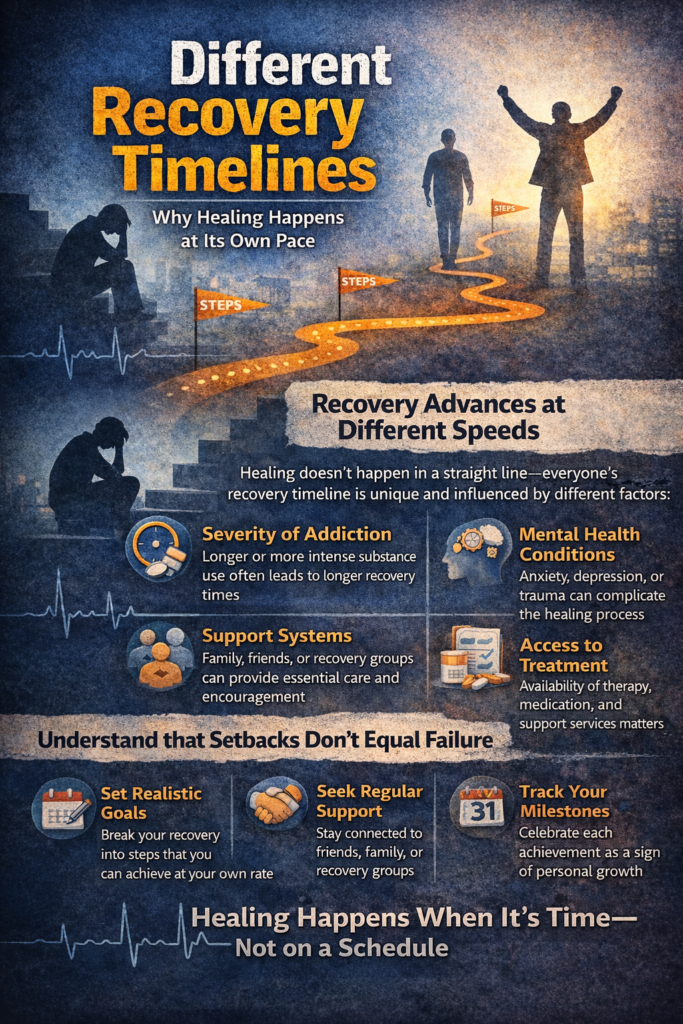
Recovery from addiction is often misunderstood as a quick or predictable process, but in reality, it unfolds differently for every individual. Different recovery timelines reflect the complex nature of addiction, which affects physical health, mental well-being, relationships, and daily functioning. Factors such as the length of substance use, co-occurring mental health conditions, support systems, and access to treatment can all influence how quickly someone progresses in recovery. Recognizing that healing does not occur at the same pace for everyone helps reduce stigma, encourages patience, and allows individuals to focus on meaningful progress rather than comparing their journey to others.
Different Recovery Timelines: Why Healing Doesn’t Happen at the Same Pace
Recovery from addiction is often portrayed as a clear, linear path—one decision to change followed by steady progress toward sobriety. In reality, recovery is far more complex. One of the most important realities to understand is that people recover at different speeds. Some individuals stabilize quickly, while others take years to build lasting recovery. These different recovery timelines are a natural part of the healing process and reflect the many factors that shape each person’s journey.
Recovery Is Not a Race
It is common for people in recovery to compare themselves to others. Someone might feel discouraged if a friend seems to regain stability faster or if others appear to move forward more quickly in their lives. However, recovery is not a competition. Each individual begins their journey with different experiences, challenges, and levels of support.
Healing from addiction involves physical recovery, psychological growth, and rebuilding relationships and life structures. These changes take time, and the pace varies widely from person to person.
Factors That Influence Recovery Timelines
Several factors can affect how quickly someone progresses in recovery:
Length and severity of addiction: Individuals who have struggled with substance use for many years may need more time to heal physically and emotionally.
Mental health conditions: Many people with substance use disorders also experience anxiety, depression, trauma, or other mental health challenges that must be addressed alongside addiction.
Support systems: Strong support from family, friends, and recovery communities can significantly influence recovery progress.
Access to treatment: Availability of counseling, medication-assisted treatment, and recovery programs can help stabilize individuals more quickly.
Personal readiness for change: Motivation and commitment to recovery can vary, and people may progress through the stages of change at different rates.
The Role of Setbacks in Recovery
Recovery is rarely a perfectly smooth process. Setbacks and relapses can occur, especially in the early stages. While these experiences can be discouraging, they are often part of the learning process rather than signs of failure.
Each challenge provides an opportunity to understand triggers, strengthen coping skills, and develop stronger recovery strategies.
Focusing on Progress, Not Speed
Instead of measuring recovery by how quickly someone achieves milestones, it is more helpful to focus on consistent progress and personal growth. Small improvements—such as developing healthier coping skills, rebuilding relationships, or maintaining periods of sobriety—are meaningful signs of progress.
Recognizing these steps can help individuals stay motivated and maintain hope during difficult moments.
A Journey That Belongs to Each Person
Addiction recovery is deeply personal. No two journeys look exactly the same, and comparing timelines can create unnecessary pressure. What matters most is not how fast someone moves forward, but that they continue moving toward healing.
By understanding that recovery timelines differ, individuals, families, and communities can develop greater patience, compassion, and support for those working to rebuild their lives. Recovery is not defined by speed—it is defined by perseverance, growth, and the commitment to keep going.
Self-Management and Different Recovery Timelines: Understanding Your Own Pace in Healing
Recovery from addiction is not a one-size-fits-all process. Some individuals experience steady progress early in their journey, while others require more time to stabilize and rebuild their lives. These different recovery timelines are normal and reflect the many physical, emotional, and social factors involved in healing. One of the most effective ways to navigate this process is through self-management, which helps individuals take an active role in their recovery while recognizing that progress occurs at different speeds.
Understanding Recovery as a Personal Process
Every person enters recovery with a unique history. The length of substance use, the presence of mental health conditions, personal stressors, and available support systems all influence how quickly someone moves forward. Because of these differences, comparing recovery progress to others can create unnecessary frustration or discouragement.
Self-management encourages individuals to focus on their own growth and milestones rather than measuring progress against others.
What Is Self-Management in Recovery?
Self-management refers to the skills and strategies individuals use to monitor their behaviors, manage triggers, and maintain healthy coping mechanisms. Instead of relying solely on external treatment systems, people learn to actively guide their recovery through daily decisions and habits.
Key self-management practices include:
- Setting realistic and personal recovery goals
- Tracking emotional triggers and cravings
- Developing stress-management strategies
- Maintaining consistent routines and healthy habits
- Seeking support when challenges arise
These strategies allow individuals to stay engaged in their recovery regardless of how quickly their progress unfolds.
Accepting Different Timelines
One of the most important aspects of self-management is accepting that recovery takes time. Healing involves not only stopping substance use but also rebuilding mental health, relationships, physical well-being, and life stability.
For some individuals, this process may take months, while for others it may take years. Recognizing that recovery timelines vary helps reduce pressure and encourages patience with oneself.
Learning From Challenges and Setbacks
Setbacks can occur during recovery, especially in the early stages. Self-management strategies help individuals view these moments as learning opportunities rather than failures. By reflecting on triggers and stressors, people can strengthen coping skills and adjust their recovery plans.
This approach promotes resilience and helps individuals continue progressing even when recovery does not follow a perfectly smooth path.
Building Confidence Through Personal Progress
When individuals practice self-management, they begin to recognize their own ability to navigate recovery. Small achievements—such as maintaining sobriety for a week, attending support meetings, or managing stress without substances—become important markers of growth.
Over time, these steps build confidence and reinforce long-term recovery.
Recovery at Your Own Pace
Understanding different recovery timelines reminds us that healing is not defined by speed. Self-management empowers individuals to move forward at a pace that supports lasting change rather than rushed progress.
By focusing on personal growth, developing coping skills, and practicing patience, individuals can build a stable foundation for recovery—one step at a time.
Family Support Strategies for Understanding Different Recovery Timelines
Recovery from addiction is a deeply personal journey, and one of the most important realities families must understand is that healing happens at different speeds for different people. Some individuals make rapid progress, while others require more time to stabilize, rebuild trust, and develop the skills needed for long-term recovery. Families who recognize these different recovery timelines can provide more effective and compassionate support for their loved ones.
Understanding That Recovery Is Not Linear
Families often hope that once a loved one enters treatment or decides to pursue recovery, improvement will happen quickly and consistently. However, recovery rarely follows a straight path. There may be periods of progress followed by setbacks or challenges. These fluctuations are often part of the healing process rather than signs that recovery is failing.
When families understand that recovery is not linear, they are better able to respond with patience rather than frustration.
Practicing Patience and Realistic Expectations
One of the most helpful strategies families can adopt is setting realistic expectations about the recovery timeline. Years of substance use can affect physical health, emotional well-being, and personal relationships. Rebuilding these areas takes time.
Families who focus on gradual improvement—rather than expecting immediate transformation—can help create an environment where recovery feels possible and sustainable.
Encouraging Consistent Progress
Instead of measuring recovery by speed, families can encourage consistent progress and effort. Small milestones, such as attending counseling sessions, maintaining sobriety for a period, or rebuilding healthy routines, are meaningful achievements.
Acknowledging these steps can motivate individuals to continue their recovery journey.
Supporting Healthy Communication
Open and respectful communication plays a critical role in family support. Individuals in recovery may feel vulnerable, ashamed, or uncertain about their progress. When families listen without judgment and allow space for honest conversations, it helps build trust and emotional safety.
Healthy communication also helps families better understand the challenges their loved ones may be experiencing at different stages of recovery.
Learning About Addiction and Recovery
Education can help families better understand why recovery timelines vary. Addiction affects brain chemistry, emotional regulation, and coping mechanisms. Learning about these changes can help families develop empathy and avoid interpreting slow progress as a lack of effort or motivation.
Family education programs, counseling, and support groups can provide valuable insight and practical guidance.
Maintaining Healthy Boundaries
While support is essential, families must also maintain healthy boundaries. Supporting recovery does not mean ignoring harmful behaviors or taking responsibility for someone else’s choices. Balanced support includes encouragement while also allowing individuals to remain accountable for their recovery.
Healthy boundaries protect both the family and the individual working toward recovery.
Building a Long-Term Support System
Recovery is often a long-term process that continues well beyond formal treatment programs. Families who remain supportive, patient, and informed help create a stable environment where recovery can continue to grow.
By understanding that healing takes different amounts of time for different people, families can shift their focus from how fast recovery happens to how well it is sustained. This perspective allows families to become powerful allies in the recovery process, helping their loved ones build lasting change one step at a time.
Community Resource Strategies for Understanding Different Recovery Timelines
Recovery from addiction does not follow the same path for everyone. Some individuals stabilize quickly, while others may take years to rebuild their health, relationships, and life stability. These different recovery timelines are influenced by many factors, including the severity of addiction, mental health conditions, social support, and access to treatment. Community resources play a critical role in helping individuals navigate these varying timelines by providing ongoing support, services, and opportunities for recovery at every stage.
Recognizing the Diversity of Recovery Journeys
Communities that understand recovery as a long-term and individualized process are better equipped to support people struggling with addiction. Rather than expecting quick or uniform results, community organizations can focus on creating flexible systems that allow individuals to receive help whenever they need it.
This perspective acknowledges that recovery may involve periods of progress, setbacks, and renewed efforts. When communities normalize these variations, individuals are less likely to feel discouraged or isolated during slower stages of recovery.
Expanding Access to Recovery Services
Community resources such as outpatient counseling centers, recovery community organizations, and peer support groups provide ongoing assistance for individuals at different stages of recovery. These services allow people to continue receiving support long after formal treatment ends.
Examples of community-based recovery resources include:
- Outpatient therapy and counseling programs
- Peer recovery coaching and mentorship
- Support groups and recovery meetings
- Mental health services for co-occurring disorders
- Community recovery centers and wellness programs
These services help individuals maintain progress at their own pace while remaining connected to supportive networks.
Providing Long-Term Support Systems
Because recovery timelines vary, communities must offer long-term recovery support rather than short-term interventions alone. Housing programs, employment training, educational opportunities, and social support networks can help individuals rebuild stability over time.
Access to these resources allows people to address the broader life challenges that often accompany addiction, such as unemployment, housing instability, and social isolation.
Encouraging Peer Support and Community Connection
Peer recovery programs are particularly valuable for individuals who may feel discouraged about the pace of their recovery. Hearing the experiences of others who have faced similar challenges helps normalize the ups and downs of the recovery process.
Community-based peer support groups create environments where individuals can share experiences, celebrate milestones, and receive encouragement during difficult periods.
Promoting Education and Awareness
Community education plays a key role in reducing stigma and increasing understanding of addiction and recovery. When communities learn that recovery timelines vary, they are more likely to respond with compassion rather than judgment.
Public awareness campaigns, educational workshops, and community partnerships with healthcare providers can help build a more informed and supportive environment for recovery.
Building Recovery-Friendly Communities
Communities that invest in diverse recovery resources create environments where individuals can continue healing at their own pace. By providing access to services, social support, and opportunities for personal growth, communities help ensure that recovery remains possible even when progress takes time.
Understanding and supporting different recovery timelines allows communities to move beyond a crisis-driven approach to addiction and instead foster long-term recovery systems that support lasting change.
Frequently Asked Questions
Here are some common questions:
1. What does “different recovery timelines” mean?
Different recovery timelines refer to the idea that people recover from addiction at different speeds. Some individuals may make rapid progress, while others need more time to heal physically, emotionally, and socially. Recovery is influenced by many personal and environmental factors, making each journey unique.
2. Why do recovery timelines vary from person to person?
Recovery timelines can vary due to several factors, including:
- The length and severity of substance use
- Co-occurring mental health conditions
- Access to treatment and healthcare services
- Support from family and friends
- Personal motivation and coping skills
These factors shape how quickly someone progresses through recovery.
3. Is it normal for recovery to take a long time?
Yes. Recovery is often a long-term process, and healing can take months or years. Addiction affects brain function, emotional regulation, and daily habits, which all require time and consistent effort to rebuild.
4. Does slower recovery mean someone is failing?
No. Slower progress does not mean failure. Recovery focuses on steady improvement and learning from challenges, not on achieving results quickly. Everyone heals at their own pace.
5. Can setbacks happen during recovery?
Yes. Setbacks or relapses can occur during recovery, especially in the early stages. These experiences are often part of the learning process and can help individuals understand triggers and strengthen coping strategies.
6. How can someone stay motivated during a long recovery process?
Maintaining motivation can involve:
- Setting realistic and achievable goals
- Celebrating small milestones
- Building supportive relationships
- Practicing self-care and stress management
- Seeking professional guidance or peer support
These strategies help individuals remain focused on long-term recovery.
7. How can families support someone with a different recovery timeline?
Families can help by:
- Practicing patience and understanding
- Avoiding comparisons with others’ recovery journeys
- Encouraging consistent progress rather than quick results
- Supporting treatment and counseling efforts
- Maintaining open and supportive communication
This support can make a significant difference in recovery outcomes.
8. What role do communities play in supporting recovery timelines?
Communities provide important resources such as support groups, counseling services, recovery centers, and educational programs. These resources help individuals receive ongoing support throughout different stages of recovery.
9. Is recovery always a straight path?
No. Recovery often includes periods of progress, challenges, and personal growth. Many individuals experience ups and downs as they develop the skills needed for long-term recovery.
10. What is the most important thing to remember about recovery timelines?
The most important thing to remember is that recovery is not a race. What matters most is continued progress, persistence, and the commitment to build a healthier life over time.
Conclusion
Understanding different recovery timelines is essential for supporting long-term healing. Recovery is not defined by speed but by persistence, growth, and the willingness to continue moving forward despite challenges. When individuals, families, and communities acknowledge that progress may take time, they create a more compassionate environment that supports sustainable recovery. By focusing on consistent improvement and personal development, rather than unrealistic expectations, recovery becomes a journey of resilience and hope rather than a race to reach a specific destination.
Video: Recovery won’t look like anyone else’s, and that’s the point #addiction #healing #recovery