The detox industry has experienced rapid growth in recent years, evolving into a multi-billion-dollar sector driven by rising health awareness and the desire for quick solutions to complex wellness concerns. From detox teas and supplements to specialized cleanses and spa treatments, these products are widely marketed as essential tools for removing toxins and improving overall health. However, this surge in popularity has also raised important questions about effectiveness, safety, and the role of marketing in shaping consumer beliefs. Understanding the growth of the detox industry requires a critical examination of both its appeal and the scientific realities behind its claims.
The Detox Industry Boom: Health Solution or Marketing Hype?
Over the past decade, the detox industry has transformed from a niche wellness concept into a multi-billion-dollar global market. From juice cleanses and detox teas to supplements and luxury spa treatments, “detoxing” has become synonymous with health, renewal, and quick transformation. But as the industry grows, so do questions about its effectiveness, safety, and underlying motivations. Is the detox boom a genuine health movement—or a powerful example of marketing at work?
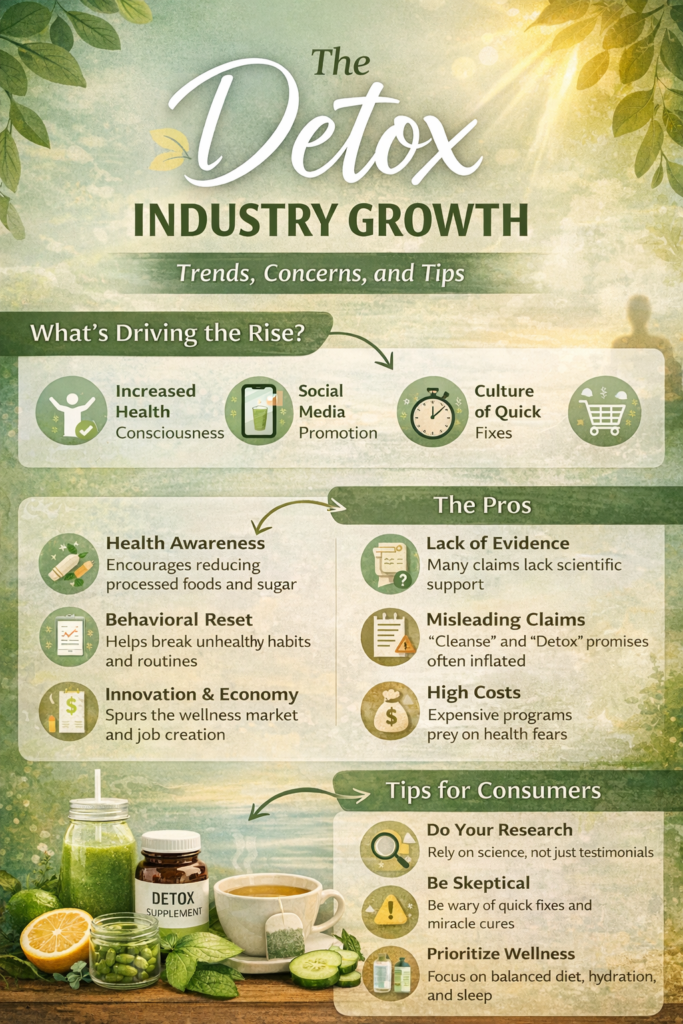
What Is Driving the Detox Industry Growth?
Several factors have fueled the rapid expansion of the detox market:
- Health Consciousness: People are more aware of diet, toxins, and long-term health than ever before.
- Social Media Influence: Influencers and wellness trends promote detox products as essential lifestyle tools.
- Quick-Fix Culture: Detox programs promise fast results—weight loss, clearer skin, and increased energy.
- Accessibility: Detox products are widely available online and in stores, often marketed as natural and safe.
This combination creates a powerful demand, especially among younger consumers seeking control over their health.
The Pros of the Detox Industry
Despite criticism, the detox movement does offer some potential benefits:
1. Increased Awareness of Health Habits
Many detox programs encourage people to reduce processed foods, sugar, and alcohol—positive steps toward healthier living.
2. Short-Term Behavioral Reset
A structured detox can act as a “reset,” helping individuals break unhealthy patterns and refocus on nutrition.
3. Economic Growth and Innovation
The detox industry contributes to job creation, wellness innovation, and the expansion of health-related products and services.
4. Psychological Motivation
For some, detoxing provides a sense of control and motivation to start a broader wellness journey.
The Cons and Controversies
However, the detox industry is not without significant concerns:
1. Lack of Scientific Evidence
The human body already has built-in detoxification systems—primarily the liver and kidneys. Many detox products lack strong scientific support for their claims.
2. Misleading Marketing
Terms like “cleanse” and “toxin removal” are often vague and unregulated, leading to exaggerated promises.
3. Potential Health Risks
Extreme detoxes (e.g., prolonged fasting or restrictive diets) can lead to nutrient deficiencies, dehydration, or disordered eating patterns.
4. Financial Exploitation
Some detox programs are expensive, capitalizing on consumer fears about health and “toxins” without delivering proven results.
The Role of Perception vs. Reality
A key issue in the detox industry is the gap between perception and reality. While consumers often view detox products as essential for cleansing the body, medical professionals generally emphasize sustainable habits—balanced nutrition, hydration, sleep, and exercise—as the true foundation of health.
The popularity of detoxing reflects a deeper cultural desire: a quick, visible solution to complex health issues. This desire is understandable—but not always supported by science.
Conclusion
The growth of the detox industry highlights both the strengths and vulnerabilities of modern health culture. On one hand, it reflects a positive shift toward wellness awareness. On the other hand, it reveals how easily health concerns can be commercialized.
Ultimately, detoxing is less about products and more about practices. Sustainable health doesn’t come from a bottle or a 7-day cleanse—it comes from consistent, evidence-based lifestyle choices. As the detox economy continues to grow, consumers must learn to navigate it critically, balancing curiosity with informed decision-making.
Staying Informed and in Control: Self-Management Strategies for Understanding Detox Industry Growth
As the detox industry continues to expand, consumers are faced with an overwhelming number of products and claims promising quick health benefits. From teas and cleanses to supplements and spa programs, the choices can be confusing—and sometimes misleading. In this environment, self-management becomes essential. Understanding how to critically evaluate detox trends empowers individuals to make informed, safe, and effective decisions about their health.
Why Self-Management Matters in the Detox Industry
The detox market thrives on persuasive marketing and the appeal of fast results. Without proper knowledge, individuals may:
- Spend money on ineffective products
- Follow unsafe or restrictive detox plans
- Develop unrealistic expectations about health outcomes
Self-management strategies help individuals shift from passive consumers to informed decision-makers, reducing risk and improving long-term wellness.
Key Self-Management Strategies
1. Develop Health Literacy
Understanding basic concepts about how the body works—especially the role of the liver and kidneys—can help you evaluate detox claims. Recognize that the body already has natural detoxification systems, and most products are not medically necessary.
2. Evaluate Sources Critically
Not all health information is created equal. When exploring detox products or trends:
- Look for evidence-based research rather than testimonials
- Be cautious of influencer promotions without scientific backing
- Check whether claims are supported by medical professionals
3. Read Labels and Ingredients
Many detox products contain herbal blends, laxatives, or stimulants. Knowing what you’re consuming helps you avoid harmful or unnecessary substances. If ingredients are unclear or overly complex, that’s a red flag.
4. Set Realistic Health Goals
Avoid the “quick-fix” mindset. Sustainable health improvements—such as better nutrition, hydration, and sleep—are more effective than short-term detoxes. Self-management involves focusing on long-term habits rather than temporary solutions.
5. Monitor Your Physical and Mental Responses
Pay attention to how your body reacts to any detox product or program. Symptoms like fatigue, dizziness, or irritability may indicate that the approach is too extreme or not suitable for you.
6. Budget and Financial Awareness
The detox industry can be expensive. Self-management includes recognizing when products are overpriced or unnecessary, helping you make financially responsible choices.
Connecting Self-Management to Broader Wellness
Self-management is not just about avoiding harmful detox trends—it’s about building a healthier relationship with your body and health decisions. When individuals take control of their choices, they are less likely to rely on external “quick fixes” and more likely to adopt sustainable wellness practices.
This approach is especially important in areas like addiction recovery, where the concept of detox has medical and psychological implications. Understanding the difference between commercial detox products and medically supervised detox can be critical for safety and recovery outcomes.
Challenges to Effective Self-Management
Even with good intentions, self-management can be difficult due to:
- Information overload from social media and advertising
- Emotional vulnerability, especially when seeking quick health improvements
- Peer influence and trends that normalize detox culture
Recognizing these challenges is part of becoming a more mindful and informed consumer.
Conclusion
The growth of the detox industry reflects a broader cultural focus on health—but also highlights the need for critical thinking and personal responsibility. Self-management strategies empower individuals to navigate this complex market safely and effectively.
Rather than chasing the latest detox trend, the goal should be to understand your body, question bold claims, and make choices grounded in evidence. In a world full of health promises, informed decision-making is the most powerful tool you have.
Stronger Together: Family Support Strategies for Understanding Detox Industry Growth
As the detox industry continues to grow, families are increasingly exposed to a flood of products and promises centered around “cleansing” and quick health fixes. Whether it’s detox teas, supplements, or extreme diet plans, these trends often influence not just individuals—but entire households. In this environment, family support plays a crucial role in helping members make informed, safe, and balanced health decisions.
Why Family Support Matters
Health behaviors are rarely formed in isolation. Family beliefs, habits, and communication styles shape how individuals respond to wellness trends like detoxing. Without guidance or open discussion, family members—especially teens or vulnerable individuals—may adopt unsafe or unrealistic detox practices.
Strong family support can:
- Encourage critical thinking about health claims
- Reduce pressure to follow harmful trends
- Promote long-term, sustainable wellness habits
- Provide emotional reassurance when quick-fix solutions seem appealing
Key Family Support Strategies
1. Open and Honest Communication
Create a space where family members feel comfortable discussing health trends without judgment. Ask questions like:
- “What have you heard about detoxing?”
- “Why does this product appeal to you?”
This helps uncover motivations and correct misinformation in a supportive way.
2. Promote Health Literacy Together
Families can learn as a unit by exploring credible health information. This might include:
- Reviewing articles from trusted medical sources
- Discussing how the body naturally detoxifies
- Comparing marketing claims with scientific evidence
Learning together builds shared understanding and reduces confusion.
3. Model Healthy Behaviors
Actions often speak louder than words. When family members prioritize balanced meals, hydration, sleep, and regular activity, it reinforces that health doesn’t come from quick detox fixes.
4. Set Realistic Expectations About Health
Help family members understand that sustainable health takes time. Detox products often promise rapid results, but families can counter this by emphasizing gradual, evidence-based progress.
5. Watch for Warning Signs
Some detox trends can overlap with unhealthy behaviors, such as extreme restriction or obsession with “cleansing.” Families should be mindful of:
- Sudden drastic diet changes
- Over-reliance on supplements or detox products
- Anxiety around “toxins” or food choices
Early awareness allows for timely support and intervention.
6. Encourage Professional Guidance When Needed
If a family member is considering a detox for medical or recovery-related reasons, it’s important to consult healthcare professionals. This is especially critical in addiction contexts, where detox should be medically supervised rather than commercially driven.
Family Support in the Context of Addiction
In addiction recovery, the concept of detox has a very different meaning. Medical detox involves safely managing withdrawal symptoms under professional care. Families who understand this distinction are better equipped to:
- Avoid confusing commercial detox products with legitimate treatment
- Support loved ones through evidence-based recovery processes
- Reduce stigma and misinformation surrounding addiction
Family involvement can significantly improve recovery outcomes when it is informed, compassionate, and grounded in reality.
Challenges Families May Face
Supporting one another as we navigate the detox industry isn’t always easy. Common challenges include:
- Conflicting beliefs about health and wellness
- Influence from social media and peer groups
- Emotional stress when trying to protect loved ones
Recognizing these barriers helps families approach conversations with empathy rather than conflict.
Conclusion
The rapid growth of the detox industry reflects a widespread desire for better health—but also creates confusion and risk. Families play a powerful role in shaping how individuals interpret and respond to these trends.
By fostering open communication, encouraging critical thinking, and modeling healthy behaviors, families can help each other navigate the detox landscape safely. In the end, the strongest defense against misleading health trends isn’t a product—it’s informed, supportive relationships.
Beyond the Hype: Using Community Resources to Navigate Detox Industry Growth
The rapid expansion of the detox industry has created both opportunity and confusion. With countless products and programs claiming to “cleanse” the body, individuals are often left to sort through conflicting information. While personal and family strategies are important, community resources play a critical role in helping people understand, evaluate, and respond to detox trends safely and informally.
Community-based support provides access to credible information, professional guidance, and shared experiences—offering a counterbalance to marketing-driven messages.
Why Community Resources Matter
Unlike commercial detox messaging, community resources are typically grounded in public health, education, and evidence-based practices. These resources help individuals:
- Access accurate, science-based information
- Avoid harmful or misleading detox practices
- Build support networks for healthier decision-making
- Connect with professionals for guidance and care
Community involvement shifts the focus from isolated decision-making to informed, collective awareness.
Key Community Resource Strategies
1. Utilize Public Health Services
Local health departments and clinics often provide educational materials about nutrition, wellness, and safe health practices. These services can clarify misconceptions about detoxing and explain how the body naturally processes toxins.
2. Attend Workshops and Educational Programs
Many communities offer free or low-cost seminars on health topics. These workshops may cover:
- Nutrition and balanced diets
- The science behind detox claims
- Safe approaches to improving overall wellness
Engaging in these programs allows individuals to ask questions and learn directly from trained professionals.
3. Access Support Groups
Support groups—especially those related to addiction recovery—provide a space to discuss detox in a realistic and supportive context. Participants can share experiences and learn the difference between:
- Commercial detox products
- Medically supervised detox and recovery
These discussions reduce stigma and misinformation.
4. Leverage Libraries and Educational Institutions
Public libraries and community colleges often host health education events or provide access to credible research. Librarians and educators can guide individuals toward reliable sources, helping them critically evaluate detox trends.
5. Partner with Healthcare Professionals
Community-based healthcare providers, including nurses, counselors, and dietitians, can offer personalized advice. Consulting professionals helps individuals avoid unsafe detox practices and choose evidence-based approaches to health.
6. Promote Community Awareness Campaigns
Communities can actively combat misinformation by organizing campaigns that:
- Educate the public about misleading detox claims
- Encourage critical thinking about health marketing
- Promote sustainable wellness habits
These efforts create a culture of informed decision-making.
Community Resources and Addiction Context
In addiction recovery, community resources are essential. Detox in this context refers to a medically supervised process, not commercial products. Community-based programs help individuals and families:
- Understand the risks of unsupervised detox
- Access proper treatment and recovery services
- Build long-term support networks
This distinction is critical for safety and effective recovery.
Challenges in Using Community Resources
Despite their value, community resources can be underutilized due to:
- Lack of awareness about available services
- Limited access in some areas
- Mistrust or stigma around seeking help
Addressing these barriers requires increased outreach and community engagement.
Conclusion
As the detox industry continues to grow, so does the need for reliable, evidence-based guidance. Community resources offer a powerful solution by providing education, support, and professional insight that counterbalances commercial messaging.
By engaging with local health services, educational programs, and support networks, individuals can better understand detox trends and make safer, more informed decisions. In a landscape filled with health promises, community knowledge and connection remain some of the most valuable tools for navigating the detox economy.
Frequently Asked Questions
Here are some common questions:
1. What is the detox industry?
The detox industry includes products and services that claim to remove toxins from the body. These range from detox teas and supplements to juice cleanses, diets, and spa treatments. It has grown rapidly due to increased interest in health and wellness.
2. Why is the detox industry growing so quickly?
The industry is expanding بسبب several factors:
- Increased health awareness
- Social media influence and marketing
- Desire for quick results (weight loss, energy, clearer skin)
- Easy access to products online and in stores
This combination makes detox products highly appealing to consumers.
3. Do detox products actually work?
In most cases, there is limited scientific evidence supporting the use of detox products. The body already detoxifies naturally through the liver, kidneys, and digestive system. While some products may promote temporary changes (such as water loss), they do not “cleanse” the body as they claim.
4. Are detox products safe?
Not always. Some detox products can be harmful, especially if used excessively or without guidance. Risks may include:
- Dehydration
- Nutrient deficiencies
- Digestive issues
- Interactions with medications
It’s important to approach detox products with caution.
5. What are the benefits of the detox industry?
Despite concerns, there are some positives:
- Encourages awareness of diet and lifestyle
- Motivates people to reduce unhealthy habits
- Contributes to economic growth and innovation in wellness
However, these benefits are often indirect rather than product-specific.
6. What are the main criticisms of the detox industry?
Common criticisms include:
- Lack of scientific evidence
- Misleading or exaggerated marketing claims
- High costs for unproven products
- Promotion of unrealistic health expectations
These issues raise ethical and health concerns.
7. How does social media impact detox trends?
Social media plays a major role by promoting detox products through influencers and ads. This can create unrealistic expectations and spread misinformation, especially when claims are not backed by science.
8. How can consumers make informed decisions?
Consumers can protect themselves by:
- Researching products using credible sources
- Reading ingredient labels carefully
- Being skeptical of “quick-fix” claims
- Consulting healthcare professionals when needed
Critical thinking is key.
9. Is detoxing necessary for good health?
No. For most people, detoxing is not necessary. Healthy habits like balanced nutrition, hydration, sleep, and exercise are more effective and sustainable ways to support the body’s natural detox processes.
10. How is detox in the wellness industry different from medical detox?
This is an important distinction:
- Wellness detox = Commercial products (teas, cleanses, etc.)
- Medical detox = Supervised process to safely manage withdrawal from substances
Medical detox is evidence-based and necessary in addiction treatment, while commercial detox is often optional and unproven.
11. Who is most influenced by the detox industry?
Young adults, social media users, and individuals seeking quick health improvements are often the most influenced. People dealing with body image or health concerns may also be more vulnerable to marketing.
12. What is the future of the detox industry?
The detox industry is expected to continue growing, but there may be increased demand for:
- Transparency in marketing
- Scientific validation of products
- More regulation to protect consumers
Consumers are becoming more informed, which may shape the industry’s direction.
Conclusion
The expansion of the detox industry reflects a broader cultural shift toward health consciousness, but it also highlights the risks of misinformation and over-commercialization. While some aspects of the detox trend may encourage healthier habits, many products rely on exaggerated claims unsupported by scientific evidence. As a result, it is essential for individuals to approach detox practices with informed skepticism and a focus on sustainable, evidence-based wellness strategies. Ultimately, true health is not achieved through short-term cleanses, but through consistent lifestyle choices grounded in knowledge and balance.
Video: