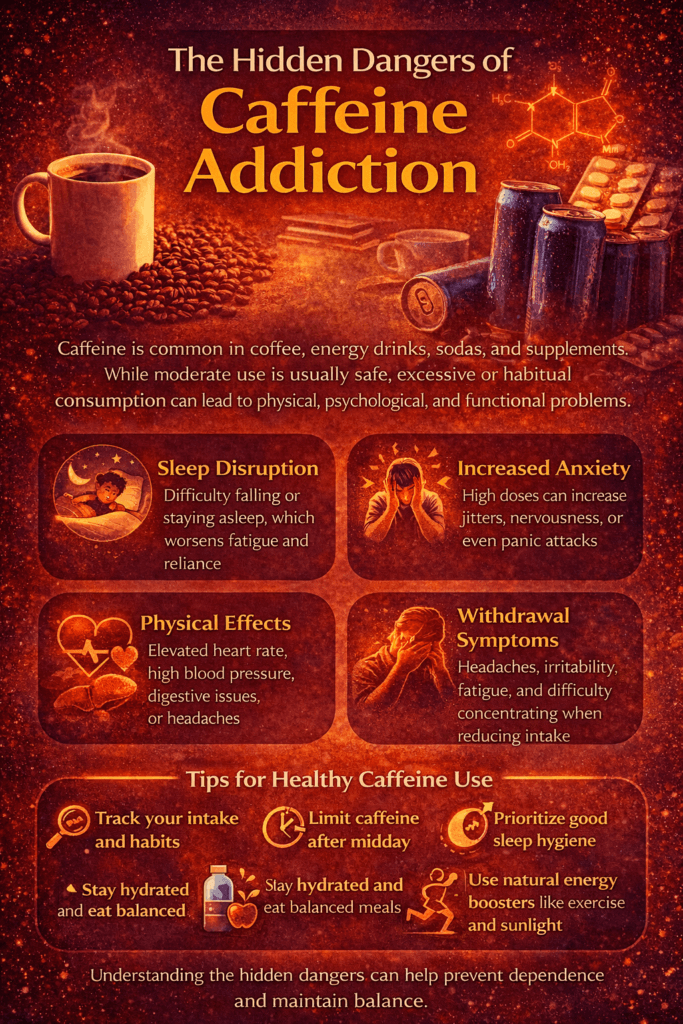
Caffeine is one of the most widely consumed stimulants in the world, commonly found in coffee, tea, energy drinks, and many everyday products. Because it is socially accepted and often associated with productivity and alertness, its risks are frequently overlooked. While moderate use is generally safe for most people, excessive or habitual consumption can lead to subtle but significant problems, including sleep disruption, anxiety, irritability, dependence, and fluctuating energy levels. The hidden danger of caffeine addiction lies in how easily it develops without notice—gradually shifting from a helpful boost to something the body feels it needs just to function normally. Recognizing these risks is essential to maintaining a balanced, healthy relationship with caffeine.
The Hidden Dangers of Caffeine Addiction: When a Common Habit Becomes a Concern
Caffeine is one of the most widely consumed psychoactive substances in the world, found in coffee, tea, soda, energy drinks, and many supplements. Because it is socially accepted and easily accessible, caffeine is often viewed as harmless. However, when use becomes excessive or compulsive, it can develop into a pattern that resembles behavioral dependence. While moderate consumption is generally safe for most adults, chronic overuse can lead to physical, psychological, and functional problems that many people overlook. Understanding the hidden dangers of caffeine addiction helps individuals recognize early warning signs and make healthier choices before negative effects escalate.
How Caffeine Affects the Brain and Body
Caffeine primarily works by blocking adenosine receptors in the brain, reducing fatigue and increasing alertness. It also stimulates dopamine and adrenaline activity, temporarily boosting energy, mood, and concentration. Over time, however, the brain adapts to repeated caffeine exposure, leading to tolerance. This means individuals may need increasing amounts to achieve the same effect, creating a cycle of escalating consumption and dependence.
Common Signs of Caffeine Dependence
Many people don’t realize they may be dependent on caffeine because its use is normalized. Possible warning signs include:
- Needing caffeine to feel “normal” or function
- Headaches or irritability without it
- Difficulty reducing intake
- Drinking more than intended
- Feeling anxious or jittery after use
These signs indicate that the body has adapted to regular caffeine exposure and may react when intake changes.
Hidden Physical Risks
Excessive caffeine intake can disrupt sleep cycles, increase heart rate, elevate blood pressure, and trigger digestive discomfort. Chronic sleep disruption is especially concerning because poor sleep affects memory, mood regulation, immune function, and metabolism. Ironically, people often consume more caffeine to compensate for fatigue caused by caffeine-related sleep loss, reinforcing a self-perpetuating cycle.
Psychological and Emotional Effects
Although caffeine can improve mood temporarily, high doses may worsen anxiety, restlessness, irritability, or panic symptoms. Individuals sensitive to stimulants may experience heightened stress responses or difficulty relaxing. Over time, reliance on caffeine for energy can reduce confidence in one’s natural ability to function without it.
Functional Consequences
Caffeine addiction can subtly interfere with daily functioning. Some individuals experience:
- Reduced sleep quality leading to daytime fatigue
- Difficulty concentrating without caffeine
- Increased dependence on stimulants for productivity
- Mood fluctuations tied to caffeine intake
These effects can accumulate gradually, making it difficult to recognize that caffeine may be contributing to the very problems it is being used to solve.
Why Caffeine Dependence Is Often Overlooked
Unlike many substances, caffeine is socially encouraged. Coffee breaks are embedded in workplace culture, and energy drinks are marketed as performance enhancers. Because of this normalization, people may dismiss warning signs or assume their symptoms are unrelated. The widespread availability and positive social perception of caffeine can make dependence harder to recognize.
When Caffeine Use Becomes a Concern
Caffeine use may warrant closer attention when:
- Consumption continues despite negative effects
- Attempts to cut back are unsuccessful
- Withdrawal symptoms occur
- Sleep or mood problems persist
Recognizing these signs early allows individuals to adjust habits before dependence deepens.
Healthier Approaches to Energy and Alertness
Many people find that improving sleep hygiene, hydration, nutrition, and stress management naturally increases energy levels. Physical activity, sunlight exposure, and regular routines can also enhance alertness without relying heavily on stimulants. These strategies support sustainable energy rather than temporary boosts that lead to crashes.
Final Insight
Caffeine is not inherently harmful, and moderate use can be part of a healthy lifestyle. The hidden danger arises when consumption becomes excessive, habitual, or necessary for daily functioning. Like any substance that affects brain chemistry, caffeine can create patterns of dependence when used repeatedly to manage fatigue or stress. Recognizing these risks does not mean eliminating caffeine entirely—it means understanding its effects and using it intentionally. With awareness and balance, individuals can enjoy caffeine responsibly while protecting their health, sleep, and long-term well-being.
Self-Management Strategies to Avoid the Hidden Dangers of Caffeine Addiction
Caffeine is woven into daily routines for millions of people, often used to boost energy, improve focus, or fight fatigue. While moderate consumption is generally safe, excessive reliance can quietly develop into dependence, leading to sleep disruption, anxiety, irritability, and fluctuating energy levels. The key to preventing these hidden dangers is self-management—learning to monitor habits, recognize early warning signs, and build healthier energy strategies. With intentional awareness and practical techniques, individuals can enjoy caffeine responsibly without letting it control their mood, productivity, or well-being.
1. Track Your Intake and Patterns
The first step in prevention is awareness. Many people underestimate how much caffeine they consume because it is present in multiple sources, such as coffee, tea, soda, chocolate, and supplements. Keeping a simple log of intake, timing, and mood can reveal patterns—such as relying on caffeine when stressed or sleep-deprived. Recognizing these patterns helps individuals make intentional choices rather than automatic ones.
2. Establish Healthy Sleep Foundations
Poor sleep often leads to increased caffeine use, which then worsens sleep quality and creates a cycle of dependence. Prioritizing consistent sleep schedules, reducing screen time before bed, and establishing a calming nighttime routine can naturally boost energy levels. When sleep improves, the need for stimulants often decreases.
3. Gradually Reduce Intake Instead of Stopping Suddenly
If dependence has developed, abrupt cessation can lead to headaches, fatigue, irritability, and difficulty concentrating. Gradually reducing intake—such as switching to half-caf beverages or spacing drinks farther apart—allows the body to adjust comfortably and lowers the risk of withdrawal symptoms.
4. Replace Stimulant Reliance With Natural Energy Sources
Sustainable energy comes from lifestyle habits rather than stimulants. Physical activity, hydration, balanced nutrition, sunlight exposure, and regular breaks throughout the day naturally support alertness. These strategies strengthen the body’s internal energy systems instead of overriding them.
5. Set Personal Limits and Boundaries
Self-management includes deciding in advance how much caffeine is reasonable for you. Some people set daily limits, avoid caffeine after a certain time, or designate caffeine-free days. Having clear boundaries prevents gradual escalation and keeps consumption intentional rather than habitual.
6. Recognize Emotional Triggers
Many people use caffeine to cope with stress, boredom, or emotional fatigue rather than physical tiredness. Identifying these triggers helps distinguish between true energy needs and emotional habits. When caffeine cravings are emotionally driven, alternative coping tools—such as stretching, breathing exercises, or brief walks—can be more effective.
7. Practice Mindful Consumption
Mindful use means pausing before reaching for caffeine and asking:
- Am I actually tired or just stressed?
- Will this help or worsen my sleep later?
- Is there another way to boost my energy right now?
This brief reflection builds intentional decision-making and prevents automatic reliance.
Why Self-Management Works
Caffeine dependence often develops gradually because daily habits become automatic. Self-management interrupts this process by bringing behavior into awareness. When individuals consciously track, adjust, and plan their intake, they regain control over their habits. Over time, these strategies retrain the body to rely more on natural energy rhythms and less on external stimulants.
Final Insight
Avoiding the hidden dangers of caffeine addiction does not require eliminating caffeine entirely—it requires balance, awareness, and intentional use. By monitoring intake, improving sleep, recognizing triggers, and strengthening natural energy habits, individuals can enjoy caffeine without becoming dependent on it. Ultimately, self-management transforms caffeine from a necessity into a choice, allowing people to maintain both alertness and long-term health.
Family Support Strategies to Avoid the Hidden Dangers of Caffeine Addiction
Caffeine is often seen as harmless because it is widely accepted and part of everyday life—morning coffee, afternoon tea, or energy drinks for productivity. Yet when use becomes excessive or habitual, it can quietly lead to sleep disruption, anxiety, irritability, and dependence. Families can play an important role in preventing these hidden dangers by shaping daily routines, modeling balanced habits, and supporting healthier energy strategies. When families approach caffeine use with awareness and teamwork, they create an environment that promotes moderation, well-being, and long-term health rather than reliance on stimulants.
Model Balanced Caffeine Habits
Family members influence each other’s habits, especially children and teens who learn by observing adults. When caregivers demonstrate moderate caffeine use, prioritize sleep, and avoid relying on stimulants to function, they indirectly teach healthy patterns. Modeling balanced behavior is often more effective than giving instructions alone.
Encourage Healthy Sleep Routines
Sleep deprivation is one of the main reasons people increase caffeine intake. Families can reduce this risk by maintaining consistent bedtime routines, limiting late-night screen time, and creating calm evening environments. Supporting healthy sleep habits lowers the need for artificial stimulation during the day.
Talk Openly About Energy and Stress
Families can help prevent dependence by discussing why someone feels tired or stressed, rather than automatically reaching for caffeine. Conversations like “Are you actually tired, or just overwhelmed?” encourage awareness of underlying causes. This helps family members learn to distinguish between physical fatigue and emotional strain.
Provide Healthy Alternatives for Energy
Families can promote natural energy sources such as hydration, nutritious meals, physical activity, fresh air, and breaks during long tasks. Making these habits part of daily family life reduces reliance on caffeine and strengthens overall health.
Set Gentle Household Guidelines
Some families benefit from shared guidelines, such as limiting energy drinks, avoiding caffeine after certain hours, or encouraging caffeine-free days. These boundaries work best when they are collaborative rather than strict rules. Involving everyone in setting limits increases cooperation and understanding.
Watch for Early Warning Signs
Family members are often the first to notice subtle changes that may signal overuse, including:
- Difficulty sleeping
- Increased irritability or anxiety
- Needing caffeine to function
- Frequent headaches without it
Recognizing these signs early allows families to respond supportively before dependence develops.
Reinforce Balance Instead of Restriction
Supportive families focus on balance rather than punishment or criticism. Encouraging moderation, praising healthy choices, and discussing progress helps individuals feel motivated rather than controlled. Positive reinforcement strengthens self-regulation skills.
Why Family Support Matters
Habits form most easily in environments that reinforce them. Families shape daily routines, attitudes toward health, and coping strategies, making them powerful protective influences. When family environments support natural energy habits and emotional awareness, individuals are less likely to rely excessively on caffeine for stimulation or stress relief.
Final Insight
Preventing caffeine dependence is not about eliminating caffeine—it’s about creating a balanced relationship with it. Families who model healthy habits, support sleep, encourage open communication, and provide natural energy alternatives help protect their loved ones from the hidden dangers of overuse. Over time, this supportive environment builds awareness, resilience, and self-regulation skills that allow individuals to maintain energy and focus without becoming dependent on stimulants.
Community Resource Strategies to Avoid the Hidden Dangers of Caffeine Addiction
Caffeine is one of the most socially accepted stimulants in the world, found in coffee, tea, sodas, energy drinks, supplements, and even medications. Because it is widely available and normalized, excessive use often goes unnoticed until sleep problems, anxiety, irritability, or dependence develop. Preventing the hidden dangers of caffeine overuse requires more than individual awareness—it benefits from community-level support. Communities that promote education, healthy routines, and balanced lifestyle habits can help individuals recognize risks early and develop sustainable energy strategies that don’t rely on stimulants. When communities actively support wellness, they create environments where moderation becomes the norm rather than the exception.
Public Education and Awareness Programs
Educational initiatives can help people understand how caffeine affects sleep, mood, and physical health. Workshops, school programs, and public health campaigns can teach safe intake levels, signs of dependence, and healthier alternatives for boosting energy. When communities provide accurate information, individuals are better equipped to make informed decisions about their consumption.
School and Workplace Wellness Initiatives
Schools and workplaces strongly influence daily habits. Institutions can support healthy energy management by encouraging breaks, hydration, movement, and balanced schedules instead of promoting stimulant reliance. Providing water stations, relaxation spaces, and wellness resources helps people sustain productivity naturally.
Access to Mental Health and Stress Support
Many individuals use caffeine excessively to cope with stress, fatigue, or emotional strain. Community access to counseling services, stress-management programs, and peer support groups can address underlying causes rather than masking symptoms. Treating stress directly reduces reliance on stimulants for temporary relief.
Promotion of Healthy Lifestyle Environments
Communities that provide safe parks, recreation programs, walking groups, and fitness opportunities make it easier for individuals to build natural energy habits. Physical activity, sunlight, and social connection all improve alertness and mood without the need for overuse of caffeine.
Responsible Marketing and Policy Awareness
Local organizations and leaders can advocate for responsible marketing of highly caffeinated products, especially those targeting youth. Educational labeling, age guidelines, and public awareness efforts help communities understand the potential risks of excessive consumption and encourage moderation.
Early Identification and Outreach
Community health screenings, school wellness checks, and workplace health programs can help identify early signs of stimulant overuse, such as sleep disturbances or chronic fatigue. Early recognition allows individuals to adjust habits before dependence develops.
Why Community Strategies Matter
Caffeine habits are shaped not just by personal choice but also by environment. Social norms, availability, advertising, and daily routines all influence consumption patterns. Community strategies address these broader influences, making healthy choices easier and more accessible for everyone.
Final Insight
Avoiding the hidden dangers of caffeine addiction is not about eliminating caffeine—it’s about creating supportive environments that encourage balance. Communities that invest in education, wellness programs, mental health resources, and healthy public spaces empower individuals to manage their energy naturally and responsibly. In this way, community involvement transforms prevention from an individual challenge into a shared effort that promotes long-term health, awareness, and well-being for all.
Frequently Asked Questions
Here are some common questions:
1. Can someone really become addicted to caffeine?
Yes. While caffeine addiction is usually milder than other substance addictions, regular excessive use can lead to dependence. The body can adapt to caffeine, causing withdrawal symptoms if intake suddenly decreases.
2. What are the most common signs of caffeine dependence?
Common signs include needing caffeine to function, headaches without it, irritability, fatigue, difficulty concentrating, and unsuccessful attempts to cut back.
3. How much caffeine is considered too much?
For most healthy adults, about 400 mg per day is considered a safe upper limit. Consistently exceeding this amount increases the risk of side effects and dependence. Sensitivity varies widely, so some people experience problems at much lower levels.
4. Why does caffeine affect sleep so much?
Caffeine blocks adenosine, a brain chemical that promotes sleepiness. Even if someone falls asleep easily, caffeine can reduce sleep quality, shorten deep sleep, and cause more nighttime awakenings.
5. Can caffeine worsen anxiety?
Yes. Because caffeine stimulates the nervous system, high doses can increase restlessness, jitteriness, racing thoughts, and even panic symptoms—especially in people who are sensitive to stimulants.
6. What are caffeine withdrawal symptoms?
Withdrawal symptoms may include headaches, fatigue, irritability, low mood, and difficulty focusing. These symptoms usually begin within 12–24 hours after stopping caffeine and may last several days.
7. Is caffeine dependence dangerous?
It is usually not life-threatening, but it can negatively affect physical health, sleep, mood, productivity, and overall well-being. Over time, these effects can interfere with daily functioning and quality of life.
8. Why is caffeine addiction often overlooked?
Because caffeine is socially accepted and widely used, people often assume it cannot cause problems. Its normalization makes it harder to recognize when use becomes excessive or habitual.
9. Can teens and children be affected more strongly?
Yes. Younger individuals are typically more sensitive to caffeine’s effects because of their smaller body size and developing nervous systems. Excess intake can affect sleep, mood, attention, and growth patterns.
10. How can someone reduce caffeine safely?
Gradually lowering intake is usually best. Switching to smaller servings, half-caffeinated beverages, or caffeine-free alternatives helps prevent withdrawal symptoms and allows the body to adjust comfortably.
11. Are energy drinks more risky than coffee?
Often yes. Many energy drinks contain high caffeine levels plus sugar and stimulants, which can intensify side effects such as heart palpitations, anxiety, and sleep disruption.
12. What is the biggest hidden danger of caffeine addiction?
The biggest risk is subtle dependence. People may not realize caffeine is affecting their sleep, mood, or stress levels because the effects develop gradually and seem normal.
Conclusion
Understanding the hidden dangers of caffeine addiction does not mean eliminating caffeine entirely; it means becoming aware of how it affects the body, mind, and daily functioning. When individuals recognize early signs of overreliance, they can adjust habits before negative effects escalate. Awareness promotes intentional use rather than automatic dependence, helping people maintain steady energy, better sleep, and improved well-being. Ultimately, caffeine is safest when it remains a choice rather than a necessity. By approaching it with balance and mindfulness, individuals can enjoy its benefits while avoiding the subtle risks that can arise when consumption becomes excessive or routine.
Video: Your Coffee Dependence Is Getting Worse #CaffeineAddiction #HealthWarning