For decades, addiction was often addressed through “tough love,” an approach rooted in the belief that strict consequences, confrontation, and emotional withdrawal would force individuals to stop using substances. However, advances in neuroscience and behavioral health have shown that addiction is a complex medical and psychological condition involving changes in brain function, emotional regulation, and stress response—not simply a failure of willpower or character. As a result, compassion-based approaches have emerged as a more effective and humane response. These approaches emphasize empathy, understanding, and supportive accountability, thereby creating safe environments in which individuals feel respected rather than judged. This shift from punishment to partnership has reshaped addiction care by improving treatment engagement, reducing stigma, and supporting recovery at the individual, family, and community levels.
Compassion Over Tough Love: A More Effective Approach to Addiction Recovery
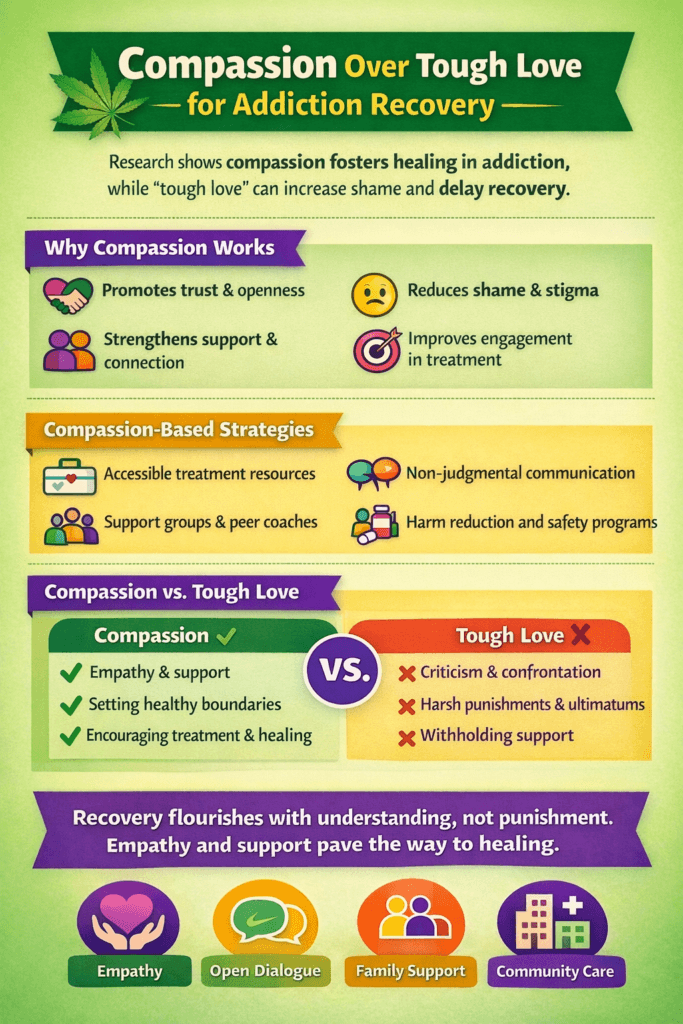
For many years, families and communities have relied on “tough love” to address addiction. This approach emphasizes strict boundaries, ultimatums, and consequences to push a person toward change. While boundaries are important, research and modern addiction science show that compassion-based strategies are often more effective in supporting long-term recovery. Addiction is not simply a matter of willpower; it is a complex condition involving brain chemistry, emotional regulation, trauma, and environmental stressors. Because of this, connection and understanding are critical tools for healing.
Compassion-focused support encourages open communication, reduces shame, and builds trust. When individuals feel safe discussing their struggles, they are more likely to seek treatment and stay engaged in recovery. Compassion does not mean enabling harmful behavior; rather, it entails approaching the person with empathy while maintaining accountability. Listening without judgment, acknowledging pain, and offering consistent encouragement help restore self-worth, which is often deeply damaged by addiction.
In contrast, repeated criticism or harsh ultimatums can intensify feelings of failure, isolation, and hopelessness. These emotional states often reinforce substance use rather than resolve it. Studies in motivational interviewing and trauma-informed care show that supportive, respectful relationships improve treatment outcomes and reduce relapse risk.
Families can practice compassionate boundaries by setting clear expectations while expressing care and belief in the person’s ability to change. Communities can reinforce compassion by offering accessible treatment services, peer support groups, and stigma-free education. Self-compassion is equally important; individuals in recovery learn to replace self-blame with self-awareness and healthy coping strategies.
Recovery thrives in environments of understanding rather than punishment. When compassion leads and boundaries support, individuals are more likely to accept help, rebuild their lives, and sustain lasting recovery.
Self-Management Through Compassion: Replacing Tough Love in Addiction Recovery
Addiction recovery is often shaped by the way individuals speak to and treat themselves. Many people struggling with substance use carry deep shame, self-criticism, and guilt, leading them to believe they must punish themselves into change. This “tough love toward self” approach frequently backfires, reinforcing stress and emotional pain that fuel continued substance use. Self-management rooted in compassion offers a healthier and more effective path to recovery.
Self-compassion in addiction recovery means recognizing that struggle is part of being human, not a personal failure. Instead of responding to setbacks with harsh self-judgment, individuals learn to acknowledge their emotions, understand their triggers, and use supportive self-talk. This mindset reduces hopelessness and increases motivation to continue recovery efforts.
Practical self-management strategies include tracking cravings without self-blame, practicing mindfulness to tolerate discomfort, setting realistic goals, and celebrating progress rather than perfection. Developing daily routines that support sleep, nutrition, exercise, and stress reduction further strengthens emotional stability. When lapses occur, compassionate self-reflection focuses on learning from the experience rather than labeling oneself a failure.
Self-compassion also encourages help-seeking. Rather than viewing support as weakness, individuals recognize treatment, therapy, and peer groups as tools for growth. This openness increases engagement in recovery programs and reduces the risk of relapse.
Replacing inner tough love with self-compassion does not remove responsibility; it strengthens it. When individuals feel worthy of healing, they are more likely to protect their health, repair relationships, and sustain long-term recovery. True self-management in addiction begins not with punishment, but with understanding, patience, and purposeful self-care.
Family Support Through Compassion: Moving Beyond Tough Love in Addiction Recovery
Families often feel helpless and frustrated when a loved one struggles with addiction. For many years, “tough love” — using ultimatums, withdrawal of support, or harsh confrontation — was seen as the best way to force change. While boundaries remain important, modern addiction science shows that compassion-based family support leads to better engagement in treatment and more sustainable recovery outcomes.
Compassionate family support begins with understanding addiction as a health condition rather than a moral failing. When families replace blame with curiosity and empathy, communication becomes safer and more honest. Loved ones feel less shame and more willingness to admit struggles, seek help, and remain connected during recovery.
This approach does not mean ignoring harmful behaviors. Compassionate boundaries involve clear expectations, respect, and encouragement. Families can say “we care about you and want you safe” while also discouraging substance use in the home or supporting treatment participation. This balance maintains accountability without emotional punishment.
Education plays a key role. When families learn about cravings, withdrawal, relapse risk, and co-occurring mental health conditions, they respond more effectively and avoid escalating conflict. Family therapy and support groups also help relatives process their own stress, fear, and grief, reducing burnout.
Most importantly, compassion restores dignity. Individuals fighting addiction often feel broken and unworthy. When families express belief in their loved one’s ability to heal, they rebuild confidence and motivation. Recovery grows in environments of connection, not rejection.
By choosing compassion over tough love, families become powerful partners in recovery — offering stability, understanding, and hope that change is possible.
Community Compassion Over Tough Love: Resource Strategies That Support Addiction Recovery
Addiction affects not only individuals and families, but entire communities. Traditionally, community responses to addiction have leaned toward punitive or “tough love” approaches, such as exclusion, criminalization, or social rejection. While accountability is important, research now shows that compassion-driven community resources are far more effective at encouraging treatment engagement and long-term recovery. When communities lead with empathy instead of punishment, people struggling with addiction are more likely to seek help rather than hide their struggles.
Compassionate community strategies begin with accessible, stigma-free services. Public health clinics, mobile treatment units, crisis hotlines, and walk-in counseling centers provide low-barrier entry to care. When individuals are treated with dignity and respect, they feel safer asking for support early, before addiction worsens.
Peer-led recovery programs are another powerful community resource. Recovery coaches, support groups, and sober community centers create connections with others who understand lived experience. This shared empathy reduces shame and isolation — two major drivers of continued substance use.
Communities also promote compassion through education and awareness campaigns. Workshops, school programs, and workplace trainings that explain addiction as a medical and psychological condition help replace judgment with understanding. This cultural shift encourages families and individuals to reach out rather than withdraw.
Harm-reduction services, such as naloxone distribution, safe-use education, and referral networks, further reflect compassionate care. These programs prioritize safety and survival while guiding individuals toward treatment readiness.
Finally, collaboration between healthcare providers, social services, housing programs, and employment agencies addresses the root stressors that often sustain addiction. Meeting people where they are — rather than demanding immediate perfection — builds trust and progress.
Communities that choose compassion over tough love become environments where recovery is possible, dignity is protected, and hope replaces stigma. When support systems are welcoming rather than punitive, healing becomes a shared success.
Frequently Asked Questions
Here are some common questions:
What does “compassion over tough love” mean in addiction recovery?
It means approaching a person struggling with addiction with empathy, understanding, and supportive boundaries rather than punishment, threats, or emotional withdrawal.
Does compassion mean enabling addiction?
No. Compassion involves caring, communicating, and providing support while maintaining healthy boundaries and encouraging treatment and responsibility.
Why is tough love often ineffective?
Harsh confrontation and shame can increase guilt, isolation, and stress, which may worsen substance use rather than motivate change.
How does compassion help recovery?
Compassion reduces shame, builds trust, and increases willingness to seek help and stay engaged in treatment.
Can families still set rules using compassion?
Yes. Compassionate boundaries set clear expectations while expressing care, respect, and belief in the person’s ability to recover.
Does self-compassion matter in addiction recovery?
Yes. Self-compassion helps individuals recover from setbacks, manage cravings, and stay motivated without self-judgment.
How do communities apply compassion-based strategies?
By offering stigma-free treatment services, peer support groups, education programs, and harm-reduction resources.
Is accountability still part of compassionate recovery?
Absolutely. Compassion strengthens accountability by fostering responsibility through support rather than fear.
Can compassion reduce relapse risk?
Yes. Feeling supported and understood lowers emotional distress, which reduces relapse triggers.
When should someone seek professional help?
When substance use is difficult to control, affects daily life, or causes physical or mental health problems.
Is compassion-based care supported by science?
Yes. Research on trauma-informed care and motivational interviewing indicates that compassionate approaches improve treatment outcomes.
Can tough love ever be helpful?
Only when paired with compassion and respect. Boundaries without empathy often harm more than help.
Conclusion
Lasting recovery is built through connection, not condemnation. While boundaries and responsibility remain essential, compassion-centered strategies foster trust, reduce shame, and encourage individuals to seek and remain in treatment. When self-compassion replaces self-blame, family support replaces confrontation, and community care replaces stigma, people struggling with addiction gain the confidence and stability needed to heal. Choosing compassion over tough love does not remove accountability — it strengthens it by giving individuals the dignity, support, and hope they need for genuine, sustainable recovery.
Video: Compassion Actually Heals Addiction Better #addictionrecovery #mentalhealthawareness #recovery