Common traits of addiction often emerge gradually and can appear long before a substance use disorder or behavioral addiction is formally recognized. These traits—such as loss of control, cravings, emotional avoidance, secrecy, impulsivity, and continued behavior despite negative consequences—reflect underlying changes in brain reward systems, stress responses, and decision-making processes. Rather than representing personal weakness or moral failure, these patterns signal that coping systems are becoming overwhelmed and that support or intervention may be needed. Understanding these traits helps individuals, families, clinicians, and communities identify early warning signs and respond with informed, compassionate strategies that promote prevention and recovery.
Common Traits of Addiction: Recognizing the Patterns Behind Substance Use Disorders
Addiction is not defined by a single behavior or personality type—it is a complex condition shaped by biological, psychological, and environmental influences. However, despite differences in substances or individual backgrounds, many people experiencing addiction share recognizable behavioral, emotional, and cognitive traits. Understanding these patterns is essential for early identification, compassionate support, and timely intervention. Recognizing traits does not mean labeling someone; rather, it helps individuals, families, and professionals identify warning signs and respond with evidence-based care.
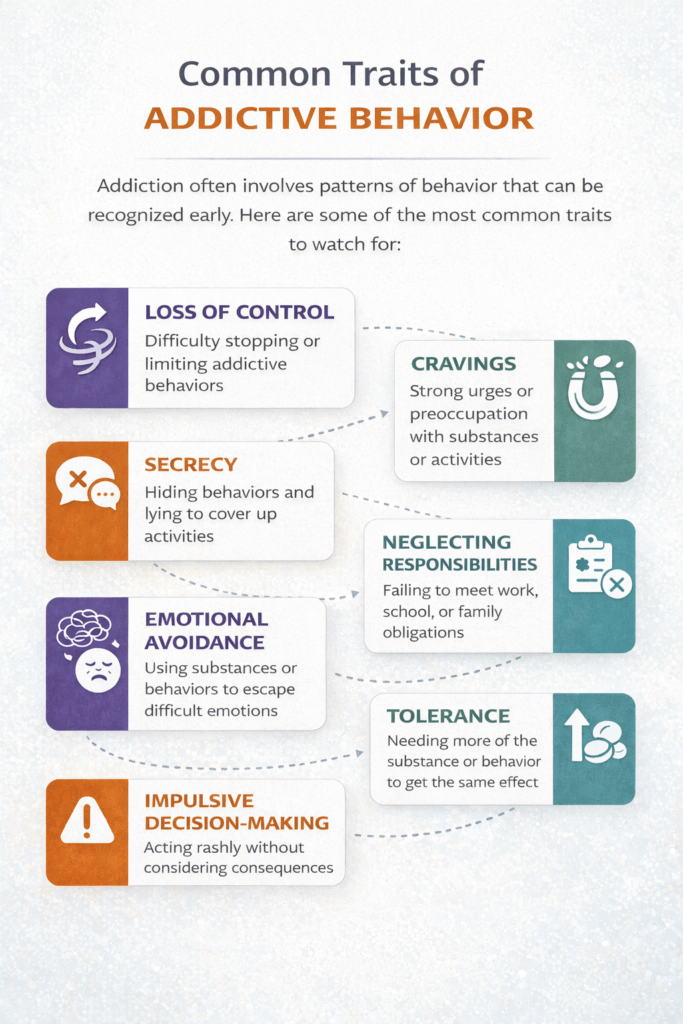
1. Loss of Control Over Use
One of the hallmark traits of addiction is difficulty controlling use despite intentions to cut back or stop. Individuals may set limits but repeatedly exceed them, often feeling frustrated or ashamed afterward. This loss of control reflects neurological changes in reward and impulse systems rather than a simple lack of willpower.
2. Craving and Preoccupation
Persistent thoughts about substances or behaviors are another common trait. Cravings can be triggered by stress, environments, emotions, or reminders associated with prior use. Over time, mental energy becomes increasingly focused on obtaining, using, or recovering from the substance, crowding out other priorities.
3. Continued Use Despite Consequences
Many individuals continue using even when faced with negative effects such as relationship conflict, declining work performance, legal trouble, or health issues. This pattern reflects how addiction alters decision-making circuits, reducing sensitivity to long-term consequences while amplifying short-term reward signals.
4. Increasing Tolerance or Escalation
Tolerance occurs when the same amount of a substance produces less effect over time, leading individuals to increase the quantity or frequency. This biological adaptation can accelerate dependence and heighten risk, especially when combined with decreased awareness of impairment.
5. Emotional Avoidance and Coping Patterns
Addiction frequently develops as a coping strategy for stress, trauma, anxiety, loneliness, or depression. Substances or behaviors may initially provide relief, distraction, or numbing. Over time, reliance on them can replace healthier coping skills, reinforcing a cycle in which distress triggers use and use worsens distress.
6. Secrecy and Isolation
Another common trait is withdrawal from supportive relationships or hiding behaviors. Individuals may minimize use, avoid questions, or become defensive when confronted. Isolation often strengthens addiction because it reduces accountability and limits access to supportive perspectives.
7. Short-Term Thinking
Addiction tends to narrow focus toward immediate relief rather than long-term well-being. Decisions may prioritize temporary comfort over health, safety, or goals. This shift is linked to changes in brain regions responsible for judgment, planning, and impulse control.
Why Recognizing Traits Matters
Identifying common traits does not diagnose addiction, but it can signal when further assessment is needed. Early recognition allows:
- Faster access to treatment
- Prevention of medical complications
- Reduced stigma through understanding
- Earlier behavioral intervention
When these traits are viewed through a clinical and compassionate lens, they become signals for support, not reasons for judgment.
Final Insight
Addiction is not defined by weakness, morality, or character flaws—it is defined by patterns. The common traits associated with addiction reflect underlying changes in brain function, coping systems, and behavioral regulation. By learning to recognize these signs early, individuals and communities can respond with empathy, structure, and evidence-based care. Awareness is often the first step toward recovery, because what we can identify, we can begin to address.
Self-Management Strategies to Prevent the Common Traits of Addiction
Preventing addiction is not only about avoiding substances—it’s about strengthening the internal skills that protect against the behavioral and emotional patterns that often lead to dependence. The common traits of addiction, such as loss of control, cravings, emotional avoidance, and impulsive decision-making, typically develop gradually. Self-management strategies help individuals recognize these tendencies early and build resilience before they escalate. By learning to regulate emotions, monitor behaviors, and create structured routines, people can reduce vulnerability and maintain healthier coping systems. Prevention, in this sense, is an active process of self-awareness and intentional living rather than simple avoidance.
1. Build Awareness of Triggers and Patterns
Self-awareness is the foundation of prevention. Many addictive patterns begin when individuals respond automatically to stress, boredom, or emotional discomfort. Keeping a daily log of moods, triggers, and reactions helps identify patterns that might otherwise go unnoticed. Once triggers are recognized, individuals can prepare healthier responses rather than react impulsively.
2. Strengthen Emotional Regulation Skills
Difficulty managing emotions is a major risk factor for addiction. Developing skills such as deep breathing, grounding exercises, physical activity, and structured problem-solving can help reduce reliance on substances for relief. Emotional regulation does not eliminate stress—it increases tolerance to it, reducing the need for escape behaviors.
3. Create Structure and Routine
Unstructured time often increases vulnerability to impulsive decisions. Establishing consistent sleep schedules, meal times, work periods, and recreational activities creates stability and reduces opportunities for risky behavior. Predictable routines also strengthen discipline, which counteracts the loss of control commonly seen in addiction.
4. Practice Delay and Decision Skills
One effective strategy for preventing impulsive behavior is the pause technique: when an urge arises, wait 10–15 minutes before acting. During that time, evaluate consequences, alternatives, and goals. This simple delay strengthens executive control and weakens automatic reactions. Over time, practicing pause-and-reflect builds resilience against cravings and compulsive tendencies.
5. Strengthen Healthy Coping Alternatives
Replacing risky behaviors with constructive ones reduces the likelihood of developing addictive patterns. Examples include exercise, creative hobbies, social connection, journaling, spiritual practices, or learning new skills. The key principle is substitution—when healthy alternatives are readily available, the brain becomes less reliant on harmful coping methods.
6. Maintain Supportive Accountability
Self-management does not mean managing everything alone. Sharing goals with trusted friends, mentors, or professionals increases motivation and accountability. External feedback often helps people recognize subtle changes they might miss on their own. Support systems act as protective factors that interrupt early risk patterns.
7. Monitor Early Warning Signs
Prevention improves when individuals track subtle behavioral changes, such as:
- Increasing secrecy
- Avoiding responsibilities
- Rationalizing unhealthy habits
- Increased irritability or isolation
Recognizing these signs early allows for immediate course correction before patterns become entrenched.
Why Self-Management Works
Self-management strategies are effective because they target the same systems addiction affects: decision-making, emotional regulation, motivation, and behavioral control. Strengthening these capacities builds psychological resilience, which reduces susceptibility to compulsive patterns. Instead of relying solely on external restrictions, individuals develop internal skills that support consistent, healthy choices.
Final Insight
Preventing addiction is not about perfection—it’s about preparation. When individuals cultivate awareness, structure, emotional regulation, and accountability, they create a strong internal framework that protects against the common traits associated with addiction. These skills do more than prevent problems; they enhance overall well-being, confidence, and life satisfaction. In this way, self-management becomes both a prevention strategy and a pathway to long-term personal growth.
Family Support Strategies to Prevent the Common Traits of Addiction
Families play a crucial role in preventing addiction long before any substance use or compulsive behavior becomes a clinical concern. Research consistently shows that strong family relationships, open communication, and stable environments act as protective factors against the development of addictive patterns. The common traits associated with addiction—such as impulsivity, emotional avoidance, secrecy, and loss of control—often emerge gradually, and families are uniquely positioned to recognize early changes. By fostering supportive structures and modeling healthy coping, families can reduce vulnerability and help individuals build the resilience needed to navigate stress, peer pressure, and emotional challenges without turning to harmful behaviors.
1. Build Open and Judgment-Free Communication
Open communication is one of the strongest preventive tools families have. When individuals feel safe discussing stress, mistakes, or emotional struggles without fear of punishment or shame, they are less likely to hide behaviors or seek unhealthy coping methods. Active listening, validation, and calm responses encourage honesty and trust. Conversations should focus on understanding rather than interrogating, which strengthens connection and reduces secrecy—one of the early traits linked to addiction risk.
2. Model Healthy Coping and Emotional Regulation
Family members teach coping skills through example. When adults handle stress with patience, problem-solving, or self-care rather than avoidance or impulsive reactions, they demonstrate effective emotional regulation. Children and young adults often internalize these patterns and apply them in their own lives. Modeling calm responses during conflict or stress helps prevent emotional dysregulation, which is a major risk factor for addictive behaviors.
3. Establish Structure, Boundaries, and Consistency
Predictable routines and clear expectations promote stability and self-discipline. Families can reduce risk by setting consistent rules about responsibilities, curfews, screen time, and substance exposure. Boundaries should be firm but fair, emphasizing guidance rather than punishment. Consistency teaches accountability and helps individuals develop internal control, which counters the impulsivity and disorganization often seen in addiction.
4. Reinforce Positive Behaviors and Strengths
Recognition of effort, progress, and strengths builds confidence and motivation. When families focus on what individuals are doing well, they reinforce positive identity and self-worth. Strong self-esteem reduces susceptibility to peer pressure, risky experimentation, and maladaptive coping strategies. Praise does not need to be dramatic—consistent acknowledgment of growth can have a lasting protective effect.
5. Encourage Healthy Social and Recreational Activities
Structured activities such as sports, the arts, volunteering, or community involvement provide purpose and a sense of belonging. Families who support participation in meaningful activities help reduce boredom, isolation, and idle time—conditions that can increase vulnerability to addictive behaviors. Positive environments also expose individuals to supportive peer groups that reinforce healthy choices.
6. Recognize Early Warning Signs Together
Families can proactively watch for subtle changes such as withdrawal from activities, declining motivation, increased irritability, secrecy, or sudden changes in sleep patterns. Addressing these signs early through supportive conversations and professional guidance can prevent escalation. Early response is one of the most effective protective strategies.
7. Promote Shared Problem-Solving
Teaching collaborative problem-solving helps individuals develop decision-making skills and confidence. When families work together to resolve conflicts or challenges, they demonstrate that difficulties can be addressed constructively rather than avoided. This reduces reliance on escapist or numbing behaviors that sometimes lead to addiction.
Why Family Prevention Strategies Work
Family environments shape emotional development, coping styles, and behavioral patterns. Supportive households strengthen protective factors such as resilience, self-regulation, and social competence. These skills directly counter the traits associated with addiction, making individuals less vulnerable to compulsive or risky behaviors even when faced with stress or temptation.
Final Insight
Preventing addiction does not require perfect parenting or flawless families—it requires presence, consistency, and compassion. When families create environments grounded in communication, structure, and encouragement, they provide a powerful buffer against the development of addictive traits. Over time, these supportive foundations help individuals build the confidence, skills, and emotional balance needed to make healthy choices and maintain long-term well-being.
Community Resource Strategies to Prevent the Common Traits of Addiction
Preventing addiction is not solely an individual or family responsibility—it is a community-wide effort. Social environments strongly influence behavior, coping skills, and access to support. Communities that intentionally design resources to strengthen resilience, reduce stressors, and promote healthy lifestyles can significantly decrease the likelihood that individuals develop the common traits associated with addiction, such as impulsivity, isolation, emotional avoidance, and loss of control. When prevention is embedded into schools, workplaces, healthcare systems, and public programs, communities become protective ecosystems that help individuals thrive rather than struggle alone.
1. Accessible Education and Early Prevention Programs
Education is a cornerstone of prevention. Communities can reduce the risk of addiction by providing evidence-based programs that teach emotional regulation, decision-making, and stress management skills. School-based prevention initiatives, youth mentorship programs, and public health campaigns help individuals understand how addiction develops and how to respond to peer pressure or stress. Early education builds awareness before risky patterns begin.
2. Safe and Supportive Environments
Safe physical and social environments lower exposure to high-risk situations. Community centers, recreational facilities, libraries, and youth programs provide structured spaces where people can connect, learn, and grow. These environments reduce isolation and boredom—two factors strongly linked to the development of addictive behaviors.
3. Mental Health and Counseling Access
Untreated stress, trauma, anxiety, or depression often underlie addictive patterns. Communities that provide affordable, stigma-free mental health services help individuals address emotional challenges before they turn to harmful coping strategies. Mobile clinics, telehealth programs, and integrated care models expand access and remove barriers to support.
4. Skill-Building and Employment Opportunities
Purpose and stability are powerful protective factors. Job training programs, career counseling, and continuing education opportunities give individuals a sense of direction and accomplishment. When people feel capable and valued, they are less likely to seek escape through substances or compulsive behaviors.
5. Positive Social Networks and Peer Support
Communities that foster connection help prevent isolation, which is a major risk factor for addiction. Peer mentoring groups, faith-based programs, volunteer organizations, and recreational clubs create social bonds that reinforce healthy norms. Positive peer influence can shape decision-making and provide encouragement during stressful periods.
6. Public Policies That Reduce Risk
Local policies can also support prevention by limiting access to harmful substances, promoting safe prescribing practices, and funding prevention initiatives. Policies that prioritize access to treatment, education, and harm reduction create structural support systems that reinforce healthy behaviors across populations.
7. Early Identification and Outreach Systems
Communities that train teachers, healthcare providers, coaches, and employers to recognize early warning signs—such as behavioral changes, declining performance, or social withdrawal—can intervene sooner. Outreach teams and referral networks ensure that individuals receive help before patterns become severe.
Why Community Prevention Strategies Work
Addiction risk is shaped by social determinants such as housing stability, education access, employment opportunities, and social support. Community resources address these broader influences, strengthening protective factors across entire populations. When communities invest in prevention, they reduce healthcare costs, improve public safety, and enhance overall quality of life.
Final Insight
Preventing addiction is most effective when communities act together. By providing education, support services, safe environments, and opportunities for growth, communities can counter the traits that often precede addiction and replace them with resilience, connection, and purpose. In this way, prevention becomes not just a program or policy, but a shared commitment to building environments where healthy choices are supported, encouraged, and sustainable.
Frequently Asked Questions
Here are some common questions:
1. What are common traits of addiction?
Common traits include patterns such as loss of control, cravings, secrecy, emotional avoidance, impulsivity, neglect of responsibilities, and continued behavior despite negative consequences. These traits reflect changes in brain reward, motivation, and decision-making systems.
2. Do these traits mean someone is addicted?
Not always. Many people may show one or two traits temporarily due to stress, trauma, or mental health challenges. Addiction is typically identified when multiple traits persist over time and interfere with daily functioning.
3. Why do these traits develop?
They often develop because repeated substance use or compulsive behaviors alter brain chemistry, particularly systems involved in reward, stress response, and impulse control. Environmental stressors, genetics, and emotional coping difficulties also contribute.
4. What is the earliest warning sign?
Loss of control or increasing preoccupation with a substance or behavior is often one of the earliest indicators. People may think about it frequently or struggle to limit use even when they intend to.
5. Are cravings a sign of addiction?
Cravings can be a sign, but they are not diagnostic on their own. Strong, persistent cravings combined with behavioral changes and negative consequences are more concerning indicators.
6. Why is secrecy common in addiction?
Secrecy often develops as a protective response. Individuals may hide behaviors to avoid judgment, conflict, or consequences. Unfortunately, secrecy can also worsen addiction by reducing accountability and support.
7. How does impulsivity relate to addiction?
Impulsivity increases the likelihood of acting without considering consequences. Addiction can strengthen impulsive tendencies by weakening brain systems responsible for self-control and long-term planning.
8. Can someone exhibit these traits without using substances?
Yes. Behavioral addictions—such as gambling, gaming, or compulsive shopping—can produce the same traits because they affect similar brain pathways involved in reward and reinforcement.
9. Do these traits worsen over time?
They often do if left unaddressed. Addiction tends to be progressive, meaning patterns like tolerance, preoccupation, and neglect of responsibilities may intensify without intervention or support.
10. Can these traits be reversed?
Yes. With treatment, therapy, lifestyle changes, and social support, many of these traits can improve significantly. The brain has the capacity to heal and adapt, especially when intervention occurs early.
11. What should someone do if they recognize these traits in themselves?
Self-awareness is a positive first step. Speaking with a healthcare professional, counselor, or support group can help determine whether the traits indicate risk and what strategies might help address them.
12. Why is understanding these traits important?
Recognizing these traits helps people identify risk early, reduce stigma, and seek help sooner. Awareness turns vague concerns into actionable insight, which can prevent addiction from progressing.
Conclusion
Recognizing the common traits of addiction is a powerful step toward reducing harm and supporting long-term well-being. When these patterns are identified early, they can be addressed through education, healthy coping skills, supportive relationships, and professional guidance before they escalate into more serious problems. Awareness transforms uncertainty into insight, allowing people to replace judgment with understanding and action. Ultimately, learning to recognize these traits does more than explain addiction—it equips individuals and support systems with the knowledge needed to intervene early, strengthen resilience, and foster healthier life paths.
Video: You Might Be Addicted and Not Know It #warning #facts #health