The Power of Mirroring in Addiction
Addiction often disrupts the ability to communicate effectively, leading to patterns of misunderstanding, defensiveness, and emotional disconnection. In this environment, individuals may feel unheard, invalidated, or isolated—both from others and from themselves. The power of mirroring offers a way to interrupt these patterns by fostering intentional listening, emotional awareness, and mutual understanding. By reflecting thoughts, … Read more
Infidelity and Addiction

Infidelity and addiction are two deeply complex and often interconnected challenges that can significantly impact individuals and relationships. Both involve patterns of secrecy, emotional disconnection, and impaired decision-making, which can lead to profound breaches of trust. When they occur together, the effects are often intensified, leaving partners feeling hurt, confused, and uncertain about the future. … Read more

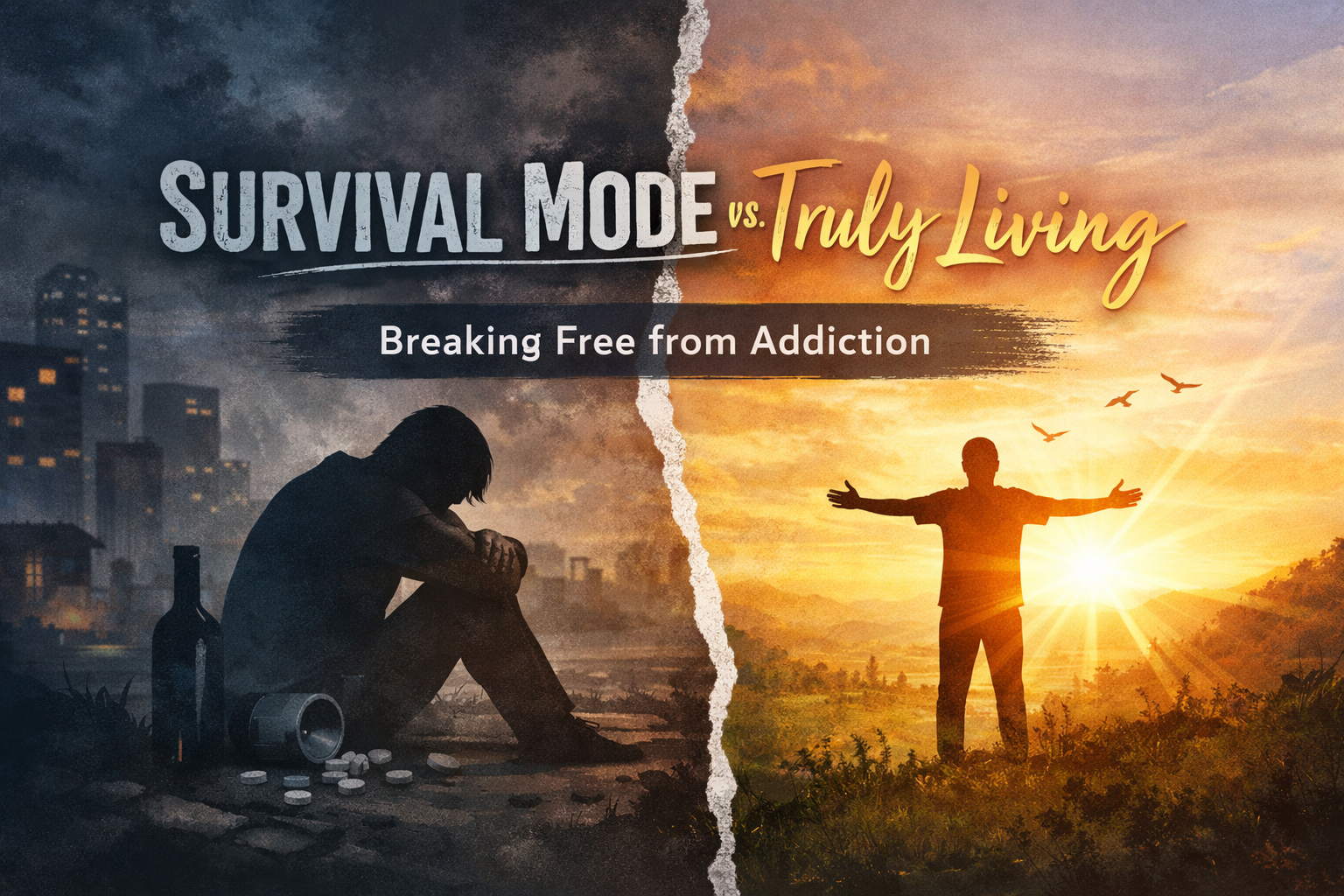
Addiction Survival vs. Truly Living

Addiction can keep individuals stuck in a constant state of survival mode, where the focus is on avoiding discomfort, managing urges, and simply making it through the day. In this state, life often becomes reactive, restricted, and disconnected from a deeper sense of purpose or meaning. Over time, this way of functioning may begin to … Read more

The First Stage of Sobriety

The first stage of sobriety is a critical turning point in the recovery journey. It is the period immediately following the decision to stop using substances, where individuals begin adjusting physically, emotionally, and mentally to a new way of living. This phase is often marked by discomfort, uncertainty, and vulnerability, as old coping mechanisms are … Read more

Addiction Recovery for Couples

Addiction has a profound impact on intimate relationships, often disrupting trust, communication, and emotional safety. For couples, the effects can be especially complex, as both partners are influenced by patterns of substance use, whether directly or indirectly. Recovery, therefore, is not just an individual process—it becomes a shared journey that requires intentional effort, mutual accountability, … Read more

30-Day Break the Dopamine Cycle

In a world filled with constant stimulation, many individuals find themselves caught in a cycle of instant gratification driven by frequent dopamine spikes. Activities such as social media use, binge-watching, and impulsive habits can overstimulate the brain’s reward system, making it harder to focus, stay motivated, and find satisfaction in everyday life. A 30-day dopamine … Read more

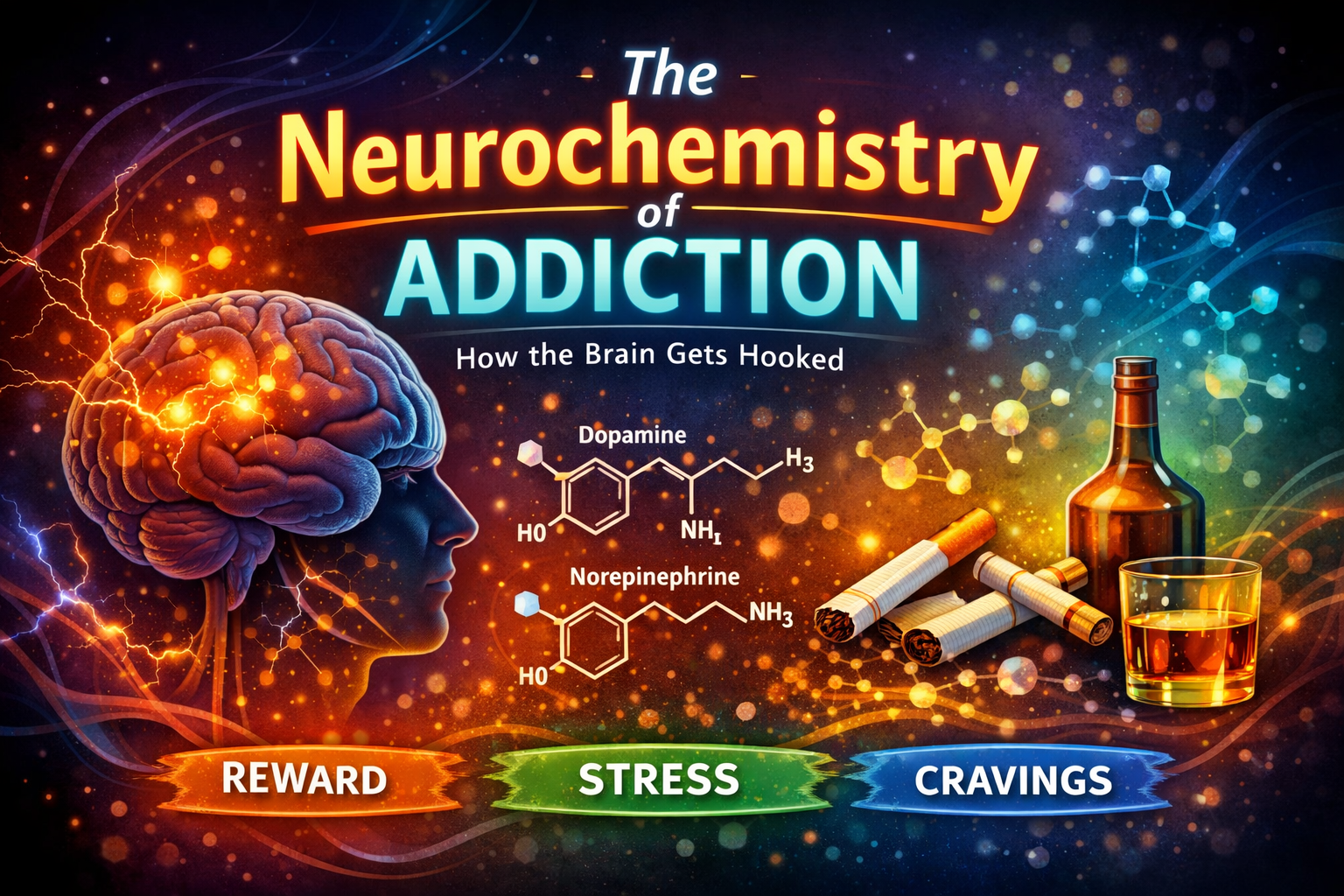
Neurochemistry of Addiction

The neurochemistry of addiction provides a scientific framework for understanding why substance use can become compulsive and difficult to control. Rather than being a simple matter of choice, addiction involves significant changes in brain function—particularly in systems that regulate reward, motivation, and stress. Neurotransmitters such as dopamine and norepinephrine play central roles in reinforcing substance … Read more

Psilocybin for Nicotine Addiction

Nicotine addiction remains one of the leading causes of preventable disease and death, with many individuals struggling to quit despite available treatments. Traditional approaches—such as nicotine replacement therapy, medications, and behavioral counseling—often yield limited long-term success, highlighting the need for innovative interventions. In recent years, psilocybin, a naturally occurring psychedelic compound, has emerged as a … Read more

Vulnerability of Addiction

Addiction is often viewed through a narrow lens—something that affects only certain individuals under specific circumstances. However, a deeper understanding reveals a more complex truth: addiction is rooted in universal human experiences. The need for relief, comfort, connection, and escape is something everyone shares. These natural drives, combined with the brain’s tendency to reinforce behaviors … Read more

The Psychology of “Cool” Culture

“Cool” culture is often presented as harmless—an ever-changing set of trends, styles, and attitudes that define what is socially desirable. But beneath the surface, it carries a powerful influence over behavior, particularly when acceptance and identity become tied to meeting those expectations. In many cases, the pressure to appear confident, effortless, or admired can push … Read more