Therapy and Addiction Healing

Therapy plays a significant role in helping people heal from addiction. It’s more than just talking about feelings. It’s about learning new ways to cope, rebuilding relationships, and gaining practical tools that help break the cycle of substance use. If you’re wondering what therapy for addiction really looks like, you’re not alone. Here’s a detailed … Read more

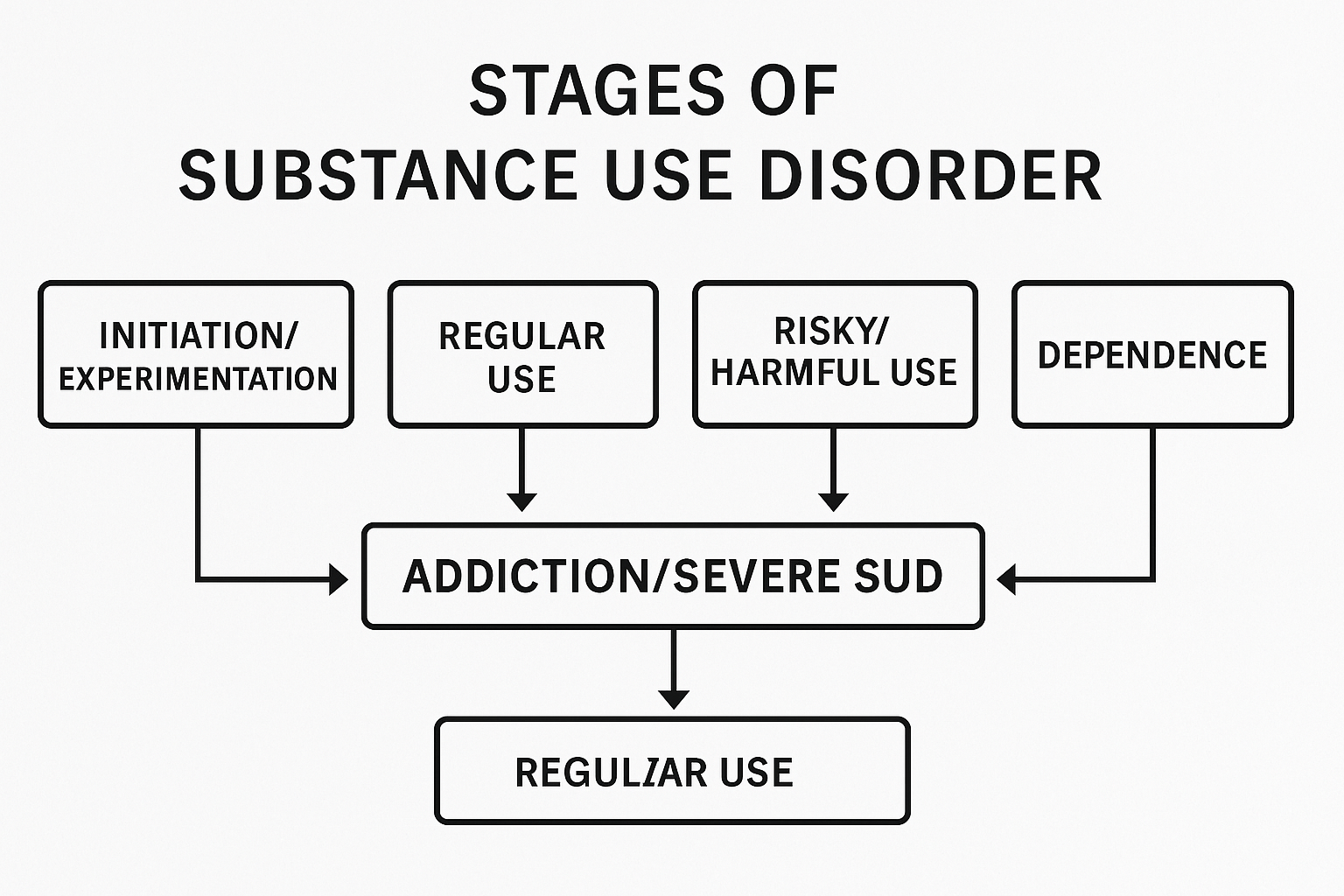
Staging Paradigm of SUD

The SUD staging paradigm provides a structured framework by dividing substance use into distinct phases, from initial experimentation to full recovery. This approach allows interventions, family support, and community resources to be tailored to the individual’s current stage, ensuring that prevention efforts target early use, treatment focuses on dependence or severe SUD, and relapse-prevention supports … Read more

Self-Efficacy and Social Support

Self-efficacy—the belief in one’s ability to handle challenges—is crucial in addiction recovery, boosting confidence to resist cravings, improving self-esteem, and reducing loneliness by fostering social connections. When integrated into treatment through goal-setting, cognitive-behavioral techniques, and peer support, it enhances motivation and outcomes. However, overconfidence can lead to relapse risk, self-blame, and resistance to help, and … Read more

Forced Withdrawal Factors

Withdrawal motivation during forced addiction treatment is influenced by social support, addiction severity, and stress perception. Strong social support can ease distress and boost engagement, while severe addiction and high stress levels often reduce motivation and increase resistance. Understanding these factors is key to providing humane, person-centered care that supports long-term recovery, even in compulsory … Read more

Refusing to offer MAT

Denying MAT access is considered both negligent and a civil rights violation under laws such as the ADA. Facilities may face consequences for restricting or withholding MAT. Families can advocate through legal action and support networks, with help from legal aid and peer advocates. The High Cost of Denying MAT: Why Withholding Evidence-Based Addiction Treatment … Read more

Resilience in Addiction Therapy

Resilience in addiction therapy helps individuals overcome cravings, relapse, and emotional struggles. Self-management, family support, and community resources provide stability, coping skills, and essential recovery tools, fostering lasting sobriety and growth. Building Resilience in Addiction Therapy: A Key to Long-Term Recovery Resilience in addiction therapy is the ability to cope with and overcome challenges related … Read more

National Addiction Treatment

National initiatives to address addiction are crucial in tackling the growing public health crisis. These programs aim to improve treatment, prevention, and recovery, especially in response to the opioid epidemic. While they have led to changes in policies and laws, challenges such as funding and stigma persist. For success, these initiatives must be adapted and … Read more

Mutual Aid Group Therapy

Mutual aid groups in addiction therapy offer peer support, emotional connection, and structure. Benefits include reduced stigma and shared experiences, but drawbacks may involve group dynamics and a lack of professional guidance. Ethical concerns include confidentiality and dependence. These groups promote accountability, family support enhances communication, and community resources link individuals to treatment. While vital … Read more

Mind Over Matter Strategies

Mind-over-matter strategies are vital in addiction recovery, focusing on mental discipline and emotional regulation to overcome cravings and sustain sobriety. Techniques such as mindfulness, cognitive-behavioral therapy (CBT), and visualization empower individuals to reframe their thoughts and build resilience. Self-management tools, such as goal setting and journaling, promote personal accountability, while mindful family communication fosters support. … Read more

Prediction of Addiction Resolution

Predicting addiction resolution involves recognizing key recovery behaviors, utilizing effective treatment modalities, and fostering supportive environments. Evidence-based therapies, medication-assisted treatments, and peer support programs are crucial for success. Family involvement through education and healthy boundaries, combined with community resources like treatment centers and support groups, provides essential support for long-term recovery. Together, these elements create … Read more