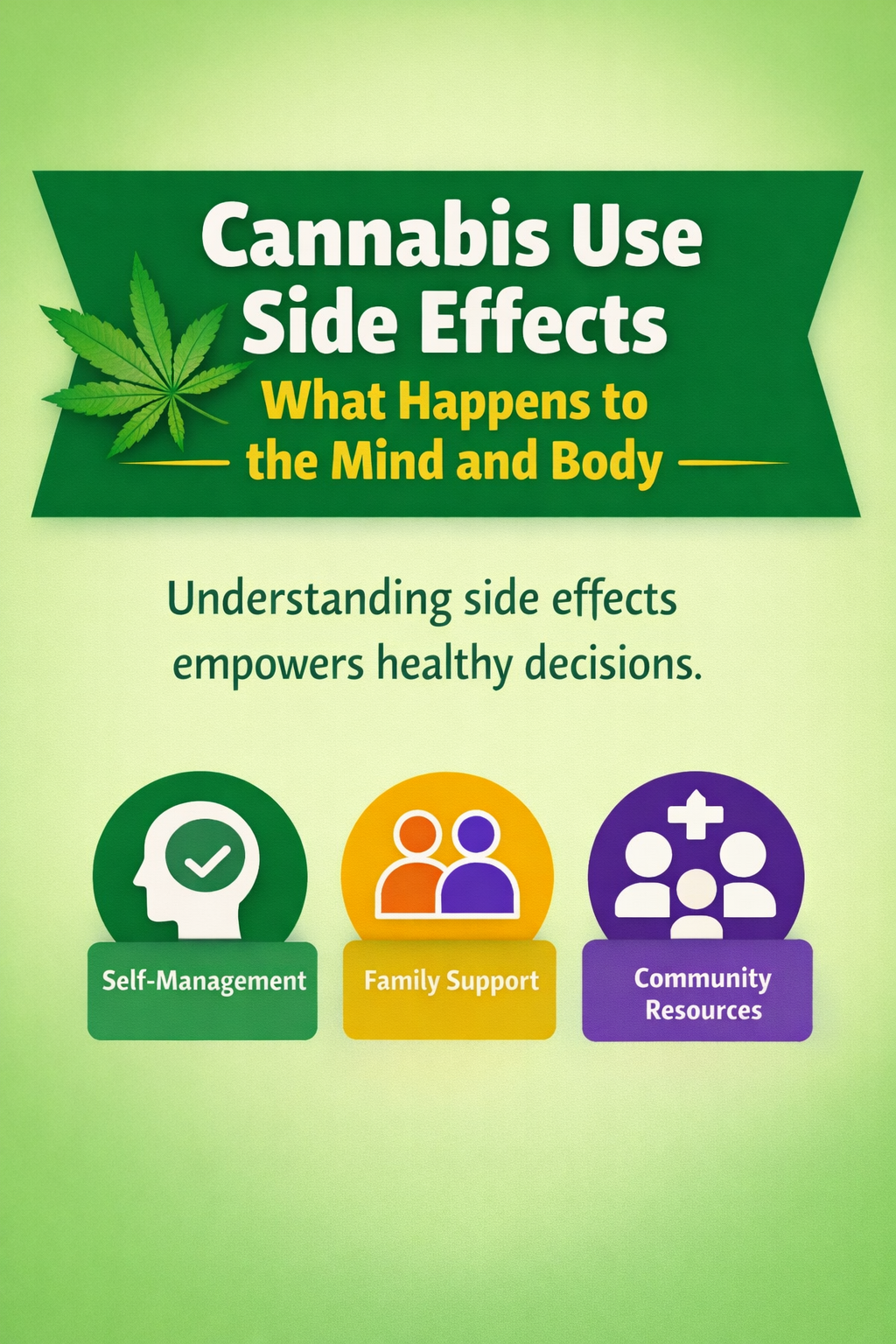
As cannabis use becomes more widely accepted, understanding its potential side effects is increasingly important. Although often viewed as low-risk, frequent or long-term use can cause physical, psychological, and behavioral effects such as memory impairment, anxiety, digestive issues, reduced motivation, and dependence. Managing these effects requires more than individual effort alone and is most effective when supported by self-management strategies, family involvement, and community resources that promote early intervention and healthier long-term outcomes.
Cannabis Use Side Effects: What Happens to the Mind and Body
Cannabis use has become increasingly common due to changing laws, social acceptance, and medical availability. While many people view cannabis as harmless, regular or heavy use can produce significant side effects that impact physical health, mental functioning, and daily performance. Understanding these effects is essential for making informed decisions and recognizing when use may be becoming harmful.
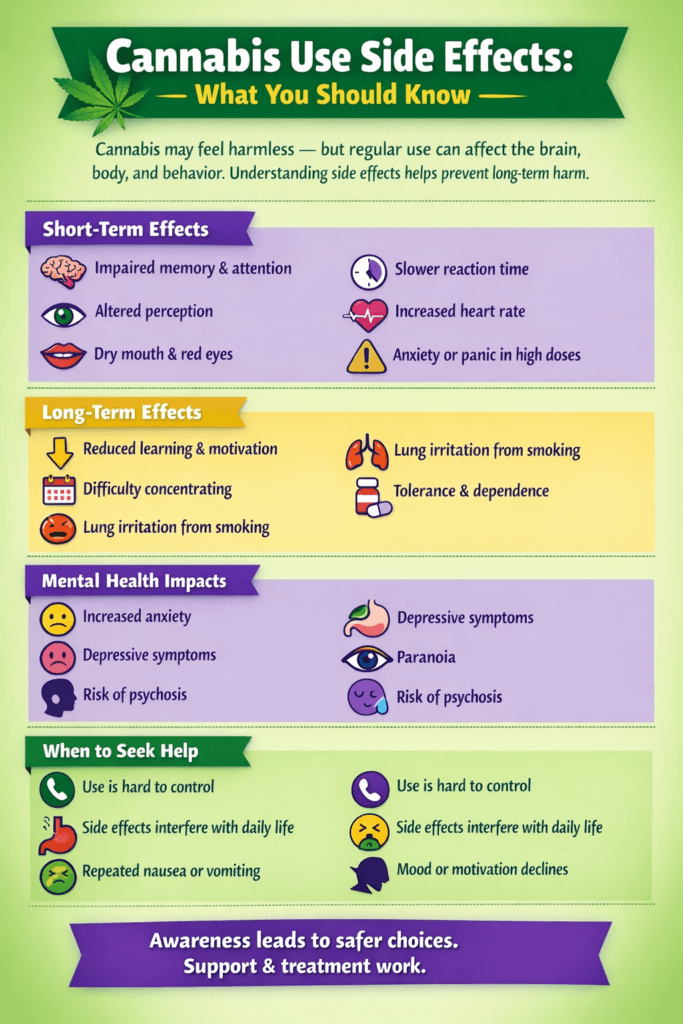
Short-term side effects often appear soon after consumption. Cannabis can alter perception, slow reaction time, impair memory, and reduce coordination. These effects increase the risk of accidents, especially when driving or operating machinery. Many users also experience increased heart rate, dry mouth, red eyes, and intensified sensory experiences. In higher doses, cannabis may cause confusion, paranoia, or panic reactions.
Long-term use can lead to more persistent health concerns. Frequent cannabis consumption may impair attention, learning, and motivation, particularly when use begins during adolescence, a critical period for brain development. Chronic smoking of cannabis can irritate the lungs, leading to coughing and breathing difficulties similar to tobacco exposure. Some individuals develop tolerance, requiring higher doses to achieve the same effect.
Mental health effects are also important. Regular cannabis use has been associated with increased risk of anxiety, depression, and, in vulnerable individuals, psychosis. Dependence can develop, known as Cannabis Use Disorder, where a person struggles to control use despite negative consequences. Withdrawal symptoms such as irritability, sleep disturbances, and cravings may appear when stopping.
Although cannabis may have medical benefits for specific conditions, it is not risk-free. Responsible use, awareness of dosage, and understanding personal vulnerability factors are key to reducing harm. When cannabis begins interfering with relationships, work, mental health, or motivation, professional support can help restore balance and prevent long-term consequences.
As research continues to evolve, public education remains essential. Knowing the side effects of cannabis empowers individuals, families, and communities to approach its use with caution, awareness, and informed decision-making.
Cannabis Use and Gastrointestinal Problems: What You Need to Know
Cannabis is widely used for both recreational and medical purposes, often promoted for its ability to reduce nausea or improve appetite. However, frequent or long-term cannabis use can also contribute to gastrointestinal (GI) problems that are often overlooked. Understanding how cannabis affects the digestive system is important for recognizing symptoms early and preventing serious complications.
In the short term, cannabis interacts with the body’s endocannabinoid system, which helps regulate digestion, appetite, and gut motility. This interaction can cause transient effects, such as dry mouth, increased appetite, delayed gastric emptying, or mild nausea, in some users. While many people experience hunger after cannabis use, others may feel bloated or uncomfortable due to slowed digestive movement.
With chronic or heavy use, more serious GI effects may develop. One of the most significant conditions linked to long-term cannabis use is Cannabinoid Hyperemesis Syndrome (CHS). CHS causes repeated episodes of severe nausea, vomiting, and abdominal pain. Many individuals with CHS find temporary relief through hot showers, but symptoms return unless cannabis use stops. Because CHS is still underrecognized, people may undergo multiple medical tests before receiving the correct diagnosis.
Long-term cannabis use may also contribute to acid reflux, gastritis, irregular bowel movements, and abdominal cramping. Changes in appetite regulation can lead to overeating, fluctuations in weight, or poor nutritional habits. Smoking cannabis can further irritate the digestive tract indirectly by increasing inflammation and affecting overall gut health.
Dependence on cannabis can make it difficult to stop use even when GI symptoms appear. Withdrawal may temporarily cause reduced appetite, stomach discomfort, or nausea, which can reinforce continued use and delay recovery.
While cannabis can have legitimate medical uses, persistent digestive symptoms should never be ignored. Recognizing the connection between cannabis and gastrointestinal health allows individuals to seek proper medical evaluation and make informed choices. Reducing or stopping cannabis use often leads to significant improvement in GI function and overall well-being.
Self-Management Strategies to Handle Cannabis Use Side Effects
As cannabis use becomes more socially accepted, many individuals underestimate its potential side effects. While some people use cannabis to relax or manage symptoms such as pain or anxiety, repeated or heavy use can create unwanted physical and psychological reactions. Learning self-management strategies can help individuals reduce harm, recognize warning signs, and maintain control over their well-being.
One of the most effective self-management approaches is monitoring personal use patterns. Keeping track of how often, how much, and why cannabis is used helps identify triggers such as stress, boredom, or social pressure. Recognizing these patterns allows individuals to set realistic limits and prevent escalation toward dependence.
Dose and frequency control is another key strategy. Using lower-potency products, spacing use, and avoiding daily consumption can reduce side effects such as memory impairment, anxiety, tachycardia, or digestive discomfort. Avoiding mixing cannabis with alcohol or other substances further lowers health risks.
Supporting the body through healthy lifestyle habits also plays a major role. Staying hydrated, eating balanced meals, exercising regularly, and maintaining consistent sleep schedules help stabilize mood, energy, and digestive function. Deep-breathing exercises, meditation, and stress-management techniques can reduce the urge to rely on cannabis for emotional relief.
For individuals experiencing unpleasant effects such as anxiety, nausea, or paranoia, grounding techniques and calm environments can help restore balance. If gastrointestinal symptoms or repeated vomiting occur, discontinuing cannabis and seeking medical evaluation is essential, as this may indicate Cannabinoid Hyperemesis Syndrome.
Finally, seeking support early prevents problems from worsening. Talking with healthcare providers, counselors, or peer support groups can help individuals develop personalized reduction plans. When stopping use, preparing for mild withdrawal symptoms such as irritability or sleep disruption makes the process more manageable.
Self-management does not mean facing challenges alone. With awareness, practical strategies, and timely support, individuals can reduce cannabis-related side effects, protect their health, and maintain long-term well-being.
Family Support Strategies to Manage Cannabis Use Side Effects
As cannabis use becomes more common, families increasingly play an important role in recognizing and responding to its side effects. While some individuals use cannabis without immediate problems, others experience physical discomfort, emotional changes, or behavioral shifts that affect family life. Supportive family strategies can reduce harm, encourage healthy decisions, and promote recovery when cannabis use begins causing difficulties.
A key family strategy is open, non-judgmental communication. Creating a safe space to discuss cannabis use helps reduce secrecy and defensiveness. Asking curious, caring questions rather than giving lectures encourages honest conversation about side effects such as anxiety, low motivation, memory problems, or digestive issues.
Education is equally important. When families understand how cannabis affects the brain and body, they are better prepared to recognize warning signs. Learning about conditions such as Cannabis Use Disorder or Cannabinoid Hyperemesis Syndrome allows families to respond early instead of waiting for crises to emerge.
Families can also support healthy daily routines. Encouraging regular meals, hydration, physical activity, and consistent sleep helps build resilience to side effects. Participating in stress-reducing activities, such as walking, hobbies, or mindfulness practices, provides alternatives to substance use for coping.
Another helpful approach is setting clear and respectful boundaries. Families can agree on expectations related to substance use in the home, driving safety, or school and work responsibilities. Consistent boundaries communicate care while reinforcing accountability.
When side effects persist or worsen, connecting with professional support becomes essential. Families can assist with scheduling medical appointments, attending counseling sessions, or exploring peer recovery groups. Early involvement often prevents progression to dependence or serious health complications.
Family support does not mean controlling behavior; it means offering guidance, stability, and compassion. When families work together with understanding and informed strategies, individuals experiencing cannabis side effects are more likely to seek help, reduce risks, and move toward healthier long-term outcomes.
Community Resource Strategies to Manage Cannabis Use Side Effects
As cannabis use becomes more widespread, communities play an essential role in reducing harm and supporting individuals who experience side effects. While some people manage cannabis use without major concerns, others develop physical discomfort, emotional changes, or dependency patterns that require external support. Community-based resources help bridge the gap between individual effort and professional treatment.
One of the most effective community strategies is public education and awareness programs. Local health departments, schools, and nonprofit organizations can provide workshops and informational campaigns about cannabis effects on mental health, memory, digestion, and motivation. Increased awareness helps individuals recognize side effects early and seek assistance before problems escalate.
Accessible healthcare services are another crucial resource. Community clinics, urgent care centers, and primary care practices trained in substance use screening can identify cannabis-related symptoms such as anxiety, sleep disruption, or repeated nausea. Early medical evaluation is especially important for conditions like Cannabinoid Hyperemesis Syndrome, where stopping cannabis use is necessary for recovery.
Communities also benefit from peer support networks. Recovery groups, youth mentorship programs, and family education sessions provide shared understanding and reduce stigma. People are more likely to change behavior when they feel supported rather than judged.
School and workplace initiatives further strengthen community response. Student counseling services, employee assistance programs, and wellness workshops can offer confidential guidance for individuals struggling with concentration issues, low motivation, or stress linked to cannabis use.
Finally, local policy and harm-reduction services contribute to safer environments. Safe-driving campaigns, crisis hotlines, and referral systems to treatment centers ensure individuals can access help when side effects become disruptive or dangerous.
Community support transforms cannabis-related health challenges from private struggles into shared public health efforts. When education, healthcare, peer connection, and early intervention work together, individuals are better equipped to manage side effects, reduce risks, and maintain long-term well-being.
Frequently Asked Questions
Here are some common questions:
1. What are the most common short-term side effects of cannabis?
Short-term effects often include impaired memory, slowed reaction time, altered perception, increased heart rate, dry mouth, red eyes, and occasional anxiety or panic, especially with high doses.
2. Can cannabis affect mental health?
Yes. Regular cannabis use has been linked to increased anxiety, depressive symptoms, paranoia, and, in vulnerable individuals, a higher risk of psychosis.
3. Does cannabis use affect motivation?
Frequent use may reduce motivation, energy, and goal-directed behavior, a phenomenon sometimes referred to as “amotivational effects.”
4. Can cannabis cause dependence?
Yes. Some individuals develop Cannabis Use Disorder, meaning they struggle to control use despite negative consequences. Withdrawal symptoms may include irritability, sleep problems, and cravings.
5. How does cannabis affect memory and learning?
Cannabis can interfere with short-term memory, attention, and learning, especially when use begins during adolescence while the brain is still developing.
6. Are there digestive side effects from cannabis?
Yes. Some users experience nausea, stomach discomfort, or changes in appetite. Chronic heavy use may cause Cannabinoid Hyperemesis Syndrome, marked by repeated vomiting.
7. Does smoking cannabis affect the lungs?
Smoking cannabis can irritate the lungs, leading to coughing, bronchitis-like symptoms, and breathing discomfort.
8. Can cannabis increase heart rate?
Yes. Cannabis temporarily raises heart rate, which may be risky for individuals with heart conditions.
9. Is medical cannabis free from side effects?
No. Even medically prescribed cannabis can cause side effects. Proper dosing and medical supervision are important.
10. When should someone seek help for cannabis side effects?
Help is recommended if cannabis use is difficult to control, interferes with daily life, causes repeated nausea or vomiting, worsens mental health, or affects work, school, or relationships.
Conclusion
Cannabis-related side effects can affect not only individuals but also families and communities. Addressing these challenges successfully depends on coordinated strategies that empower personal responsibility, strengthen family communication and boundaries, and provide community-based education and healthcare support. Self-monitoring and healthy lifestyle practices help individuals regain control; family support provides stability and encouragement; and community resources ensure access to professional guidance when needed. When these three levels of support work together, the risks associated with cannabis use can be reduced, recovery becomes more attainable, and overall well-being is strengthened.
Video: Nobody Warns You About These Effects #shorts #cannabis #health