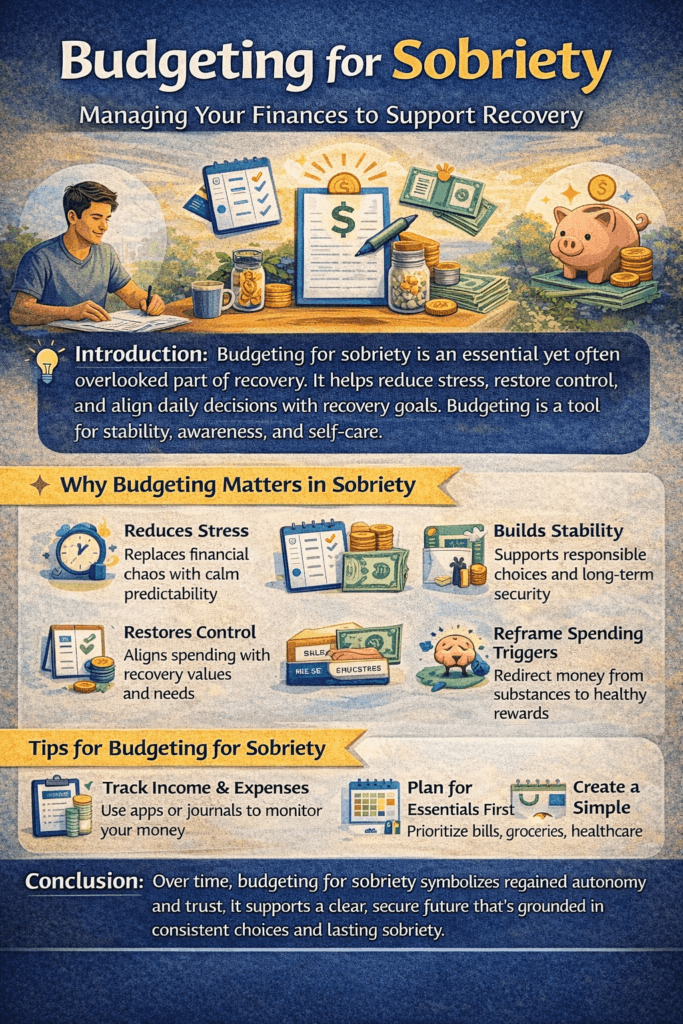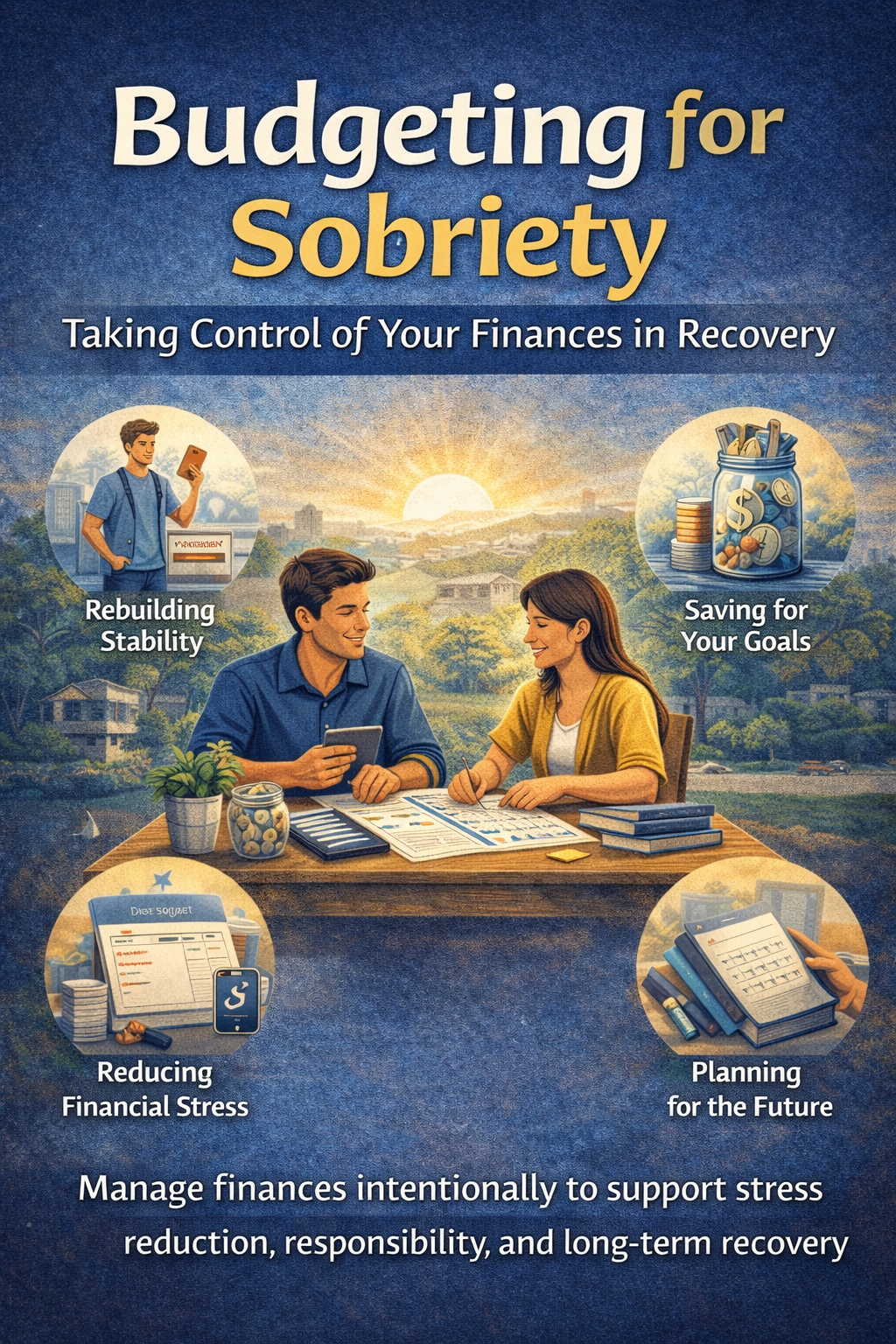
Budgeting for sobriety is an essential yet often overlooked part of recovery. Substance use can quietly disrupt financial stability through impulsive spending, unmet obligations, and long-term consequences. As individuals enter sobriety, managing money intentionally becomes a practical way to reduce stress, restore control, and align daily decisions with recovery goals. Budgeting is not about punishment or restriction—it is a tool for stability, awareness, and self-care.
Budgeting for Sobriety: Reclaiming Financial Control in Recovery
Budgeting for sobriety is a powerful yet often overlooked part of the recovery journey. Substance use can quietly drain finances through daily purchases, impulsive spending, missed work, and long-term consequences. When sobriety begins, many individuals notice an immediate financial shift—often for the first time in years. Learning to manage money intentionally becomes both a practical skill and a form of self-care.
At its core, budgeting for sobriety is about awareness. Recovery invites honesty, including facing financial realities without shame. Tracking income and expenses helps individuals see where money was previously lost and where it can now support health, stability, and growth. This clarity replaces financial chaos with a sense of control and progress.
Budgeting also supports relapse prevention. Financial stress is a common trigger for substance use, and unplanned spending can quickly recreate feelings of overwhelm. A simple, realistic budget reduces anxiety by creating predictability. Knowing bills are covered, essentials are prioritized, and savings are growing reinforces emotional safety and confidence.
One important shift in sobriety budgeting is reframing spending priorities. Money once used for substances can now be redirected toward recovery-supportive needs such as therapy, transportation, healthy food, fitness, hobbies, or sober social activities. This reallocation strengthens motivation by making the benefits of sobriety tangible and rewarding.
Budgeting for sobriety also emphasizes small wins over perfection. Many individuals in recovery are rebuilding credit, paying off debt, or learning financial skills for the first time. Progress may be gradual, but consistency matters more than speed. Simple tools—like weekly check-ins, envelope systems, or budgeting apps—help create structure without overwhelm.
Importantly, budgeting is not about restriction or punishment. It is about empowerment and self-trust. Each responsible financial choice reinforces the belief that life is manageable without substances. Over time, budgeting becomes a symbol of regained autonomy—proof that sobriety supports not only health and relationships, but long-term stability and opportunity.
Budgeting for sobriety transforms money from a source of stress into a tool for recovery. By aligning financial choices with sober values, individuals build a future rooted in clarity, responsibility, and hope—one intentional decision at a time.
Self-Management Strategies for Budgeting for Sobriety
Budgeting for sobriety is more than a financial task—it is a self-management skill that supports emotional stability, accountability, and long-term recovery. Substance use often disrupts financial awareness and impulse control, making intentional money management a critical part of rebuilding daily life. Self-management strategies help individuals move from financial chaos to clarity without shame or overwhelm.
The first strategy is building financial awareness through tracking. Recording income, expenses, and spending patterns creates a clear picture of where money goes. This awareness reduces denial and impulsivity, two common challenges in early recovery. Even simple tracking methods—such as weekly check-ins or basic budgeting apps—can restore a sense of control.
Creating a values-based budget is another key strategy. Rather than focusing on restrictions, individuals are encouraged to align their spending with sober priorities, such as housing stability, food security, healthcare, transportation, and recovery supports. Redirecting money once spent on substances toward meaningful goals reinforces motivation and makes sobriety feel rewarding.
Impulse control is central to sobriety budgeting. Using pause-and-plan techniques—such as waiting 24 hours before nonessential purchases or consulting a written budget—helps interrupt automatic spending behaviors. These small delays strengthen decision-making skills and reduce stress-driven financial choices.
Setting realistic, flexible goals supports sustainability. Attempting to fix debt, savings, and spending habits all at once can be overwhelming. Self-management focuses on small, achievable steps, such as paying one bill consistently, saving a modest amount each week, or reducing unnecessary expenses gradually. Progress builds confidence and momentum.
Routine also plays an important role. Scheduling regular money check-ins—weekly or biweekly—prevents avoidance and keeps finances manageable. When budgeting becomes part of a routine, it feels less intimidating and more predictable, reducing anxiety and emotional reactivity.
Emotional awareness is equally important. Financial stress can trigger shame, fear, or cravings. Practicing self-compassion and emotional regulation helps individuals respond thoughtfully rather than reactively. Budgeting mistakes are treated as learning opportunities, not failures.
Support systems strengthen self-management. Seeking guidance from financial counselors, recovery coaches, peer groups, or trusted family members can add accountability and reduce isolation. Budgeting does not have to be done alone to be effective.
Self-management strategies transform budgeting for sobriety into a tool for empowerment. With awareness, structure, emotional regulation, and support, financial stability becomes another pillar of recovery, reinforcing independence, confidence, and long-term well-being.
Family Support Strategies for Budgeting for Sobriety
Budgeting for sobriety is not only an individual responsibility—it is often strengthened by informed, compassionate family support. Substance use can disrupt trust, finances, and communication within families, making money a sensitive topic during recovery. When families approach budgeting as a recovery-support tool rather than a control mechanism, they help create stability, accountability, and emotional safety.
One of the most important family strategies is shifting the focus from blame to rebuilding. Financial difficulties related to past substance use can bring up resentment or fear, but recovery-oriented budgeting emphasizes forward progress. Families who frame budgeting as a shared effort to restore stability—rather than a reminder of past mistakes—reduce shame and encourage openness.
Clear, respectful communication about finances is essential. Families can support sobriety by having calm, planned conversations about expenses, responsibilities, and goals. Avoiding surprise confrontations or emotional reactions helps keep discussions productive. When expectations are transparent, budgeting becomes a collaborative process rather than a source of conflict.
Families also play a key role in setting healthy financial boundaries. Support does not mean unlimited access to money or rescuing someone from every financial consequence. Boundaries around lending, shared expenses, or spending expectations protect both the individual in recovery and the family system. These boundaries promote responsibility while maintaining trust.
Practical support with structure can be especially helpful in early recovery. Families may assist by helping create a simple budget, setting up bill reminders, or supporting regular financial check-ins. This guidance provides structure without taking over autonomy, reinforcing skill-building rather than dependence.
Encouragement and positive reinforcement are powerful motivators. Acknowledging progress—such as paying bills on time, saving money, or avoiding impulsive spending—helps rebuild confidence. Recognition reinforces the connection between sobriety and improved financial stability.
Education is another vital strategy. When families understand how financial stress can trigger cravings or emotional overwhelm, they are more likely to respond with empathy. Learning about recovery-focused budgeting helps families align their support with relapse-prevention goals.
Finally, families should also care for their own financial and emotional well-being. Seeking family counseling, financial education, or peer support helps loved ones process stress and avoid burnout. A stable family environment supports individual recovery more effectively.
Family support strategies transform budgeting for sobriety into a shared foundation for healing. Through communication, boundaries, encouragement, and education, families help turn financial stability into a symbol of progress—reinforcing trust, responsibility, and long-term recovery.
Community Resource Strategies for Budgeting for Sobriety
Budgeting for sobriety is far more sustainable when individuals are supported by accessible, recovery-informed community resources. Financial instability is a common and powerful stressor in early and long-term recovery, and without support, money-related anxiety can increase relapse risk. Community-based strategies help individuals build financial skills, reduce overwhelm, and restore stability in a structured, nonjudgmental way.
One of the most impactful community strategies is access to financial education and counseling. Many nonprofits, community health centers, and recovery organizations offer free or low-cost budgeting classes, credit counseling, and money management workshops. These services help individuals learn foundational skills such as expense tracking, debt management, and savings planning—often for the first time—without shame or pressure.
Recovery-integrated support programs also play a key role. Some outpatient treatment centers, peer recovery organizations, and reentry programs include financial literacy as part of holistic recovery care. When budgeting support is integrated into recovery services, individuals are better equipped to manage stressors that can undermine sobriety.
Community resources also provide accountability and structure. Peer-led groups, recovery meetings, or financial coaching programs offer regular check-ins that reinforce budgeting habits. Knowing that someone will review progress or provide encouragement increases follow-through and reduces avoidance, which is common when finances feel overwhelming.
Employment and workforce development programs are another critical component. Job training services, vocational rehabilitation, and recovery-friendly employers help individuals improve income stability, thereby strengthening budgeting efforts. Reliable employment makes financial planning more predictable and supports long-term independence.
Technology-based community resources expand access further. Online budgeting tools, virtual financial coaching, and recovery-focused apps allow individuals to engage with budgeting support privately and flexibly. These options are especially valuable for those with transportation barriers, busy schedules, or concerns about stigma.
Faith-based organizations and community nonprofits also contribute by offering practical assistance paired with education, such as help with utilities, food access, and transportation, as well as budgeting guidance. This combination addresses immediate needs while supporting long-term financial skill-building.
Finally, community education helps reduce stigma around both addiction and financial struggle. When budgeting for sobriety is normalized as a recovery skill—not a punishment for past behavior—individuals feel empowered to seek help early and consistently.
Community resource strategies transform budgeting for sobriety into a shared support system rather than a solitary challenge. Through education, structure, accountability, and compassionate access to services, communities help individuals rebuild financial stability—strengthening recovery, resilience, and long-term wellbeing.
Frequently Asked Questions
Here are some common questions:
What is budgeting for sobriety?
Budgeting for sobriety is the intentional management of money to support recovery, reduce stress, and promote stability. It involves tracking income and expenses, prioritizing essentials, and aligning financial decisions with sober goals and values.
Why is budgeting important in recovery?
Financial stress is a common trigger for relapse. Budgeting creates predictability, reduces anxiety, and replaces financial chaos with structure. It supports emotional regulation and reinforces responsible decision-making in sobriety.
How does substance use affect finances?
Substance use often leads to impulsive spending, neglected bills, debt accumulation, and lost income. These financial consequences can persist into recovery if not addressed intentionally.
Is budgeting for sobriety about restricting spending?
No. Budgeting is about awareness and empowerment, not punishment. It helps individuals make conscious choices about how money is spent, ensuring that spending supports health, stability, and recovery rather than impulsive habits.
What are the first steps to budgeting in sobriety?
The first steps include tracking income and expenses, identifying essential costs, and creating a simple, realistic budget. Starting small reduces overwhelm and builds confidence.
How can budgeting help with relapse prevention?
Budgeting reduces stress, limits impulsive behavior, and removes financial triggers associated with substance use. Redirecting money toward recovery-supporting activities reinforces sobriety.
What if someone has debt from active addiction?
Debt is common and manageable. Recovery-focused budgeting emphasizes gradual progress, realistic repayment plans, and seeking support from financial counselors or community resources when needed.
How often should someone review their budget?
Weekly or biweekly check-ins are recommended. Regular reviews prevent avoidance, allow adjustments, and help budgeting feel manageable rather than overwhelming.
Can family members be involved in sobriety budgeting?
Yes, when done respectfully. Families can offer structure, accountability, and encouragement while maintaining healthy boundaries. Open communication reduces conflict and builds trust.
Are budgeting apps helpful in sobriety?
Yes. Budgeting apps, spreadsheets, or envelope systems can simplify tracking and reduce cognitive load. The best tool is the one that feels easy and sustainable.
What role do community resources play?
Community resources such as financial literacy programs, recovery-integrated services, nonprofits, and peer support groups provide education, accountability, and access to tools that strengthen financial stability.
What is the long-term benefit of budgeting for sobriety?
Over time, budgeting builds self-trust, independence, and security. It transforms money from a source of stress into a tool for growth, reinforcing long-term recovery and overall well-being.
Conclusion
Over time, budgeting for sobriety becomes more than a financial habit—it becomes a symbol of regained autonomy and trust. By creating structure, reducing financial anxiety, and reinforcing responsible decision-making, budgeting supports both emotional well-being and relapse prevention. With consistency, support, and self-compassion, financial stability grows alongside recovery, helping individuals build a future grounded in clarity, security, and lasting sobriety.
Video: How Budget Control Became My Recovery Tool #sobriety #addictionrecovery #lifeinrecovery