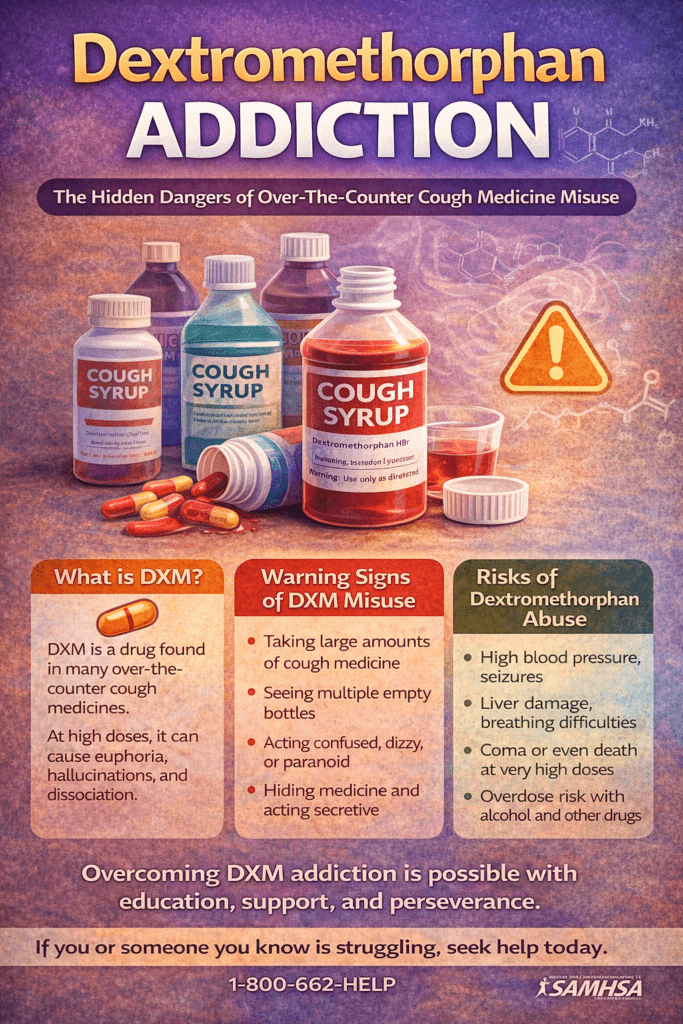
Dextromethorphan (DXM) addiction is a growing concern due to easy access to over-the-counter cough medicines. Although safe at recommended doses, high-dose DXM can cause mind-altering effects, dependence, and health problems. Recovery requires more than stopping use and relies on self-management, family support, and community resources working together to restore stability and long-term well-being.
Dextromethorphan Addiction: When Cough Medicine Becomes a Dangerous Escape
Dextromethorphan (DXM) is a common ingredient in many over-the-counter cough and cold medicines. When taken at recommended doses, it safely suppresses coughing. However, at high doses, DXM affects brain chemistry in ways similar to dissociative and hallucinogenic drugs. This has led to growing misuse, particularly among adolescents and young adults, and increasing cases of dextromethorphan addiction. Understanding how a legal, easily accessible medication can become addictive is essential for prevention, early intervention, and effective recovery.
How Dextromethorphan Works
At normal doses, DXM acts on the brain’s cough center to relieve symptoms. At excessive doses, it blocks NMDA receptors and increases serotonin and dopamine activity, producing euphoria, dissociation, altered perception, and impaired motor control. These psychoactive effects make high-dose DXM appealing for recreational use.
Why DXM Can Become Addictive
Repeated misuse changes brain reward pathways. Users may develop tolerance, needing larger doses to achieve the same high. Over time, psychological dependence forms, where individuals crave the dissociative escape DXM provides. Co-occurring anxiety, depression, trauma, or other substance use disorders increase vulnerability to addiction.
Signs of Dextromethorphan Misuse
Common warning signs include taking large amounts of cough medicine, frequent empty bottles, mixing products to intensify effects, confusion, slurred speech, poor coordination, rapid heartbeat, nausea, hallucinations, and secrecy around medication use.
Health Risks of DXM Addiction
High-dose DXM misuse can cause high blood pressure, heart rhythm disturbances, liver damage (especially when combined with acetaminophen-containing products), seizures, coma, and, in severe cases, death. Combining DXM with antidepressants or alcohol increases the risk of serotonin syndrome or respiratory depression.
Withdrawal and Recovery
Stopping heavy DXM use may cause restlessness, anxiety, insomnia, depression, and cravings. Treatment focuses on behavioral therapy, substance-use counseling, relapse prevention planning, and support groups. Medical supervision is recommended when stopping prolonged heavy use.
Prevention and Safe Use
Preventing DXM addiction includes educating families, monitoring medicine cabinets, teaching teens about risks, and seeking help early if misuse is suspected. Safe medication use always follows label instructions.
Conclusion
Dextromethorphan is safe when used correctly but dangerous when abused. Awareness, early detection, and compassionate treatment help individuals break free from DXM addiction. With proper support, recovery is achievable, and a healthy life balance can be restored.
Self-Management Strategies for Dextromethorphan Addiction Recovery
Recovering from dextromethorphan (DXM) addiction requires more than stopping cough medicine misuse. Because high-dose DXM alters perception, mood, and reward pathways in the brain, individuals often experience cravings, emotional instability, and disrupted sleep during early recovery. Self-management strategies provide daily tools that help individuals control urges, rebuild routines, and prevent relapse. When combined with professional care and support, self-directed recovery skills create long-term stability.
Remove Access to DXM Products
The first step in self-management is eliminating easy access. Clearing medicine cabinets, avoiding stores that sell DXM products alone, and asking trusted family members to monitor medications reduce impulsive misuse.
Track Cravings and Triggers
Keeping a daily log of cravings, stress levels, mood changes, and situations linked to past use helps identify patterns. Recognizing triggers early allows individuals to apply coping strategies before relapse occurs.
Develop Healthy Coping Skills
Many people misuse DXM to escape stress, emotional pain, or boredom. Replacing that escape with healthy coping tools is essential. Deep breathing, mindfulness, physical exercise, music, journaling, and creative hobbies naturally calm the nervous system.
Rebuild Sleep and Daily Structure
DXM misuse often disrupts sleep cycles and motivation. Establishing consistent wake times, meals, exercise routines, and bedtime rituals stabilizes brain chemistry and reduces vulnerability to cravings.
Manage Emotional Regulation
Mood swings, irritability, or anxiety are common in recovery. Techniques such as grounding exercises, meditation, and short breaks during stressful moments help maintain emotional balance.
Use Accountability Supports
Recovery apps, peer support groups, sponsors, or trusted friends provide motivation and prevent isolation. Sharing progress builds confidence and responsibility.
Avoid High-Risk Environments
Staying away from people or places associated with DXM misuse protects early recovery. Planning alternative activities reduces boredom and temptation.
Educate Yourself on Health Risks
Understanding how DXM affects the brain and body reinforces commitment to recovery and strengthens motivation to stay substance-free.
Seek Help When Struggling
Self-management does not mean recovering alone. Contacting therapists, counselors, or crisis services during intense cravings prevents setbacks.
Conclusion
Dextromethorphan addiction recovery is achievable through consistent self-management and strong support systems. By removing access to DXM, tracking triggers, building healthy routines, regulating emotions, and staying accountable, individuals regain control of their lives. Empowered self-management transforms recovery from short-term abstinence into lifelong resilience.
Family Support Strategies for Dextromethorphan Addiction Recovery
Dextromethorphan (DXM) addiction often begins quietly, hidden behind ordinary cough medicine use. Families may not realize misuse is occurring until behaviors, moods, or health begin to change. Because DXM products are legal and easily available, family awareness and involvement become essential for early detection and successful recovery. With education, structure, and compassionate boundaries, families can play a vital role in helping loved ones overcome DXM addiction and rebuild stability.
Learn About DXM Misuse
Families who understand how DXM affects the brain, why it produces a high at large doses, and what withdrawal looks like are better prepared to respond calmly and effectively. Knowledge reduces fear and replaces blame with informed support.
Monitor and Secure Medications
Keeping cough medicines and other potentially misused products locked or monitored prevents easy access and impulsive relapse. Families can regularly check medicine cabinets and dispose of unused products safely.
Encourage Professional Treatment
Families can support loved ones by helping schedule medical or counseling appointments, offering transportation, and encouraging consistent attendance in therapy or recovery programs.
Promote Healthy Routines
Shared meals, consistent sleep schedules, exercise, and family activities help restore structure, reducing stress and craving triggers.
Practice Open Communication
Creating a nonjudgmental environment encourages honesty about cravings or setbacks. Listening without immediate criticism builds trust and keeps recovery conversations ongoing.
Recognize Warning Signs
Sudden behavior changes, secrecy, mood swings, confusion, frequent cough syrup bottles, or isolation may indicate relapse. Early family intervention allows quick provider involvement.
Set Compassionate Boundaries
Families should avoid enabling behaviors such as giving money for substances or ignoring misuse. Clear expectations paired with emotional support protect both recovery progress and family well-being.
Seek Support for the Family
Family members benefit from joining addiction family support groups or counseling to manage stress, learn coping strategies, and avoid burnout.
Conclusion
Dextromethorphan addiction affects entire families, but recovery becomes stronger when loved ones actively participate in healing. Through education, medication safety, healthy routines, open communication, early detection, and compassionate boundaries, families create a stable foundation for long-term recovery. When families and treatment teams work together, lasting change becomes possible.
Community Resource Strategies for Dextromethorphan Addiction Recovery
Dextromethorphan (DXM) addiction is a growing but often overlooked public health issue because the substance is found in legal, over-the-counter cough medicines. Many individuals who misuse DXM struggle in silence, unaware that specialized help is available. Community-based resources bridge the gap between private struggle and professional recovery care. When communities provide education, accessible treatment, and peer connection, individuals gain the support needed to break free from DXM dependence and rebuild healthy lives.
Community Addiction Treatment Centers
Local substance use treatment clinics offer assessments, counseling, outpatient programs, and relapse-prevention services tailored for medication misuse. These centers provide safe spaces for individuals to begin recovery without stigma.
School and Youth Prevention Programs
Because DXM misuse is common among adolescents, school-based education programs, youth outreach initiatives, and counseling services play a critical role in prevention and early intervention.
Peer Recovery Organizations
Peer-led recovery groups and mentorship programs allow individuals to connect with others who understand prescription and over-the-counter medication addiction. Shared experience builds accountability and hope.
Community Mental Health Services
Many individuals misuse DXM to cope with anxiety, depression, or trauma. Community mental health clinics provide therapy and psychiatric care that address underlying emotional drivers of substance use.
Pharmacy and Retailer Partnerships
Community pharmacies and retailers can help prevent DXM misuse by educating customers, limiting bulk purchases, and referring individuals to support services when misuse is suspected.
Family and Public Education Workshops
Community organizations that host medication safety workshops, addiction awareness events, and family education programs help reduce stigma and encourage early help-seeking.
Recovery Housing and Supportive Living
Sober-living environments and transitional housing programs provide structured, substance-free spaces that support early recovery stability.
Crisis and Helpline Services
Local crisis lines, mobile mental health teams, and national substance-use helplines provide immediate support when individuals feel overwhelmed or at risk of relapse.
Conclusion
Dextromethorphan addiction does not have to remain a hidden struggle. When communities offer accessible treatment, education, peer support, mental health services, and stigma-free outreach, recovery becomes achievable for more individuals. Strong community resource networks transform isolated misuse into connected healing — giving people the opportunity to reclaim health, stability, and purpose.
Frequently Asked Questions
Here are some common questions:
What is dextromethorphan (DXM)?
Dextromethorphan is a common ingredient in many over-the-counter cough medicines. At normal doses, it suppresses coughing, but at high doses, it affects brain chemistry and produces mind-altering effects.
Can DXM be addictive?
Yes. When taken in large amounts, DXM can cause euphoria, dissociation, and hallucinations. Repeated misuse can lead to tolerance, cravings, and psychological dependence.
Why do people misuse DXM?
People misuse DXM to experience a temporary escape, relaxation, or altered perception. Teens and young adults are especially at risk because DXM products are easy to obtain.
How does DXM addiction develop?
With repeated high-dose use, the brain adapts to the drug’s effects. Over time, users need larger amounts to get the same high, leading to dependence and compulsive use.
What are common signs of DXM misuse?
Frequent empty cough syrup bottles, taking large doses, confusion, slurred speech, poor coordination, rapid heartbeat, hallucinations, and secretive behavior are common warning signs.
What health risks are linked to DXM addiction?
Risks include high blood pressure, nausea, vomiting, seizures, liver damage (from combination products), breathing problems, coma, and even death at very high doses.
Is DXM withdrawal dangerous?
Withdrawal symptoms may include anxiety, insomnia, restlessness, depression, and cravings. Medical guidance is recommended for heavy or long-term users.
Can DXM be mixed with alcohol or antidepressants?
No. Mixing DXM with alcohol or certain antidepressants can cause respiratory depression or serotonin syndrome, both of which are medical emergencies.
How is DXM addiction treated?
Treatment includes stopping misuse under medical guidance, behavioral therapy, relapse-prevention planning, and peer recovery support. Underlying mental health conditions are also treated.
Can family members help in recovery?
Yes. Families can monitor medication access, encourage treatment participation, and provide emotional support and healthy routines.
Are community resources important for recovery?
Yes. Addiction treatment centers, counseling services, peer support groups, and youth programs strengthen long-term recovery.
Can someone fully recover from DXM addiction?
Absolutely. With proper support, self-management strategies, family involvement, and community resources, long-term recovery is achievable.
How can DXM addiction be prevented?
Education about risks, safe medication storage, monitoring cough medicine use, and early intervention when misuse is suspected helps prevent addiction.
What should someone do if they think they are addicted to DXM?
They should contact a healthcare provider or addiction counselor immediately. Early help greatly improves recovery outcomes.
Conclusion
Dextromethorphan addiction can quietly take hold, but it does not have to define a person’s future. Through self-management practices that build coping skills and structure, family involvement that provides accountability and compassion, and community resources that offer access to treatment and peer connection, recovery becomes achievable and lasting. When individuals are supported at personal, family, and community levels, they gain the strength to overcome dependence, prevent relapse, and move forward with confidence toward a healthier, substance-free life.
Video: