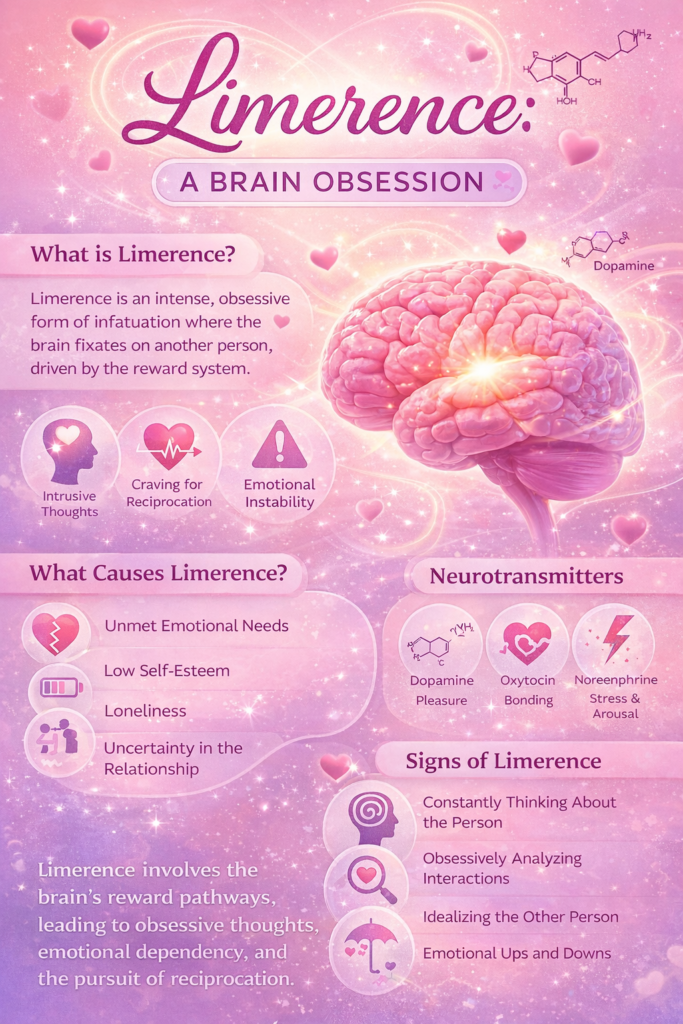
Limerence is a powerful psychological state often mistaken for love, but it is more accurately described as the brain’s obsessive fixation on another person. Driven by the brain’s reward system, limerence involves intense emotional highs, intrusive thoughts, and a deep craving for reciprocation. What makes it so compelling is not just the attraction itself, but the uncertainty and anticipation that fuel it. The brain becomes conditioned to seek emotional “rewards” from even the smallest interactions, creating a cycle that can feel difficult to control. Understanding limerence requires looking beyond romantic ideals and examining the neurological and emotional processes that turn attraction into obsession.
The Brain’s Obsession: Understanding Limerence
Limerence is often mistaken for intense love, but it is actually a powerful psychological state driven by obsession, emotional dependency, and a strong desire for reciprocation. What makes limerence so compelling is how deeply it engages the brain, creating a cycle of craving and emotional highs. Rather than being grounded in mutual connection, limerence is often fueled by uncertainty and the brain’s reward response, making the experience feel both exciting and overwhelming.
At the center of limerence is the brain’s reward system. Small moments of attention or validation trigger dopamine release, reinforcing the desire for more interaction. This creates a loop of anticipation and reward, especially when feelings are unclear or inconsistent. Over time, individuals may experience intrusive thoughts, constantly replaying interactions or imagining possibilities. This mental fixation, combined with idealization and emotional uncertainty, can make the attachment feel stronger than it truly is. While limerence may feel meaningful, it often reflects deeper emotional needs rather than a balanced, reciprocal relationship.
Key Points
- What is Limerence?
- Intense, obsessive form of attraction
- Driven by emotional dependency and desire for reciprocation
- Brain and Reward System
- Dopamine release reinforces emotional highs
- Creates cycles of craving, anticipation, and reward
- Uncertainty strengthens the attachment
- Intrusive Thinking
- Constant thoughts about the person
- Overanalyzing interactions and imagining scenarios
- Interferes with focus and daily life
- Idealization
- Placing the person on a pedestal
- Ignoring flaws and exaggerating positive traits
- Creates a distorted sense of connection
- Role of Uncertainty
- Mixed signals and lack of clarity intensify feelings
- “What if” thinking keeps the brain engaged
- Underlying Emotional Factors
- Loneliness or unmet attachment needs
- Low self-esteem or desire for validation
- Emotional longing projected onto another person
- Similarities to Addiction
- Emotional highs and lows
- Craving for contact or attention
- Withdrawal-like feelings when disconnected
- Moving Toward Balance
- Build self-awareness of thought patterns
- Set boundaries and limit triggers
- Focus on personal growth and real connections
Key Takeaway:
Limerence is not simply love—it is the brain’s response to reward, uncertainty, and emotional need. Understanding it allows individuals to shift from obsession to clarity and develop healthier, more grounded relationships.
Managing Limerence: Self-Management Strategies for Emotional Balance
Limerence—an intense and obsessive form of attraction—can feel overwhelming, affecting thoughts, emotions, and daily life. Although it may resemble love, it is often driven by intrusive thinking, emotional dependency, and the brain’s reward system. Understanding limerence is an important first step, but learning how to manage it is what leads to emotional stability. With intentional self-management strategies, individuals can begin to regain control and create healthier patterns of thinking and feeling.
At the core of managing limerence is self-awareness. Recognizing patterns such as constant thinking, emotional highs and lows, and overanalyzing interactions helps individuals separate feelings from reality. From there, strategies like cognitive reframing, setting boundaries, and redirecting attention can reduce the intensity of the experience. By addressing underlying emotional needs and building a stronger sense of self, individuals can shift from fixation toward clarity and balance.
Key Points
- Self-Awareness
- Recognize obsessive thought patterns and emotional cycles
- Observe feelings without judgment
- Separate perception from reality
- Cognitive Reframing
- Challenge idealized thoughts about the person
- Ask realistic questions about the relationship
- Reduce assumptions and fantasy-based thinking
- Limiting Triggers
- Reduce contact or exposure (e.g., social media)
- Set boundaries around situations that intensify feelings
- Break the reward cycle that reinforces limerence
- Mindfulness and Thought Redirection
- Pause when intrusive thoughts arise
- Shift focus to activities like hobbies or work
- Decrease frequency of obsessive thinking over time
- Emotional Regulation
- Identify unmet needs (validation, connection, self-worth)
- Use journaling, reflection, or therapy to process emotions
- Address feelings directly rather than projecting them
- Building a Strong Sense of Self
- Focus on personal goals, interests, and relationships
- Develop identity outside of the limerent attachment
- Strengthen emotional independence
- Delaying Impulses
- Pause before acting on urges (e.g., texting or checking profiles)
- Create space between impulse and action
- Reduce compulsive behaviors
- Self-Compassion
- Recognize limerence as a natural psychological response
- Avoid shame or self-criticism
- Practice patience during the process
- Seeking Support
- Talk to trusted friends or professionals
- Join supportive communities if needed
- Gain perspective and reduce isolation
Key Takeaway:
Limerence may feel intense and consuming, but it is manageable. With self-awareness, boundaries, and intentional strategies, individuals can move from obsession to clarity and regain control over their emotional well-being.
Supporting from the Outside: Family Strategies for Understanding Limerence
Limerence—an intense and often overwhelming form of attraction—can be difficult for both the individual experiencing it and their family to understand. What may seem like a simple crush can actually involve intrusive thoughts, emotional highs and lows, and deep psychological attachment. For families, recognizing the complexity of limerence is essential in providing meaningful support. With the right approach, families can help their loved ones navigate these feelings with greater clarity and balance.
A key starting point is education and empathy. Understanding that limerence is driven by the brain’s reward system—not just choice or immaturity—allows families to respond with compassion rather than judgment. Creating a safe space for open, non-judgmental communication helps individuals feel understood and less isolated. By gently encouraging realistic thinking, supporting healthy boundaries, and promoting broader sources of fulfillment, families can help reduce the intensity of limerence. With patience, support, and awareness, families play a vital role in guiding their loved one toward healthier emotional patterns and more grounded connections.
Key Points
- Education and Awareness
- Understand limerence as a psychological and neurological experience
- Reduce judgment and increase empathy
- Non-Judgmental Communication
- Listen with curiosity and openness
- Validate feelings without dismissing them
- Encourage honest conversations
- Encouraging Reality-Based Thinking
- Ask reflective questions to challenge assumptions
- Help distinguish between facts and idealization
- Support balanced perspectives
- Promoting Healthy Boundaries
- Discourage behaviors that reinforce obsession (e.g., constant checking)
- Model balanced and healthy habits
- Support gradual reduction of triggers
- Encouraging Diverse Fulfillment
- Engage in hobbies, social activities, and shared experiences
- Help shift the focus away from one person
- Build broader emotional connections
- Addressing Underlying Emotional Needs
- Recognize needs for validation, connection, and self-worth
- Offer consistent support and reassurance
- Strengthen emotional stability
- Support Without Pressure
- Avoid forcing change or dismissing feelings
- Allow space for the individual to process emotions
- Maintain a calm and supportive presence
- Encouraging Professional Help
- Suggest therapy when limerence impacts daily life
- Provide access to tools and coping strategies
- Support long-term emotional growth
- Practicing Patience and Compassion
- Understand that change takes time
- Offer steady support without frustration
- Be compassionate toward both the individual and yourself
Key Takeaway:
Limerence can feel intense and isolating, but family support can make a meaningful difference. Through empathy, understanding, and balanced guidance, families can help transform limerence into an opportunity for emotional growth and healthier relationships.
From Obsession to Awareness: Community Strategies for Understanding Limerence
Limerence—an intense and often overwhelming form of attraction—can feel deeply personal, yet it is a shared psychological experience that many people encounter. Marked by intrusive thoughts, emotional dependency, and a strong desire for reciprocation, limerence is driven by the brain’s reward system and heightened by uncertainty. While individuals and families play important roles in managing these experiences, community resources are essential in helping people understand, normalize, and navigate the complexities of limerence.
Communities play a key role in transforming confusion into awareness. Through education, accessible support, and open dialogue, individuals can better recognize limerence and learn how to manage it. By creating environments that encourage emotional understanding and connection, communities help reduce stigma and provide pathways toward healthier relationships and emotional balance.
Key Points
- Education and Awareness
- Clarify the difference between love and limerence
- Use workshops, campaigns, and programs to increase understanding
- Reduce stigma around emotional experiences
- Accessible Mental Health Services
- Provide therapy, counseling, and community clinics
- Address underlying causes like attachment needs and self-esteem
- Make support approachable and available
- Support Groups and Peer Networks
- Offer shared spaces for discussion and connection
- Validate experiences and reduce isolation
- Encourage learning from others with similar challenges
- Skill-Building Programs
- Teach emotional regulation and mindfulness
- Promote healthy relationship skills and boundaries
- Help manage intrusive thoughts and emotional dependency
- Training for Community Professionals
- Equip educators, social workers, and healthcare providers
- Recognize signs of limerence and emotional distress
- Guide individuals toward appropriate resources
- Digital and Online Resources
- Provide access to online therapy and educational tools
- Offer private and flexible support options
- Reach individuals hesitant to seek in-person help
- Encouraging Open Conversations
- Normalize discussions about attachment and vulnerability
- Create safe, non-judgmental environments
- Promote early awareness and intervention
- Collaboration Across Systems
- Connect mental health, education, and social services
- Ensure consistent support and messaging
- Expand access to comprehensive care
Key Takeaway:
Limerence may feel isolating, but it is not something individuals have to face alone. Through education, support, and community connection, people can move from obsession to understanding—transforming limerence into an opportunity for growth and emotional clarity.
Frequently Asked Questions
Here are some common questions:
1. What is limerence?
Limerence is an intense psychological state of obsessive attraction toward another person, characterized by intrusive thoughts, emotional dependency, and a strong desire for reciprocation.
2. How is limerence different from love?
Love is typically stable, mutual, and based on reality. Limerence, on the other hand, is often unilateral, obsessive, and fueled by uncertainty and idealization rather than true connection.
3. Why is limerence considered a “brain obsession”?
Limerence activates the brain’s reward system, particularly dopamine pathways. This creates a cycle of craving, anticipation, and emotional highs, similar to patterns seen in addiction.
4. What are the main signs of limerence?
- Constant thinking about the person
- Obsessively analyzing interactions
- Emotional highs and lows based on their attention
- Idealizing the person
- Strong need for validation or reciprocation
5. What causes limerence?
Limerence can be influenced by:
- Unmet emotional needs
- Loneliness or isolation
- Low self-esteem
- Attachment styles
- Uncertainty or mixed signals in relationships
6. What role does dopamine play in limerence?
Dopamine is a neurotransmitter linked to pleasure and reward. In limerence, it reinforces the emotional “high” from attention or imagined connection, making the experience feel addictive.
7. Can limerence affect mental health?
Yes. It can lead to anxiety, emotional instability, distraction, and distress, especially when feelings are not reciprocated or are uncertain.
8. Is limerence a form of addiction?
While not officially classified as an addiction, limerence shares many features with it, including cravings, obsessive thinking, and withdrawal-like feelings when contact is absent.
9. How long does limerence typically last?
Limerence can last from months to several years, depending on factors like emotional reinforcement, continued contact, and personal awareness.
10. Can limerence turn into a healthy relationship?
It can, but only if the relationship becomes mutual, grounded in reality, and emotionally balanced. Otherwise, limerence tends to fade or become distressing.
11. How can someone manage or reduce limerence?
- Increase self-awareness of thought patterns
- Limit triggers (e.g., social media, contact)
- Focus on personal growth and activities
- Challenge idealized thinking
- Seek support or therapy if needed
12. Why is uncertainty so powerful in limerence?
Uncertainty keeps the brain engaged and seeking answers, thereby intensifying dopamine release and strengthening the obsessive cycle.
13. What is the key takeaway about limerence?
Limerence is not simply love—it is the brain’s response to reward, uncertainty, and emotional need. Understanding this helps individuals regain control and move toward healthier relationships.
Conclusion
The brain’s obsession with limerence highlights how powerful—and sometimes misleading—our emotional experiences can be. While it may feel like a deep connection, limerence often reflects unmet needs, idealization, and the brain’s response to uncertainty and reward. Recognizing this distinction is essential for regaining emotional balance and clarity. With self-awareness, intentional boundaries, and a focus on personal well-being, individuals can move beyond obsessive patterns toward healthier, more grounded relationships. Ultimately, understanding limerence allows us to shift from being controlled by intense feelings to gaining insight into them—and choosing a more stable and authentic form of connection.
Video: