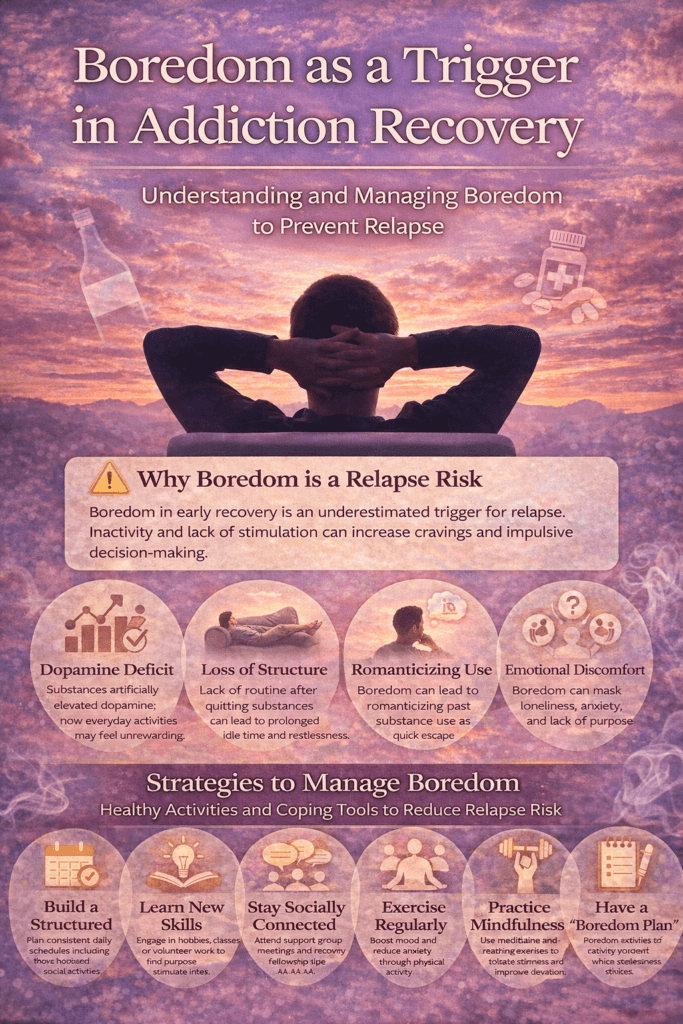
Boredom is one of the most underestimated relapse triggers in addiction recovery. While individuals often prepare for obvious stressors such as conflict, trauma reminders, or social pressure, periods of unstructured time and low stimulation can quietly increase vulnerability. After substance use has artificially elevated dopamine and structured daily routines, early recovery may feel emotionally flat or uneventful. Ordinary activities can seem less rewarding, leading to restlessness, irritability, or romanticizing past substance use. What appears to be simple inactivity often reflects deeper needs—purpose, connection, or emotional processing. Recognizing boredom as a legitimate trigger allows individuals, families, and clinicians to address it proactively rather than dismissing it as harmless.
Boredom as a Trigger in Addiction Recovery: Why Emptiness Can Lead to Cravings
Boredom is one of the most underestimated relapse triggers in addiction recovery. While individuals often prepare for obvious stressors such as conflict, trauma reminders, or social pressure, periods of inactivity and emotional flatness can quietly increase vulnerability. In early recovery, especially, the absence of substance use leaves a void in routine, stimulation, and identity. If that void is not intentionally filled, it can lead to boredom, restlessness, cravings, and impulsive behavior.
From a neurobiological perspective, addiction alters the brain’s reward system. Substances that artificially elevate dopamine levels condition the brain to expect high-intensity stimulation. When substances are removed, everyday activities may initially feel dull or unrewarding. This temporary “dopamine deficit” can make normal life seem uninteresting. Without structured coping strategies, individuals may romanticize past substance use as a quick solution to monotony.
Psychologically, boredom often masks deeper emotional states. What appears as “nothing to do” may actually be unprocessed grief, loneliness, anxiety, or lack of purpose. Substances once provided distraction, escape, or artificial excitement. In recovery, learning to tolerate quiet moments and build meaning becomes essential.
Programs such as Alcoholics Anonymous emphasize service, sponsorship, and structured meeting attendance precisely because engagement reduces idle time. Similarly, involvement in Narcotics Anonymous or other peer recovery communities provides social stimulation and accountability during vulnerable periods.
Addressing boredom requires intentional activity planning. Structured daily schedules, hobbies, exercise routines, educational pursuits, volunteer work, and skill development help rebuild natural reward pathways. Behavioral activation—a therapeutic approach encouraging meaningful action even before motivation fully returns—can be particularly effective.
Importantly, recovery is not about constant busyness but about purposeful engagement. Learning to tolerate stillness without discomfort is part of long-term emotional regulation. Mindfulness practices help individuals sit with low-stimulation states without impulsively seeking escape.
Clinically, boredom should be assessed during relapse prevention planning. Asking patients how they manage unstructured time reveals hidden risk areas. Encouraging diverse, value-driven activities strengthens resilience.
Boredom is not harmless—it is a signal. When recognized and addressed intentionally, it becomes an opportunity to rebuild identity, purpose, and healthy sources of fulfillment.
Self-Management Strategies for Boredom as a Trigger in Addiction Recovery
Boredom is more than “having nothing to do.” In addiction recovery, it can signal vulnerability. When substances once filled time, elevated mood, or created stimulation, their absence can leave emotional and behavioral gaps. Without intentional structure, boredom may lead to restlessness, cravings, and an increased risk of relapse. Self-management strategies help individuals transform idle time into purposeful engagement.
The first strategy is structured scheduling. Recovery thrives on routine. Create a daily plan that includes wake time, meals, work or productivity blocks, exercise, peer support, and relaxation. Even a flexible structure reduces the cognitive drift that often accompanies boredom. A written or digital planner reinforces accountability.
Second, practice behavioral activation. Motivation does not always precede action—often it follows it. Choose small, meaningful activities aligned with personal values: learning a new skill, reading, volunteering, creative projects, or physical training. Engagement stimulates natural dopamine pathways gradually restored after substance use.
Third, identify emotional undercurrents. Boredom frequently masks loneliness, sadness, or anxiety. Journaling, mindfulness meditation, or cognitive restructuring exercises can uncover these underlying states. Programs such as Alcoholics Anonymous encourage daily inventory practices to reflect on thoughts and emotions before they escalate.
Fourth, build a “boredom response plan.” Pre-identify healthy alternatives when restlessness arises: call a sponsor, attend a meeting, take a brisk walk, complete a short workout, engage in a hobby, or listen to recovery-focused podcasts. Having options ready prevents impulsive decisions.
Fifth, strengthen social connections. Isolation amplifies boredom. Participating in peer recovery groups such as Narcotics Anonymous, community activities, or structured group therapy adds stimulation and accountability.
Sixth, develop tolerance for stillness. Recovery includes learning to sit with quiet moments without seeking immediate stimulation. Mindfulness and breathing exercises improve distress tolerance and emotional regulation.
Finally, track patterns. If boredom consistently appears at certain times—weekends, evenings, post-work transitions—adjust routines proactively.
Boredom in recovery is not a weakness; it is a predictable phase of neurological recalibration. With structured self-management strategies, individuals can replace emptiness with meaning, transforming idle moments into opportunities for growth and resilience.
Family Support Strategies for Boredom as a Trigger in Addiction Recovery
Boredom is often overlooked as a relapse trigger, yet it can be particularly powerful in addiction recovery. When substances once structured time, provided stimulation, or masked emotional discomfort, their removal can leave a noticeable void. Families play an important role in helping individuals replace that void with healthy engagement rather than impulsive behavior.
The first family strategy is helping establish structure. Predictable routines reduce idle time and lower the risk of relapse. Families can encourage consistent sleep schedules, shared meals, planned activities, and weekly commitments. Even small traditions—game nights, Sunday dinners, or evening walks—add meaningful structure.
Second, promote healthy engagement without overcontrol. Offer invitations rather than directives. For example, “Would you like to join me at the gym?” is more supportive than “You need to stay busy.” Encouragement fosters autonomy while reducing isolation.
Third, create substance-free recreational environments. Plan outings that reinforce enjoyment without exposure to alcohol or high-risk settings—such as hiking, cooking together, attending community events, or volunteering. Shared activities rebuild natural reward pathways and strengthen relational bonds.
Fourth, recognize emotional layers beneath boredom. Sometimes boredom masks loneliness, frustration, or lack of purpose. Families can practice active listening rather than dismissing concerns with statements like “Just find something to do.” Validating feelings encourages open communication and reduces secrecy.
Encourage continued participation in recovery communities such as Alcoholics Anonymous or Narcotics Anonymous. Offering transportation, childcare support, or schedule flexibility helps maintain consistent engagement during vulnerable periods.
Families should also model balanced living. Demonstrating hobbies, setting goals, and using downtime constructively provide subtle reinforcement of healthy coping.
Importantly, avoid enabling passive avoidance. If boredom leads to excessive screen use, social withdrawal, or risky peer interactions, address concerns calmly and collaboratively.
Boredom in recovery is not merely a lack of activity—it is a transitional phase of rebuilding identity and purpose. When families provide structure, connection, and encouragement, they help transform idle time into meaningful growth, reducing vulnerability to relapse and strengthening long-term recovery.
Community Resource Strategies for Boredom as a Trigger in Addiction Recovery
Boredom is a subtle but significant relapse trigger in addiction recovery. When substances once provided stimulation, structure, or escape, their removal can leave extended periods of unstructured time. Without intentional engagement, boredom may lead to restlessness, cravings, and impulsive decision-making. Community-level strategies play a critical role in reducing this risk by providing structured opportunities for connection, purpose, and meaningful activity.
One essential strategy is expanding access to recovery community centers. These centers provide safe, substance-free environments where individuals can participate in workshops, peer groups, vocational training, and social events. Structured programming reduces idle time and strengthens social accountability.
Peer-support fellowships such as Alcoholics Anonymous and Narcotics Anonymous serve as foundational boredom-reduction resources. Regular meetings, sponsorship roles, and service commitments create purposeful engagement. When individuals transition from attendees to active contributors, their sense of identity and belonging deepens.
Community education and workforce development programs also reduce the risk of relapse. Job training initiatives, GED programs, trade certifications, and continuing education opportunities provide long-term goals and daily structure. Purpose-driven activity restores natural reward systems that substances once artificially stimulated.
Local recreation departments and nonprofit organizations can contribute by offering affordable classes, fitness programs, arts workshops, and volunteer opportunities. Both physical activity and creative expression stimulate healthy dopamine release and reduce emotional stagnation.
Faith-based organizations, civic groups, and volunteer networks further expand engagement options. Mentorship programs and service projects foster meaning beyond personal recovery, reinforcing prosocial identity.
Transportation and accessibility services are equally important. Without reliable access to meetings or programs, boredom-driven isolation increases. Community investment in transportation vouchers, hybrid programming, and flexible scheduling strengthens continuity.
From a systems perspective, collaboration among healthcare providers, social services, schools, and recovery organizations ensures that individuals are not left navigating unstructured time alone. Referral pathways should include not only clinical treatment but also enrichment resources.
Boredom in recovery is not simply inactivity—it is a signal that structure and meaning need reinforcement. When communities provide accessible, engaging, and purpose-oriented resources, they transform idle time into opportunity, reducing vulnerability to relapse and strengthening long-term resilience.
Frequently Asked Questions
Here are some common questions:
1. Why is boredom considered a relapse trigger?
Boredom creates unstructured time and low stimulation, which can increase vulnerability to craving. In recovery, the brain is recalibrating from artificially elevated dopamine levels caused by substance use. When everyday activities feel less rewarding, individuals may feel restless or tempted to seek quick stimulation through substances.
2. Is boredom more common in early recovery?
Yes. Early recovery often involves lifestyle changes, loss of old social circles, and removal of substance-centered routines. Without intentional replacement activities, individuals may feel a noticeable void.
3. Does boredom always mean someone is at high risk of relapse?
Not necessarily. Boredom is common and does not automatically lead to relapse. However, when paired with isolation, depression, or lack of structure, it can increase vulnerability if not addressed.
4. How does addiction change the brain in relation to boredom?
Substance use overstimulates dopamine pathways. After stopping, the brain may temporarily experience reduced sensitivity to natural rewards. This can make normal life feel dull until neural balance gradually restores.
5. What are the warning signs that boredom is becoming risky?
- Increased irritability or restlessness
- Skipping recovery meetings
- Social withdrawal
- Romanticizing past substance use
- Impulsive decision-making
Recognizing these patterns early allows intervention.
6. What can individuals do when boredom hits?
Create a pre-planned response list: exercise, call a sponsor, attend a meeting, engage in a hobby, volunteer, journal, or complete a small productive task. Structured action often reduces craving intensity.
Programs such as Alcoholics Anonymous and Narcotics Anonymous emphasize service and consistent engagement to reduce idle time.
7. Is constant busyness the solution?
No. Recovery is not about filling every moment. It involves building purposeful engagement while also learning to tolerate stillness without distress. Mindfulness and emotional regulation skills help with this balance.
8. Can boredom hide deeper emotions?
Yes. Boredom often masks loneliness, grief, anxiety, or lack of purpose. Exploring these underlying emotions through therapy or journaling strengthens long-term stability.
9. How can families help?
Families can encourage structured activities, invite participation in sober events, maintain predictable routines, and support continued involvement in recovery communities.
10. Does boredom decrease over time in recovery?
Typically, yes. As the brain’s reward system stabilizes and individuals build meaningful routines, hobbies, and relationships, natural enjoyment gradually returns.
Conclusion
Boredom in recovery is not a sign of failure; it is a predictable phase of neurological and psychological adjustment. The brain requires time to recalibrate its natural reward system, and identity must be rebuilt without substances at the center. When boredom is ignored, it can evolve into craving and impulsive behavior. When it is acknowledged, it becomes an opportunity to cultivate structure, meaning, and healthy engagement. Through intentional routines, purposeful activity, supportive relationships, and community involvement, individuals can transform idle time into growth. Addressing boredom proactively strengthens relapse prevention planning and reinforces long-term recovery stability.
Video: This is why you’re bored in recovery #AddictionRecovery #RelapsePrevention