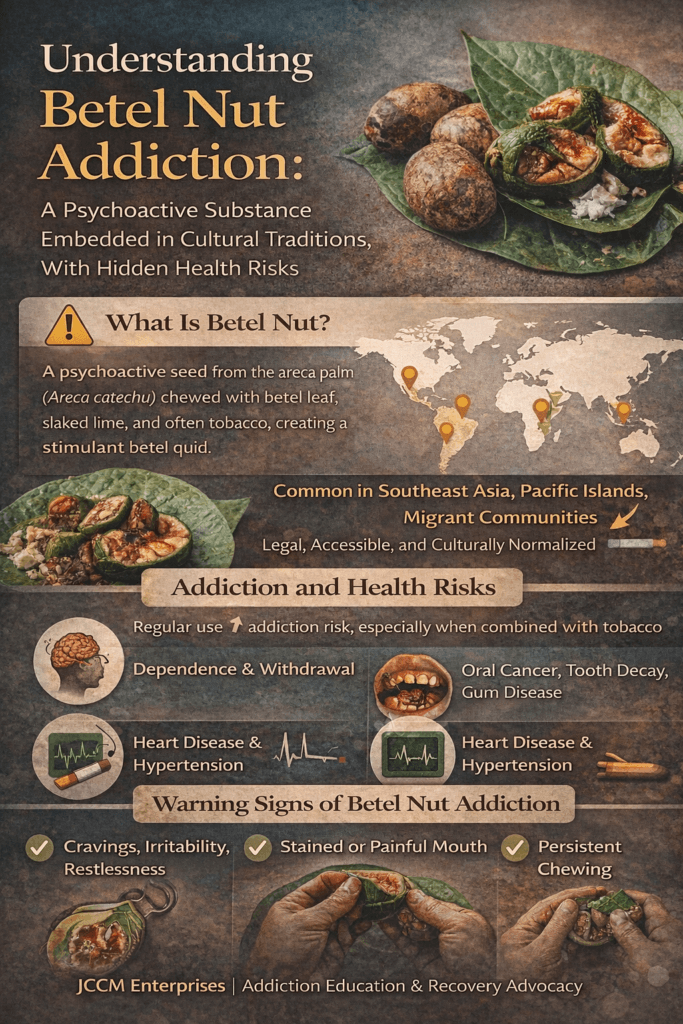
Betel nut, derived from the areca palm (Areca catechu), is one of the most widely used psychoactive substances globally, particularly in parts of South and Southeast Asia and the Pacific Islands. Often chewed alone or combined with betel leaf, slaked lime, and sometimes tobacco, it produces mild stimulant effects such as increased alertness, relaxation, and enhanced sociability. Because its use is deeply embedded in cultural traditions, betel nut is frequently perceived as harmless. However, the active compound arecoline can lead to dependence characterized by cravings, tolerance, and withdrawal symptoms such as irritability and restlessness. Over time, chronic use is strongly associated with serious health consequences, including oral submucous fibrosis and a significantly increased risk of oral cancers.
Betel Nut Addiction: A Hidden Global Public Health Concern
Betel nut, derived from the areca palm (Areca catechu), is one of the most widely used psychoactive substances in the world—particularly in South and Southeast Asia, the Pacific Islands, and parts of East Africa. Often wrapped in betel leaf with slaked lime and sometimes tobacco, the preparation—commonly called betel quid—produces stimulant effects similar to nicotine. Despite its cultural acceptance in many regions, chronic use carries significant addiction and health risks.
The primary psychoactive compound in betel nut, arecoline, stimulates the central nervous system. Users report increased alertness, mild euphoria, relaxation, and enhanced sociability. Over time, however, repeated exposure can lead to tolerance, cravings, and withdrawal symptoms such as irritability, anxiety, headache, and difficulty concentrating—hallmarks of substance dependence.
Betel nut addiction is often underestimated because it is culturally normalized and legally accessible in many countries. Yet long-term use is strongly associated with serious health consequences. These include oral submucous fibrosis, gum disease, tooth decay, and a significantly increased risk of oral and esophageal cancers. When combined with tobacco, the carcinogenic risk increases further.
From a behavioral perspective, betel nut use can become habitual through social reinforcement and daily routines. Family traditions, peer groups, and occupational customs may perpetuate use, making cessation challenging. Like other stimulant addictions, relapse risk increases under stress or social pressure.
Treatment approaches for betel nut dependence are still emerging. Behavioral interventions such as cognitive behavioral therapy, motivational interviewing, and culturally sensitive education programs show promise. Public health campaigns focusing on oral cancer awareness have improved prevention efforts in several regions.
Betel nut addiction illustrates how cultural practices and health risks can intersect. Addressing it requires a balanced approach—respecting cultural traditions while educating communities about evidence-based health risks. With increased awareness, early intervention, and supportive cessation programs, individuals and communities can reduce the long-term harms associated with this often-overlooked addiction.
Betel Nut Addiction in the United States: An Emerging and Overlooked Risk
Betel nut, derived from the areca palm (Areca catechu), is widely used in parts of South and Southeast Asia and the Pacific Islands. In the United States, its use is far less common but persists within certain immigrant communities where cultural traditions continue. Although often viewed as a customary practice rather than a substance use issue, betel nut contains psychoactive compounds that can produce dependence and significant health risks.
The primary active ingredient, arecoline, stimulates the central nervous system and produces mild euphoria, increased alertness, and a sense of relaxation. Over time, repeated use can lead to tolerance, cravings, and withdrawal symptoms such as irritability, restlessness, anxiety, and difficulty concentrating. These features mirror patterns seen in other stimulant-related addictions.
In the U.S., betel nut products may be sold in some specialty markets or imported informally. Some preparations include tobacco, which increases addiction potential and cancer risk. Long-term chewing is strongly associated with oral submucous fibrosis, gum disease, tooth decay, and a markedly elevated risk of oral and esophageal cancers. Healthcare providers may overlook this risk if they are unfamiliar with the practice.
One challenge in addressing betel nut addiction in the United States is under-recognition. Patients may not disclose use because they do not consider it a drug. Clinicians may not routinely screen for it. Culturally sensitive education is critical to avoid stigma while providing accurate health information.
Treatment strategies mirror those used in other behavioral and stimulant addictions. Motivational interviewing, cognitive behavioral therapy, peer support, and oral health monitoring can support cessation efforts. Community outreach within cultural groups is essential to promote awareness and early intervention.
Although betel nut addiction is less visible in the United States compared to nicotine or alcohol use, its health consequences are significant. Increased screening, culturally informed counseling, and public health education can help prevent long-term complications and support healthier communities.
Overdose Signs of Betel Nut (Areca Nut) Use
Betel nut (from Areca catechu) contains the stimulant alkaloid arecoline, which activates the autonomic nervous system. While fatal overdoses are uncommon compared to opioids, acute toxicity can occur, especially with large amounts, concentrated preparations, or when combined with tobacco, alcohol, or other stimulants.
🚨 Acute Toxicity / Overdose Signs
Mild to Moderate Symptoms
- Nausea and vomiting
- Abdominal cramps or diarrhea
- Excessive salivation
- Sweating
- Dizziness or headache
- Increased heart rate (tachycardia)
- Elevated blood pressure
Severe Toxicity Symptoms
- Severe vomiting and dehydration
- Confusion or agitation
- Tremors
- Chest pain
- Irregular heartbeat (arrhythmia)
- Marked blood pressure changes
- Seizures (rare but possible in severe cases)
Because arecoline stimulates muscarinic receptors, some symptoms resemble cholinergic overstimulation (sweating, salivation, GI distress).
⚠️ Chronic Use Risks (Not Overdose, But Serious Health Effects)
- Oral submucous fibrosis (restricted mouth opening)
- Severe gum disease and tooth decay
- Oral and esophageal cancers
- Dependence with withdrawal symptoms (irritability, anxiety, restlessness)
🏥 When to Seek Emergency Care
Call emergency services immediately if someone experiences:
- Chest pain
- Severe confusion
- Seizures
- Difficulty breathing
- Loss of consciousness
Clinical Perspective
In the U.S., betel nut use is under-recognized, especially in immigrant communities. Screening is important because patients may not identify it as a psychoactive substance. Toxicity management is largely supportive (hydration, cardiac monitoring, symptom control).
Betel Nut (Areca Nut) Toxicity: Testing and Treatment
🧪 How Is Betel Nut Toxicity Tested?
1. Clinical Assessment (Most Important)
- History of recent chewing or ingestion
- Quantity used and whether tobacco was included
- Onset and progression of symptoms
- Co-ingestants (alcohol, stimulants, medications)
2. Vital Signs Monitoring
- Heart rate (tachycardia or arrhythmia)
- Blood pressure changes
- Respiratory status
- Temperature
3. Laboratory Testing (Supportive, Not Specific)
There is no widely available routine blood test for arecoline levels in standard U.S. emergency settings. Labs are used to assess complications:
- Basic metabolic panel (electrolytes, dehydration)
- Cardiac enzymes if chest pain is present
- EKG for arrhythmias
- Toxicology screen (to rule out other substances)
4. Oral Examination (Chronic Users)
- Look for oral submucous fibrosis
- Leukoplakia or suspicious lesions
- Referral for biopsy if cancer risk suspected
💊 How Is Betel Nut Toxicity Treated?
Treatment is supportive, similar to the management of other stimulant or cholinergic toxicities.
Mild to Moderate Toxicity
- IV fluids for dehydration
- Antiemetics for nausea/vomiting
- Observation and cardiac monitoring
- Benzodiazepines, if agitation or tremors occur
Severe Toxicity
- Continuous cardiac monitoring
- Management of arrhythmias
- Seizure control (benzodiazepines first-line)
- Airway support if mental status declines
In rare cases of significant cholinergic symptoms, consultation with toxicology or poison control is recommended.
📞 In the U.S., clinicians can contact Poison Control (1-800-222-1222) for real-time guidance.
🧠 Long-Term Management (Addiction Treatment)
For individuals with dependence:
- Motivational interviewing
- Cognitive behavioral therapy
- Oral health monitoring
- Culturally sensitive cessation programs
- Screening for co-use of tobacco
Clinical Takeaway
Betel nut toxicity is uncommon but can produce cardiovascular and neurologic complications. Because routine laboratory confirmation is not available, early recognition through history and symptom assessment is critical. Treatment is supportive, with most cases resolving with appropriate monitoring and symptom management.
Frequently Asked Questions
Here are some common questions:
1. What is betel nut?
Betel nut is the seed of the areca palm (Areca catechu). It is commonly chewed alone or wrapped in betel leaf with slaked lime and sometimes tobacco, forming what is known as betel quid.
2. Is betel nut addictive?
Yes. The active compound, arecoline, stimulates the nervous system and can lead to tolerance, cravings, and withdrawal symptoms such as irritability, restlessness, anxiety, and difficulty concentrating.
3. What does betel nut feel like?
Users often report increased alertness, mild euphoria, relaxation, improved focus, and enhanced sociability. These stimulant effects contribute to repeated use.
4. What are the health risks of long-term use?
Chronic chewing is strongly linked to oral submucous fibrosis, gum disease, tooth decay, and a significantly increased risk of oral and esophageal cancers. When combined with tobacco, cancer risk rises further.
5. Is betel nut legal in the United States?
Betel nut itself is not federally classified as a controlled substance, but certain preparations may be regulated, especially if they contain tobacco or are marketed for consumption.
6. What are the signs of betel nut dependence?
Common signs include daily use, cravings, inability to stop, withdrawal symptoms, stained teeth, persistent chewing habits, and continued use despite oral health problems.
7. Can you overdose on betel nut?
Severe toxicity is uncommon but possible, especially with large amounts or combined substances. Symptoms may include nausea, vomiting, rapid heart rate, high blood pressure, tremors, and, in rare cases, seizures.
8. How is betel nut addiction treated?
Treatment focuses on behavioral strategies, including motivational interviewing, cognitive behavioral therapy, peer support, and culturally sensitive counseling. There is no FDA-approved medication specifically for betel nut dependence.
9. Why is betel nut addiction often overlooked?
In many communities, betel nut use is culturally normalized and not viewed as a drug. As a result, individuals may not report use, and healthcare providers may not routinely screen for it.
10. How can someone quit betel nut safely?
Gradual reduction, identifying triggers, replacing the habit with healthier coping strategies, seeking peer or counseling support, and monitoring oral health are helpful steps.
11. Does betel nut affect heart health?
Yes. It can increase heart rate and blood pressure, and long-term use has been associated with cardiovascular risks.
12. What is the most important public health message?
Betel nut may be culturally accepted, but it carries real addiction potential and serious health consequences. Awareness, early screening, and supportive cessation programs are key to prevention and recovery.
Conclusion
Betel nut addiction represents a complex intersection of culture, behavior, and public health. While its social and ceremonial significance is respected in many communities, the medical risks associated with long-term use are substantial. Addressing betel nut dependence requires culturally sensitive education, early screening, and supportive cessation strategies rather than stigma or dismissal. With increased awareness among healthcare providers and communities, individuals can make informed decisions about use and access appropriate support when dependence develops. Recognizing betel nut addiction as a legitimate health concern is an important step toward reducing preventable oral disease, cancer risk, and long-term health complications.
Video: Betel Nut Is More Dangerous Than Anyone Realizes #healthfacts #awareness