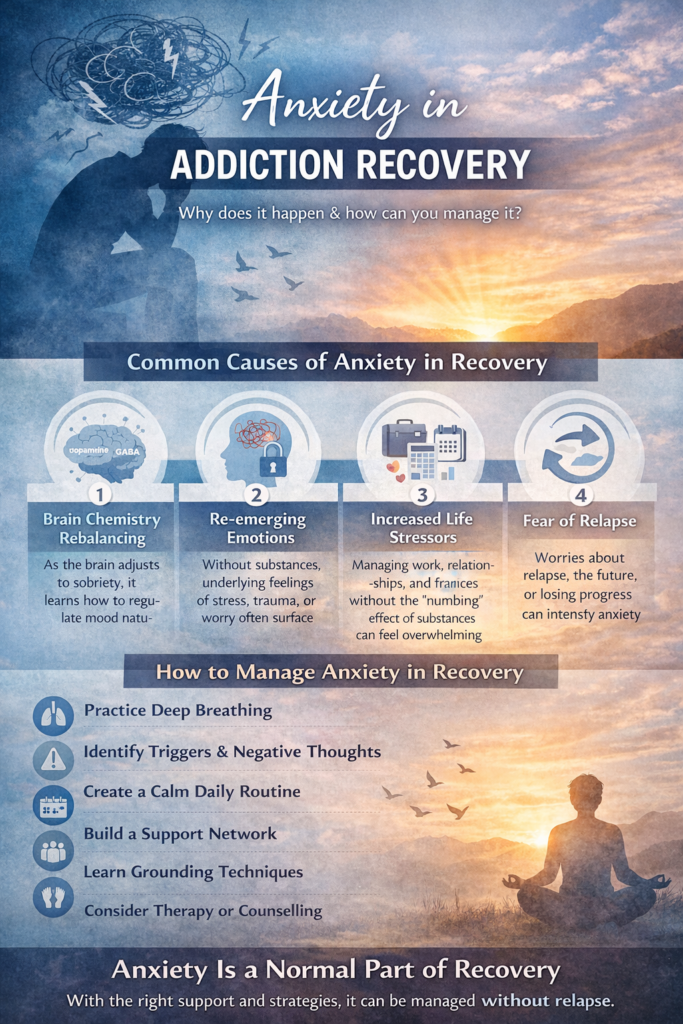
Anxiety is a frequent but often underestimated part of addiction recovery. Many individuals expect to feel immediate relief after stopping substance use, yet they often encounter increased worry, restlessness, or emotional unease instead. This happens because substances are commonly used to manage underlying stress, and once they are removed, suppressed emotions tend to resurface. At the same time, the brain is adjusting as it relearns how to regulate mood and stress on its own. Recognizing anxiety as a normal aspect of recovery is important, as it helps individuals respond with understanding rather than fear, supporting long-term sobriety.
Anxiety in Addiction Recovery: Why It Happens and How to Manage It
Introduction: The Overlooked Challenge in Recovery
When people think about addiction recovery, they often focus on detox, sobriety milestones, and rebuilding life. But one of the most persistent and underestimated challenges is anxiety. For many individuals, anxiety doesn’t disappear when substance use stops—in fact, it often becomes more noticeable.
Understanding why anxiety shows up in recovery is essential. Not only does it help normalize the experience, but it also equips individuals with the tools to manage it without returning to substance use.
Why Anxiety Is Common in Recovery
1. Brain Chemistry Is Rebalancing
Substances like alcohol, opioids, or stimulants alter neurotransmitters such as dopamine and GABA. When use stops, the brain must relearn how to regulate mood naturally. This adjustment period can lead to heightened anxiety, restlessness, or panic.
2. Emotional Suppression Lifts
Many people use substances to cope with stress, trauma, or chronic worry. Once substances are removed, those underlying emotions resurface—often more intensely.
3. Life Stressors Become More Visible
Recovery brings real-world responsibilities back into focus: relationships, finances, career, and health. Facing these without the buffer of substances can feel overwhelming.
4. Fear of Relapse
Ironically, worrying about relapse can itself create anxiety. Thoughts like “What if I mess up?” or “Can I maintain this?” are common and valid—but can spiral if not addressed.
How Anxiety Can Impact Recovery
Unchecked anxiety can increase vulnerability to relapse. It may lead to:
- Cravings as a way to self-soothe
- Avoidance of recovery activities (meetings, therapy)
- Sleep disturbances and irritability
- Negative thinking patterns (“I can’t handle this”)
Recognizing anxiety as part of the process—not a failure—is key to staying on track.
Healthy Ways to Manage Anxiety in Recovery
1. Develop Awareness of Triggers
Notice when anxiety spikes. Is it tied to certain environments, people, or thoughts? Awareness is the first step toward change.
2. Practice Grounding Techniques
Simple strategies can calm the nervous system:
- Deep breathing (inhale 4 seconds, exhale 6)
- Name 5 things you can see, 4 you can touch, etc.
- Progressive muscle relaxation
3. Build a Support System
Talking to a sponsor, therapist, or peer group can reduce isolation. Shared experiences help normalize anxiety and provide perspective.
4. Create Structure and Routine
Predictability reduces uncertainty. Regular sleep, meals, and daily plans can stabilize mood and lower anxiety levels.
5. Challenge Unhelpful Thoughts
Cognitive strategies—like asking “Is this thought realistic?”—can interrupt spirals of worry and fear.
6. Consider Professional Support
Therapy (such as CBT) and, in some cases, medication can be effective. Addressing anxiety directly is a strength, not a setback.
The Connection Between Anxiety and Growth
While uncomfortable, anxiety in recovery often signals growth. You’re facing life without numbing, building resilience, and learning new coping skills. Over time, many people find that anxiety becomes more manageable—and even less frequent—as confidence in sobriety grows.
Conclusion: You’re Not Alone
Anxiety is not a sign that recovery isn’t working—it’s often a sign that your mind and body are healing. With the right tools and support, it can be managed without returning to substance use.
Recovery isn’t just about stopping a behavior—it’s about learning how to live, feel, and cope in a new way. And that includes learning how to move through anxiety, one step at a time.
Understanding Anxiety in Addiction Recovery: Self-Management Strategies That Work
Introduction: Why Anxiety Deserves Attention in Recovery
Anxiety is one of the most common experiences during addiction recovery, yet it is often misunderstood or minimized. Many individuals expect that once substance use stops, emotional distress will fade. Instead, anxiety can intensify—surfacing as restlessness, racing thoughts, or even panic.
Learning how to understand and manage anxiety is not just helpful—it’s essential for maintaining long-term recovery.
Why Anxiety Increases During Recovery
1. Neurochemical Adjustment
Substance use alters brain chemistry, particularly systems involved in stress and reward. During recovery, the brain recalibrates, which can temporarily heighten anxiety.
2. Loss of a Coping Mechanism
Substances often serve as a means of numbing or escaping distress. Without them, individuals must face emotions directly—sometimes for the first time in years.
3. Heightened Self-Awareness
Recovery involves reflection and accountability. While this promotes growth, it can also trigger worry, guilt, or overthinking.
4. Uncertainty About the Future
Questions about identity, stability, and long-term success can create a persistent sense of unease.
What Anxiety Is Really Telling You
Anxiety isn’t just a symptom—it’s information. It often signals:
- A perceived threat (real or imagined)
- Unprocessed emotions or past experiences
- Cognitive patterns like catastrophizing or perfectionism
Understanding anxiety as a message rather than a problem can shift how you respond to it.
Self-Management Strategies to Understand and Reduce Anxiety
1. Track Your Anxiety Patterns
Start noticing when anxiety appears:
- What triggered it?
- What thoughts followed?
- How did your body feel?
Journaling or using a simple log can reveal patterns and help you anticipate difficult moments.
2. Separate Thoughts From Facts
Anxiety often distorts thinking. Practice questioning your thoughts:
- Is this fear based on evidence?
- Am I assuming the worst-case scenario?
This cognitive restructuring helps reduce the intensity of anxious reactions.
3. Use Grounding and Regulation Techniques
Calming the body can calm the mind:
- Deep breathing (slow, controlled exhale)
- The 5-4-3-2-1 sensory technique
- Light physical movement, like walking
These techniques interrupt the stress response and bring attention back to the present.
4. Build Emotional Tolerance
Instead of avoiding anxiety, practice sitting with it:
- Notice the feeling without reacting
- Label it (“This is anxiety, not danger”)
- Allow it to rise and fall naturally
This reduces fear of anxiety itself—a key factor in relapse prevention.
5. Create a Structured Routine
Uncertainty fuels anxiety. Establishing consistent habits—sleep, meals, meetings, and self-care—provides stability and predictability.
6. Strengthen Support Systems
Connection reduces anxiety. Whether through therapy, peer support groups, or trusted individuals, sharing experiences can provide reassurance and insight.
7. Set Realistic Expectations
Recovery is not a linear process. Accepting that anxiety will come and go prevents discouragement and self-criticism.
When to Seek Additional Help
Self-management is powerful, but some situations require extra support. Consider professional help if anxiety:
- Interferes with daily functioning
- Leads to panic attacks or severe distress
- Increases cravings or relapse risk
Therapies like Cognitive Behavioral Therapy (CBT) are especially effective in addressing anxiety within recovery.
Conclusion: From Reaction to Understanding
Managing anxiety in recovery isn’t about eliminating it—it’s about understanding it. When you learn to interpret anxiety, regulate your response, and apply practical strategies, it becomes less overwhelming and more manageable.
Recovery is a process of rebuilding—not just behaviors, but how you relate to your thoughts and emotions. With consistent self-management, anxiety can shift from a barrier into an opportunity for deeper self-awareness and growth.
Supporting Recovery Together: Family Strategies to Understand Anxiety in Addiction Recovery
Introduction: Why Family Support Matters
Addiction recovery doesn’t happen in isolation—it unfolds within relationships, especially family. While much attention is given to the individual in recovery, family members often face their own challenges, including how to understand and respond to anxiety.
Anxiety is common during recovery, and without the right support, it can increase stress for everyone involved. When families learn how to recognize and respond to anxiety effectively, they can become a powerful source of stability rather than tension.
Understanding Anxiety in Recovery as a Family
1. It’s Part of the Healing Process
Anxiety often increases as the brain and body adjust to life without substances. This isn’t a setback—it’s a normal part of recovery.
2. It May Show Up Differently
Anxiety isn’t always obvious. It can appear as:
- Irritability or anger
- Withdrawal or avoidance
- Restlessness or trouble sleeping
- Overthinking or indecisiveness
Recognizing these signs helps families respond with understanding instead of frustration.
3. It’s Not Something You Can “Fix.”
A common mistake is trying to solve or eliminate a loved one’s anxiety. Instead, the goal is to support them in managing it.
Family Support Strategies That Make a Difference
1. Practice Active Listening
Instead of offering immediate advice, focus on listening:
- Maintain eye contact
- Reflect back what you hear (“It sounds like you’re feeling overwhelmed”)
- Avoid interrupting or minimizing
Feeling heard can significantly reduce anxiety.
2. Avoid Judgment and Blame
Statements like “Just relax” or “You’re overthinking” can increase shame and anxiety. Replace them with:
- “I’m here for you.”
- “That sounds really difficult.”
A nonjudgmental approach builds trust and openness.
3. Learn About Anxiety and Recovery
Education reduces misunderstanding. When families understand that anxiety is tied to brain chemistry, emotional processing, and stress, they are less likely to take behaviors personally.
4. Encourage Healthy Coping Strategies
Support, don’t force. You might:
- Suggest going for a walk together
- Encourage attending meetings or therapy
- Help create a calming routine at home
Small, consistent encouragement can be more effective than pressure.
5. Set Healthy Boundaries
Support does not mean overextending yourself. Boundaries help maintain balance:
- Be clear about what you can and cannot do
- Avoid enabling behaviors
- Prioritize your own well-being
Healthy families support recovery without losing themselves in the process.
6. Create a Stable Environment
Consistency reduces anxiety. Try to:
- Maintain predictable routines
- Reduce unnecessary conflict
- Provide a calm, supportive space
A stable environment can help regulate emotional responses.
7. Take Care of Your Own Mental Health
Family members often experience stress, worry, or burnout. Consider:
- Therapy or support groups (like Al-Anon)
- Personal self-care routines
- Open communication with others you trust
You can’t pour from an empty cup—your well-being matters too.
Common Challenges Families Face
- Wanting quick progress: Recovery and anxiety management take time
- Taking behaviors personally: Anxiety-driven reactions are not intentional attacks
- Over-helping: Doing too much can reduce independence and confidence
Awareness of these patterns can help families adjust their approach.
Conclusion: Support, Not Control
Family support is one of the strongest protective factors in recovery—but only when it’s rooted in understanding. Anxiety is not a sign of failure; it’s part of the adjustment to a new way of living.
By listening, learning, setting boundaries, and offering consistent support, families can help create an environment where recovery—and emotional stability—can truly grow.
Stronger Together: Community Resource Strategies to Understand Anxiety in Addiction Recovery
Introduction: Recovery Beyond the Individual
Addiction recovery is often framed as a personal journey, but in reality, it thrives within a broader community. Anxiety—one of the most common challenges in recovery—can feel isolating and overwhelming when faced alone. Community resources provide not only support, but also education, structure, and connection that help individuals better understand and manage anxiety.
Tapping into these resources can transform anxiety from a private struggle into a shared, manageable experience.
Why Community Support Is Essential for Anxiety in Recovery
1. Reduces Isolation
Anxiety feeds on loneliness. Being part of a community reminds individuals they are not alone in their experiences.
2. Provides Shared Understanding
Hearing others describe similar thoughts and feelings can normalize anxiety and reduce shame.
3. Offers Structure and Accountability
Regular meetings, check-ins, and programs create consistency—an important factor in reducing anxiety.
4. Expands Coping Tools
Various resources present a range of strategies, from mindfulness to cognitive techniques.
Community Resource Strategies That Make a Difference
1. Peer Support Groups
Groups such as 12-step programs or recovery-focused meetings provide a safe space to share experiences. Benefits include:
- Validation of feelings
- Learning from others’ coping strategies
- Building accountability and routine
These environments often help individuals better understand how anxiety connects to recovery.
2. Mental Health Services in the Community
Local clinics, counseling centers, and outpatient programs offer professional support:
- Therapy (especially Cognitive Behavioral Therapy)
- Anxiety management education
- Dual-diagnosis treatment (addiction + anxiety)
Accessing these services ensures anxiety is addressed alongside recovery—not ignored.
3. Recovery Community Centers
These centers often provide:
- Workshops on stress and anxiety
- Group activities and social support
- Educational sessions on relapse prevention
They create a structured yet welcoming environment where individuals can practice new coping skills.
4. Mindfulness and Wellness Programs
Community-based programs like yoga classes, meditation groups, or stress management workshops help regulate anxiety by calming the nervous system. These approaches:
- Improve emotional awareness
- Reduce physical symptoms of anxiety
- Encourage present-moment focus
5. Online Recovery Communities
Digital spaces (forums, virtual meetings, apps) expand access to support:
- Available anytime, anywhere
- Helpful for those with limited local resources
- Provide anonymity for those hesitant to seek in-person help
These platforms can be especially useful during high-anxiety moments.
6. Educational Workshops and Seminars
Understanding anxiety reduces fear. Community education programs often cover:
- The science behind anxiety
- How it relates to substance use
- Practical coping strategies
Knowledge empowers individuals to respond to anxiety more effectively.
7. Crisis and Support Hotlines
For immediate support, hotlines and text services provide:
- Real-time emotional support
- Guidance during overwhelming anxiety or cravings
- Connection to local resources
These services act as a safety net during high-risk moments.
Barriers to Using Community Resources
Despite their benefits, some individuals hesitate to seek support due to:
- Stigma or fear of judgment
- Lack of awareness about available resources
- Transportation or accessibility issues
- Social anxiety
Recognizing these barriers is the first step toward overcoming them—often with small, gradual steps into community engagement.
Conclusion: Connection as a Tool for Healing
Understanding anxiety in addiction recovery becomes much easier when it’s not faced alone. Community resources provide more than help—they offer connection, perspective, and practical tools that strengthen recovery.
Recovery is not just about avoiding substances; it’s about building a life supported by people, knowledge, and shared experience. Within a community, anxiety becomes less overwhelming—and recovery becomes more sustainable.
Frequently Asked Questions
Here are some common questions:
1. Is anxiety normal during addiction recovery?
Yes, anxiety is very common in recovery. When substance use stops, the brain and body go through a period of adjustment. Substances often suppress stress and emotions, so without them, anxiety can feel stronger at first. This is a normal part of the healing process—not a sign that recovery isn’t working.
2. Why does anxiety sometimes get worse after quitting substances?
Substances alter brain chemistry, especially neurotransmitters such as dopamine and GABA, which regulate mood and stress. During recovery, the brain must naturally rebalance these systems. At the same time, previously avoided emotions and life stressors resurface, which can temporarily increase anxiety.
3. How long does anxiety last in recovery?
It varies from person to person. For some, anxiety improves within weeks or months as the brain stabilizes. For others—especially those with pre-existing anxiety disorders—it may persist longer and require ongoing management. Consistent coping strategies and support can significantly reduce symptoms over time.
4. Can anxiety lead to relapse?
Yes, unmanaged anxiety is a major relapse risk. People may feel tempted to return to substances to quickly relieve discomfort. That’s why learning healthy coping strategies is critical—so anxiety can be managed without relying on substances.
5. What are common symptoms of anxiety in recovery?
Anxiety can show up both mentally and physically, including:
- Racing thoughts or excessive worry
- Restlessness or irritability
- Difficulty sleeping
- Rapid heartbeat or muscle tension
- Trouble concentrating
Recognizing these symptoms helps individuals respond more effectively.
6. How can I manage anxiety without using substances?
There are several evidence-based strategies:
- Deep breathing and grounding techniques
- Cognitive Behavioral Therapy (CBT) skills
- Regular exercise and sleep routines
- Journaling or identifying triggers
- Building a strong support network
These approaches help regulate both the mind and body.
7. Should I seek professional help for anxiety in recovery?
Yes—especially if anxiety interferes with daily life or increases cravings. Therapy, particularly CBT, is highly effective. In some cases, medication may also be appropriate and can be safely managed alongside recovery with professional guidance.
8. How can family and friends support someone with anxiety in recovery?
Supportive actions include:
- Listening without judgment
- Avoiding minimizing statements (“just relax”)
- Encouraging healthy coping strategies
- Being patient with emotional ups and downs
Understanding that anxiety is part of recovery helps create a more supportive environment.
9. Is anxiety a sign that recovery is failing?
No. Anxiety is often a sign that the brain and body are healing and adjusting. It reflects increased awareness and emotional processing—not failure. Learning to manage anxiety is actually a key part of long-term recovery success.
10. Can anxiety ever become a positive part of recovery?
Yes. When understood and managed, anxiety can increase self-awareness and highlight areas that need attention—such as stress, boundaries, or unresolved emotions. Over time, it can become a signal for growth rather than something to fear.
Conclusion
Anxiety in addiction recovery is not a sign of failure, but a reflection of the mind and body adapting to change. When recognized and addressed, it can become an opportunity for growth, self-awareness, and the development of healthier coping strategies. By learning to understand anxiety, rather than avoid it, individuals can build resilience and reduce the risk of relapse. Recovery is not only about abstaining from substances—it is about learning how to navigate emotions in a new and sustainable way. With the right tools and support, anxiety can be managed, allowing recovery to become stronger and more stable over time.
Video: