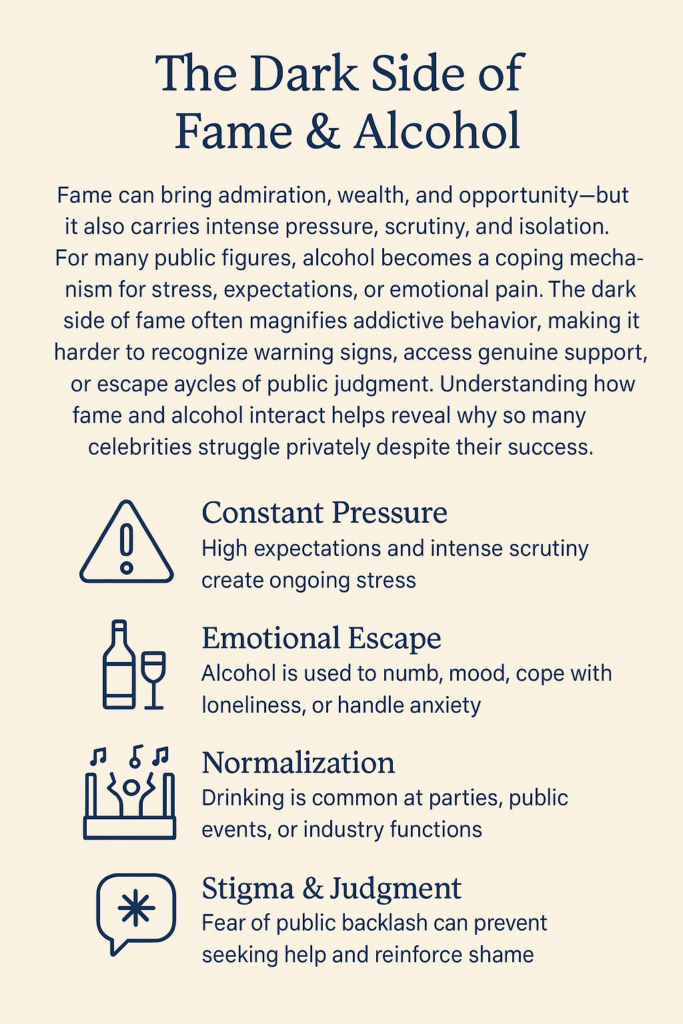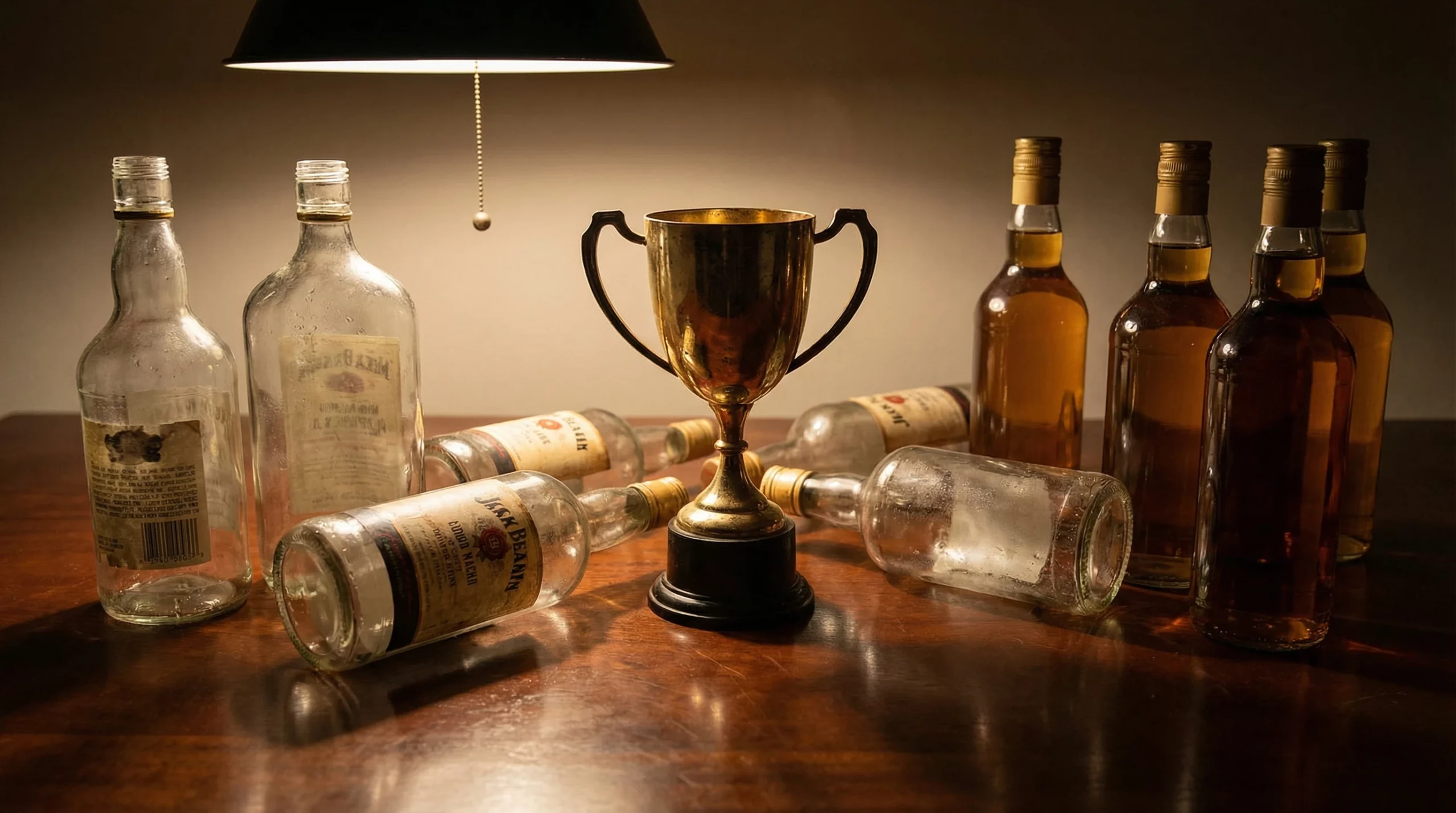
Alcoholism and fame often go hand in hand, but not in a way that benefits those in the spotlight. The pressure, constant attention, and unrealistic expectations surrounding fame can make alcohol a tempting escape for many celebrities. Over the years, this unhealthy relationship has been widely documented, both in dramatic headlines and in reflective interviews from those who’ve struggled through it. In this article, I’m taking a closer look at why alcoholism and fame often mix, the risks and realities celebrities face, and what both fans and public figures can learn from these stories.
The High-Pressure World of Fame
The glitz and glamour that come with fame often hide a harsh reality. Celebrities live in a world where privacy is scarce, and public judgment feels never-ending. I’ve noticed plenty of interviews where actors, musicians, and athletes talk about feeling isolated even when surrounded by fans and friends. Performing under constant scrutiny and maintaining an image can naturally lead to anxiety, depression, and sometimes the urge to self-medicate with alcohol.
The entertainment and sports industries are well known for demanding schedules and punishing hours. Add the extra strain of continuous media scrutiny, and even the most outgoing personalities feel the pressure. Party culture, which is often glamorized, creates easy access to alcohol, making heavy drinking seem normal. When celebrities use alcohol to handle anxiety or social stress, it’s a coping mechanism that can quietly spiral into addiction without much warning.
Why Are Celebrities Drawn to Alcohol?
It’s easy to assume celebrities drink because they want to have fun or fit in, but the reasons usually run deeper. Alcohol can offer a fleeting sense of relief or confidence, especially during high-pressure events like premieres or live shows. I’ve read stories about well-known musicians admitting they needed a few drinks to get on stage.
Celebrities often face unique triggers for alcohol use:
- Social anxiety: Appearing calm, charming, or exciting at parties is easier when you’re holding a drink.
- Constant travel: Being away from home leads to loneliness; hotel bars and afterparties fill the void.
- Lack of privacy: Judgment from fans and the press can make anyone self-conscious.
- Peer pressure: The industry normalizes drinking, making it harder to say no.
Many celebrities start drinking socially, but frequent use in high-stress environments can quickly become daily use. Over time, a drink for “courage” or “celebration” becomes routine, then a habit, and eventually an addiction that’s hard to ignore or stop.
Common Signs of Alcohol Struggles in the Spotlight
Alcoholism can look quite different in celebrities compared to people outside the limelight. The money, access, and endless public attention mean warning signs might be overlooked or dismissed entirely. Some of the most obvious patterns out there include:
- Highly visible partying, leading to wild public appearances
- Frequent absences from work or cancelled shows
- Sudden or unexplained health issues
- Legal troubles or public scandals tied to drinking
- Statements to the press about “taking a break” to focus on personal matters
For many stars, fans and managers may enable this behavior, excuse bad conduct, or cover up the truth. On the surface, some may appear totally functional even while struggling with a serious alcohol problem behind closed doors.
Risks and Consequences: What Alcoholism Costs Celebrities
The price of alcoholism can be incredibly steep for celebrities. Careers get sidelined or sometimes destroyed by a public struggle with addiction. I’ve seen plenty of celebrated stars lose acting jobs, endorsement deals, or even close relationships because their addiction was hard to hide or got out of hand.
Physically, alcoholism takes the same toll on celebrities as on anyone else. Liver disease, cognitive problems, and overall health decline show up quickly when drinking spirals out of control. However, public exposure means any mistake is magnified, creating its own pain. Relapses, failed rehab attempts, and messy public outbursts are picked apart on social media and in gossip columns, sometimes making recovery even more challenging to achieve.
The mental effects can be just as harsh. Depression, anxiety, and shame often go along with addiction. Even after choosing to get help, a celebrity’s recovery rarely happens without a spotlight. Paparazzi chase them out of rehab, and millions discuss their setbacks. This attention makes it challenging to heal without constant judgment, sometimes leading to repeated cycles of addiction.
Breaking the Cycle: Stories of Recovery and Resilience
While the road to recovery is rough, plenty of celebrities have spoken openly about overcoming alcoholism. Their stories don’t just inspire fans; they help reduce stigma and show that it’s possible to get through addiction even when everyone is watching.
Well-known figures like Rob Lowe and Demi Lovato have shared details about their struggles with alcohol and how sobriety changed their lives. In their stories, some major themes come up:
- Recognizing the problem and asking for help takes guts, especially with the whole world watching.
- Having support from family, friends, and professional counselors plays a considerable role.
- Staying sober in Hollywood or the music world means steering clear of old temptations and sometimes old friendships.
- Using setbacks as learning experiences helps build lasting recovery.
Recovery is different for everyone, but honest talk about addiction takes away myths and can prompt others in similar situations to ask for help. Over the years, more celebrities have chosen to be open about sobriety, publicly discussing what worked for them and where they stumbled, providing valuable insight for fans and others facing addiction in their own lives.
Challenges to Sobriety When You’re Famous
Even after finding sobriety, celebrities face unique obstacles. For example, many industry events still revolve around alcohol. Saying no to champagne at a film festival or a club party is tough when everyone’s celebrating a project or a new release. There’s also the issue of always being watched. Any minor slip-up can become front-page news, making privacy in sobriety nearly impossible. This kind of scrutiny puts pressure on celebrities to be “perfect” in their recovery, a standard that just isn’t realistic for anyone.
Professionals often point out that stars need to build support systems that don’t depend on the party scene. That could involve finding sober friends, working with therapists who get how public life works, or speaking out to help others. Public advocacy can add meaning to the sober lifestyle and strengthen a star’s resolve to stay the course.
Fans, Media, and the Role of Responsibility
Fans and the media have a huge influence when it comes to the relationship between fame and alcoholism. Sometimes, media attention helps raise awareness, pushing celebrities to seek professional help. More often, though, relentless coverage and nasty gossip drive people into shame and isolation.
Fans have an excellent opportunity to support celebrities who are dealing with addiction by celebrating recovery wins and showing empathy during setbacks. Choosing not to share negative rumors and stories actually makes a genuine difference. Media outlets have a responsibility to report with care, offering more than clickbait headlines. Telling the honest, human story behind addiction can break down stigma and foster understanding that stretches far beyond the celebrity world.
Alcoholism, Fame, and Real-World Impact
The struggles of famous people make headlines, but their experiences highlight issues faced by people everywhere. Sobriety is strict in any setting, and when you’re surrounded by stress, constant temptation, and the fear of public failure, it’s even more challenging. The stories of celebrity struggles shine a light on just how meaningful support and honest conversations about addiction truly are.
If you or someone you know is facing similar struggles, resources and support networks exist for all, not just the rich and famous. Groups like Alcoholics Anonymous and SAMHSA offer confidential assistance, no matter your status or background.
Frequently Asked Questions
Question: Why do so many celebrities become addicted to alcohol?
Answer: The high-stress environment, party culture, social anxiety, and constant public attention create a risky mix that pushes many into drinking. Once addiction begins, access to resources and enablers sometimes makes it hard to spot and fix the problem.
Question: Is recovery harder for people in the public eye?
Answer: For those in the spotlight, recovery brings extra challenges, mainly due to the lack of privacy and ever-present media coverage. A strong support system and well-tailored treatment can help with these hurdles, but it takes significant lifestyle shifts and some personal boundaries to make it work.
Question: What role does the public play in a celebrity’s recovery?
Answer: Public compassion and the refusal to pass harsh judgment can help reduce stigma and support healing. Fans and journalists who focus on understanding rather than criticism make it easier for celebrities to share their struggles and progress toward recovery.
Alcoholism tied to fame has ruined countless careers, but it has also sparked real talk about mental health and addiction. When celebrities tell their stories—the wins as well as the losses—it encourages everyone to reach out for help. While fame never shields anyone from addiction, it does offer a platform to give hope and spread awareness to millions who need it.
Video: How Celebrity Life Leads to Addiction 🍻 #shorts #celebrity #darktruth