The question of whether alcoholism is a choice or a disease has long shaped public attitudes, treatment approaches, and personal beliefs about addiction. Historically, excessive drinking was often viewed as a moral failing or lack of discipline. However, advances in neuroscience, psychology, and addiction medicine now show that alcohol use disorder involves measurable changes in brain chemistry, stress systems, and decision-making processes. While initial alcohol use may begin with voluntary choices, repeated exposure can alter neural pathways involved in reward, impulse control, and motivation. Understanding this distinction is essential because it reframes alcoholism not as a simple matter of willpower, but as a complex condition influenced by biology, environment, behavior, and mental health.
Alcoholism: A Choice or a Disease? Understanding the Science Behind Addiction
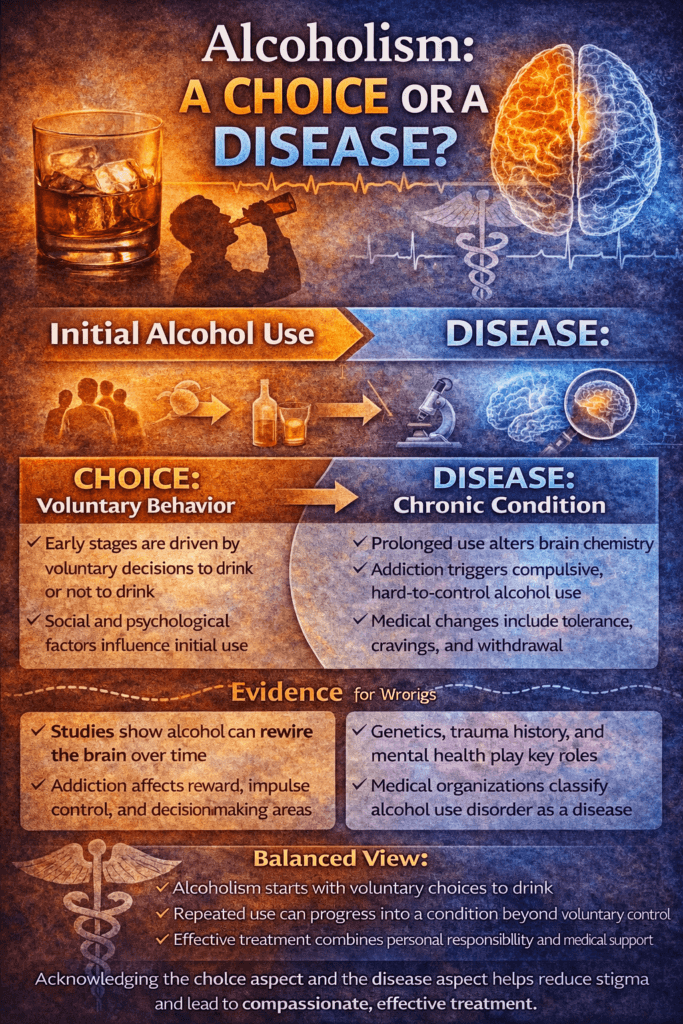
The question of whether alcoholism is a choice or a disease has been debated for decades across medical, psychological, and social fields. While early societal views often framed alcohol misuse as a moral failing or lack of willpower, modern research strongly supports the understanding of alcohol use disorder (AUD) as a chronic medical condition involving changes in brain function, behavior, and physiology. The answer, therefore, is not simply one or the other—it is a complex interaction between voluntary decisions and biological processes.
The “Choice” Perspective
At the beginning of alcohol use, drinking is typically voluntary. Individuals decide whether, when, and how much to drink. Social influences, stress, curiosity, culture, and environment all play roles in these early decisions. Because initial use involves personal choice, many people assume continued use is also fully voluntary.
However, this perspective does not account for what happens biologically after repeated exposure to alcohol.
The Disease Perspective
Scientific evidence shows that prolonged alcohol use can alter brain circuits responsible for reward, motivation, memory, and self-control. Over time:
- The brain becomes less sensitive to alcohol’s pleasurable effects (tolerance)
- Withdrawal symptoms develop when alcohol is reduced
- Cravings intensify
- Decision-making and impulse control weaken
These neurological changes can make stopping extremely difficult, even when someone deeply wants to quit. This loss of control is one of the defining features of addiction and is why major medical organizations classify alcoholism as a chronic disease.
Why It’s Both Choice and Disease
Alcoholism is best understood as a progressive condition that often begins with choice but can evolve into a disease state. Early decisions to drink may be voluntary, but repeated use can lead to brain changes that reduce voluntary control. Genetics, trauma history, mental health conditions, and environmental stressors can increase vulnerability, meaning not everyone who drinks will develop addiction.
This dual perspective helps explain why judgment and stigma are ineffective responses. If alcoholism were purely a choice, treatment would not be necessary. If it were purely a disease without behavioral components, lifestyle change wouldn’t matter. In reality, recovery requires both medical support and personal commitment.
Implications for Treatment and Recovery
Viewing alcoholism as a disease has transformed treatment approaches. Instead of punishment or shame, evidence-based care focuses on:
- Medical detoxification when needed
- Behavioral therapies
- Medication support
- Peer and family support systems
- Long-term relapse prevention
This model treats alcoholism similarly to other chronic illnesses like diabetes or hypertension—conditions that can be managed successfully with ongoing care.
Conclusion
Alcoholism is neither solely a choice nor solely a disease—it is a condition that often begins with voluntary behavior but can progress into a medically recognized disorder affecting brain function and self-control. Understanding this distinction reduces stigma, promotes compassion, and encourages effective treatment. Recognizing alcoholism as a health condition rather than a moral failing allows individuals and communities to respond with support, science, and hope for recovery.
Self-Management Strategies to Determine Whether Alcoholism Is a Choice or a Disease
Understanding whether alcohol use is still a matter of choice or has progressed into a disease process can be challenging. Alcohol use disorder exists on a spectrum, and self-awareness is often the first step toward clarity. While only a qualified clinician can diagnose a substance use disorder, structured self-management strategies can help individuals evaluate their patterns, recognize warning signs, and decide when professional support may be needed. These strategies focus on insight, behavioral monitoring, and honest reflection rather than judgment.
1. Track Patterns of Use
One of the most effective self-assessment tools is behavioral tracking. Keeping a daily log of:
- Amount consumed
- Situations and triggers
- Emotional state before and after drinking
- Attempts to limit use
can reveal patterns that might otherwise go unnoticed. If drinking consistently exceeds planned limits or occurs despite intentions to stop, this may signal reduced voluntary control—a hallmark of addiction rather than simple choice.
2. Evaluate Control and Intentions
Ask yourself structured questions:
- Do I drink more than I plan to?
- Have I tried to cut down, but couldn’t?
- Do I feel compelled to drink in certain situations?
- Do cravings feel automatic or intrusive?
When alcohol use shifts from intentional to compulsive, it suggests neurological and behavioral changes associated with a disease process rather than purely voluntary behavior.
3. Assess Consequences Across Life Domains
Self-management requires evaluating real-life outcomes. Reflect honestly on whether alcohol use is affecting:
- Physical health
- Relationships
- Work or school performance
- Finances
- Mood or mental health
If alcohol use continues despite negative consequences, this is a strong indicator that the behavior is no longer fully under conscious control.
4. Monitor Withdrawal and Tolerance
Biological signs provide important clues. Increasing tolerance (needing more alcohol for the same effect) or experiencing withdrawal symptoms—such as tremors, anxiety, sweating, irritability, or insomnia—suggest that the body has adapted physiologically. These changes are medical indicators of dependence and support the disease model of addiction.
5. Observe Emotional Motivation
Self-reflection about why you drink can be revealing. Drinking primarily for celebration or social enjoyment differs from drinking to cope with stress, trauma, anxiety, or depression. When alcohol becomes a primary coping mechanism, it may indicate psychological dependence rather than a simple lifestyle choice.
6. Use the “Control Test” Method
A practical self-management technique is a structured trial period:
- Set a clear limit or abstinence goal
- Choose a defined time frame (e.g., 30 days)
- Monitor cravings, mood, and ability to adhere
Difficulty maintaining the plan—especially with strong urges or repeated lapses—may signal that brain reward systems are influencing behavior beyond conscious choice.
7. Seek External Feedback
Addiction often affects insight. Trusted feedback from family, friends, or mentors can help identify patterns you might overlook. If others consistently express concern about your drinking, it is worth taking seriously as an early warning sign.
Why Self-Management Matters
Self-assessment does not replace professional evaluation, but it can reduce denial and increase readiness for change. The goal is not to label yourself but to understand where you fall on the spectrum of control. Early recognition allows earlier intervention, which greatly improves recovery outcomes.
Conclusion
Determining whether alcoholism is a choice or a disease is less about assigning blame and more about recognizing patterns of control, consequences, and physiology. Self-management strategies—such as tracking behavior, assessing consequences, monitoring tolerance, and testing limits—help individuals understand whether alcohol use remains voluntary or has progressed into dependence. This insight empowers informed decisions, encourages timely support, and replaces stigma with awareness. Ultimately, understanding the nature of one’s relationship with alcohol is the first step toward protecting health, autonomy, and long-term well-being.
Family Support Strategies to Determine Whether Alcoholism Is a Choice or a Disease
Families are often the first to notice subtle shifts in behavior, mood, and functioning when alcohol use begins to change. While the question of whether alcoholism is a choice or a disease can feel philosophical, for families, it is deeply practical. Understanding the difference helps guide how to respond—with discipline, compassion, boundaries, or medical support. Alcohol use disorder is widely recognized as a medical condition involving brain, behavior, and physiology, but it often begins with voluntary drinking. Family support strategies can help clarify where someone falls on that spectrum and whether professional help may be needed.
1. Observe Patterns Without Judgment
Families can gain meaningful insights simply by consistently and objectively observing behavior. Instead of reacting emotionally, they can track patterns such as:
- Frequency and quantity of drinking
- Changes in mood or personality
- Missed responsibilities
- Secretive or defensive behavior
Consistent patterns of escalating use or loss of control suggest something deeper than casual choice. Calm observation prevents assumptions and supports accurate understanding.
2. Compare Intentions vs. Actions
A key distinction between choice and disease is whether behavior aligns with stated intentions. Families can gently notice discrepancies:
- Do they promise to cut down, but don’t?
- Do they set limits but exceed them?
- Do they acknowledge problems but continue drinking?
Repeated inability to follow through despite sincere intentions often indicates impaired control—a hallmark of addiction rather than simple decision-making.
3. Assess Functional Impact
Families can evaluate whether alcohol use is affecting daily life. Warning signs include:
- Declining work or school performance
- Relationship conflict
- Financial strain
- Neglect of responsibilities
- Changes in sleep or health
When alcohol use continues despite clear negative consequences, it suggests neurological and behavioral changes consistent with a disease process.
4. Notice Physical and Emotional Dependence
Biological symptoms can help families distinguish between occasional misuse and physiological dependence. Signs that alcohol may be affecting the body include:
- Tremors or shakiness
- Sweating or anxiety when not drinking
- Increased tolerance
- Irritability or restlessness without alcohol
These symptoms indicate the body has adapted to alcohol, which is a medical signal rather than a simple lifestyle choice.
5. Encourage Open, Non-Confrontational Dialogue
Families can foster clarity through supportive conversations. Instead of accusations, use curiosity-based statements:
- “I’ve noticed you seem stressed when you don’t drink—how are you feeling?”
- “You mentioned wanting to cut back. How is that going?”
This approach reduces defensiveness and increases honesty, making it easier to determine whether the person feels in control or overwhelmed.
6. Provide Structured Support, Not Rescue
Healthy support means encouraging responsibility while offering help. Families can:
- Suggest professional assessments
- Offer to attend appointments
- Help set realistic goals
- Maintain clear boundaries
Avoiding enabling behaviors—such as covering up consequences—allows reality to provide feedback, which can clarify whether alcohol use is voluntary or compulsive.
7. Seek a Professional Perspective Together
Families do not have to determine the answer alone. Medical professionals, therapists, and addiction specialists can evaluate symptoms objectively using diagnostic criteria. A joint evaluation reduces stigma and shifts the focus from blame to understanding.
Why Family Insight Matters
Individuals struggling with alcohol use may minimize or deny problems, especially in the early stages. Families serve as external mirrors, reflecting changes the person may not see. Their observations can help identify whether alcohol use remains a matter of choice or has progressed into a condition affecting brain function and behavior.
Conclusion
Determining whether alcoholism is a choice or a disease is not about labeling—it is about understanding. Family support strategies such as careful observation, compassionate communication, boundary-setting, and professional consultation help clarify whether alcohol use is still voluntary or has become a medical concern. When families approach the situation with awareness instead of judgment, they create an environment where truth can surface, support can be accepted, and recovery can begin.
Community Resource Strategies to Determine Whether Alcoholism Is a Choice or a Disease
Communities play a crucial role in helping individuals and families understand alcohol use patterns and whether they reflect voluntary behavior or a developing medical condition. The question of whether alcoholism is a choice or a disease is best answered not through opinion, but through evidence, observation, and professional assessment. Modern addiction science shows that while alcohol use may begin voluntarily, repeated exposure can lead to neurological, psychological, and physiological changes that reduce control. Community resources—such as healthcare systems, education programs, screening services, and support networks—help clarify this distinction by providing objective tools, expert guidance, and early intervention pathways.
1. Public Screening and Assessment Programs
Community health clinics, wellness fairs, and behavioral health centers often provide screening tools for alcohol use risk. Standardized questionnaires and brief assessments can identify warning signs such as impaired control, cravings, tolerance, or withdrawal symptoms. These screenings help individuals determine whether their drinking remains within voluntary limits or shows patterns consistent with alcohol use disorder.
2. Access to Professional Evaluations
Medical and behavioral health professionals offer diagnostic assessments based on established clinical criteria. Community systems that provide affordable or low-cost evaluations—such as public health departments or nonprofit clinics—make it easier for individuals to seek objective answers. Professional evaluation removes guesswork and helps distinguish between lifestyle choices and medically recognized dependence.
3. Educational Outreach Initiatives
Community education programs improve understanding of how addiction develops. Workshops, school programs, public seminars, and awareness campaigns explain:
- Brain changes caused by alcohol
- Early warning signs of dependence
- Risk factors such as trauma, genetics, or stress
- The difference between use, misuse, and disorder
Knowledge reduces stigma and empowers people to recognize when alcohol use has shifted from choice to compulsion.
4. Peer Support and Recovery Groups
Support groups provide a real-world perspective. Hearing others describe their experiences with loss of control, cravings, and relapse patterns can help individuals compare their own behaviors. These shared experiences often clarify whether someone’s drinking is situational or part of a deeper pattern. Peer environments also reduce isolation and normalize help-seeking.
5. Early Intervention Programs
Many communities now offer early intervention services that focus on individuals at risk rather than those already in crisis. These programs may include counseling, motivational interviewing, brief therapy, or lifestyle coaching. Early intervention helps identify whether alcohol use is escalating and can prevent progression into severe dependence.
6. Crisis and Referral Systems
Hotlines, mobile crisis teams, and referral networks help individuals access professional help quickly. If someone begins to experience withdrawal symptoms, intense cravings, or an inability to control drinking, these services can connect them with appropriate care. Rapid response is especially important when physical dependence is suspected.
7. Integrated Community Care Networks
The most effective communities coordinate services across sectors—healthcare, education, employment, and social services. When providers communicate and share resources, individuals receive consistent guidance rather than fragmented advice. This integrated approach improves accuracy in determining whether alcohol use is behavioral, situational, or clinical.
Why Community Resources Matter
Determining whether alcoholism is a choice or a disease should not rely on self-judgment alone. Objective tools, professional assessments, and supportive environments provide a clearer, more accurate picture. Communities that invest in accessible screening, education, and early intervention make it easier for individuals to seek clarity without shame or fear.
Conclusion
The distinction between choice and disease in alcoholism is best understood through evidence, not assumption. Community resource strategies—such as screening programs, professional evaluations, educational outreach, peer support, and early intervention services—help individuals recognize where they fall on the spectrum of alcohol use. When communities provide accessible, stigma-free pathways to information and care, they empower people to move from uncertainty to understanding, and from understanding to action.
Frequently Asked Questions
Here are some common questions:
1. Is alcoholism considered a disease?
Yes. Most medical and mental health organizations classify alcoholism—clinically called alcohol use disorder—as a chronic medical condition. It involves measurable changes in brain chemistry, reward pathways, and impulse control that affect behavior and decision-making.
2. Why do some people say alcoholism is a choice?
People often say this because the first drink is voluntary. Early alcohol use typically involves personal decisions influenced by environment, stress, or social factors. This can create the impression that continued use is entirely controllable, even though brain changes may later reduce that control.
3. Can something be both a choice and a disease?
Yes. Alcohol use can begin with voluntary behavior but progress into a disease state over time. This is similar to other health conditions that develop from lifestyle behaviors, yet become medical disorders once physiological changes occur.
4. What changes in the brain during alcoholism?
Repeated alcohol exposure can alter brain circuits involved in reward, stress regulation, motivation, and self-control. These changes can increase cravings, reduce impulse control, and make it difficult to quit even when someone wants to.
5. Does calling alcoholism a disease remove personal responsibility?
No. Recognizing alcoholism as a disease does not eliminate responsibility; it reframes the issue so that treatment, support, and behavioral change are emphasized instead of blame. Recovery still requires effort, commitment, and decision-making.
6. Why is it important to understand alcoholism this way?
Understanding alcoholism as a medical condition helps reduce stigma, encourages people to seek treatment earlier, and promotes compassionate responses from families and communities. Stigma often delays help-seeking and worsens outcomes.
7. Can someone recover from alcoholism if it is a disease?
Yes. Like other chronic illnesses, alcoholism can be managed successfully with treatment, lifestyle changes, therapy, and support systems. Many people achieve long-term recovery and regain stability and health.
8. What are the signs that alcohol use may be more than a choice?
Common warning signs include:
- Drinking more than intended
- Failed attempts to cut down
- Cravings or urges to drink
- Withdrawal symptoms
- Continued use despite negative consequences
These signs suggest impaired control, which is a key feature of addiction.
9. Are some people more vulnerable than others?
Yes. Genetics, trauma history, mental health conditions, environment, and stress levels all influence risk. Two people may drink the same amount, yet only one develops alcohol dependence due to these underlying factors.
10. How should families respond to this issue?
Families should approach the situation with concern rather than judgment. Encouraging professional evaluation, offering support, and maintaining healthy boundaries are more effective than blame or confrontation.
Conclusion
Recognizing alcoholism as both a behavioral and medical condition allows for a more accurate and compassionate perspective. It acknowledges personal responsibility for choices while also understanding the biological mechanisms that can reduce control over time. This balanced view helps reduce stigma, encourages earlier intervention, and supports evidence-based treatment rather than blame. Ultimately, the most productive question is not whether alcoholism is solely a choice or solely a disease, but how understanding its dual nature can guide effective prevention, support, and recovery for individuals and families affected by alcohol use disorder.
Video: Choice vs. Disease: What Alcohol Actually Does #mentalhealth #recovery