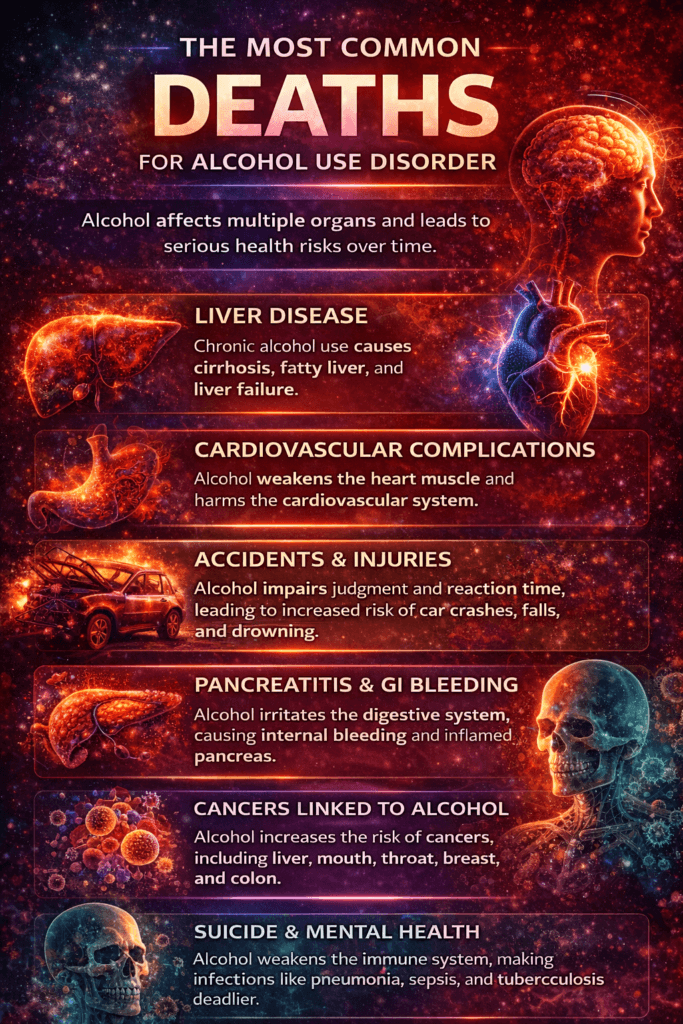
Alcohol use disorder (AUD) is associated with a wide range of serious health risks because alcohol affects nearly every major organ system in the body. The most common causes of death linked to chronic alcohol misuse include liver disease, cardiovascular complications, accidents and injuries, cancers, infections, and mental health–related causes such as suicide. These outcomes rarely occur suddenly; instead, they typically develop over time as repeated exposure to alcohol disrupts metabolism, weakens immunity, impairs judgment, and damages vital tissues. Understanding these leading causes of mortality is essential for recognizing early warning signs, encouraging timely intervention, and helping individuals reduce long-term health risks.
The Most Common Causes of Death in Alcohol Use Disorder: Understanding the Risks
Alcohol use disorder (AUD) affects nearly every organ system in the body, which is why long-term alcohol misuse is associated with a wide range of life-threatening conditions. Death related to chronic alcohol use rarely results from a single factor; instead, it typically occurs after years of cumulative damage to the liver, heart, brain, immune system, and mental health. Understanding the most common causes of death among individuals with alcoholism can help families, clinicians, and communities recognize warning signs earlier and intervene before complications become irreversible.
1. Liver Disease (Most Common Cause)
Chronic alcohol use is the leading cause of cirrhosis, a condition where scar tissue replaces healthy liver tissue. The liver loses its ability to detoxify blood, regulate metabolism, and produce essential proteins. Alcohol-related liver disease typically progresses through stages:
- Fatty liver
- Alcoholic hepatitis
- Fibrosis
- Cirrhosis
Why it becomes fatal: Liver failure leads to internal bleeding, toxin buildup in the brain, severe infections, and organ shutdown.
2. Cardiovascular Complications
Alcohol weakens the heart muscle and disrupts electrical signaling. Common fatal conditions include:
- Cardiomyopathy (weakened heart muscle)
- Arrhythmias (irregular heartbeat)
- Stroke
- Hypertension-related complications
Why it becomes fatal: Alcohol stresses the cardiovascular system, raising blood pressure, altering heart rhythm, and increasing clotting risk—all of which can lead to sudden death.
3. Accidents and Injuries
Alcohol impairs coordination, judgment, reaction time, and risk perception. Many alcohol-related deaths are due to:
- Motor vehicle accidents
- Falls
- Drowning
- Fires or burns
Why it becomes fatal: Even moderate intoxication significantly increases injury risk, and chronic drinkers may underestimate danger or overestimate their ability.
4. Pancreatitis and Gastrointestinal Bleeding
Alcohol irritates the digestive organs and blood vessels. Severe complications include:
- Acute or chronic pancreatitis
- Bleeding ulcers
- Ruptured esophageal varices (dilated veins in the esophagus)
Why it becomes fatal: These conditions can cause sudden internal bleeding, infection, or systemic inflammatory responses that rapidly become life-threatening.
5. Cancer Linked to Alcohol Use
Alcohol increases risk for several cancers, especially:
- Liver
- Mouth
- Throat
- Esophagus
- Breast
- Colon
Why it becomes fatal: Alcohol damages DNA, weakens immune defenses, and promotes chronic inflammation—conditions that allow cancer cells to grow and spread.
6. Suicide and Mental Health Complications
Alcohol strongly affects mood regulation and impulse control. Chronic use is associated with:
- Depression
- Anxiety
- Increased impulsivity
- Poor judgment
Why it becomes fatal: Alcohol lowers inhibition and intensifies emotional distress, increasing the risk of self-harm or suicide, particularly during withdrawal or intoxication.
7. Infections and Immune Suppression
Long-term alcohol use weakens the immune system, making individuals more vulnerable to severe infections such as:
- Pneumonia
- Sepsis
- Tuberculosis
- Skin infections
Why it becomes fatal: A compromised immune response makes it harder for the body to fight infections, allowing illnesses to progress rapidly.
Warning Signs of Life-Threatening Alcohol Complications
Seek medical attention if someone with heavy alcohol use experiences:
- Yellowing of skin or eyes
- Severe abdominal pain
- Confusion or memory changes
- Vomiting blood or black stool
- Irregular heartbeat
- Seizures or severe withdrawal symptoms
These may signal urgent medical emergencies.
Prevention and Recovery Insight
The body has a remarkable healing capacity when alcohol use stops. Early sobriety can reverse fatty liver, improve heart function, stabilize mood, and strengthen immunity. Even individuals with advanced complications often experience significant health improvement when treatment, medical care, and support are started.
Conclusion
Alcohol-related deaths rarely occur suddenly without warning. Most result from progressive damage to vital organs, mental health, and decision-making ability over time. Understanding the most common causes—liver failure, heart disease, injuries, digestive complications, cancer, and mental health crises—helps people recognize risks early and seek intervention.
Key Takeaway:
Alcohol misuse doesn’t just affect lifestyle—it affects survival. Early awareness, medical care, and recovery support can dramatically reduce mortality risk and restore long-term health.
Self-Management Strategies to Prevent the Most Common Causes of Death in Alcohol Use Disorder
Alcohol use disorder (AUD) can affect nearly every organ system, which is why its most common causes of death—liver disease, heart complications, injuries, cancers, infections, and mental health crises—often develop gradually rather than suddenly. The encouraging reality is that many of these risks can be reduced through intentional self-management strategies. By learning to monitor physical and emotional warning signs, building daily protective habits, and engaging in proactive health care, individuals can significantly lower their risk of life-threatening complications. Prevention is not about perfection; it is about consistent, informed choices that protect the body and mind over time.
Prioritize Liver Protection Habits
Because liver disease is the leading cause of alcohol-related death, protecting liver health is critical. Self-management steps include:
- Reducing or stopping alcohol use
- Staying hydrated
- Eating balanced meals rich in antioxidants
- Avoiding unnecessary medications or toxins
Routine lab tests and medical monitoring can detect early liver stress before irreversible damage occurs.
Strengthen Cardiovascular Health
Alcohol stresses the heart and circulatory system. Protective actions:
- Monitor blood pressure regularly
- Exercise consistently
- Maintain a heart-healthy diet
- Manage stress
Small daily habits significantly reduce the risk of arrhythmias, stroke, and cardiomyopathy.
Reduce Injury Risk Through Awareness
Accidents are a major cause of alcohol-related deaths. Preventive strategies include:
- Avoid driving after drinking
- Removing home hazards that increase fall risk
- Using support systems during high-risk moments
- Planning safe transportation in advance
Intentional safety planning protects both individuals and others.
Protect Digestive and Immune Health
Alcohol weakens digestion and immunity. Helpful habits:
- Eat regular, nutrient-dense meals
- Sleep consistently
- Practice good hygiene
- Stay current with vaccinations
These steps reduce the risk of infection and prevent serious gastrointestinal complications.
Support Mental Health Daily
Mental health complications are a major contributor to alcohol-related mortality. Protective practices:
- Daily mood check-ins
- Stress-management techniques
- Journaling or reflection
- Seeking therapy or counseling
Recognizing emotional distress early prevents escalation into crisis states.
Monitor Warning Signs Proactively
Self-awareness can save lives. Seek medical care if you notice:
- Yellowing skin or eyes
- Persistent abdominal pain
- Irregular heartbeat
- Severe mood changes
- Memory problems
Tracking symptoms allows early intervention before conditions become dangerous.
Build a Structured Recovery Routine
Consistency stabilizes brain chemistry and reduces the risk of relapse. Effective routines include:
- Regular sleep schedule
- Planned meals
- Scheduled activities
- Support group participation
- Physical activity
Structure provides stability that protects both physical and mental health.
Develop an Emergency Plan
Preparation reduces risk during high-stress moments. A personal safety plan may include:
- Emergency contact list
- Crisis hotline numbers
- Medical provider information
- Steps to follow during cravings or relapse urges
Having a plan ensures quick action when judgment may be impaired.
Long-Term Prevention Mindset
Self-management works best when viewed as ongoing maintenance rather than a short-term fix. Each healthy decision—whether attending a checkup, choosing rest over drinking, or asking for help—strengthens resilience and lowers long-term risk.
Conclusion
Preventing the most common causes of death in alcohol use disorder is achievable when individuals actively participate in protecting their health. Liver care, heart health, injury prevention, immune support, emotional awareness, and structured routines all work together to reduce risk and promote stability. Recovery is not defined by a single decision but by daily habits that reinforce well-being and safety.
Key Takeaway:
Self-management is one of the most powerful tools in recovery. When individuals learn to monitor their bodies, regulate stress, and make protective choices, they greatly increase their chances of living longer, healthier lives beyond alcohol use disorder.
Family Support Strategies to Prevent the Most Common Causes of Death in Alcohol Use Disorder
Families often play a decisive role in protecting loved ones from the most serious consequences of alcohol use disorder (AUD). Many alcohol-related deaths—such as those caused by liver failure, heart disease, accidents, infections, or mental health crises—develop gradually and can be prevented when warning signs are recognized early. Supportive family involvement helps individuals stay accountable, seek treatment sooner, and maintain healthier daily habits. When families understand risk factors and actively participate in prevention, they become a powerful protective force that can literally save lives.
Supporting Liver Health and Medical Monitoring
Since liver disease is the leading cause of alcohol-related death, families can help by:
- Encouraging routine medical checkups and lab tests
- Watching for warning signs like yellowing skin, swelling, or confusion
- Supporting alcohol reduction or abstinence goals
- Helping maintain balanced nutrition
Early detection of liver damage can allow treatment before irreversible complications develop.
Encouraging Heart-Healthy Habits
Alcohol can weaken the heart muscle and disrupt the rhythm. Families can lower risk by:
- Promoting regular exercise together
- Preparing heart-healthy meals
- Encouraging blood pressure checks
- Supporting stress-reduction routines
Shared lifestyle habits increase adherence and make change feel less isolating.
Preventing Accidents and Injuries
Accidents are among the most common causes of alcohol-related death. Families can reduce risk by:
- Planning transportation ahead of social events
- Removing fall hazards at home
- Discouraging risky behavior during intoxication
- Staying present during high-risk situations
Simple environmental adjustments can prevent life-threatening incidents.
Protecting Mental Health and Emotional Stability
Emotional distress and impulsivity increase the risk of suicide and dangerous behavior. Families can help by:
- Checking in regularly about mood and stress
- Listening without judgment
- Encouraging therapy or counseling
- Watching for signs of depression or withdrawal
Consistent emotional support reduces isolation, a major predictor of relapse and crisis.
Strengthening Immune and Physical Health
Chronic alcohol use weakens immunity and increases infection risk. Supportive families can:
- Encourage consistent sleep routines
- Promote nutritious meals
- Remind loved ones about medical appointments and vaccines
- Support hydration and hygiene habits
Physical stability strengthens the body’s ability to recover and resist illness.
Recognizing Urgent Warning Signs
Families should seek immediate medical help if a loved one shows:
- Vomiting blood or black stools
- Severe confusion or disorientation
- Seizures or fainting
- Chest pain or irregular heartbeat
- Persistent severe abdominal pain
Rapid response during emergencies can prevent fatal outcomes.
Creating a Structured and Supportive Home Environment
Consistency protects recovery. Families can help by:
- Establishing predictable routines
- Reducing alcohol availability at home
- Encouraging healthy hobbies
- Celebrating progress milestones
Stable environments lower stress and reduce the risk of relapse.
Responding to Setbacks With Support, Not Shame
Relapse or setbacks can occur, but family response strongly influences outcomes. Calm, supportive reactions help maintain trust and motivation, while criticism or blame may increase guilt and risk of further substance use. Compassionate accountability is far more effective than punishment.
Conclusion
Families are uniquely positioned to prevent the most common causes of death associated with alcohol use disorder because they often notice subtle changes before anyone else. By supporting medical care, encouraging healthy habits, ensuring safety, and providing emotional stability, loved ones can significantly reduce the risk of life-threatening conditions. Prevention is not about controlling someone’s behavior—it’s about creating conditions where healthy choices become easier and safer.
Key Takeaway:
When families combine awareness, compassion, and proactive support, they become one of the strongest protective factors against alcohol-related mortality, helping loved ones move toward stability, recovery, and long-term health.
Community Resource Strategies to Prevent the Most Common Causes of Death in Alcohol Use Disorder
Alcohol use disorder (AUD) is a complex health condition that affects not only individuals but entire communities. Many alcohol-related deaths—such as those caused by liver disease, cardiovascular complications, injuries, infections, and mental health crises—are preventable when communities provide accessible resources, early screening, education, and coordinated support systems. Community-level strategies are especially powerful because they reach people before crises occur, reduce stigma around seeking help, and create environments that promote safer choices. When local organizations, healthcare systems, public health agencies, and social networks work together, they form a safety net that can significantly reduce alcohol-related mortality.
Expand Access to Preventive Healthcare
Early medical monitoring can detect complications before they become fatal. Communities can:
- Offer free or low-cost screenings for liver and heart health
- Provide mobile clinics for underserved areas
- Integrate substance screening into primary care visits
- Host health fairs and outreach programs
Accessible care allows early treatment of alcohol-related health damage.
Strengthen Public Safety and Injury Prevention
Accidents are a major contributor to alcohol-related deaths. Community actions include:
- Safe ride programs
- Public awareness campaigns about impaired driving
- Safe nightlife initiatives
- Improved lighting and environmental safety measures
These strategies reduce harm even before individuals seek treatment.
Increase Availability of Behavioral Health and Crisis Services
Communities that provide accessible mental health support reduce suicide risk and relapse-related complications. Important resources include:
- Crisis hotlines and text lines
- Walk-in counseling centers
- Peer recovery coaches
- Medication-assisted treatment programs
Rapid access to care can prevent emotional crises from escalating into life-threatening situations.
Promote Alcohol Education and Awareness
Public education empowers individuals to recognize risk early. Effective programs may include:
- School and workplace education initiatives
- Community workshops about alcohol’s health effects
- Prevention campaigns addressing stigma
- Training on recognizing the warning signs of alcohol complications
Knowledge helps people seek help before damage becomes severe.
Support Recovery-Friendly Community Environments
Local policies and programs can reduce triggers and encourage healthier lifestyles:
- Alcohol-free public events
- Community recreation and wellness programs
- Employment support for individuals in recovery
- Housing assistance programs
Stable environments reduce stressors that increase relapse risk and medical complications.
Train Community Gatekeepers
Many professionals encounter individuals at risk before emergencies occur. Training teachers, employers, clergy, first responders, and social workers to recognize warning signs—such as confusion, severe withdrawal symptoms, or emotional crisis—allows early referral to treatment.
Foster Collaboration Across Systems
Communities are most effective when resources work together rather than separately. Coordinated systems may include:
- Healthcare providers sharing referral networks
- Partnerships between hospitals and recovery programs
- Law enforcement diversion initiatives
- Data-sharing to monitor local trends
Integrated care systems ensure individuals receive timely help without falling through the gaps.
Encourage Social Connection and Support Networks
Isolation increases both alcohol misuse and mortality risk. Community support can include:
- Peer recovery groups
- Volunteer opportunities
- Faith-based outreach programs
- Community mentoring initiatives
Belonging and connection are powerful protective factors against relapse and health decline.
Conclusion
Preventing the most common causes of death associated with alcohol use disorder requires more than individual effort—it requires community commitment. When healthcare access, safety initiatives, education, mental health services, and social support networks work together, they create an environment where prevention is possible and recovery is sustainable. Communities that invest in these resources not only reduce mortality but also strengthen overall public health and resilience.
Key Takeaway:
Strong communities save lives. By building coordinated systems that support early detection, treatment access, and long-term recovery, communities can dramatically reduce alcohol-related deaths and help individuals move toward healthier, more stable futures.
Frequently Asked Questions
Here are some common questions:
1. What are the most common causes of death linked to alcohol use disorder?
The leading causes include liver disease, cardiovascular problems, accidents and injuries, cancers, gastrointestinal complications, infections, and suicide. These conditions often develop gradually due to long-term damage from alcohol.
2. Why is liver disease the most common cause?
The liver is responsible for metabolizing alcohol. Repeated exposure causes inflammation, fat buildup, scarring, and eventually cirrhosis or liver failure, which can become life-threatening if untreated.
3. Can alcohol cause sudden death?
Yes. Alcohol can trigger fatal arrhythmias, acute poisoning, severe withdrawal complications, or accidents. In some cases, death occurs unexpectedly even in individuals who seemed stable beforehand.
4. How does alcohol affect the heart?
Chronic alcohol use can weaken the heart muscle, disrupt the electrical rhythm, raise blood pressure, and increase stroke risk. These effects can lead to heart failure or sudden cardiac death.
5. Are accidents really a major cause of death?
Yes. Alcohol impairs coordination, reaction time, and judgment, significantly increasing risk for motor vehicle crashes, falls, drowning, fires, and other fatal injuries.
6. Does alcohol increase cancer risk?
It does. Alcohol damages DNA, weakens immune defenses, and promotes inflammation, all of which increase risk for cancers such as liver, throat, mouth, breast, and colon cancer.
7. How does alcohol affect mental health and suicide risk?
Alcohol can worsen depression, anxiety, and impulsivity. It also lowers inhibition and increases emotional intensity, which can raise the risk of self-harm or suicide—especially during withdrawal or intoxication.
8. Can infections be fatal in people with alcohol use disorder?
Yes. Chronic alcohol use weakens the immune system, making infections like pneumonia, sepsis, and tuberculosis more severe and harder to fight.
9. Are these deaths preventable?
Many are. Early treatment, reducing or stopping alcohol use, routine medical care, and mental health support can significantly lower risk and sometimes reverse early damage.
10. What warning signs suggest life-threatening complications?
Seek urgent medical care if someone with heavy alcohol use experiences:
- Yellowing skin or eyes
- Severe abdominal pain
- Vomiting blood
- Confusion or disorientation
- Irregular heartbeat
- Seizures
These may indicate serious medical emergencies.
11. How quickly can alcohol-related health damage develop?
Damage can begin early but often worsens over the years. Some complications, like fatty liver or high blood pressure, may develop silently before symptoms appear.
12. What is the most important protective factor?
Early intervention. Individuals who seek treatment, reduce alcohol use, and receive medical monitoring greatly improve their chances of avoiding life-threatening complications.
Conclusion
The most common deaths associated with alcohol use disorder are largely preventable when risks are identified early and addressed with medical care, lifestyle changes, and supportive interventions. Awareness of how alcohol contributes to organ damage, injury, and mental health decline empowers individuals, families, and communities to act before complications become life-threatening. With education, early screening, and access to treatment and recovery support, many alcohol-related health risks can be reduced or reversed. Ultimately, prevention and timely support not only save lives but also restore long-term health, stability, and quality of life for those affected by alcohol use disorder.
Video: