Addiction recovery services provide essential support for individuals seeking treatment for substance use disorders. These services often include counseling, medical treatment, peer support programs, and community-based recovery resources. However, government funding cuts can significantly reduce the availability of these services, creating barriers for individuals who rely on publicly funded programs. When treatment centers experience reduced financial support, programs may be limited, waiting lists may increase, and some services may become unavailable. As a result, individuals and families must often explore alternative ways to access recovery support. Understanding how to identify community resources, nonprofit programs, and low-cost treatment options becomes increasingly important when public funding for addiction recovery services is reduced.
Government Funding Cuts to Addiction Recovery Services
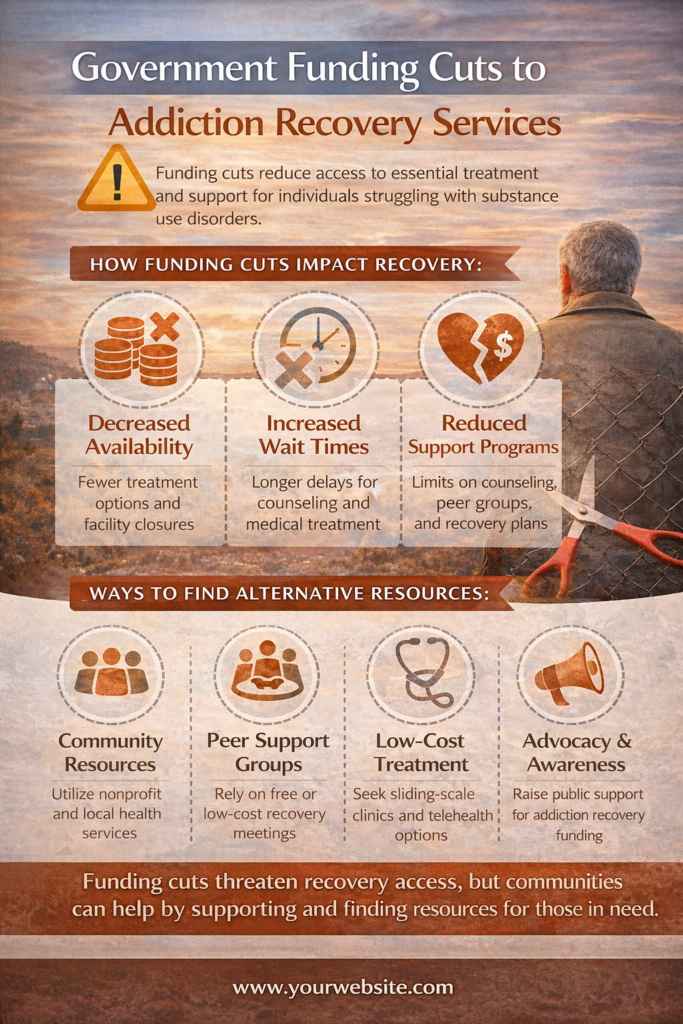
Addiction recovery services play a vital role in supporting individuals struggling with substance use disorders. These services provide access to treatment programs, counseling, medication-assisted therapy, and long-term recovery support. However, in many communities, government funding cuts have reduced the availability of these essential services. When financial support for addiction recovery programs is decreased, individuals seeking help may face longer wait times, limited treatment options, and fewer community resources. These challenges can significantly affect people’s ability to access the care they need to begin and maintain recovery.
Government funding is often a primary source of support for public treatment facilities, community health centers, and recovery support programs. Many individuals who seek treatment rely on publicly funded services because private treatment programs can be expensive and inaccessible. When funding is reduced, treatment centers may struggle to maintain staff, operate programs, or expand services to meet community needs. As a result, some facilities may reduce the number of patients they can serve, while others may close programs entirely.
Funding cuts can also affect the quality and continuity of care available to individuals in recovery. Effective addiction treatment often requires a combination of medical care, counseling, peer support, and long-term recovery planning. When resources become limited, programs may be forced to shorten treatment durations, reduce counseling services, or eliminate support programs that help individuals maintain long-term recovery. These reductions can increase the risk of relapse and make it more difficult for individuals to sustain progress.
Communities are also impacted when addiction recovery services lose financial support. Recovery programs not only help individuals heal but also contribute to healthier families, safer neighborhoods, and stronger local economies. Without adequate resources, communities may see increases in untreated substance use disorders, healthcare costs, and social challenges related to addiction. Investing in recovery services often benefits society as a whole by promoting stability, reducing healthcare burdens, and supporting long-term well-being.
Addressing the challenges created by government funding cuts requires collaboration among policymakers, healthcare providers, and community organizations. Advocating for sustainable funding, expanding access to evidence-based treatment programs, and increasing public awareness about the importance of addiction recovery services can help ensure that individuals receive the support they need. Recovery is a complex and ongoing process, and access to consistent resources is essential for helping people rebuild their lives.
Ultimately, addiction recovery services represent more than healthcare programs—they are lifelines for individuals seeking a second chance. Maintaining strong support systems through adequate funding ensures that people affected by addiction have the opportunity to pursue healing, stability, and long-term recovery.
Self-Management Strategies for Finding Alternative Resources During Cuts to Addiction Recovery Services
Government funding plays a significant role in supporting addiction recovery programs, including treatment centers, counseling services, and community support initiatives. However, when funding cuts occur, many individuals in recovery may experience reduced access to services such as therapy, medication-assisted treatment, or peer support programs. In these situations, self-management strategies become especially important. By learning to identify and use alternative resources, individuals can continue their recovery journey even when traditional services are limited.
Understanding the Importance of Self-Management
Self-management in addiction recovery refers to the ability to actively participate in maintaining one’s health and well-being. This includes recognizing personal needs, seeking out available resources, and developing coping strategies that support long-term recovery. When public funding cuts reduce the availability of services, individuals may need to take a more proactive role in locating support systems within their communities.
Developing strong self-management skills empowers individuals to maintain stability and continue their recovery despite changes in available resources.
Exploring Community-Based Resources
Even when government-funded programs face reductions, many communities offer alternative resources that can support recovery. Nonprofit organizations, faith-based groups, community health clinics, and peer-led recovery groups often provide free or low-cost services.
Individuals can explore these options by researching local recovery organizations, contacting community health centers, or visiting community resource hubs. Public libraries, social service agencies, and local health departments often maintain directories of available recovery resources.
By staying informed about local support systems, individuals can identify services that continue to provide guidance and encouragement throughout the recovery process.
Utilizing Peer Support Networks
Peer support groups can be a powerful alternative when formal treatment services are limited. These groups allow individuals to connect with others who share similar experiences with addiction and recovery. Peer support environments encourage open discussion, shared coping strategies, and mutual accountability.
Support groups may be available in person through community organizations or online through virtual recovery platforms. Online meetings, forums, and recovery communities provide flexible options for individuals who may not have access to local services.
Engaging with peer networks can help individuals feel less isolated while reinforcing motivation and commitment to recovery.
Seeking Low-Cost or Sliding-Scale Treatment Options
Some healthcare providers and counseling services offer sliding-scale fees based on income. Community health clinics, university counseling programs, and nonprofit treatment centers may provide therapy and medical care at reduced costs.
Individuals can also inquire about telehealth services, which sometimes offer more affordable treatment options. These alternatives can help maintain continuity of care even when publicly funded programs become less available.
Developing Personal Coping Strategies
In addition to seeking external resources, self-management includes developing personal coping mechanisms that support emotional and mental well-being. Healthy coping strategies such as exercise, mindfulness practices, journaling, and creative expression can help individuals manage stress and reduce cravings.
Creating structured daily routines, setting recovery goals, and maintaining supportive relationships can also strengthen resilience during challenging periods when resources may be limited.
These practices reinforce personal responsibility while supporting emotional balance and stability.
Advocating for Recovery Resources
Self-management also includes advocacy and awareness. Individuals and communities can work together to raise awareness about the importance of addiction recovery services and the impact of funding reductions. Participation in community meetings, advocacy groups, or recovery organizations can help amplify the voices of those affected by these changes.
Advocacy efforts not only support the restoration of services but also encourage communities to develop innovative solutions that expand access to recovery resources.
Moving Forward Despite Resource Challenges
Government funding cuts to addiction recovery services can create significant barriers for individuals seeking help. However, through self-management strategies such as exploring community resources, engaging in peer support, seeking affordable treatment options, and strengthening personal coping skills, individuals can continue to move forward in their recovery journey.
Recovery is a dynamic process that often requires adaptability and resilience. By actively seeking alternative support systems and maintaining a commitment to personal well-being, individuals can sustain their progress even in the face of reduced resources. Ultimately, self-management empowers people to remain active participants in their recovery and reinforces the belief that healing and growth remain possible despite external challenges.
Family Support Strategies for Finding Alternative Resources During Cuts to Addiction Recovery Services
Government funding cuts to addiction recovery services can create serious challenges for individuals and families who rely on these programs for treatment and support. Reduced funding may lead to fewer available programs, longer wait times, or the closure of essential services such as counseling, peer support groups, and community recovery programs. During these difficult situations, families often play an important role in helping their loved ones identify alternative resources and maintain progress in recovery. Through proactive support, research, and advocacy, families can help ensure that recovery continues even when traditional services become limited.
Understanding the Impact of Funding Cuts
When government funding for addiction recovery services is reduced, it can affect the availability of treatment centers, outpatient programs, and community support systems. Individuals in recovery may struggle to access therapy, medication-assisted treatment, or recovery coaching. These changes can be overwhelming, especially for those who depend on structured programs to maintain stability.
Families who understand the potential impact of funding cuts are better prepared to help their loved ones navigate these challenges. Awareness of changing resources allows families to begin exploring alternative options before gaps in care disrupt recovery progress.
Researching Community-Based Alternatives
One of the most important strategies families can use is actively researching community-based recovery resources. Many nonprofit organizations, local health clinics, faith-based groups, and recovery organizations offer free or low-cost support services. These programs may include peer recovery meetings, counseling services, or educational workshops that support long-term recovery.
Families can help by gathering information about available resources in their community. Local health departments, community centers, and social service agencies often provide directories of recovery services that may not be widely advertised.
Encouraging Peer Support and Recovery Groups
Peer support groups can be valuable alternatives when professional services become limited. These groups provide safe spaces where individuals can connect with others who share similar recovery experiences. The sense of understanding and shared encouragement within these groups often strengthens motivation and accountability.
Families can support their loved ones by helping them locate nearby recovery meetings or online support groups. Virtual meetings have become increasingly accessible, allowing individuals to connect with supportive communities even when local services are unavailable.
Supporting Low-Cost Treatment Options
Even when government-funded programs are reduced, some organizations offer sliding-scale services or low-cost treatment options. University counseling programs, nonprofit clinics, and community mental health centers sometimes provide therapy or counseling at reduced rates.
Families can assist by helping their loved ones research affordable treatment providers, schedule appointments, or explore telehealth services that may offer flexible and cost-effective care.
Providing Emotional and Practical Support
During periods of reduced resources, emotional support from family members becomes even more critical. Encouraging open communication, offering reassurance, and recognizing progress can help individuals maintain motivation during difficult times.
Families may also assist with practical needs, such as transportation to meetings, establishing structured routines, or encouraging healthy activities that support emotional well-being. These supportive actions reinforce stability and promote resilience in recovery.
Advocating for Recovery Resources
Families can also play an important role in advocating for the restoration and expansion of addiction recovery services. Participation in community meetings, support organizations, and advocacy initiatives can raise awareness about the impact of funding cuts on individuals and families.
Advocacy efforts help ensure that policymakers and community leaders understand the importance of maintaining accessible recovery services. Families who share their experiences can contribute to broader efforts to strengthen support systems for individuals in recovery.
Strengthening Recovery Through Family Involvement
Although government funding cuts may reduce access to certain programs, families can help fill important gaps by identifying alternative resources and offering consistent support. Through research, encouragement, and advocacy, families can help their loved ones remain connected to recovery networks and maintain progress.
Recovery is rarely achieved alone, and strong family involvement can make a meaningful difference during times of limited resources. By working together to find solutions and maintain supportive environments, families help reinforce the belief that recovery remains possible even in the face of challenges.
Community Resource Strategies for Finding Alternatives During Government Funding Cuts to Addiction Recovery Services
Addiction recovery services often rely on government funding to provide treatment programs, counseling, and long-term recovery support. When funding cuts occur, many communities face reduced services, limited treatment availability, and fewer support programs. These challenges can create barriers for individuals seeking help and maintaining recovery. In response, communities can develop alternative resource strategies that help fill these gaps and ensure individuals continue to receive the support they need.
Expanding Community-Based Support Networks
When publicly funded recovery programs are reduced, community organizations can play a crucial role in providing alternative services. Nonprofit organizations, faith-based groups, and grassroots recovery initiatives often step in to offer peer support groups, counseling programs, and educational workshops. These programs may operate with volunteer support or donations, making them more accessible to individuals who cannot afford private treatment.
By strengthening partnerships among local organizations, communities can create networks of support that help individuals access recovery resources even when government funding is limited.
Strengthening Peer Recovery Programs
Peer-led recovery programs are valuable community resources that can continue operating with minimal financial support. These programs allow individuals with lived experience in addiction recovery to support others who are facing similar challenges. Peer recovery meetings provide encouragement, accountability, and shared understanding.
Communities can promote these programs by providing meeting spaces in community centers, libraries, or local organizations. Increasing awareness about peer support networks helps individuals connect with recovery communities that reinforce hope and resilience.
Utilizing Local Health and Social Services
Community health clinics, social service agencies, and nonprofit health organizations often offer low-cost or sliding-scale services that support addiction recovery. These services may include mental health counseling, substance use treatment referrals, and wellness programs.
Communities can improve access by coordinating referrals between healthcare providers and community organizations. Resource directories and information centers can also help individuals quickly and efficiently identify available services.
Developing Collaborative Partnerships
Collaboration between local governments, healthcare providers, educational institutions, and nonprofit organizations can strengthen community responses to funding cuts. Partnerships allow communities to pool resources, share knowledge, and develop creative solutions that address gaps in recovery services.
For example, universities may offer counseling services through training clinics, while nonprofit organizations may provide peer support or recovery coaching. When these resources are coordinated, individuals can access comprehensive support even without extensive government funding.
Promoting Community Education and Awareness
Education and awareness campaigns can help communities better understand addiction and recovery while encouraging support for alternative resources. Workshops, community forums, and public awareness initiatives can inform residents about available recovery programs and ways they can support individuals in recovery.
Educated communities are more likely to reduce stigma, volunteer in recovery programs, and advocate for improved resources.
Encouraging Recovery-Friendly Environments
Communities can also support recovery by promoting environments that encourage healing and inclusion. Recovery-friendly workplaces, community events, and volunteer opportunities can help individuals rebuild social connections and regain a sense of purpose.
These supportive environments reinforce the message that individuals in recovery are valued members of the community who deserve opportunities for growth and stability.
Moving Forward Through Community Collaboration
Government funding cuts to addiction recovery services can pose significant challenges, but communities can develop innovative strategies to maintain support systems. By expanding community-based programs, strengthening peer support networks, encouraging partnerships, and promoting education, communities can create alternative pathways to recovery.
These collaborative efforts demonstrate that recovery is not solely dependent on government programs—it is also sustained by compassionate communities committed to helping individuals rebuild their lives. When communities work together to support recovery, they help ensure that individuals facing addiction continue to have access to hope, healing, and opportunity.
Frequently Asked Questions
Here are some common questions:
1. What are government funding cuts to addiction recovery services?
Government funding cuts occur when public financial support for addiction treatment programs is reduced. This can affect services such as treatment centers, counseling programs, medication-assisted treatment, and recovery support services that many individuals rely on for help.
2. How do funding cuts affect addiction treatment programs?
Funding reductions can lead to fewer available programs, longer waiting lists, reduced staffing, and limited treatment options. In some cases, treatment facilities may have to close or reduce the number of patients they can serve.
3. Why are addiction recovery services often publicly funded?
Addiction recovery services are frequently supported by government funding because substance use disorders are recognized as public health issues. Public funding helps ensure treatment is available to individuals who may not be able to afford private care.
4. What happens to individuals who need treatment when services are cut?
Individuals may face delays in receiving treatment or may have difficulty accessing specialized services. In these situations, people often need to seek alternative support systems such as community organizations, nonprofit treatment programs, or peer support groups.
5. What are some alternative resources for addiction treatment?
Alternative resources may include:
- Community health clinics
- Nonprofit recovery organizations
- Peer support groups (in-person or online)
- Faith-based recovery programs
- Sliding-scale counseling services
- Telehealth addiction treatment programs
These options can help individuals continue receiving support even when government-funded services are limited.
6. How can families help find treatment resources?
Families can help by researching local programs, contacting community health organizations, attending support meetings, and assisting with transportation or scheduling appointments. Emotional encouragement and practical support can also help individuals stay engaged in recovery.
7. What role do communities play in supporting recovery during funding cuts?
Communities can help by creating resource networks, supporting nonprofit organizations, offering meeting spaces for peer groups, and increasing awareness about available treatment services. Collaboration between healthcare providers and community groups can help fill gaps created by funding reductions.
8. Are low-cost addiction treatment options available?
Yes. Some clinics, nonprofit treatment centers, and counseling programs offer sliding-scale fees based on income. Community health centers and university counseling programs may also provide reduced-cost services.
9. How can people find addiction treatment resources in their area?
Individuals can search for local treatment options through:
- Community health departments
- Nonprofit recovery organizations
- National treatment directories
- Local hospitals or clinics
- Recovery support groups
These sources often maintain lists of available services within a community.
10. What can be done to improve access to addiction recovery services?
Improving access may involve advocating for increased funding, supporting community-based recovery programs, reducing stigma around addiction, and expanding awareness of treatment resources. Collective efforts from individuals, families, communities, and policymakers can help strengthen recovery support systems.
Conclusion
Although government funding cuts can limit access to addiction recovery services, individuals, families, and communities can still find ways to support recovery by exploring alternative resources. Community health clinics, nonprofit organizations, peer support groups, and low-cost counseling services can help fill gaps when traditional programs become less available. Families and communities also play an important role in helping individuals locate these resources and maintain supportive environments for recovery. By increasing awareness of available services and encouraging collaboration among community organizations, individuals affected by addiction can continue to access the care and support needed for long-term healing. Even in the face of financial challenges, recovery remains possible when people work together to identify and strengthen alternative pathways to treatment.
Video: Fewer Beds, Longer Waits, No Hope #AddictionTreatment #SystemFailure