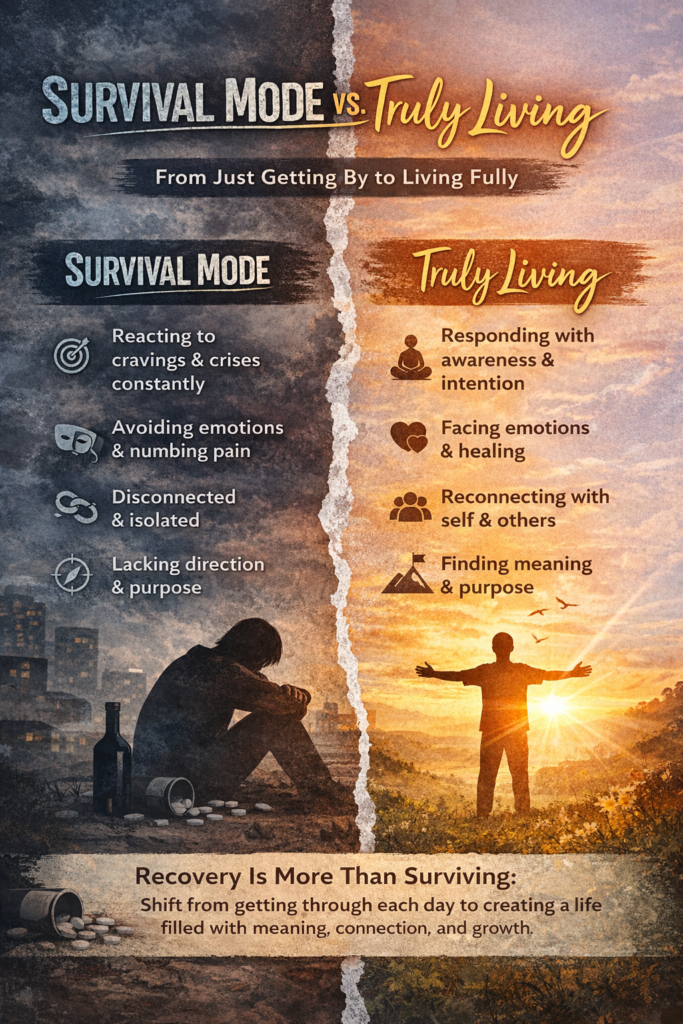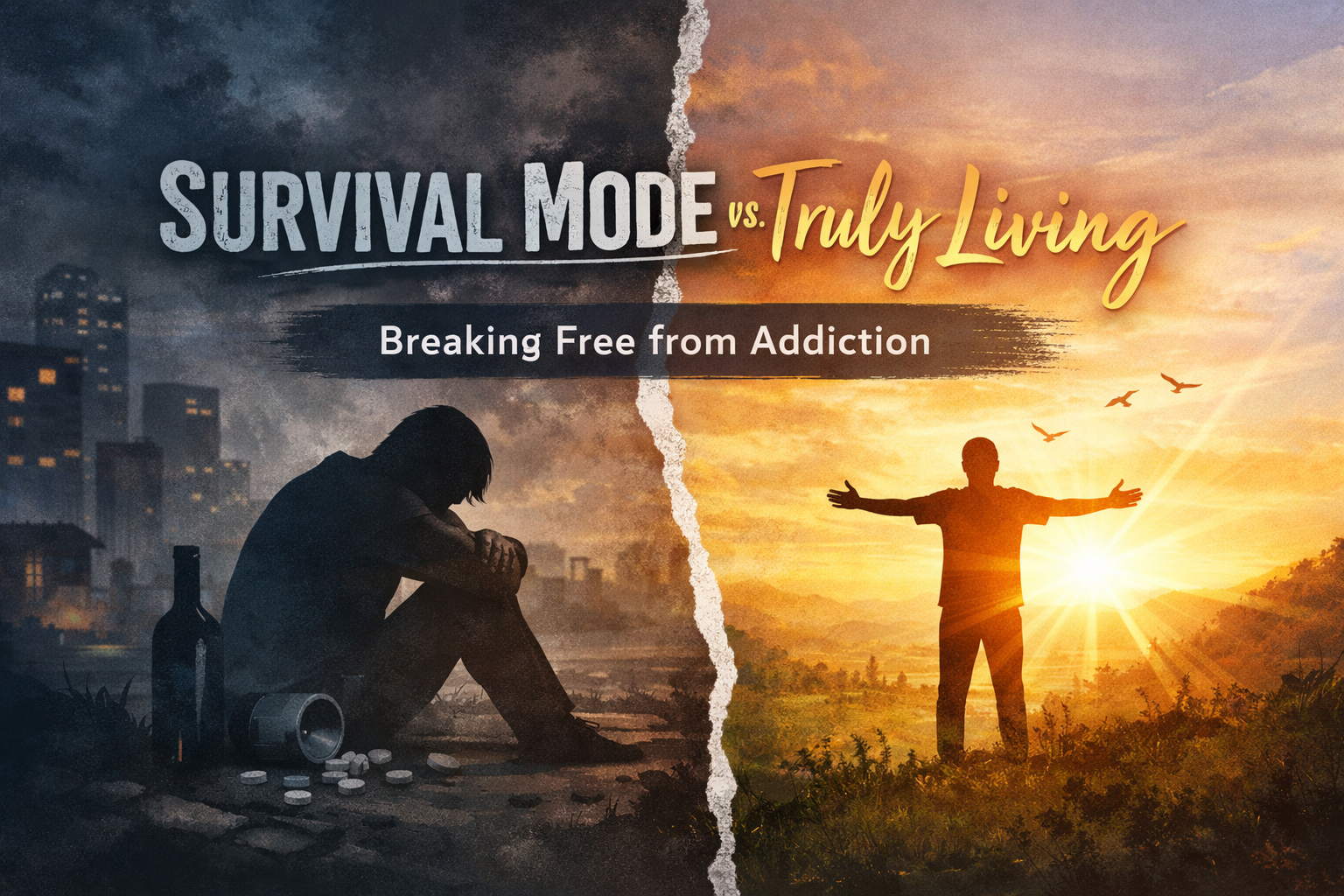
Addiction can keep individuals stuck in a constant state of survival mode, where the focus is on avoiding discomfort, managing urges, and simply making it through the day. In this state, life often becomes reactive, restricted, and disconnected from a deeper sense of purpose or meaning. Over time, this way of functioning may begin to feel normal—even necessary—but it often comes at the expense of emotional depth, meaningful relationships, and personal growth. Recovery opens the door to a different way of living: one that goes beyond mere survival. It involves learning to move past the need for immediate relief and beginning to engage with life in a more intentional, connected, and meaningful way.
Survival Mode vs. Truly Living: Breaking Free from Addiction’s Grip
Addiction often traps individuals in what feels like a constant state of survival. Life becomes centered around avoiding withdrawal, managing cravings, and coping with emotional discomfort. In this state, decisions are reactive, relationships are strained, and the future feels uncertain or out of reach. While it may not always be obvious, many individuals struggling with addiction are not truly living—they are surviving, day by day. Recovery offers a path out of this cycle, creating the possibility for a life that is not just endured, but genuinely experienced.
Understanding Survival Mode in Addiction
Survival mode is a state in which the brain and body prioritize immediate relief over long-term well-being. In addiction, this often means prioritizing substance use or behaviors that temporarily reduce discomfort, even if they cause harm in the long run.
Common signs of survival mode include:
- Constant focus on avoiding pain or distress
- Living day-to-day without long-term goals
- Emotional numbness or overwhelming reactivity
- Disconnection from relationships and self
In this state, individuals are not choosing their lives—they are reacting to them.
How Addiction Reinforces Survival Mode
Addiction changes how the brain processes stress, reward, and decision-making. Over time, substances or addictive behaviors become the primary way of coping. This creates a cycle:
- Discomfort or stress arises
- The urge to escape or numb intensifies
- Substance use provides temporary relief
- Consequences increase stress and emotional pain
This loop keeps individuals stuck, reinforcing the belief that survival—not growth—is the only option.
The Cost of Staying in Survival Mode
While survival mode may feel necessary, it comes at a high cost. Individuals often experience:
- Loss of meaningful relationships
- Lack of purpose or direction
- Chronic stress and emotional exhaustion
- Decreased self-worth and identity confusion
Over time, life becomes smaller, more restricted, and less fulfilling.
Transitioning from Survival to Living
Recovery is not just about stopping substance use—it is about shifting out of survival mode and into a more intentional way of living. This transition doesn’t happen overnight, but it begins with small, consistent changes.
Key shifts include:
- From reacting to responding: Pausing before acting on urges
- From avoidance to awareness: Facing emotions rather than escaping them
- From isolation to connection: Rebuilding relationships and support systems
- From chaos to structure: Creating routines that support stability
These changes help individuals regain a sense of control and direction.
Rediscovering What It Means to Live
As individuals move out of survival mode, they begin to reconnect with aspects of life that addiction often takes away.
This may include:
- Experiencing genuine emotions without numbing
- Building meaningful relationships
- Setting and working toward personal goals
- Finding purpose, joy, and fulfillment
Living is not about the absence of struggle—it is about engaging with life in a meaningful and intentional way.
Challenges in the Transition
Leaving survival mode can feel uncomfortable at first. Without substances, emotions may feel more intense, and uncertainty may increase. It’s common to feel:
- Vulnerable or exposed
- Unsure of identity without addiction
- Fearful of failure or relapse
These challenges are part of the process, not signs of failure.
The Role of Support and Patience
Moving from survival to truly living requires time, support, and persistence. Therapy, support groups, and healthy relationships provide guidance and encouragement during this transition.
Patience is essential. Growth happens gradually, and setbacks may occur. What matters is the continued effort to move forward.
Final Thoughts
Addiction keeps individuals in survival mode—but recovery opens the door to something more. It offers the chance to move beyond simply getting through the day and into a life filled with connection, purpose, and meaning.
Breaking free from survival mode is not easy, but it is possible. And on the other side is not just sobriety—but the opportunity to truly live.
Moving Beyond Survival: Self-Management Strategies for Truly Living in Addiction Recovery
Addiction often keeps individuals trapped in survival mode—focused on getting through the day, avoiding discomfort, and managing immediate urges. While this state may feel necessary, it limits growth, connection, and a sense of purpose. Transitioning from survival mode to truly living requires more than sobriety; it requires intentional self-management. By developing the ability to manage thoughts, emotions, and behaviors, individuals can begin to shift from reactive patterns to a more meaningful and fulfilling way of life.
Understanding the Shift: Survival vs. Living
In survival mode, life is driven by avoidance—avoiding pain, stress, and emotional discomfort. In contrast, truly living involves engagement—facing challenges, building relationships, and pursuing purpose.
Self-management is the bridge between these two states. It allows individuals to pause, reflect, and choose actions that align with long-term well-being rather than short-term relief.
1. Increasing Self-Awareness
The first step in moving beyond survival mode is recognizing it. Many individuals are unaware of how often they operate on autopilot.
Self-awareness strategies include:
- Noticing emotional triggers and patterns
- Identifying automatic thoughts (e.g., “I can’t handle this”)
- Reflecting on daily behaviors and choices
Awareness creates space for change.
2. Regulating Emotional Responses
Survival mode is often fueled by intense or avoided emotions. Learning to regulate emotions reduces the need to escape through substance use.
Effective techniques include:
- Deep breathing or grounding exercises
- Naming and validating emotions
- Taking intentional pauses before reacting
Over time, emotions become more manageable and less overwhelming.
3. Replacing Reactive Behaviors with Intentional Choices
In addiction, behaviors are often automatic and driven by immediate relief. Self-management involves interrupting these patterns.
This can look like:
- Pausing before acting on urges
- Asking, “What do I actually need right now?”
- Choosing healthier alternatives (walking, calling someone, journaling)
These small decisions gradually reshape behavior patterns.
4. Building Structure and Purpose
Survival mode thrives in chaos and unpredictability. Creating structure helps individuals feel grounded and in control.
Key strategies include:
- Establishing a daily routine
- Setting short-term and long-term goals
- Engaging in meaningful activities
Purpose shifts life from “getting through” to “moving forward.”
5. Strengthening Healthy Coping Skills
To move beyond survival, individuals need tools to handle stress without substances.
Healthy coping strategies include:
- Physical activity
- Creative outlets
- Mindfulness or meditation
- Problem-solving skills
The goal is to expand the range of responses to stress and discomfort.
6. Practicing Connection Instead of Isolation
Survival mode often leads to withdrawal and disconnection. Truly living requires connection—with others and with oneself.
Self-management in this area includes:
- Reaching out when struggling
- Building supportive relationships
- Engaging in community or recovery groups
Connection reduces isolation and reinforces growth.
7. Reinforcing Progress and Growth
Transitioning out of survival mode is gradual. Recognizing progress helps maintain motivation.
This includes:
- Celebrating small wins
- Reflecting on how responses to stress have changed
- Acknowledging increased emotional awareness
Progress builds confidence and reinforces new patterns.
Moving Toward a Life of Intention
The shift from survival mode to truly living is not immediate. It involves consistent effort, patience, and a willingness to face discomfort. Self-management provides the tools needed to navigate this process.
Over time, what once felt like a constant struggle becomes more manageable. Life becomes less about avoiding pain and more about engaging with meaning.
Final Thoughts
Addiction may begin in survival mode, but recovery offers a path beyond it. Through intentional self-management, individuals can reclaim control over their choices, emotions, and direction in life.
Moving beyond survival is not about perfection—it’s about progress. And with each intentional step, individuals move closer to a life that is not just endured, but truly lived.
From Survival to Connection: Family Support Strategies in Addiction Recovery
Addiction often places individuals and their families into survival mode—a state where the focus is on getting through each day, managing crises, and avoiding further harm. In this mode, relationships become strained, communication breaks down, and emotional distance grows. While this may feel necessary during active addiction, it is not sustainable for long-term healing. Recovery offers an opportunity not only for the individual to change but also for the entire family system to shift from survival mode to a more connected, supportive, and intentional way of living.
Understanding Survival Mode in Families
Families impacted by addiction often develop patterns centered around crisis management. These may include:
- Walking on eggshells to avoid conflict
- Reacting quickly to problems without long-term solutions
- Suppressing emotions to “keep the peace.”
- Taking on roles such as caretaker, fixer, or protector
While these behaviors may have helped the family cope during active addiction, they can prevent growth and healing during recovery if they continue unchanged.
Why Family Support Matters in the Shift to Living
As the individual in recovery begins to move out of survival mode, the family must also adapt. Without this shift, old dynamics can pull everyone back into reactive patterns.
Healthy family support helps:
- Create emotional safety
- Encourage growth instead of control
- Reinforce new, healthier behaviors
- Support long-term recovery and connection
The goal is not just stability, but a more meaningful and balanced way of living together.
1. Moving from Reactivity to Intentional Support
In survival mode, families often react quickly out of fear or frustration. In recovery, support must become more intentional.
This involves:
- Pausing before responding to situations
- Choosing calm, thoughtful communication
- Focusing on long-term outcomes rather than immediate relief
Intentional responses help reduce conflict and build trust.
2. Encouraging Emotional Expression
Survival mode often leads to emotional suppression. Families may avoid difficult conversations to prevent conflict.
Shifting toward living means:
- Creating space for open and honest dialogue
- Validating each other’s feelings
- Allowing discomfort without shutting down
Emotional expression strengthens connection and understanding.
3. Supporting Without Controlling
Families often feel responsible for keeping their loved one “on track.” However, control can create tension and resistance.
Healthy support looks like:
- Encouraging recovery efforts
- Offering help when asked
- Allowing the individual to take responsibility for their choices
Letting go of control supports independence and accountability.
4. Establishing Healthy Boundaries
Boundaries are essential for moving out of survival mode. They create clarity and prevent the return of unhealthy dynamics.
Examples include:
- Not rescuing or fixing problems caused by addiction
- Protecting personal, emotional, and physical well-being
- Clearly communicating limits and expectations
Boundaries allow both the individual and the family to grow.
5. Rebuilding Trust Through Consistency
Trust is often damaged during addiction, leaving families guarded and uncertain. Rebuilding trust requires time and consistency from everyone involved.
Families can support this by:
- Acknowledging progress
- Being patient with the process
- Avoiding constant monitoring or suspicion
Trust grows through repeated, positive experiences over time.
6. Fostering Connection and Shared Meaning
Moving beyond survival involves reconnecting as a family—not just managing recovery.
This may include:
- Spending quality time together
- Creating new, positive experiences
- Establishing shared goals and values
Connection shifts the focus from “getting through” to “growing together.”
7. Taking Care of the Family System
Families must also care for themselves. Remaining in survival mode often leads to burnout, resentment, and emotional exhaustion.
Self-care strategies include:
- Seeking individual therapy or support groups
- Maintaining personal interests and routines
- Setting limits on emotional involvement when needed
A healthier family system supports a healthier recovery process.
Moving Forward Together
The transition from survival mode to truly living is a process for both the individual and the family. It requires patience, awareness, and a willingness to change long-standing patterns.
Families who embrace this shift create an environment where recovery is not just maintained, but strengthened.
Final Thoughts
Addiction may push families into survival mode—but recovery offers a path toward connection, stability, and meaning. By shifting from reactive patterns to intentional support, families can help build a new foundation of trust, respect, and growth.
Healing is not just about avoiding crisis—it’s about learning how to live differently, together.
From Isolation to Connection: Community Resource Strategies for Moving Beyond Survival Mode in Addiction Recovery
Addiction often keeps individuals trapped in survival mode—focused on immediate relief, managing cravings, and getting through each day. In this state, life becomes narrow, reactive, and disconnected. Recovery offers a way out, but moving from survival mode to truly living requires more than internal change. It requires a connection. Community resources play a critical role in this transition, providing structure, support, and opportunities to rebuild a meaningful life beyond addiction.
Understanding the Role of Community in Recovery
Survival mode thrives in isolation. Without external support, individuals may rely solely on willpower, which can quickly become overwhelming. Community resources help shift recovery from an individual struggle to a shared experience.
They provide:
- A sense of belonging and understanding
- Accountability beyond oneself
- Access to guidance and tools
- Opportunities for growth and engagement
Connection is what transforms recovery from survival into something sustainable and fulfilling.
1. Replacing Isolation with Peer Support
One of the most powerful ways to move beyond survival mode is through connection with others who understand the recovery process.
Community strategies include:
- Attending support groups regularly
- Engaging with peers who share similar experiences
- Building relationships with people in recovery
Peer support reduces loneliness and helps normalize the challenges of recovery.
2. Utilizing Structured Recovery Programs
In survival mode, life often feels chaotic and unpredictable. Structured community programs provide stability and direction.
Examples include:
- Outpatient or intensive outpatient programs
- Group therapy sessions
- Recovery coaching or case management
These resources create consistency and help individuals develop new patterns of behavior.
3. Building a Sober Social Network
Moving into truly living requires replacing old social environments with healthier ones. Community resources offer spaces to build new relationships.
This may involve:
- Sober meetups or events
- Recovery-based social groups
- Volunteer or service opportunities
These connections help individuals rediscover enjoyment and a sense of belonging without substances.
4. Engaging in Meaningful Activities
Survival mode focuses on avoiding discomfort, while truly living involves pursuing purpose. Community resources provide access to activities that foster growth.
Examples include:
- Educational or skill-building programs
- Fitness or wellness classes
- Creative workshops or hobbies
These activities help individuals reconnect with interests and develop a sense of identity beyond addiction.
5. Accessing Mental Health and Wellness Services
Emotional and psychological support is essential when transitioning out of survival mode. Community-based services provide professional guidance.
These may include:
- Individual therapy or counseling
- Trauma-informed care
- Mental health support groups
Addressing underlying issues supports deeper, long-term recovery.
6. Preparing for High-Risk Situations with Community Support
Even as individuals begin to move beyond survival mode, challenges will arise. Community resources provide a safety net during difficult moments.
Important supports include:
- Crisis hotlines or emergency services
- Immediate access to support groups
- Sponsors or accountability partners
Knowing where to turn reduces the likelihood of relapse.
7. Staying Consistent and Engaged
The transition from survival to living requires ongoing effort. Community resources are most effective when used consistently, not just in times of crisis.
Strategies include:
- Scheduling regular participation in groups or programs
- Maintaining contact with support networks
- Continuing engagement even during stable periods
Consistency builds a reliable foundation for long-term recovery.
Moving from Surviving to Living
Community involvement shifts recovery from isolation to connection, from chaos to structure, and from avoidance to engagement. It helps individuals expand their lives beyond the narrow focus of survival.
Through connection, individuals begin to:
- Experience genuine relationships
- Develop purpose and direction
- Build confidence in their ability to live differently
This is where recovery becomes more than abstinence—it becomes a new way of life.
Final Thoughts
Addiction may keep individuals in survival mode, but the community opens the door to something more. By actively engaging with community resources, individuals can move beyond simply getting through the day and begin building a life that feels meaningful and connected.
Recovery is not meant to be done alone. And in the journey from survival to truly living, community is one of the most powerful tools available.
Frequently Asked Questions
Here are some common questions:
1. What does “survival mode” mean in addiction?
Survival mode in addiction refers to living in a constant state of coping and reacting. The focus is on avoiding pain, managing cravings, and getting through each day rather than building a meaningful life.
2. How is survival mode different from truly living?
- Survival mode = reactive, focused on immediate relief, emotionally disconnected
- Truly living = intentional, emotionally engaged, focused on growth and purpose
The difference lies in whether life is being endured or actively experienced.
3. Why do people in addiction stay in survival mode?
Addiction trains the brain to prioritize short-term relief over long-term well-being. Over time, this creates patterns of avoidance, emotional numbing, and reactive decision-making that keep individuals stuck.
4. Can someone be sober but still in survival mode?
Yes. Sobriety does not automatically mean someone is truly living. A person may stop using substances, but still:
- Avoid emotions
- Feel disconnected
- Lack of purpose or direction
Recovery involves more than abstinence—it involves growth.
5. What are the signs someone is stuck in survival mode?
Common signs include:
- Living day-to-day without goals
- Avoiding difficult emotions
- Feeling numb or constantly overwhelmed
- Isolating from others
- Reacting impulsively to stress
These patterns indicate a focus on coping rather than living.
6. What does “truly living” look like in recovery?
Truly living includes:
- Experiencing and managing emotions
- Building meaningful relationships
- Setting and pursuing goals
- Making intentional decisions
- Feeling a sense of purpose
It’s about engagement, not avoidance.
7. Why is it hard to move out of survival mode?
Because survival mode feels familiar and “safe.” Moving beyond it requires:
- Facing discomfort
- Letting go of old coping patterns
- Developing new skills
This can feel uncomfortable at first, even though it leads to growth.
8. How can someone start transitioning out of survival mode?
Key steps include:
- Increasing self-awareness
- Learning emotional regulation skills
- Building structure and routine
- Seeking support (therapy, groups, community)
- Making small, intentional choices daily
The shift happens gradually, not all at once.
9. What role does emotional regulation play in this transition?
A major one. Survival mode often involves either avoiding or being overwhelmed by emotions. Learning to manage emotions allows individuals to respond thoughtfully rather than react impulsively.
10. How do relationships change when moving from survival to living?
Relationships often improve because individuals:
- Communicate more openly
- Become more emotionally present
- Build trust over time
Connection replaces isolation.
11. Can relapse happen during this transition?
Yes. The transition can be uncomfortable, and old patterns may resurface. Relapse can occur, but it can also be part of the learning process if addressed constructively.
12. What mindset helps most in moving toward truly living?
Helpful mindsets include:
- Progress over perfection
- Willingness to feel discomfort
- Patience with the process
- Openness to change
These support long-term growth.
13. How long does it take to move out of survival mode?
There is no set timeline. It depends on the individual, their support system, and their engagement in recovery. For many, it’s a gradual process over months or years.
14. Why is connection important in this process?
Connection helps break isolation, which fuels survival mode. Support from others provides:
- Perspective
- Accountability
- Emotional support
Recovery is strengthened through relationships.
15. What is the biggest takeaway about survival vs. living?
Recovery is not just about stopping substance use—it’s about changing how you live. Moving from survival mode to truly living means shifting from reacting to life… to actively creating it.
Conclusion
The transition from survival mode to truly living is one of the most significant shifts in addiction recovery. It requires patience, effort, and a willingness to face discomfort rather than avoid it. While survival mode may have once served a purpose, it is not where growth or fulfillment happens. Through recovery, individuals can rebuild their lives with greater awareness, stronger relationships, and a renewed sense of purpose. Moving beyond survival is not about perfection—it’s about progress, choice, and the gradual rediscovery of what it means to fully live.
Video: