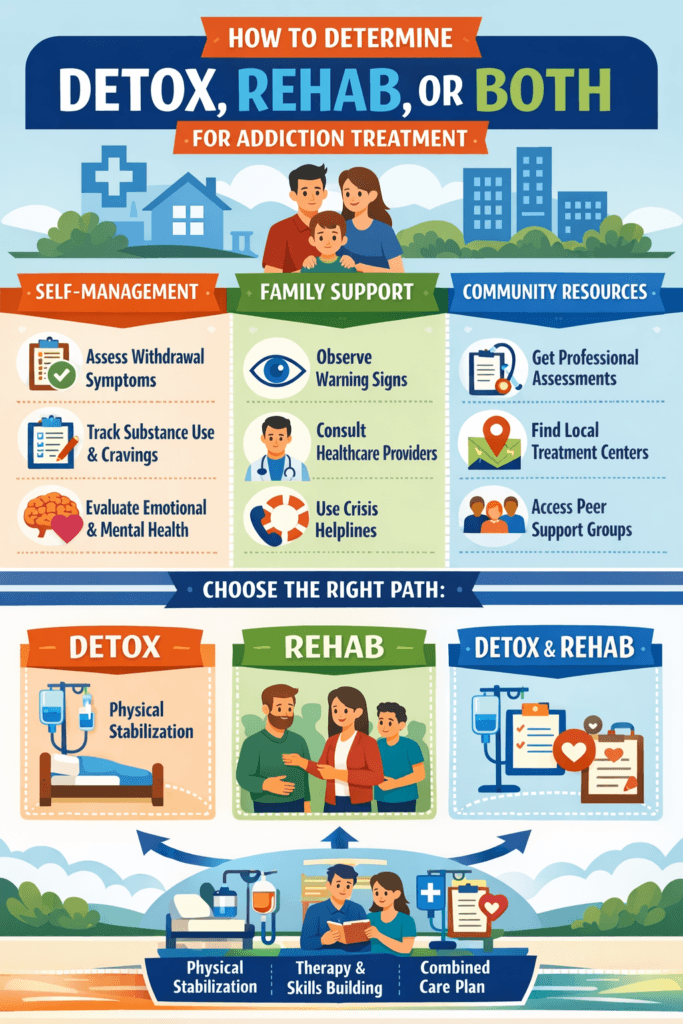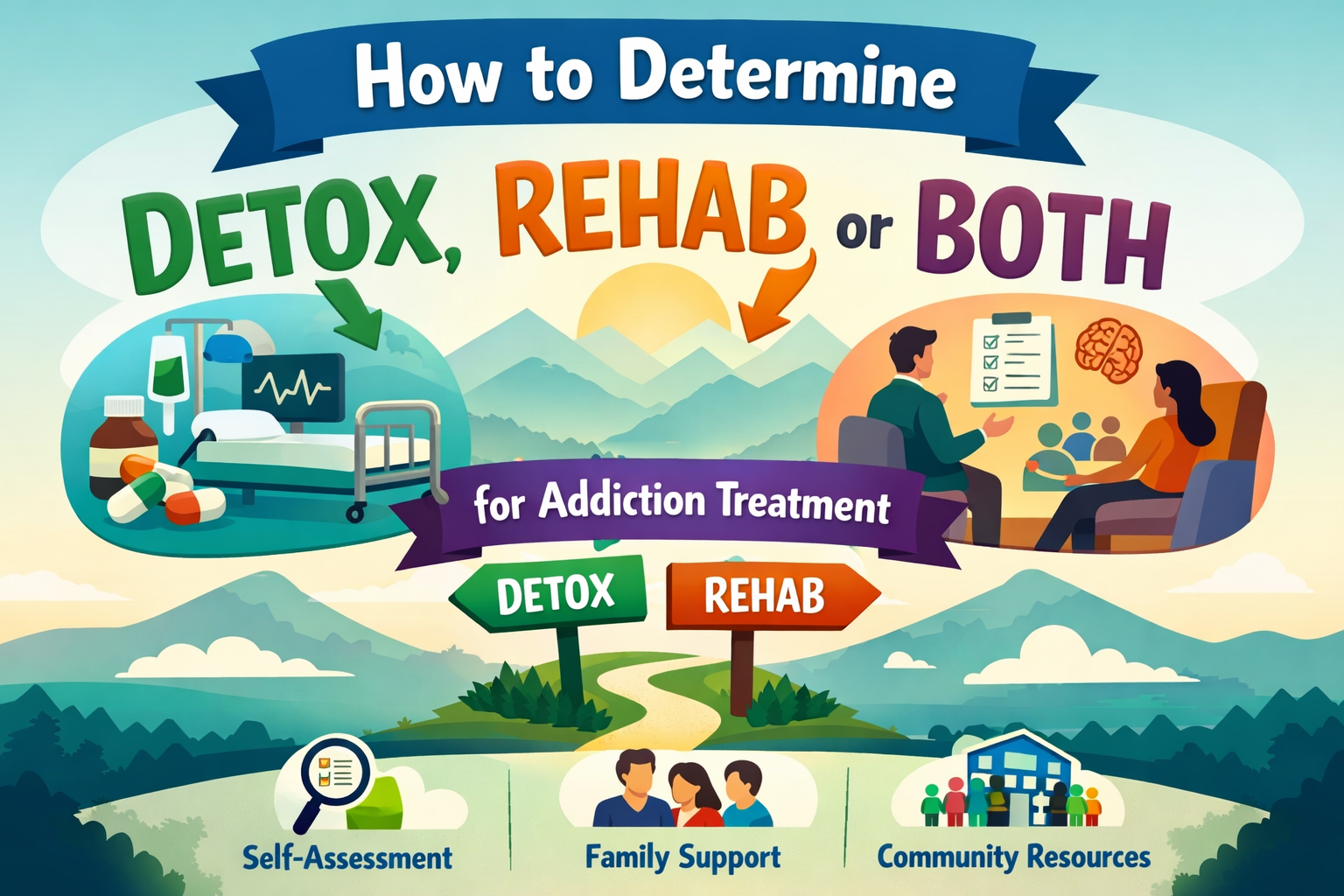
Determining whether detox, rehab, or a combination of both is needed for addiction treatment is a critical first step in the recovery journey. Because addiction affects the body, mind, and social environment, choosing the appropriate level of care requires more than recognizing substance use alone. Self-management strategies help individuals assess physical dependence, emotional triggers, and relapse risks. Family support provides observation, encouragement, and practical assistance in seeking care. Community resources offer professional assessments, referrals, and supportive services that guide treatment decisions. When these three forces work together, individuals are better equipped to enter the right treatment pathway safely and effectively.
Detox, Rehab, or Both? Understanding the Right Path in Addiction Treatment
Addiction treatment is not a one-size-fits-all process. Many people entering recovery hear terms like detox and rehab used interchangeably, but they serve very different purposes. Knowing the difference helps individuals and families make informed decisions about the most effective treatment path.
Detoxification, or detox, is the first step for many people with substance dependence. During detox, the body clears drugs or alcohol while medical professionals manage withdrawal symptoms. This phase focuses on physical stabilization and safety. Depending on the substance and severity of use, detox can last from a few days to over a week. While detox addresses the physical dependence, it does not treat the psychological, behavioral, or emotional roots of addiction.
Rehabilitation, commonly called rehab, begins once the body is stabilized. Rehab focuses on therapy, education, coping skills, relapse prevention planning, and emotional healing. Programs may be inpatient (residential) or outpatient, depending on individual needs. Rehab helps individuals understand triggers, rebuild daily routines, repair relationships, and develop long-term recovery strategies.
For many individuals, both detox and rehab are necessary. Detox prepares the body for recovery work, while rehab provides the tools to maintain sobriety. Skipping rehab after detox often leads to relapse because underlying causes remain unaddressed. Likewise, entering rehab without detox may be unsafe for those with severe physical dependence.
The best treatment plan depends on the substance used, the length of addiction, physical health, mental health, and personal support systems. A professional assessment helps determine whether detox, rehab, or both are required.
Recovery is a process, not a single event. When detox and rehab work together, they create a strong foundation for long-term healing, stability, and renewed quality of life.
Self-Management Strategies to Decide Between Detox, Rehab, or Both in Addiction Treatment
Choosing the right level of care for addiction treatment can feel overwhelming, especially at the beginning of recovery. While professional assessments are always recommended, individuals can use self-management strategies to better understand whether detox, rehab, or a combination of both may be necessary. Self-awareness and honest evaluation are powerful tools in taking the first steps toward treatment.
A key self-management strategy is assessing physical dependence. Individuals can reflect on whether they experience withdrawal symptoms such as shaking, nausea, anxiety, sweating, or insomnia when they stop using a substance. The presence of withdrawal often signals the need for medically supervised detox to ensure safety and stabilization before further treatment.
Another important strategy is monitoring patterns of use. Keeping a brief daily log of substance use, cravings, and failed attempts to quit can reveal the severity of dependence. Frequent cravings, loss of control, or continued use despite negative consequences suggest that structured rehabilitation support is likely needed beyond detox.
Evaluating emotional and mental health is also essential. Feelings of depression, anxiety, trauma, or high stress often drive substance use. If emotional triggers feel unmanageable alone, rehab programs offering therapy and coping-skill development can provide critical support.
Identifying relapse risk factors is another self-management step. Individuals can list triggers such as certain people, environments, or emotional states. If avoiding these triggers seems unrealistic without guidance, rehab may be necessary to build relapse-prevention skills.
Finally, seeking feedback from trusted sources such as family members, support groups, or healthcare providers can provide an outside perspective. Addiction often distorts self-assessment, so external input strengthens decision-making.
While self-management strategies help clarify treatment needs, professional evaluations remain the gold standard. When individuals combine self-awareness with clinical guidance, they are more likely to choose the right path — whether detox, rehab, or both — and build a strong foundation for lasting recovery.
Family Resource Strategies to Determine Whether Detox, Rehab, or Both Are Needed in Addiction Treatment
Families often play a critical role in guiding a loved one toward addiction treatment. Because addiction affects behavior, health, and relationships, family members are often the first to recognize when professional help is needed. Using family resource strategies can help determine whether detox, rehab, or a combination of both is the most appropriate path.
One effective strategy is observing physical and behavioral warning signs. Families can watch for symptoms such as withdrawal sickness, tremors, sweating, confusion, sudden mood changes, or inability to function without substances. These signs suggest physical dependence, indicating that medically supervised detox may be necessary for safety.
Families can also document patterns of substance use and consequences. Keeping track of missed work, financial problems, legal issues, health concerns, or repeated failed attempts to quit provides a clearer picture of addiction severity. When substance use continues despite serious consequences, structured rehabilitation is usually recommended in addition to detox.
Another valuable resource strategy is consulting healthcare professionals. Primary care providers, addiction specialists, or emergency departments can perform assessments and recommend appropriate levels of care. Many treatment centers offer free intake evaluations that families can schedule to guide their decisions.
Utilizing community and crisis resources is equally important. National helplines, local recovery organizations, and crisis services can provide immediate guidance on treatment placement. Families can also attend support groups such as Al-Anon or family recovery education programs to learn how to respond effectively.
Finally, creating a supportive decision-making environment helps the loved one accept care. Families can express concern without judgment, present treatment options, and offer assistance with transportation, childcare, or insurance navigation. Practical support reduces barriers to entering detox or rehab.
When families use available resources, gather accurate information, and seek professional guidance, they become powerful partners in determining the right treatment path. Whether detox, rehab, or both are needed, family involvement can significantly improve the chances of successful recovery.
Community Resource Strategies to Determine Whether Detox, Rehab, or Both Are Needed in Addiction Treatment
Communities play an essential role in connecting individuals and families to appropriate addiction treatment. Because many people delay seeking help due to confusion, stigma, or lack of information, accessible community resources can guide decisions about whether detox, rehab, or both are required. Using local and national support systems helps ensure individuals enter the right level of care at the right time.
One key community strategy is accessing screening and assessment services. Many hospitals, community health clinics, behavioral health centers, and treatment facilities offer free or low-cost addiction assessments. These evaluations determine physical dependence, mental health needs, and risk factors, clarifying whether medically supervised detox is necessary before rehabilitation begins.
Utilizing addiction helplines and referral networks is another effective approach. National and state hotlines provide confidential guidance, crisis intervention, and treatment referrals. Trained specialists help individuals understand treatment options, insurance coverage, and available detox or rehab programs in their area.
Community organizations also offer education and prevention programs. Workshops, recovery centers, faith-based initiatives, and public health campaigns teach individuals and families how to recognize addiction severity, withdrawal risks, and relapse patterns. This knowledge supports informed treatment decisions.
Peer recovery services provide lived-experience guidance. Recovery coaches and peer mentors help individuals navigate the treatment system, accompany them to intake appointments, and share insights on whether detox, rehab, or both are appropriate based on real-world experience.
Finally, reducing practical barriers is crucial for the community. Transportation services, housing assistance, employment programs, and childcare support make entering treatment more feasible. When communities address these barriers, individuals are more likely to complete detox and continue into rehabilitation.
Through coordinated community resources, individuals gain access to accurate information, professional assessments, and supportive networks. These strategies help ensure the right treatment path is chosen — whether detox, rehab, or both — leading to stronger recovery outcomes and healthier communities.
Frequently Asked Questions
Here are some common questions:
Q1: What is the difference between detox and rehab?
Detox is the medically supervised process of removing substances from the body while managing withdrawal symptoms. Rehab is a therapeutic program that addresses the psychological, emotional, and behavioral aspects of addiction. Detox stabilizes the body; rehab builds recovery skills.
Q2: How do I know if detox is necessary?
Detox is usually needed if a person experiences withdrawal symptoms such as shaking, nausea, sweating, anxiety, seizures, or severe cravings when stopping substance use. Medical detox ensures safety during this process.
Q3: Can someone go straight to rehab without detox?
Yes, if the person does not have physical dependence or withdrawal risk. However, individuals with heavy or long-term substance use typically require detox before beginning rehab.
Q4: How can self-management help determine the right treatment?
Self-management strategies include tracking substance use patterns, noting withdrawal symptoms, identifying emotional triggers, and assessing failed quit attempts. These observations help indicate whether detox, rehab, or both are needed.
Q5: What role does family support play in treatment decisions?
Family members can observe warning signs, encourage professional assessments, assist with logistics, and provide emotional support. Their involvement often helps individuals accept the appropriate level of care.
Q6: How do community resources help determine treatment needs?
Community clinics, hospitals, addiction helplines, and recovery organizations provide professional screenings, referrals, and treatment recommendations based on clinical assessments.
Q7: Is detox alone enough for recovery?
Detox alone addresses physical dependence but does not treat underlying emotional, behavioral, or psychological causes of addiction. Without rehab or continued therapy, relapse risk remains high.
Q8: How long do detox and rehab usually last?
Detox typically lasts 3–10 days, depending on the substance. Rehab programs may last 30, 60, or 90 days, with outpatient options that can extend longer based on individual needs.
Q9: What if someone refuses treatment?
Families and community support services can provide education, motivational interventions, and crisis resources. In severe cases, medical or legal interventions may be necessary to ensure safety.
Q10: Who makes the final decision on treatment type?
A licensed addiction or medical professional makes the final recommendation after a clinical assessment. Self-awareness, family input, and community guidance all contribute to this decision.
Conclusion
Successful addiction recovery begins with choosing the right level of care. Self-management strategies build personal awareness of dependence and readiness for change. Family support strengthens motivation, reduces barriers, and encourages treatment engagement. Community resources connect individuals to professional evaluations, detox services, rehabilitation programs, and long-term recovery networks. By combining personal insight, family involvement, and community guidance, individuals can accurately determine whether detox, rehab, or both are necessary. This collaborative approach creates a strong foundation for safe stabilization, meaningful healing, and lasting recovery.
Video: Detox Only Fixes Half the Problem #addictionrecovery #rehablife #sobriety