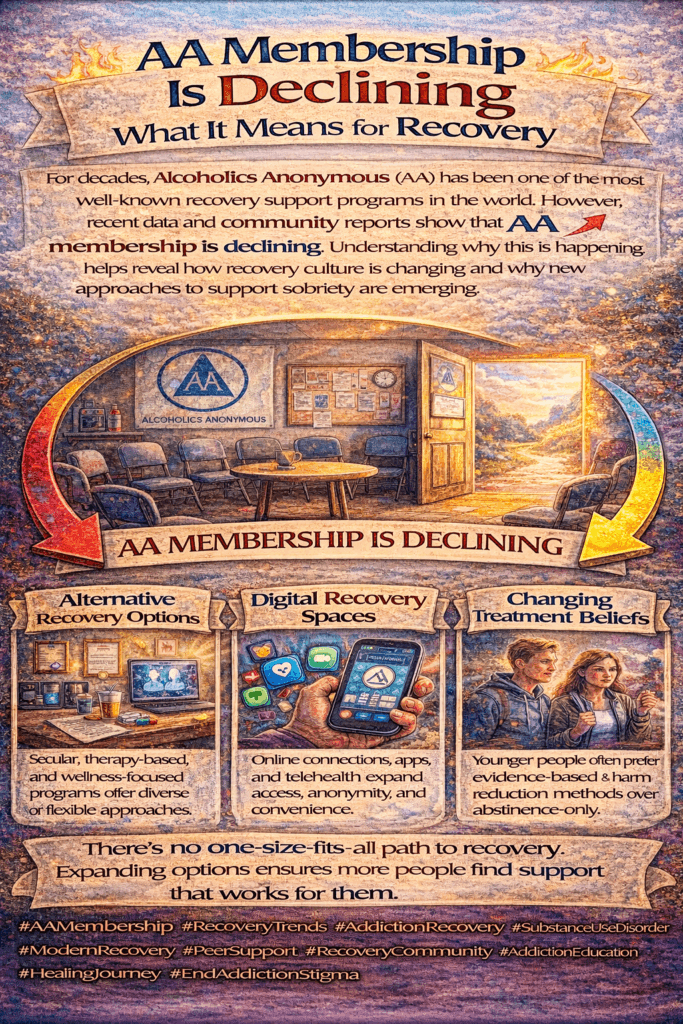
AA membership has been declining steadily over the past decade, even as substance misuse continues to affect millions of individuals and families across communities. Having spent years involved in addiction recovery spaces, I’ve watched these trends closely and reflected on what they may signal for people who are considering Alcoholics Anonymous as a pathway to recovery. The numbers raise important questions about changing attitudes toward traditional support models, the growing demand for more flexible or individualized approaches, and whether existing programs are evolving sufficiently to meet contemporary needs. Beyond AA itself, this shift has broader implications for the recovery ecosystem, including peer support groups, treatment providers, and community-based resources that play a critical role in sustaining long-term recovery.
What’s Actually Happening with AA Membership?
For decades, Alcoholics Anonymous has been the most well-known mutual help group for alcohol dependence and recovery. Over time, though, the official numbers provided by AA’s own surveys and various independent studies point to a drop in membership. AA’s yearly membership estimate dropped from about 2.1 million in 2013 to around 1.7 million in 2023, a change that’s hard to ignore. This isn’t just a small blip; it’s a real trend.
There are a few things contributing to this slow but steady decline:
- New recovery options: These days, people have loads of ways to find support. Online programs, alternatives such as SMART Recovery, and peer support apps are on the rise, providing greater flexibility.
- Pandemic impacts: COVID-19 limited in-person meetings for years, making it tough for people to join or stick with AA if they preferred face-to-face support.
- Changing views about addiction and recovery: Younger generations seem to want choices that fit their beliefs. Sometimes, those don’t match up with AA’s spiritual or 12-step approach.
- More professional treatment options: Outpatient clinics and individual therapists are increasingly available, and many people prefer the flexibility and privacy these settings offer.
Seeing these factors at play, it makes a lot of sense why AA’s old model doesn’t draw as many newcomers as it used to. The availability of user-friendly digital solutions and modern approaches continues to fuel this switch-up in attitudes.
Understanding AA’s Longtime Role in Recovery Culture
AA has been around since 1935 and played a big part in shaping how people across the US and beyond talk about and approach addiction. The “12 Steps” are so well known that they’ve inspired dozens of offshoots, such as Narcotics Anonymous and Gamblers Anonymous.
For a long time, AA was pretty much the only widely available peer support group if you were searching for help with alcohol use. AA is based on anonymous support, regular meetings, and a spiritual framework that encourages reflection, honesty, and connection. Many people still credit AA for life-changing results, but the landscape of recovery support has switched up a lot, especially over the last ten to fifteen years.
If you look beyond the traditional model, you’ll track down a wealth of programs that either mirror AA’s group focus or twist things to suit modern life. Social media, mobile apps, and mixed-group approaches have all become part of today’s support landscape.
Why Is AA Membership Dropping?
From my experience, it boils down to people wanting programs that fit their own personalities, beliefs, and schedules. Let’s break down a few reasons in plain language:
- Lack of flexibility: Some folks feel AA’s rules (like confirming total abstinence or needing to attend in-person meetings regularly) are rigid or outdated.
- Views on spirituality: AA uses spiritual language, and not everyone is comfortable with that. Alternatives have popped up to serve those who want a more secular approach.
- Privacy concerns: In smaller communities, showing up at an AA meeting can feel awkward if you worry about running into people you know.
- Digital options: Online recovery groups and coaching platforms are super convenient. You can attend from anywhere, on your own terms, even anonymously if you like. That reduces the friction for people who are hesitant to attend traditional meetings.
Not all of these changes are bad or good. They just reflect how real people’s needs are growing and how recovery communities are making things work for everyone.
How Is This Switch Up Affecting Recovery as a Whole?
AA’s declining numbers don’t mean people are giving up on recovery. Quite the opposite, there’s actually been an explosion of new resources, both in person and online. From what I’m seeing and hearing, the bigger impact is on how people view recovery as a lifelong process, not just a one-size-fits-all solution offered by AA.
Some things I’ve noticed that are shaping the future of recovery support:
- Growth of digital communities: Platforms such as Reddit’s “stop drinking” group, online meetings, and sobriety-tracking apps have thousands (sometimes millions) of active users. This lets people build a support system 24/7.
- Personalized pathways: Instead of a single approach, individuals are combining therapy, peer groups, medication, mindfulness practices, and self-guided learning.
- Focus on inclusivity: More new groups are making a point to welcome people regardless of belief, background, or level of “readiness” for change. That helps folks feel less judged and more able to participate at their own pace.
- Longevity of support: Recovery often takes years, and a combination of tools is often more effective for many people than reliance on meetings alone.
It’s a new world for support, where creativity and personalization are now central. Many organizations now make it easy for people to check out different approaches and even blend several for the best results. This spread of options lets recovery support cover everything from quick chats to deep, consistent counseling, which is next-level cool compared to the past.
Pros and Cons of AA’s Decline for People Seeking Recovery
This switch-up does come with upsides and drawbacks, depending on your situation.
- Upsides: There are more choices, a greater chance of finding a support group that feels right, and less stigma about getting help. You can shape your own experience without feeling boxed in.
- Downsides: Some people thrive in the structure and tradition of AA and might feel lost if there’s no active local group. For others, trying to sort through dozens of options can feel overwhelming and a bit chaotic.
I’ve found that whichever route you take, having “peer connections” (people who understand what you’re going through) is important for maintaining recovery goals. Whether that comes from AA, a Facebook group, or texting a sober buddy, the central idea is still support and community. Community is at the heart of any long-term recovery ride.
Challenges for Newcomers in the Current Landscape
If you’re just exploring sobriety, this wide-open menu of options can be exciting and a little intimidating. Here are a few things to keep in mind so you get a smoother start:
- Finding your tribe: If one group feels awkward, it’s totally fine to shop around. Try out a few online meetings or ask around at local community centers for alternatives.
- Understanding group fit: AA isn’t for everyone, and that’s okay. Look for SMART Recovery, LifeRing, or even local peer-led meetups with a different style.
- Trying blended support: Mix digital and in-person options if you can. Sometimes, showing up at face-to-face groups keeps you more accountable, while online meetups fill in when you need extra flexibility.
- Trusting your gut: Only you know what feels comfortable. If something doesn’t sit right, you’re not “failing.” You’re just finding what works for you.
It might help some folks to connect with a sponsor, counselor, or even just a sober-friendly friend during these early steps. Building that initial support circle can make the experience feel much less lonely.
Tips for Getting Recovery Support When AA Isn’t the Right Fit
I’ve lost count of how many people I’ve met who eventually found a support approach that made sense for them outside of AA. Some switched after years, and others just never felt at home there. If that’s you, try these practical ideas:
- Try several support styles: Consider SMART Recovery, Women for Sobriety, or Moderation Management. Each offers something different, whether it’s a science-based approach or the ability to meet different needs. If you stumble upon something that clicks, stick with it.
- Look for one-on-one coaching or therapy: Sometimes private help, especially with a counselor who “gets” addiction, can work wonders in combination with peer groups.
- Use sobriety tech: Apps for tracking progress or private chat groups can boost accountability and connection without in-person pressure. Gamifying the process can make it more interactive and, at times, enjoyable.
- Check out podcasts and books: Sometimes hearing other people’s stories makes a big difference, and you can find loads of testimonials outside of official programs. It can help you feel less alone and illuminate multiple paths people have taken.
In addition to these steps, checking online forums, asking questions during live web chats, and keeping an open mind will help you settle into the right fit over time. No single solution is perfect, and that’s perfectly okay.
Frequently Asked Questions
Here’s what a lot of people are curious about when they hear about AA membership changes:
Question: Is AA going away entirely?
Answer: Not at all. Despite its smaller membership, AA remains active globally. Many find real comfort and belonging there. It’s just not growing as quickly as before, and there are more choices now.
Question: What if I don’t want a religious or spiritual approach?
Answer: That’s where programs like SMART Recovery or LifeRing come in. They focus on science-based strategies and maintain a secular approach. People who aren’t into spiritual language or religion will track down more secular, welcoming spaces than ever before.
Question: Can I mix different recovery supports?
Answer: Absolutely. Many people combine therapy, medication, apps, and different meeting formats. Recovery is personal and flexible now more than ever, and mixing things up might give you the boost you need at different parts of your adventure.
Where Recovery Support Is Headed Next
AA’s slower growth reflects bigger cultural changes. Recovery support now encompasses a range of methods, programs, and digital platforms. If you’re working towards sobriety or supporting someone else, exploring a few options and keeping an open mind offers more ways to succeed. Community and connection, whether through old-school meetings or newer virtual circles, are as valuable as ever in the recovery adventure. If you’re jumping into this world now, the best news is that there’s truly a seat at the table waiting for everyone who needs it, and the table keeps getting bigger every year.
Video: Younger people are ditching AA for this instead #sobriety #recovery #trends