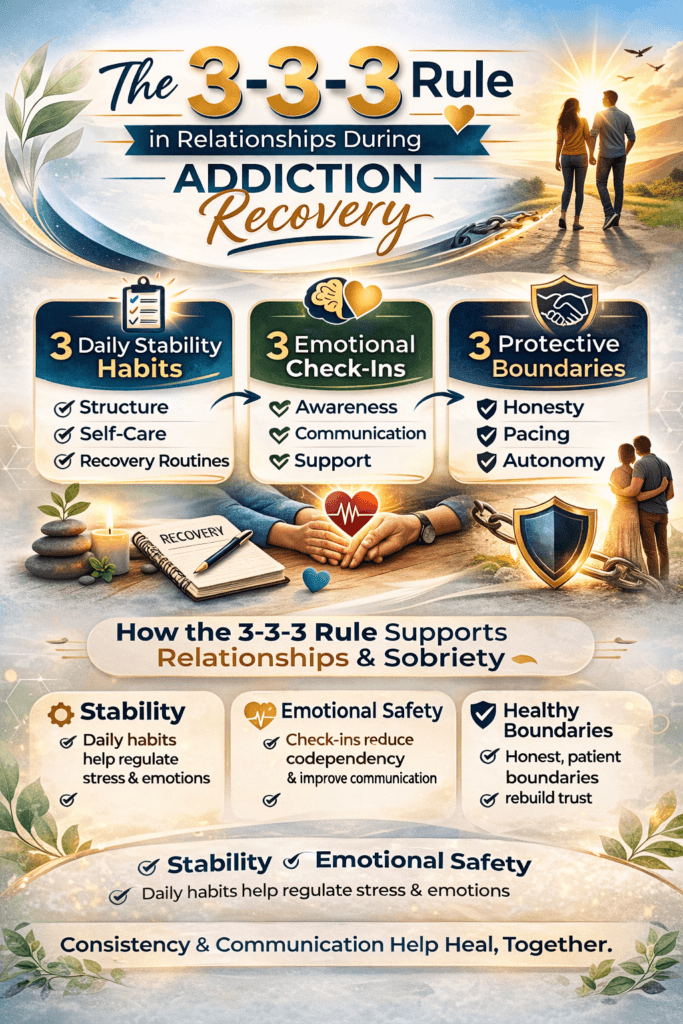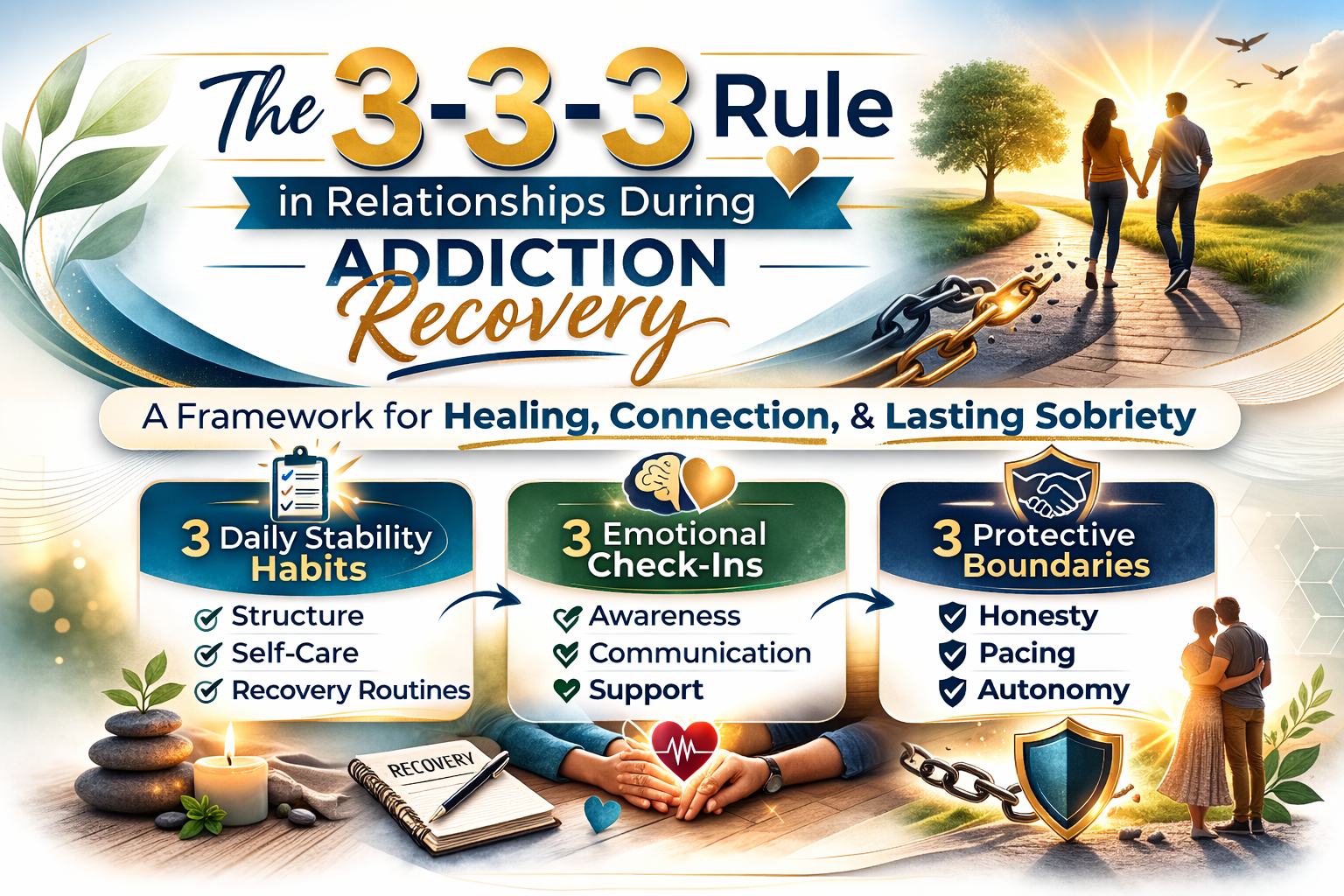
The 3-3-3 rule in relationships during addiction recovery provides a clear, memorable framework that supports emotional healing and relational stability. Recovery often strains communication, trust, and boundaries, making structure essential. By emphasizing three daily stability habits, three emotional check-ins, and three protective boundaries, this approach helps individuals strengthen their connection without compromising sobriety. It encourages mindful pacing, self-awareness, and accountability—key elements that help relationships rebuild safely as the recovering brain restores balance, regulation, and resilience.
The 3-3-3 Rule in Relationships: A Simple Framework for Stronger Love
Relationships can feel complicated, but sometimes the most powerful guidance comes from simple frameworks. The 3-3-3 rule in relationships is one such guideline. Though variations exist, it’s commonly used as a relationship growth model that focuses on three important stages: the first 3 dates, the first 3 months, and the first 3 years. Each stage reveals deeper layers of compatibility, communication, and commitment.
During the first 3 dates, the focus is on discovery. This stage is about curiosity, observing values, and noticing how someone treats others, handles stress, and communicates. Attraction may spark quickly, but emotional safety and respect are what truly matter here.
The first 3 months often reveal consistency. This is when the initial excitement settles, and real patterns emerge. Do they keep promises? Do they communicate honestly? Do they respect boundaries? Many relationships succeed or fail during this phase because authenticity replaces first impressions.
In the first 3 years, couples usually face real-life tests—career stress, financial decisions, family dynamics, or shifts in personal growth. This stage evaluates long-term compatibility, shared goals, and emotional resilience. Healthy relationships during this phase tend to demonstrate teamwork, conflict-resolution skills, and mutual support.
The beauty of the 3-3-3 rule isn’t rigid timing—it’s awareness. It reminds people not to rush intimacy, ignore red flags, or confuse chemistry with compatibility. Instead, it encourages intentional pacing, reflection, and emotional honesty. When partners understand each stage, they can build trust gradually rather than forcing commitment too quickly.
Ultimately, strong relationships aren’t built overnight. They develop through observation, patience, and shared experiences. The 3-3-3 rule offers a simple roadmap: notice early signs, evaluate consistency, and invest in long-term growth. Love that grows steadily often lasts longer, because it’s rooted in clarity, not just emotion.
The Self-Management 3-3-3 Rule for Relationships During Addiction Recovery
Recovery is not only about healing the individual—it’s also about rebuilding healthy relationships. One practical framework that can help is the self-management 3-3-3 rule, a relationship approach designed to promote stability, emotional awareness, and intentional growth while maintaining sobriety. This model focuses on three daily habits, three emotional check-ins, and three relationship boundaries.
The first component—3 daily habits—supports personal stability. These include one physical habit (sleep, nutrition, or exercise), one emotional habit (journaling, therapy skills, or mindfulness), and one recovery habit (meetings, check-ins, or reading recovery material). When individuals maintain these basics, they are less likely to rely on relationships for emotional regulation, reducing codependency risks.
The second component—3 emotional check-ins—helps maintain relational awareness. Ask yourself: What am I feeling? What triggered it? What do I need? Practicing this prevents projection, miscommunication, and impulsive reactions that can strain partnerships during early recovery.
The third component—3 relationship boundaries—protects sobriety and trust. These typically include honesty (no hiding feelings or behaviors), pacing (avoiding rushed emotional intensity), and autonomy (maintaining individual growth alongside the relationship). Boundaries are not walls—they’re safeguards that allow love to develop safely.
The strength of the 3-3-3 rule lies in its simplicity. Addiction often disrupts emotional regulation, attachment patterns, and communication. Structured self-management provides predictability, which the recovering brain needs to rebuild stability. Healthy relationships thrive when both partners prioritize accountability, patience, and personal responsibility.
In recovery, love is strongest when it grows alongside self-respect. The 3-3-3 rule reminds individuals that stable relationships aren’t built on intensity—they’re built on consistency, clarity, and conscious effort.
Family Support Strategies to Apply the 3-3-3 Rule in Relationships During Addiction Recovery
Addiction recovery is rarely a solo journey—it’s a process strengthened by healthy support systems. Families play a vital role in helping loved ones rebuild stability, trust, and emotional balance. One practical framework families can use is the 3-3-3 rule for recovery relationships, which focuses on supporting three daily stability habits, encouraging three emotional check-ins, and reinforcing three healthy boundaries. When families actively participate in these areas, they help create an environment where healing relationships can grow safely and sustainably.
The first step is supporting 3 daily stability habits. Families can encourage consistent sleep schedules, nutritious meals, and recovery-focused routines, such as attending therapy or support meetings. Rather than policing behavior, supportive relatives model structure and celebrate small wins. Stability in daily life strengthens emotional regulation and reduces the risk of relapse, benefiting both the individual and the relationship.
Next is promoting 3 emotional check-ins. Families can gently ask reflective questions, such as, “How are you feeling today?” “What’s been stressful?” and “How can I support you?” This approach fosters open communication and reduces shame. It also teaches emotional literacy—an essential skill often disrupted by addiction. When families listen without judgment, trust begins to rebuild.
Finally, families help maintain 3 relationship boundaries: honesty, pacing, and autonomy. Encouraging honesty means rewarding truth rather than punishing mistakes. Supporting pacing means allowing relationships to rebuild gradually instead of rushing forgiveness or expectations. Respecting autonomy means recognizing that recovery belongs to the individual, not the family. Healthy boundaries protect both sides from burnout, resentment, and codependent patterns.
When families use the 3-3-3 rule as a guide, they shift from crisis management to intentional support. Recovery relationships flourish when patience replaces pressure, understanding replaces blame, and structure replaces chaos. In this environment, both healing and connection can grow—together, steadily, and with purpose.
Community Resource Strategies to Implement the 3-3-3 Rule in Relationships During Addiction Recovery
Recovery thrives in connection, not isolation. While personal effort and family support are essential, community resources often provide the structure and reinforcement needed to sustain both sobriety and healthy relationships. The 3-3-3 rule for recovery relationships—three stability habits, three emotional check-ins, and three protective boundaries—can be strengthened significantly when communities actively support individuals and couples navigating recovery together.
Community programs help reinforce the first element: 3 daily stability habits. Recovery centers, peer-support groups, fitness programs, and vocational services provide consistent routines that anchor individuals in a healthy structure. Access to transportation services, sober living environments, and community wellness programs makes it easier to maintain sleep, nutrition, and participation in recovery. These external supports reduce stress on relationships by ensuring stability doesn’t rely solely on a partner.
The second component, 3 emotional check-ins, is strengthened through community-based counseling, group therapy, and peer mentorship. Support groups create safe spaces where individuals learn to identify emotions, process triggers, and communicate needs effectively. Relationship workshops or couples recovery groups further teach partners how to listen actively, validate feelings, and respond rather than react. These resources normalize emotional growth and reduce stigma, which strengthens relational trust.
Community systems also help protect 3 relationship boundaries: honesty, pacing, and autonomy. Accountability programs, recovery coaching, and structured outpatient treatment encourage transparency and responsibility. Educational workshops teach partners not to rush reconciliation or expect instant change. Meanwhile, job training, educational opportunities, and social clubs promote independence and self-worth—key factors that prevent codependency and foster balanced relationships.
Communities that invest in recovery resources do more than help individuals stay sober—they help relationships heal. When local organizations provide structure, emotional education, and accountability, they create an ecosystem where the 3-3-3 rule can thrive. In that environment, recovery relationships are not fragile; they become resilient, supported by networks that reinforce growth, dignity, and lasting connection.
Frequently Asked Questions
Here are some common questions:
1. What is the 3-3-3 rule in recovery relationships?
It’s a simple framework that supports healthy connections while protecting sobriety. It focuses on 3 daily stability habits, 3 emotional check-ins, and 3 protective boundaries to help couples maintain balance, communication, and trust.
2. Why is structure important in relationships during recovery?
Addiction often disrupts emotional regulation and routines. Structure restores predictability, reduces stress, and prevents relationships from becoming chaotic or codependent.
3. What are examples of the 3 daily stability habits?
They usually include one physical habit (sleep, nutrition, exercise), one emotional habit (journaling, therapy skills, mindfulness), and one recovery habit (meetings, check-ins, or recovery reading).
4. What are the 3 emotional check-ins?
They involve asking yourself: What am I feeling? What triggered it? What do I need? These questions promote self-awareness and prevent projecting emotions onto a partner.
5. What are the 3 protective boundaries?
Most commonly: honesty, pacing, and autonomy. These boundaries ensure transparency, prevent rushing intimacy, and maintain individual growth.
6. Can couples use this rule if only one partner is in recovery?
Yes. The framework still works because it promotes healthy communication, emotional safety, and mutual respect—benefiting both partners.
7. Does the 3-3-3 rule replace therapy or counseling?
No. It’s a supportive tool, not a substitute for professional treatment. It works best alongside therapy, peer support, and recovery programs.
8. How does this rule help prevent relapse?
It reduces emotional overload, strengthens coping skills, and prevents relationship conflict from becoming a trigger—three common relapse risks.
9. Is it normal for relationships to feel unstable early in recovery?
Yes. Early recovery involves emotional adjustment, identity rebuilding, and neurological healing. The 3-3-3 rule provides guidance during this vulnerable stage.
10. How long should couples use the 3-3-3 rule?
There’s no time limit. Many couples adopt it long-term because it encourages habits that strengthen both sobriety and relationship health.
Conclusion
Ultimately, the 3-3-3 rule reminds couples that recovery and relationships succeed through consistency rather than intensity. When partners prioritize daily self-care, honest emotional reflection, and respectful boundaries, they create a foundation strong enough to support long-term healing. This framework is not about perfection—it’s about progress, patience, and partnership. In recovery, love thrives when both individuals commit to growth, and the 3-3-3 rule provides a practical roadmap for building trust, strengthening connection, and sustaining sobriety together.
Video: The 3-3-3 Rule Strong Couples Actually Use #relationshipgoals #advice #couples