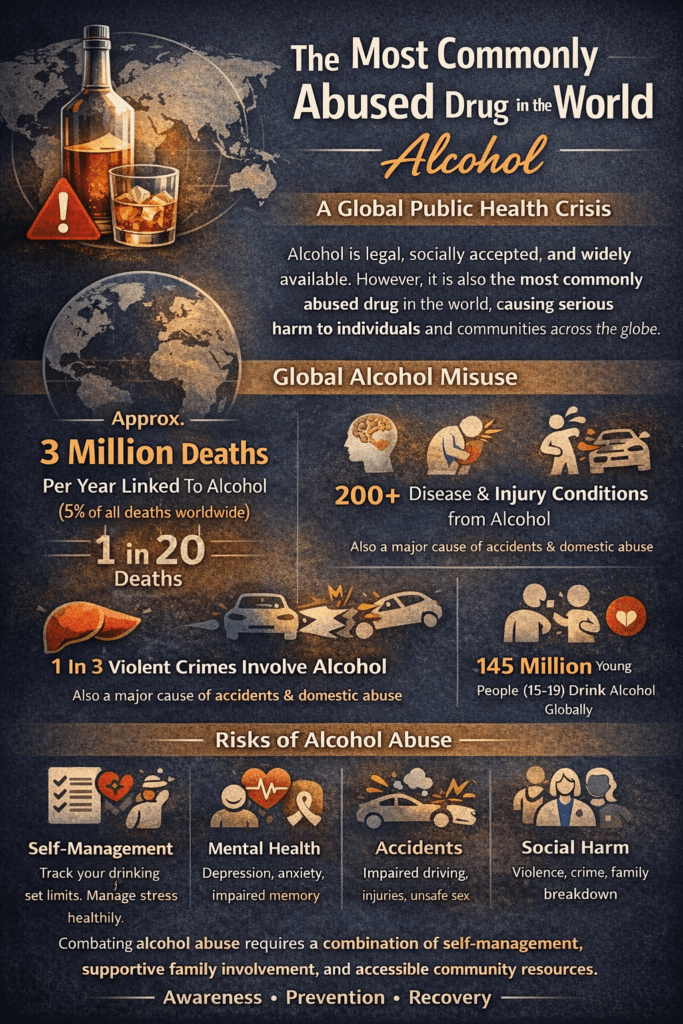
Alcohol is the most commonly abused drug in the world, largely because it is legal, widely available, and deeply embedded in social and cultural norms. Its acceptance at celebrations, social gatherings, and even as a stress-relief tool often minimizes public awareness of its potential harms. While many individuals consume alcohol without immediate or obvious consequences, frequent or excessive use can quietly progress into misuse, increasing the risk of physical illness, mental health disorders, relationship strain, and social harm. Because alcohol-related problems often develop gradually, they may go unrecognized until significant damage has occurred. Preventing alcohol abuse, therefore, requires more than individual willpower alone; it depends on a coordinated, multi-level approach. Effective prevention includes strong self-management skills such as self-awareness and healthy coping, supportive family involvement that promotes communication and accountability, and accessible community resources that provide education, early intervention, and treatment. When these elements work together, they create protective systems that reduce risk, support healthier choices, and promote long-term well-being for individuals, families, and communities.
The Most Commonly Abused Drug in the World
When people think of drug abuse, illicit substances like heroin, cocaine, or methamphetamine often come to mind. However, the most commonly abused drug in the world is alcohol—a legal, socially accepted substance that is deeply embedded in cultures across the globe.
Alcohol is widely available, inexpensive in many regions, and frequently associated with socializing, celebrations, and stress relief. Because of this normalization, the associated risks are often underestimated. Yet alcohol misuse contributes to millions of deaths each year and is a major driver of preventable disease, injury, and social harm worldwide.
From a public health perspective, alcohol abuse is linked to liver disease, cardiovascular problems, cancers, mental health disorders, and impaired immune function. It also plays a significant role in accidents, violence, domestic abuse, and impaired driving. Unlike many illicit drugs, alcohol’s legal status can delay recognition of harmful use, allowing patterns of dependence to develop quietly over time.
Globally, alcohol misuse affects people of all ages, genders, and socioeconomic backgrounds. Adolescents and young adults are particularly vulnerable due to peer influence and early exposure, while adults may turn to alcohol to cope with chronic stress, trauma, or social isolation. Over time, repeated heavy use can alter brain chemistry, reinforcing cravings and reducing self-control—hallmarks of addiction.
What makes alcohol especially dangerous is not just how common it is, but how socially invisible its harm can be. Many individuals with alcohol use disorder continue working, parenting, and functioning outwardly, even as their physical health, relationships, and mental well-being decline.
Recognizing alcohol as the world’s most abused drug is not about demonizing its use, but about increasing awareness. Education, early screening, community support, and access to treatment are essential to reducing alcohol-related harm. Understanding the true impact of alcohol helps shift the conversation from blame to prevention, treatment, and recovery—where real change begins.
Self-Management Strategies to Avoid Alcohol Abuse
Alcohol is widely accepted in many cultures, which can make it difficult to recognize when use begins to cross into unhealthy territory. Self-management strategies are practical, intentional actions individuals can take to reduce risk, build awareness, and maintain control over alcohol use before it becomes harmful.
One of the most effective strategies is self-monitoring. Paying attention to how often, how much, and why you drink helps uncover patterns that may otherwise go unnoticed. Many people drink out of habit, stress, or social pressure rather than choice. Tracking alcohol use—whether mentally or in a journal—creates accountability and increases insight into triggers and routines.
Setting clear limits is another essential tool. This includes deciding in advance how many drinks are acceptable, choosing alcohol-free days each week, or committing to avoiding alcohol in certain situations, such as during emotional distress. Clear boundaries reduce impulsive decisions and support healthier habits over time.
Managing stress without alcohol is critical. Exercise, mindfulness, deep breathing, creative outlets, and adequate sleep all reduce reliance on alcohol as a coping mechanism. When stress relief is built into daily life, alcohol becomes less necessary as an emotional escape.
Social strategies also play a major role. Surrounding yourself with supportive people, practicing saying no confidently, and choosing social activities that do not revolve around drinking can significantly lower risk. Healthy relationships reinforce positive behavior and reduce peer pressure.
Finally, knowing when to seek support is a strength, not a weakness. If controlling alcohol use becomes difficult, early conversations with a healthcare provider, counselor, or support group can prevent escalation into dependence. Early intervention is one of the strongest predictors of long-term success.
Self-management is about empowerment, not restriction. By building awareness, setting boundaries, developing healthier coping skills, and leaning on support, individuals can protect their well-being and prevent alcohol misuse before it becomes a serious problem.
Family Support Strategies to Avoid Alcohol Abuse
Family plays a powerful role in shaping attitudes, behaviors, and coping skills related to alcohol use. Supportive, informed families can significantly reduce the risk of alcohol abuse by creating environments rooted in trust, communication, and emotional safety.
One of the most effective strategies is open and honest communication. Families that talk openly about alcohol—its risks, social pressures, and expectations—help normalize healthy decision-making. Conversations should be age-appropriate, nonjudgmental, and ongoing, allowing family members to ask questions and express concerns without fear of punishment or shame.
Modeling healthy behavior is equally important. Children and adolescents learn more from what they see than what they are told. When adults demonstrate moderation, stress management without alcohol, and responsible choices, those behaviors become the family norm. Consistency between words and actions strengthens credibility and influence.
Families can also reduce risk by establishing clear boundaries and expectations around alcohol use. This includes agreed-upon rules, consequences, and shared values related to safety and well-being. Clear structure provides guidance while still allowing room for autonomy and growth.
Emotional support and connection are critical protective factors. Strong family bonds reduce the likelihood of using alcohol to cope with stress, loneliness, or trauma. Regular family time, active listening, and validation of emotions help individuals feel seen and supported, lowering the appeal of alcohol as an escape.
Finally, families should embrace early support and intervention when concerns arise. Addressing changes in behavior, mood, or functioning early—without blame—can prevent escalation. Seeking help together from healthcare providers, counselors, or community resources reinforces that recovery and prevention are shared responsibilities.
Family support is not about control; it is about connection. When families foster trust, model healthy coping, and respond early with compassion, they create a powerful foundation for preventing alcohol abuse and promoting long-term well-being.
Community Resource Strategies to Avoid Alcohol Abuse
Communities play a vital role in preventing alcohol abuse by shaping environments, access to support, and social norms. When communities invest in education, connection, and accessible resources, they create protective systems that help individuals and families reduce the risk of harmful alcohol use.
One key strategy is community education and awareness. Public workshops, school-based programs, faith-based initiatives, and local campaigns help people understand the risks of alcohol misuse and recognize early warning signs. Education reduces stigma, encourages informed choices, and empowers individuals to seek help sooner rather than later.
Accessible support services are another cornerstone of prevention. Community health centers, counseling services, peer-support groups, and recovery programs provide safe spaces for individuals to talk openly about alcohol use. When these services are affordable, local, and culturally responsive, people are far more likely to use them before problems escalate.
Communities can also reduce alcohol-related harm by creating alcohol-free spaces and activities. Recreational programs, sports leagues, family events, and youth centers offer social connection without alcohol being the focal point. These alternatives are especially important for adolescents and young adults who are highly influenced by peer norms.
Policy and environmental strategies are also important. Responsible alcohol sales practices, limits on availability, safe-ride programs, and enforcement of drinking-age laws all reduce risk at a population level. These measures protect not only individuals who drink, but also the broader community from alcohol-related accidents and violence.
Finally, strong community connections act as a protective factor. Neighborhood groups, recovery-friendly workplaces, volunteer networks, and mutual-aid programs foster belonging and purpose. When people feel connected and supported, they are less likely to rely on alcohol to cope with stress or isolation.
Preventing alcohol abuse is not solely an individual responsibility—it is a community effort. By investing in education, support services, healthy social options, and protective policies, communities can create environments that promote resilience, wellness, and long-term recovery for all.
Frequently Asked Questions
Here are some common questions:
What is the most commonly abused drug in the world?
Alcohol is the most commonly abused drug worldwide. Its legal status, social acceptance, and wide availability contribute to high rates of misuse across all age groups and cultures.
Why is alcohol considered a drug?
Alcohol is classified as a drug because it alters brain function, affects mood and behavior, and can lead to dependence and addiction. It is a central nervous system depressant that impacts judgment, coordination, and decision-making.
Why is alcohol abuse often overlooked?
Because alcohol is legal and culturally normalized, harmful use is frequently minimized or ignored. Many people do not recognize misuse until physical, emotional, or social consequences become severe.
What are the health risks of alcohol abuse?
Alcohol abuse is linked to liver disease, heart disease, cancers, weakened immune function, mental health disorders, and cognitive impairment. It also increases the risk of injuries, accidents, and violence.
Can someone abuse alcohol without being “alcoholic”?
Yes. Alcohol misuse exists on a spectrum. Binge drinking, frequent heavy drinking, or using alcohol to cope with stress can all be harmful even without meeting criteria for alcohol use disorder.
What are effective self-management strategies to avoid alcohol abuse?
Self-management strategies include tracking alcohol use, setting clear limits, avoiding high-risk situations, managing stress without alcohol, and recognizing emotional or environmental triggers early.
How does family support help prevent alcohol abuse?
Families help by modeling healthy behavior, maintaining open communication, setting clear expectations, offering emotional support, and addressing concerns early without judgment or shame.
What role do community resources play in prevention?
Community resources provide education, counseling, peer support, alcohol-free activities, and access to treatment services. Policies and programs at the community level reduce harm and improve early intervention.
When should someone seek professional help for alcohol use?
Professional help should be sought if alcohol use becomes difficult to control, interferes with daily life, affects health or relationships, or is used as a primary coping strategy.
Is recovery from alcohol misuse possible?
Yes. With the right combination of self-awareness, family support, community resources, and professional care, recovery is achievable. Early support significantly improves long-term outcomes.
Conclusion
Addressing alcohol abuse effectively means recognizing it as a shared responsibility rather than an individual failure. Self-management strategies help individuals build awareness, set limits, and cope with stress in healthier ways. Family support fosters open communication, emotional connection, and positive role modeling, thereby reducing vulnerability across the lifespan. Community resources strengthen prevention efforts through education, accessible services, supportive environments, and protective policies. Together, these strategies create a comprehensive framework for preventing alcohol misuse, reducing harm, and supporting healthier individuals, families, and communities.
Video: How Millions Develop Alcohol Addiction Without Realizing It