Relapse can often feel like a major setback, especially when you’re putting in the effort to make meaningful changes in your life. Whether you’re navigating recovery from substance use, trying to break a bad habit, or working toward a healthier lifestyle, it’s normal to encounter difficulties and experience moments of vulnerability. These challenges are part of the process, and relapsing doesn’t mean all the progress you’ve made is lost. In fact, viewing relapse as a personal failure can intensify feelings of frustration and discouragement, making it harder to stay on track.
Instead of seeing relapse as a defeat, consider it an opportunity for learning and growth. Every setback can provide valuable insight into the triggers and patterns that lead to unhealthy behaviors. By reflecting on what happened, you can identify areas where you might need additional support, strategies, or coping mechanisms. This shift in perspective allows you to approach recovery as an ongoing process rather than a linear journey, where bumps in the road are part of the learning experience. Recognizing relapse as a natural and temporary part of the journey can help reduce feelings of shame, maintain motivation, and ultimately support lasting progress.
Why Relapse Happens (and Why It’s So Common)
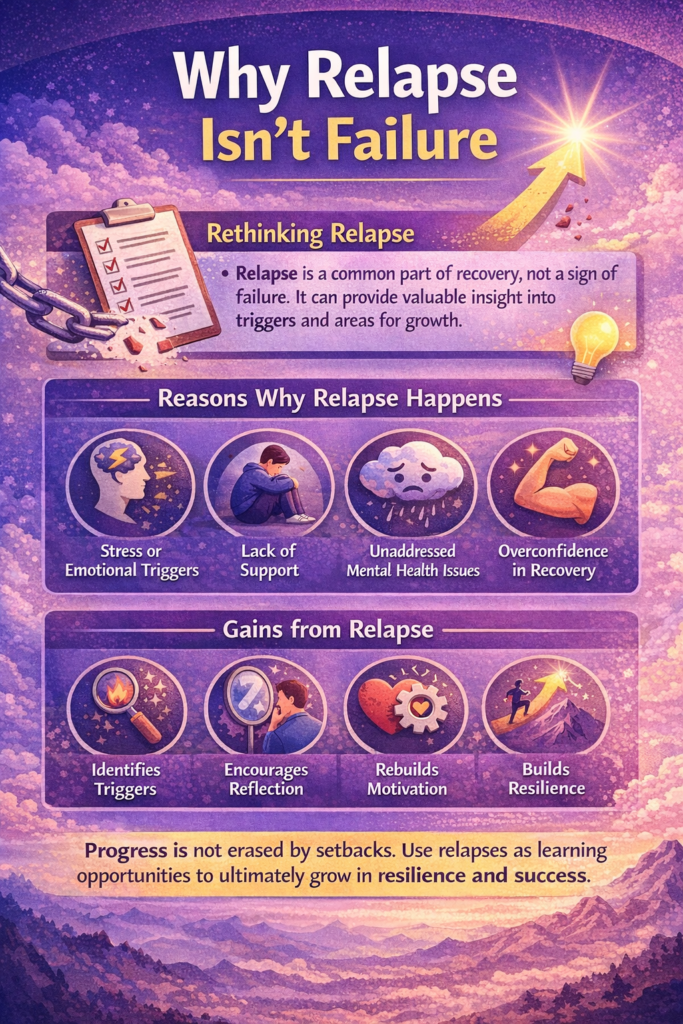
Relapse isn’t rare; it’s normal in most recovery adventures. About 40 to 60% of people in addiction recovery, for example, experience relapse at some point. Even when people are changing other habits—like sticking to a new exercise routine or quitting junk food—most of us slip up.
I’ve seen that a bunch of things can lead to relapse: stress, being around old triggers, feeling overconfident, or just hitting a tough spot emotionally. Scientists explain relapse as part of a learning curve in which the brain and body adjust to new habits. Real change rarely happens in a simple straight line.
This pattern doesn’t just apply to substance recovery. Making any big lifestyle switch is hard work, and a process full of starts and stops. Expecting perfection from yourself or others doesn’t just add pressure; it can also make it much tougher to get back on track when setbacks pop up.
Busting the Myth: Relapse ≠ Failure
The idea that relapse is failure comes from a culture that really values willpower and self-control. But research and personal stories both show that the path to recovery or change is much messier, and that a slip-up never erases your progress.
Relapse actually offers clues about what works, what doesn’t, and what you might need to adjust in your plan. Just like learning to ride a bike, every wobble or fall tells you something valuable, even if it’s not always fun in the moment. Recovery takes trial and error and a willingness to keep showing up, even after setbacks.
I’ve learned that labeling relapse as failure can cause a lot of guilt and shame, and those feelings make it even harder to return to healthy routines. If you can see relapse as a signal (not a dead end), it becomes a tool for learning and growth.
What Actually Defines Progress?
Progress isn’t about never messing up; it’s about moving forward, even if that movement is uneven. Changing a habit, managing a mental health condition, or staying sober often has its ups and downs. Getting back to your plan after a setback is more important than sticking to a perfect streak.
I find it super helpful to look at the bigger picture. Maybe you made it a week longer this time before a slip, or you bounced back faster. That’s still growth. You’re learning how to manage triggers, what coping strategies work for you, and how to rebuild momentum.
Tracking those small wins—like reaching out for help more quickly or using self-care tools—can keep you motivated and show how far you’ve actually come, even if the road isn’t totally smooth. Celebrating those little steps is key, and if you start noticing the patterns that lead to relapse, you’re already making progress. Learning from missteps is part of a broader process that continues to build your skill set for a healthier future.
Common Causes of Relapse and How to Spot Them
I’ve noticed certain patterns that often show up right before relapse, and noticing them yourself makes a big difference in prevention. These are worth keeping an eye on:
- High-Stress Situations: Big life changes, personal losses, or chronic stress make it tougher to resist old habits.
- Isolation: Pulling away from supportive friends or not seeking help increases the risk of relapse.
- Triggers: Being around places, people, or situations associated with past behavior can tempt you to revert.
- Overconfidence: Sometimes, feeling too sure that you’re “done” can make it easy to let your guard down.
Recognizing these signs early lets you make a new plan before things go off track. Adjusting your coping skills, staying connected with your support crew, and knowing your warning signs can help you bounce back stronger.
How to Use a Relapse as a Stepping Stone
If you’ve experienced a relapse, it’s not the end of the world or even your goal. Here’s how I suggest turning the moment into something useful for your growth:
- Look at What Happened: Try to think through what triggered the relapse and what was happening around you.
- Ask What You Needed: Were you tired, stressed, hungry, or lonely? Identifying these feelings helps inform your future strategy.
- Tweak Your Plan: Use what you learned to create a tweak—maybe add a support person, change your routine, or set up reminders.
- Reach Out for Support: Talking it out with someone you trust can make it feel so much more possible to return to your goals.
There’s no single right way to recover from a relapse, and sometimes, new strategies (like changing your environment or trying new support systems) can be what really helps you level up when you’re ready to get back on track.
Taking Responsibility Without Blame
Taking charge of your actions feels very different from blaming yourself. Accepting what happened with honesty lets you grow, whereas self-blame only deepens shame and discouragement. Self-compassion goes a long way here; treat yourself how you’d treat a friend in the same situation.
Lifting up personal responsibility is about learning from a misstep, not beating yourself up for it. This approach builds resilience, the ability to bounce back, and actually helps with long-term success. You might be surprised by how much more confident you feel as you keep stepping back onto your path despite rough patches along the way.
Practical Steps for Getting Back on Track
- Pause and Breathe: Give yourself a moment to collect your thoughts and calm down after a relapse. No need to rush to fix everything at once.
- Reflect: Take a nonjudgmental look at what led up to the relapse. Jot down details if that helps.
- Tell Someone: Sharing with a support group or a trusted person helps break the cycle of shame.
- Jump Back In: Don’t wait for the perfect moment. Return to your recovery plan, self-care routine, or new habit as soon as you can.
- Set Small Goals: Focus on one day, one meal, or one activity at a time. Tiny wins build back confidence fast.
Stumbling is part of the process, not proof that you can’t do it. Recovery, habit change, and mental health adventures are all about progress, not perfection.
Extra Challenges People Face During Relapse
I’ve heard from folks that certain things can make bouncing back from relapse a bit harder. These are good to keep in mind:
- Shame from Others: Sometimes, family or friends may not understand, and their reactions make it tougher to open up.
- The “All or Nothing” Mindset: Thinking one slip means you’re “back to square one” discourages a fresh start.
- Comparing Progress: Watching others on social media or in support groups can leave you feeling behind, but everyone’s process is unique.
Getting honest about these extra hurdles makes it easier to build strategies that really fit your own needs and makes bouncing back more realistic. Sometimes, just knowing others struggle too can ease that sense of isolation.
Ways to Build Resilience After a Setback
Resilience isn’t something you’re just born with; it builds over time. Some little things can help you bounce back, even if this isn’t your first relapse:
- Keep a journal to track what works and what doesn’t, so you have something to look back on the next time things get tough.
- Join a support group in your area or online. Connecting with others going through similar experiences can make a world of difference.
- Try out new self-care routines. It could be walks, creative hobbies, or mindfulness exercises that don’t feel overwhelming. Find what feels right for you.
- Reward yourself for progress, no matter how small. Acknowledge every step, and remember, resilience grows with every comeback.
Frequently Asked Questions
Here are a few questions I often hear about relapse and recovery:
Question: Does relapse mean I need to start over?
Answer: Not at all. You can pick up where you left off and use what you learned to move forward smarter and stronger.
Question: How do I handle the guilt and shame after a relapse?
Answer: It’s totally normal to feel bad, but self-blame doesn’t help. Focusing on taking one small positive step helps more than judging yourself.
Question: How do I talk to loved ones about a relapse?
Answer: Honesty works best. Let friends or family know what happened and how you’re working to move forward. Sharing your plan for getting back on track can help rebuild trust.
Why Accepting Relapse Makes Recovery More Sustainable
Accepting relapse as a possibility, and even as part of personal growth, takes a big weight off your shoulders. Recovery or habit change doesn’t have to be a straight line. Each setback holds lessons that can move you closer to what you really want. If you stumble upon obstacles, give yourself permission to adjust and keep going.
Success is about showing up, learning, and practicing new skills every time things get tough. Relapse isn’t a finish line. It’s just a curve in the path, a normal part of any real growth. Keep going, keep learning, and above all, be kind to yourself.
Video: That one mistake won’t undo months of work #sobriety #recovery #healing