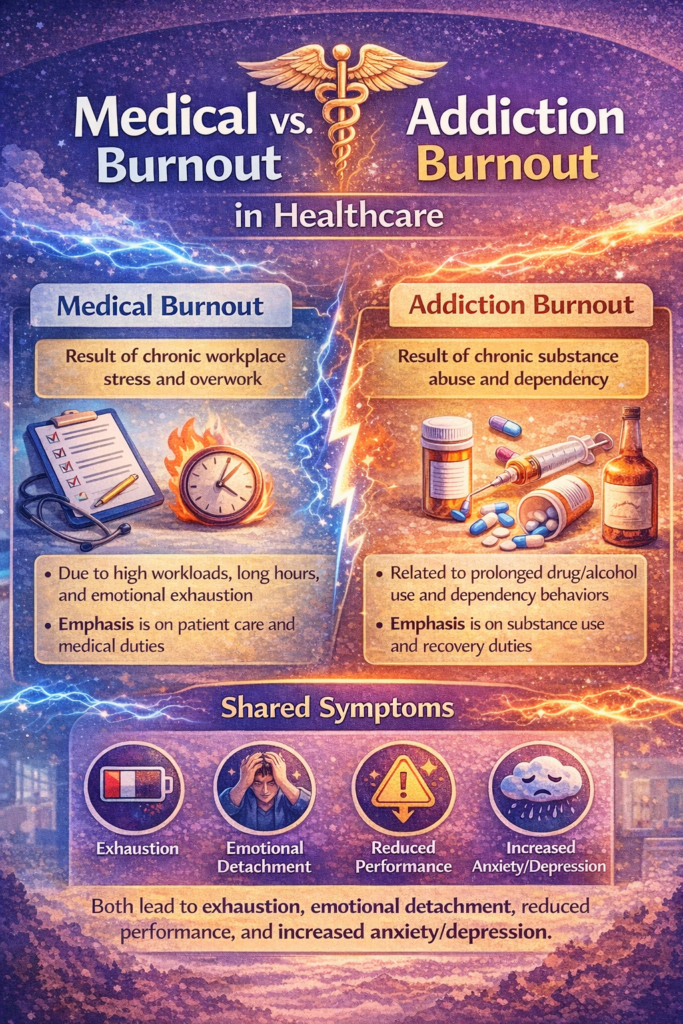
Medical burnout and addiction burnout are two topics that get tossed around a lot in healthcare circles, but they aren’t the same thing. I’ve spent quite a bit of time around hospitals and clinics, and the effects of both are easy to spot if you’re paying attention. These terms often turn up together in conversations about healthcare worker well-being, but when you start looking closer, you’ll see major differences in how they show up and what kind of solutions actually help.
Understanding Medical Burnout and Addiction Burnout
Burnout is basically a state of emotional, mental, and physical exhaustion that comes from long-term stress. In healthcare, this usually shows up as feeling drained by the demands of the job, losing motivation, and finding it hard to care about patients or even yourself. According to research published in JAMA, burnout rates among physicians are regularly about 40%. That’s pretty wild when you consider how important their jobs are.
But there’s another kind of struggle taking place in the same hospital hallways: addiction burnout. This one shows up when people working in healthcare develop a dependence on substances, usually as a way to handle all the stress. It’s not about losing your drive at work quite the same way as medical burnout, but there’s a definite overlap since both can wreck your career and your life.
Key Differences Between Medical Burnout and Addiction Burnout
I’ve seen people mix up medical burnout and addiction burnout, but they’re miles apart when you get into the details. Here are the main ways they differ:
- Medical burnout mainly comes from long hours, emotional stress, paperwork, and nonstop responsibility. It usually means you start feeling less effective, less empathetic, and just flat-out tired all the time.
- Addiction burnout is the fallout of using substances (like alcohol or prescription drugs) too often in an effort to handle work pressure. Over time, this habit becomes a crutch and, eventually, a dependency. Addiction burnout is more about the physical and mental crash that comes when substances stop working or start causing trouble on the job and at home.
So, even if both have stress at their root, the way they develop and what you notice most in someone’s life can be really different.
Causes: What Drives Burnout in Healthcare Workers?
The main causes of burnout in healthcare can look pretty similar at first: overload, unrelenting stress, and insufficient support. But if you pay attention, the triggers for medical burnout and addiction burnout split off in a few key ways.
Medical Burnout Triggers
- Long shifts or night shifts that cut into normal sleep patterns
- Piling on paperwork and administrative tasks instead of patient care
- Lack of control over schedules or patient assignments
- Constantly seeing tough cases or traumatic events
- Not getting recognition or feedback from colleagues or leaders
The result is feeling stretched too thin with no way to recharge. After a while, motivation and compassion disappear, and mistakes start creeping in.
Addiction Burnout Triggers
- Ready access to prescription drugs
- Cultural habits of drinking or substance use as stress relief.
- Perceived stigma around seeking help for addiction
- Using substances to cope emotionally after hard shifts
- Losing personal boundaries between work and personal coping choices
For people dealing with addiction burnout, things often start small; maybe a glass of wine after work or using painkillers after an injury. Over time, it becomes a routine just to get through the shifts and sleep at night.
Warning Signs: Spotting the Differences on the Job
Spotting the early signs can make all the difference for healthcare teams. If you know what to look for, you might be able to help someone get support before things get really bad.
Medical Burnout Red Flags
- Emotional numbness, where nothing seems to matter anymore
- Crankiness or frustration with patients or coworkers
- Chronic exhaustion, even after taking time off
- Feeling detached or spaced out at work
- Falling behind or making errors on routine tasks
These symptoms usually develop slowly and are often written off as just “part of the job.” But if someone hasn’t always acted this way, it’s worth checking in.
Addiction Burnout Red Flags
- Unexplained absences or late arrivals
- Secretive behavior, especially around medications
- Noticeable mood swings or sudden personality changes
- Declining job performance that doesn’t bounce back after rest
- Physical symptoms like slurred speech or unsteady hands
If you notice these signs, it’s super important not to jump to conclusions, but it’s definitely time to get the person some help. Addiction is a medical issue with legal and ethical implications in healthcare settings, especially since patient safety is always on the line.
Impact: How Each Type Affects Individuals and the Workplace
When medical burnout gets out of control, I’ve seen whole teams go from energetic and upbeat to tired and irritable. People who used to love patient care end up disengaged and just trying to make it through their shifts. The ripple effect can lead to lower-quality care, increased medical errors, longer-term disability leave, and higher staff turnover. According to the Mayo Clinic Proceedings, healthcare organizations lose hundreds of thousands of dollars each year due to physician burnout.
Addiction burnout, on the other hand, is actually more likely to stay hidden until something really serious happens: missing documentation, a near-miss in patient care, or even a legal inquiry. The cultural stigma around substance use in healthcare makes it harder for people to reach out for support, which means they might go years without anyone knowing there is a problem. When it finally does surface, the consequences can be much harsher, including the loss of medical licenses, criminal charges, or irreparable professional damage.
Approaches to Prevention and Recovery
Addressing each problem means taking different tactics. Trying to treat medical burnout with solutions meant for addiction, or vice versa, won’t work. I’ve seen the best results when teams and leaders know exactly what kind of stress they’re dealing with and tailor their solutions accordingly.
Helping with Medical Burnout
- Encouraging regular breaks during shifts
- Prioritizing peer support and transparency about stress
- Hospital wellness programs and flexible schedules
- Setting up counseling or coaching just for healthcare staff
- Training on healthy boundaries and time management
Medical burnout responds best to culture changes, where it’s okay to say “I’m not okay” and support is typical. Encouraging leadership to lead by example, offering debriefing after tough cases, and creating informal support circles can give an added boost. Even small rituals, like a quick check-in with the team at the start or end of shifts, can help people feel less isolated. Creating a space where staff can unwind, have a quiet coffee, or talk without judgment adds real value for recovery.
Supporting Addiction Burnout Recovery
- Access to specialized addiction counseling
- Anonymous self-referral programs for healthcare workers
- Clear policies on safe reporting and treatment
- Colleague-driven ‘watchdog’ systems
- Removing stigma around addiction in the workplace
Addiction burnout recovery often needs a structured program, sometimes including inpatient care or peer groups such as Physicians Health Programs (PHPs). Setting up confidential support lines or online communities and offering regular talks about addiction in staff training normalizes the conversation and opens doors to help. The earlier staff can ask for help without fear, the better their chances of getting back on track and regaining their professional and personal well-being.
Frequently Asked Questions
People working in healthcare, and even folks supporting them, usually have tons of questions about how burnout and addiction interact. Here are a few I hear the most.
Question: Can someone have both medical burnout and addiction burnout at the same time?
Answer: Absolutely. In fact, medical burnout sometimes leads to substance use as people try to cope, and then addiction burnout builds on top of that. Addressing both requires a combined approach: mental health support plus substance use counseling.
Question: Are certain healthcare jobs at higher risk for burnout or addiction?
Answer: Jobs with long hours, high patient loads, or easy access to medications (like ER staff and anesthesiologists) tend to be at higher risk. But honestly, any role can be vulnerable if healthy work-life habits aren’t supported.
Question: What’s the biggest difference in how you recover from medical burnout versus addiction burnout?
Answer: Medical burnout often improves with rest, changes in routine, or extra support. Addiction burnout requires those things too, but also needs direct help to overcome physical and mental dependence on substances, usually with more intensive treatment and ongoing recovery support.
Question: What steps can individuals and organizations take to build resilience and prevent both types of burnout?
Answer: On an individual level, setting limits with work, prioritizing self-care, and finding trusted colleagues to talk things through can help a lot. For organizations, offering training focused on healthy coping, increasing staff flexibility, and ensuring leadership regularly and openly checks in on well-being are effective strategies. Promoting a supportive, low-stigma culture strengthens resilience and makes early intervention much more feasible. Acknowledging and celebrating small victories also keeps morale up and reminds everyone why they got into healthcare in the first place.
Getting Help: Resources and Next Steps
If you’re struggling with either kind of burnout, or you know someone who is, reaching out is really important. Plenty of professional organizations offer confidential hotlines, support groups, or wellness programs that are easy to access. For more resources, consider checking out sites like the American Medical Association for burnout or the National Association for Alcoholism and Drug Abuse Counselors for addiction support. Early action means better outcomes, both for you and for the people who count on you at work. Remember, making small changes today can save careers—and lives—tomorrow. Don’t wait to ask for help, because every positive step is a win for yourself and your team.
Video: Medical Burnout vs Addiction Burnout—Which One Breaks You First? #healthcare #burnout #shorts