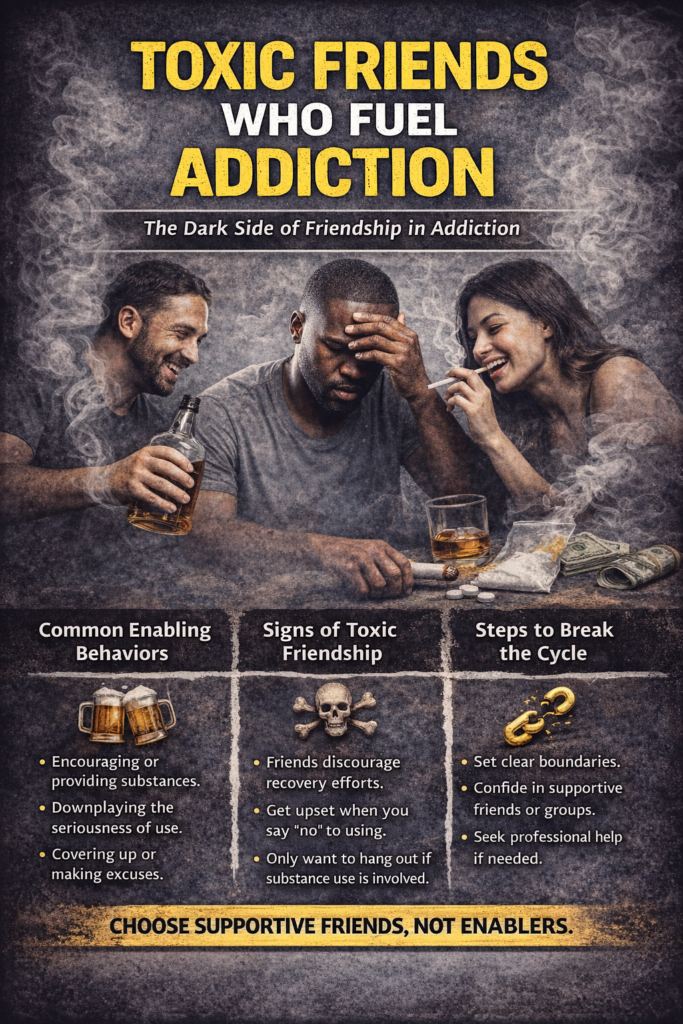
When it comes to addiction, friendships can shift from supportive to harmful in subtle but powerful ways. Friends often play an important role in providing encouragement, comfort, and accountability during difficult times. However, in the context of addiction, even well-intentioned friends may unintentionally enable unhealthy behaviors. Enabling can happen when someone minimizes the seriousness of substance use, makes excuses for harmful actions, provides access to substances, or avoids addressing the problem out of fear of conflict or losing the friendship. Over time, these patterns can make recovery more difficult by reinforcing the very behaviors a person may be trying to change. Recognizing when a friendship has crossed the line from support to enabling is a critical step for anyone seeking lasting recovery. Signs may include friends encouraging substance use, dismissing concerns about addiction, or resisting changes that support healthier habits. Understanding these dynamics helps individuals set clearer boundaries and evaluate which relationships truly support their well-being. By identifying toxic or enabling behaviors and taking steps to seek healthier support systems, people in recovery can create an environment that encourages accountability, growth, and long-term healing.
Understanding Enabling in Friendships
Enabling doesn’t always start with bad intentions. Most of the time, it creeps in quietly. A friend might pick up the slack when you’re struggling, cover for you at work, or brush off concerning behavior to keep the peace. In the context of addiction, enabling shows up when friends help someone avoid the negative consequences of their substance use. Over time, this can keep the cycle going, making it harder for someone to face their problem head-on.
What usually happens is that small favors stack up. Maybe someone gives you money because you say you’re out of cash, but they ignore the fact that it’s for buying more alcohol. Or a friend lets you crash on their couch repeatedly after you’ve been out drinking. These actions come from a place of care, but without realizing it, they’re actually protecting you from the natural fallout of your choices. This protection can keep you stuck, since the discomfort that sometimes triggers real change is softened or removed altogether. The hard truth is that friends who constantly shield you from consequences are actually making it harder for you to take an honest look at what’s happening. That’s why it’s so important to be able to spot the difference between genuine support and unintentionally prolonging the problem.
How Friendships Turn Toxic in Addiction
Addiction can completely change the dynamic between friends. There’s often a blur between caring and enabling, and this confusion can create unhealthy patterns. One thing I’ve noticed is that these relationships often start with strong bonds or even shared experiences of using together. Over time, what felt supportive can become codependent, where both people play a part in keeping the unhealthy cycle going.
Toxic friendships in this context aren’t just about fights or drama. It’s more about the subtle behaviors that encourage unhealthy habits. For example, friends might downplay your substance use, convince you it’s “not that bad,” or join you just because they don’t want you to be alone. These friends might also guilt-trip you when you try to make positive changes, not out of malice, but out of fear that things will switch up between you.
- Examples of Toxic Behaviors: Blaming others for dangerous situations, loaning money without asking questions, making excuses for repeated relapses, or constantly rescuing someone from the consequences of their actions.
- Common Warning Signs: Feeling anxious about your friend’s reactions, lying to others about their behavior, or noticing that boundaries always get pushed or ignored.
Recognizing Enabling Behaviors
Spotting enabling isn’t always obvious. Sometimes, it looks like classic friendship—helping out when someone is down, offering comfort, or being there no matter what. The difference comes down to whether the help supports healthy change or keeps someone stuck where they are.
- Lying or Covering Up: If you catch yourself lying to protect a friend from the truth or to downplay their addiction to others, that’s a red flag.
- Giving Financial Support Without Boundaries: Loaning money, especially if you know it might go toward drugs or alcohol, falls into enabling territory.
- Dismissing or Making Excuses: Brushing off concerning behaviors with phrases like “They were just stressed” or “It’s not usually like this” can get in the way of facing the problem.
- Taking Over Responsibilities: Consistently taking on your friend’s responsibilities (like calling in sick for them, paying their rent, or excusing their missed commitments) makes it easier for them to keep using.
- Rescuing from Consequences: Jumping in to smooth things over or bail someone out isn’t just about being a good friend; it can stop someone from really understanding the impact of their addiction.
Friendships thrive on honesty and boundaries. When those go missing, enabling can take over. It’s not always easy to admit when a friendship has slipped into this territory, but naming it is the first step toward change. Over time, persistent enabling can lead to resentment and burnout for the person doing the helping, while the person with addiction might struggle even more with making healthy changes.
Steps for Creating Healthier Boundaries
Setting boundaries doesn’t mean dropping your friends or abandoning someone going through addiction. Instead, it’s about protecting your own well-being and encouraging real growth. Boundaries let you show support without losing yourself or fueling the cycle.
- Speak Up (Honestly and Calmly): Express your concerns directly, without judgment. Use “I” statements, like, “I care about you, and I’m worried that drinking is taking a toll.” Sharing how their behavior affects you helps set a clear tone.
- Don’t Cover Up or Make Excuses: Encouraging responsibility can feel tough, but it’s super important. If someone misses work due to substance use, avoid making up stories to cover for them.
- Limit Financial Support: Make a rule that you won’t provide cash or pay for things that could support their substance use. Offer time or emotional support instead.
- Set Clear Expectations: Let them know what you’re willing—and not willing—to do. For example: “I’m happy to meet for coffee, but I’m not comfortable hanging out if you’re drinking.”
- Encourage Professional Help: Offering information about local support groups or treatment options can open a door without forcing someone to take it. Sometimes, just knowing someone is rooting for healthier changes makes a difference.
Why Boundaries Matter
Healthy boundaries work both ways. They protect your energy and make it clear that you value yourself as much as you value your friend. This kind of balance is really important for supporting recovery and for keeping yourself from getting dragged into unhealthy patterns. Without boundaries, it’s easy to lose yourself in someone else’s struggles, but with them, you create a safer space for both of you.
Common Stumbling Blocks and How to Handle Them
Most people feel guilty or worried about “giving up” on a friend when they start pulling back from enabling. That’s normal, but it doesn’t mean you’re wrong. Here are a few common challenges many people hit, and some ways I’ve found to work through them.
- Guilt: Feeling like you’re abandoning someone is tough. Remember, it’s possible to support someone from a healthy distance. Your well-being counts too.
- Pushback from Friends or Family: Others might not understand your new boundaries and may even try to convince you to “just help this once.” Stay consistent and explain your reasons without getting into arguments.
- Fear of Losing the Friendship: Sometimes, the dynamic does change. Some friendships survive, others fade. Both outcomes are okay; friendships built on real respect and healthy boundaries can actually grow stronger.
- Uncertainty: If you’re not sure what’s enabling and what’s helping, talk things out with someone who gets it, like a counselor or people in support groups like Al-Anon or SMART Recovery Family & Friends.
Sometimes, it’s helpful to write out your own feelings and reasoning before talking with your friend, or even to rehearse what you want to say. If you ever feel your boundaries are being tested, remember that it’s okay to step back and check in with your own needs—a friendship can’t thrive if it’s costing you your own wellbeing.
Real-World Examples of Moving from Enabling to Support
I’ve seen the turnaround when a friend or loved one makes changes. One story that comes to mind is of someone who had a group of friends with whom they went out every weekend. When one person in the group realized their drinking had become a problem, most friends just chalked it up to stress, always inviting them out to “just one more” for old time’s sake. Only after someone finally spoke up and suggested checking out a local recovery meeting did things start to change. Creating distance and offering support that didn’t involve bars or parties showed true friendship, walking alongside but not dragging them back in.
Another example is when a close friend decided to stop bailing their roommate out financially after repeated episodes linked to substance use. Instead, they helped their roommate make a plan for paying bills and encouraged them to seek professional help. The boundary was met with some pushback at first, but ultimately, it led to much healthier communication and a more balanced friendship. Moving from enabling to real support is rarely seamless, but with consistency, there’s room for everyone to grow in the process.
Frequently Asked Questions
Some of the most common questions I get about this topic come from people feeling stuck or unsure about what’s helpful. Here’s what I hear (and what might help):
Question: How do I know if I’m enabling my friend?
Answer: If you’re helping your friend avoid consequences of their addiction or ignoring the problem to keep the peace, those are signs of enabling. Honest reflection and asking a neutral third party (like a counselor) can help clarify things further.
Question: Can I still be friends while setting boundaries?
Answer: Yes. Healthy boundaries don’t mean ending a friendship; they just keep you both safe from slipping into patterns that keep the addiction going. Most true friends understand, even if it takes time.
Question: What should I say to a friend who pushes back or gets upset?
Answer: Stick to honest, calm language. Say something like, “I care about you, and I want to support you in healthy ways.” If needed, give them space to process. Taking time apart doesn’t mean the friendship is over; sometimes that space lets people think it through.
Taking Care of Yourself First
Managing friendships when addiction is involved is exhausting and emotional. If you’re dealing with this, self-care is just as important as checking in on your friend. Reach out to support groups or professionals for guidance, and give yourself permission to set limits that keep you safe and healthy. Real friendship supports positive change. Sometimes that means stepping back instead of stepping in. Taking care of yourself not only protects your own wellbeing, but it also gives your friend space to grow and change in their own time.
Video: Who’s Actually Helping Your Addiction Recovery #redflag #toxicfriends #mentalhealthmatters