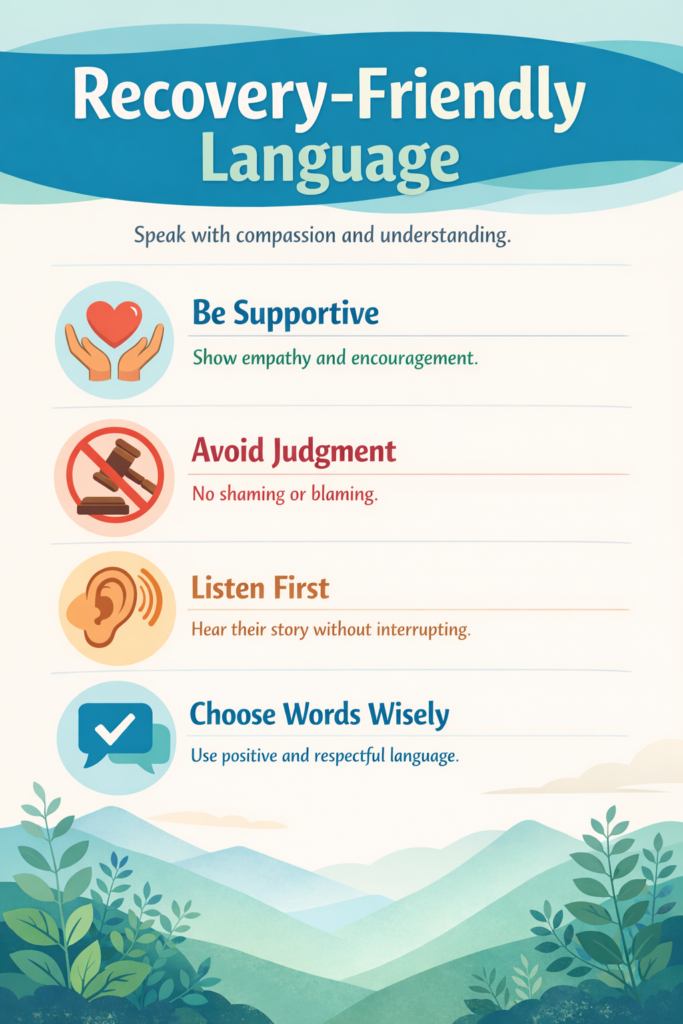
Being there for someone in recovery can be surprisingly tricky, especially if you haven’t been through it yourself. Even with the best intentions, some words can weigh heavier than you’d think. I’ve learned a lot by listening to people in recovery and by being part of supportive communities. Here, I want to share what not to say to someone in recovery and what you can do instead to actually help.
Why Words Matter When Supporting Someone in Recovery
Recovery is a deeply personal adventure and comes with its own set of hurdles. Support from friends and family is really important, but sometimes, certain comments can hit the wrong note. The way we talk about addiction or sobriety still carries a lot of stigma, and just a stray remark can leave someone feeling judged or misunderstood.
According to mental health experts, strong support systems increase the likelihood of recovery success (SAMHSA). Honest, nonjudgmental conversations are key, but knowing what to avoid can make them much safer and more uplifting. Focusing on how we speak is a real show of care—it can make recovery more manageable and remind the person that they have people on their side, which research shows truly matters in the long run.
Common Phrases That Can Be Hurtful (And Why)
I’ve heard these phrases slip out quite a bit, sometimes even from caring friends. Here are a few examples of what to steer clear of, with my take on why they can sting.
- “Just have one, it won’t hurt.” Pressuring someone to use or drink again can undo a lot of hard work. Recovery means saying no to “just one.” Even a single slip can set their progress back way more than most people realize.
- “I know exactly how you feel.” Unless you’ve walked the same path, it’s tough to really understand what they’re going through. Comparing your tough days to their recovery adventure feels dismissive.
- “Aren’t you over it by now?” There’s no expiration date on recovery. It’s an ongoing process, sometimes day by day. Questions like this can make someone feel like they’re failing if they’re still struggling.
- “But you look fine now.” Addiction isn’t just about physical appearance. Even if someone seems better on the outside, the inside could be full of struggles no one sees.
- “At least you’re not as bad as so-and-so.” This comparison brings guilt and minimizes the person’s own experience. Everyone’s adventure is unique and deserves respect in its own right.
Phrases to Avoid: Quick Reference
- “You were more fun before.” Implying someone was more entertaining before recovery is unhelpful and could make them question their choice.
- “Don’t you miss drinking/using?” Chances are, they do. Bringing it up just adds temptation or sadness.
- “Relapse is a failure.” Relapses can happen. It doesn’t mean they’ve failed. Framing it as a setback rather than a defeat is more supportive.
- “You don’t really have an addiction problem.” This invalidates what the person is going through. Trust their story instead of judging from the outside.
- “If you loved your family, you’d quit.” Addiction is complicated. Comments like this pile on shame when recovery is already tough enough.
What’s Going On Emotionally for Someone in Recovery?
I’ve seen a lot of people assume recovery is a straight line, just stop and move on. In reality, it’s full of ups and downs, especially in how people feel about themselves and the world around them. Understanding the rollercoaster of feelings helps friends and family offer better support and avoid stumbling into topics that add emotional weight.
- Guilt and Shame: Sometimes, people in recovery already feel guilty about their actions when they were struggling. Rehashing the past can make those feelings worse, even if you mean well.
- Anxiety or Social Pressure: Social settings, especially where substances are around, can be stressful. Small, thoughtless comments can turn that stress up to eleven and make being around others challenging.
- Cravings and Triggers: Even a casual mention of drinks, parties, or the “old days” can trigger cravings. Language has a powerful link to memory, making it important to choose words with care.
Recognizing these emotional hurdles helps avoid words or topics that pile on more pressure. Everyone wants to feel respected, not scrutinized. Your reassurance and patience truly matter here.
Mindful Communication: How to Talk to Someone in Recovery
The cool thing about learning what not to say is that it shows us better ways to have these conversations. Here are some habits I’ve found super helpful when trying to be supportive:
- Ask Open Questions: Instead of making assumptions, invite them to share (if they want). For example: “How are you feeling about everything lately?” This gives them space and shows you’re genuinely interested.
- Just Listen: Sometimes, just being there and listening is the best thing you can do. No pressure to “fix” anything, just offering a safe space.
- Avoid Judgement: Drop the shoulds and coulds. Phrases like “You’re doing awesome” or “I’m here if you need me” go a long way, especially on tough days.
- Support their boundaries: If they want to leave the party early or skip situations with alcohol, respect that choice without pushing. You’re showing respect for their needs over your own plans.
Examples of Supportive Messages
- “I’m proud of you.”
- “Let me know if you ever want to talk or need some company.”
- “Would you like to hang out in a place where you feel comfortable?”
- “Is there anything I can do to make things easier right now?”
Recovery, Relapse, and Language
Relapse can happen. When it does, the way people around react can make a big difference. Using words that carry less shame and more understanding really helps. Words can either be a gentle hand or an added burden, so kindness and patience matter here most.
- Avoid: “You blew it.”
- Try: “That sounds tough. How are you holding up?”
- Avoid: “After all this time, seriously?”
- Try: “Everyone has tough days, and setbacks happen. What do you need right now?”
Focusing on encouragement helps the person dust themselves off and get back on track rather than sinking into blame or embarrassment. Reminding someone that a setback does not define them is more powerful than it may seem.
How Triggers Work: Why Certain Topics Can Hurt
Triggers are social, emotional, or physical cues that bring back memories of substance use. Language can be a huge trigger, sometimes even more than seeing a drink or a familiar place. Understanding that words can be reminders helps people better support their friends or loved ones.
- Environment: Places and people connected to substance use are obvious triggers, but even jokes or casual comments can be powerful. Bringing up old times or past behaviors, even jokingly, can stir up memories best left alone.
- Holidays, Celebrations, and Loss: Comments about “letting loose” or “just this once” often ramp up during big events. These moments heighten vulnerability, so an extra dose of consideration makes a significant difference.
Giving someone a heads-up if you plan to talk about alcohol or asking if they’d prefer to skip a certain event shows respect for their adventure. These small gestures show you care about their needs first and foremost.
Tips for Friends and Family: What Actually Helps
- Stay Neutral: No need to bring up the past unless the person wants to discuss it. Focus on listening instead of offering solutions, keeping the focus on what matters most to them.
- Educate Yourself: Learning a bit about addiction and recovery signals that you care. Organizations like Hazelden Betty Ford and NA offer great resources. Reading up shows genuine investment in your friend’s well-being.
- Plan Sober Hangouts: Suggest activities that don’t revolve around drinking or using. Movie nights, hikes, or cooking together can offer relief from social pressure. Choosing new, healthy traditions gives everyone something fresh to look forward to.
- Set an Example: If you’re with them, ordering a nonalcoholic drink or skipping substances altogether shows solidarity. Actions sometimes say more than words and help relieve any feeling that they need to justify their sobriety.
Frequently Asked Questions
I get a lot of questions from people wanting to be more supportive. Here are some common ones:
Question: What if I accidentally say the wrong thing?
Answer: Nobody’s perfect. If it happens, just apologize and move on. A quick, “Sorry, I didn’t mean to be thoughtless,” usually clears the air. Most people appreciate honest effort over perfection.
Question: Should I ask about their recovery?
Answer: It’s fine if you ask respectfully, but pay attention to their cues. Some people appreciate interest, while others prefer privacy. Let them lead the way—and be okay with their choice either way. You’re making it about them, not your curiosity.
Question: Can I invite them to events where alcohol is present?
Answer: It’s good to offer the invite, but make it clear there’s no pressure. Saying, “I’d love to see you, but totally understand if you’d rather skip this one,” is generally well received. Taking this approach removes guilt or obligation and lets your friend decide for themselves.
Recovery and Language: Wrapping Up
Knowing what not to say to someone in recovery is mainly about respect and empathy. When in doubt, keep it positive, steer clear of topics that focus on substances or old habits, and, above all else, let your friend or loved one lead their own recovery adventure. Being present and supportive means more than perfect words. Avoiding the wrong ones matters too—sometimes it’s what you don’t say that gives the most support. Remember, encouragement and patience lay the groundwork for real, lasting connections through recovery.
Video: Language That Actually Saves Lives #RecoveryJourney #CompassionWorks #EndTheStigma