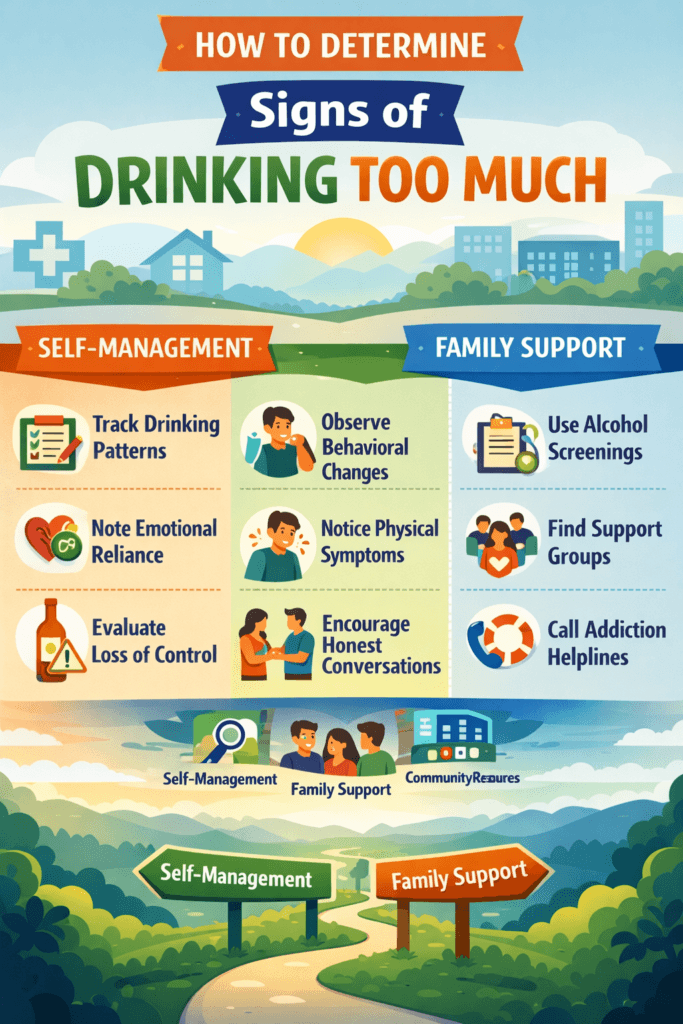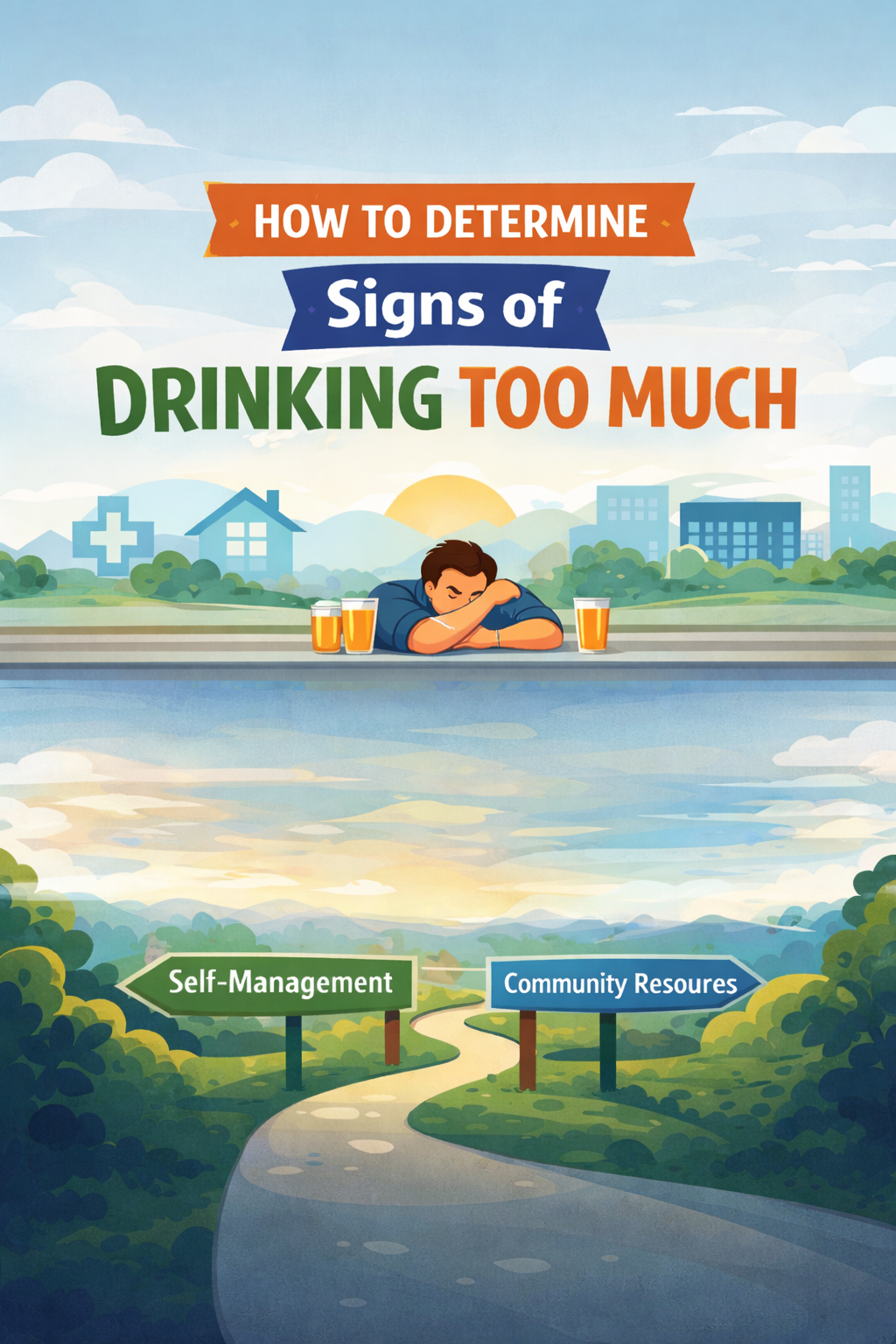
Recognizing the signs of drinking too much is a vital step in preventing alcohol misuse from progressing into dependence. Because excessive drinking often develops gradually and is reinforced by socially normalized alcohol use, individuals may not immediately recognize harmful patterns. Awareness and support are therefore essential.
Self-management strategies help individuals track drinking habits, identify emotional triggers, and assess loss of control. Family support provides an outside perspective through observation, communication, and encouragement to seek help. Community resources strengthen early intervention by offering education, screenings, and referrals to appropriate services. When self-awareness, family involvement, and community support work together, individuals are more likely to recognize risky drinking early and take action before serious health or addiction consequences develop.
6 Signs You Might Be Drinking Too Much
Alcohol is widely accepted in social culture, making it easy to overlook when drinking becomes harmful. However, excessive alcohol use can quietly affect physical health, emotional stability, relationships, and daily functioning. Recognizing early warning signs allows individuals to take action before dependence develops. Below are six common indicators that drinking may be becoming a problem.
1. You Need More Alcohol to Feel the Same Effect
Developing tolerance means the body adapts to alcohol, requiring larger amounts to achieve relaxation or intoxication. This is an early sign of physical dependence and increased risk for addiction.
2. You Experience Cravings or Strong Urges to Drink
Thinking frequently about drinking or feeling restless until you have alcohol suggests psychological dependence. Cravings often signal that alcohol is being used to manage stress or emotions.
3. You Drink More or Longer Than Planned
Intending to have one or two drinks but repeatedly consuming much more indicates loss of control, a hallmark feature of alcohol use disorder.
4. You Continue Drinking Despite Negative Consequences
Relationship conflicts, work problems, financial strain, or health issues caused by drinking — yet continuing to drink anyway — signal harmful use patterns.
5. You Feel Withdrawal Symptoms When Not Drinking
Symptoms such as shakiness, sweating, anxiety, nausea, or insomnia when alcohol wears off indicate physical dependence and the potential need for medical detox.
6. Drinking Becomes a Primary Coping Strategy
Relying on alcohol to deal with stress, sadness, boredom, or anxiety suggests emotional reliance and increases risk for long-term addiction.
Recognizing these signs does not mean failure — it means awareness. Early intervention through self-assessment, family support, and community or medical resources can prevent progression to severe dependence. Whether the next step is cutting back, seeking counseling, entering rehab, or medically supervised detox, taking action early leads to safer recovery and better long-term health.
Self-Management Strategies to Recognize Signs of Drinking Too Much
Because alcohol use is socially normalized, many people struggle to recognize when their drinking has crossed from casual use into harmful behavior. Self-management strategies help individuals build awareness, monitor habits, and identify early warning signs before serious health or dependence develops. Practicing honest self-reflection is often the first step toward positive change.
One effective strategy is tracking drinking patterns. Keeping a brief daily log of how much, how often, and why alcohol is consumed helps reveal trends that may otherwise go unnoticed. Drinking more than intended, drinking alone frequently, or drinking in response to stress are red flags that suggest increasing risk.
Another important self-management approach is monitoring physical and emotional responses. Individuals can note whether they feel shaky, anxious, nauseated, or irritable when not drinking. They can also assess whether alcohol is being used to cope with sadness, stress, boredom, or social discomfort. These patterns indicate emotional reliance on alcohol.
Evaluating control over drinking is equally essential. Asking questions such as “Can I stop after one drink?” or “Have I tried to cut back and failed?” helps determine whether loss of control is present. Repeated unsuccessful attempts to reduce drinking suggest the need for outside support.
Another strategy is to assess the impact on life. Individuals can reflect on whether drinking has caused arguments, missed responsibilities, financial strain, risky behavior, or health problems. Continuing to drink despite these consequences is a strong indicator of harmful use.
Finally, seeking feedback from trusted people provides a valuable external perspective. Friends, family members, or healthcare providers may notice changes that the individual overlooks.
Self-management does not replace professional assessment, but it builds awareness and motivation to seek help early. Recognizing the signs of drinking too much allows individuals to choose appropriate next steps — whether reducing use, joining support programs, entering counseling, or seeking medical treatment — before alcohol dependence becomes severe.
Family Support Strategies to Recognize Signs of Drinking Too Much
Alcohol misuse rarely affects only the individual; it impacts the entire family system. Loved ones are often the first to notice when casual drinking becomes harmful. Using healthy family support strategies can help identify early warning signs, encourage honest conversations, and guide a loved one toward seeking help before serious dependence develops.
One effective family strategy is observing behavioral changes. Family members can look for shifts in mood, irritability, secrecy around drinking, frequent intoxication, or withdrawal from family activities. These behaviors often signal increasing reliance on alcohol.
Another important approach is noticing physical warning signs. Tremors, sweating, sleep problems, memory lapses, or frequent illness may indicate the body is struggling with excessive alcohol use. Recognizing these symptoms helps families understand when medical evaluation may be necessary.
Families can also track life disruptions linked to drinking. Missed work or school, financial strain, arguments, driving under the influence, or legal issues connected to alcohol use suggest that drinking is no longer under control.
Open and nonjudgmental communication is crucial. Expressing concern with empathy rather than blame encourages honesty and reduces defensiveness. Simple statements like “I’m worried about how much you’ve been drinking” create space for discussion.
Another valuable strategy is encouraging professional screening. Families can assist in scheduling medical appointments, finding addiction assessments, or contacting community helplines for guidance.
Finally, seeking family education and support groups such as Al-Anon or family recovery programs equips loved ones with tools to respond effectively and avoid enabling behaviors.
Family involvement can be a powerful motivator for change. When loved ones recognize the signs of drinking too much early and respond with support, structure, and resource connection, the individual is more likely to seek help and regain control before alcohol use becomes severe.
Community Resource Strategies to Recognize Signs of Drinking Too Much
Excessive alcohol use often develops gradually, making it difficult for individuals and families to recognize when drinking has become harmful. Community resources provide education, screening, and support services that help identify early warning signs and connect people to appropriate care. When communities actively offer guidance and access to help, individuals are more likely to seek support before dependence progresses.
One key community strategy is offering alcohol-use screening and assessment services. Community health clinics, primary care offices, emergency departments, and behavioral health centers routinely provide brief alcohol screenings that identify risky drinking patterns. These evaluations help determine whether someone is drinking excessively and whether further intervention is needed.
Public education programs also play a major role. Workshops, health campaigns, workplace wellness programs, and school-based prevention initiatives teach people how to recognize tolerance, withdrawal symptoms, loss of control, and alcohol-related life disruptions. Increased awareness makes it easier for individuals to recognize warning signs in themselves or others.
Another important resource is confidential helplines and online support services. National and local hotlines provide anonymous guidance, self-assessment tools, and referrals to counseling or treatment services. These low-barrier entry points encourage individuals who are unsure about their drinking to seek advice safely.
Peer recovery and community support groups further strengthen early intervention. Organizations such as AA, SMART Recovery, and community recovery centers offer meetings where individuals can hear shared experiences and recognize similar patterns in their own behavior.
Finally, community partnerships with healthcare and social services help reduce barriers to care. Transportation assistance, affordable counseling programs, and integrated primary-care screening ensure that help is accessible when concerns arise.
Through education, screening, peer connection, and referral networks, community resources create a safety net for early detection of harmful drinking. When individuals are supported by informed communities, they are more likely to recognize risky alcohol use, seek help early, and prevent progression to alcohol dependence.
Frequently Asked Questions
Here are some common questions:
Q1: What does “drinking too much” mean?
Drinking too much refers to consuming alcohol in amounts that begin to negatively affect health, behavior, relationships, responsibilities, or safety. It includes binge drinking, heavy daily drinking, or loss of control over alcohol use.
Q2: What are the early warning signs of excessive drinking?
Early signs include increasing tolerance, drinking more than intended, frequent cravings, using alcohol to cope with emotions, and prioritizing drinking over other activities.
Q3: How can I self-assess my drinking habits?
You can track how often you drink, how much you consume, whether you can stop after one drink, and if you experience cravings or regret after drinking. Difficulty cutting back is a key warning sign.
Q4: What physical symptoms suggest drinking is becoming a problem?
Shakiness, nausea, sweating, anxiety, sleep problems, memory gaps, or feeling sick when not drinking may indicate physical dependence.
Q5: How do emotional signs help determine risky drinking?
Relying on alcohol to handle stress, sadness, boredom, or social anxiety suggests emotional dependence and increased risk for alcohol use disorder.
Q6: What role does family play in recognizing excessive drinking?
Family members may notice mood changes, secrecy, missed responsibilities, conflicts, or a decline in health. Their observations provide a valuable outside perspective.
Q7: How can community resources help identify problem drinking?
Clinics, healthcare providers, helplines, and community health programs offer confidential screenings, assessments, and referrals to determine if drinking is harmful.
Q8: When should someone seek professional help?
Professional help is recommended if attempts to cut down fail, withdrawal symptoms appear, drinking causes life problems, or family members express concern.
Q9: Can someone stop drinking on their own?
Some individuals can reduce drinking with self-management strategies, but those with dependence or withdrawal symptoms should seek medical guidance to avoid health risks.
Q10: Why is early recognition important?
Identifying harmful drinking early prevents progression to alcohol dependence, reduces health risks, and increases the success of recovery efforts.
Conclusion
Early recognition of harmful drinking patterns can change a person’s health and well-being. Self-management strategies promote honest self-reflection and awareness of personal drinking behaviors. Family support strengthens accountability, reduces denial, and encourages help-seeking. Community resources offer accessible screening, education, and professional guidance to address concerns and connect individuals with care. By combining these approaches, individuals and families can accurately determine when drinking has become excessive and take meaningful steps toward healthier choices, early intervention, and long-term recovery.
Video: Heavy Drinking Looks Like This (Are You Doing It?) #shorts #recovery