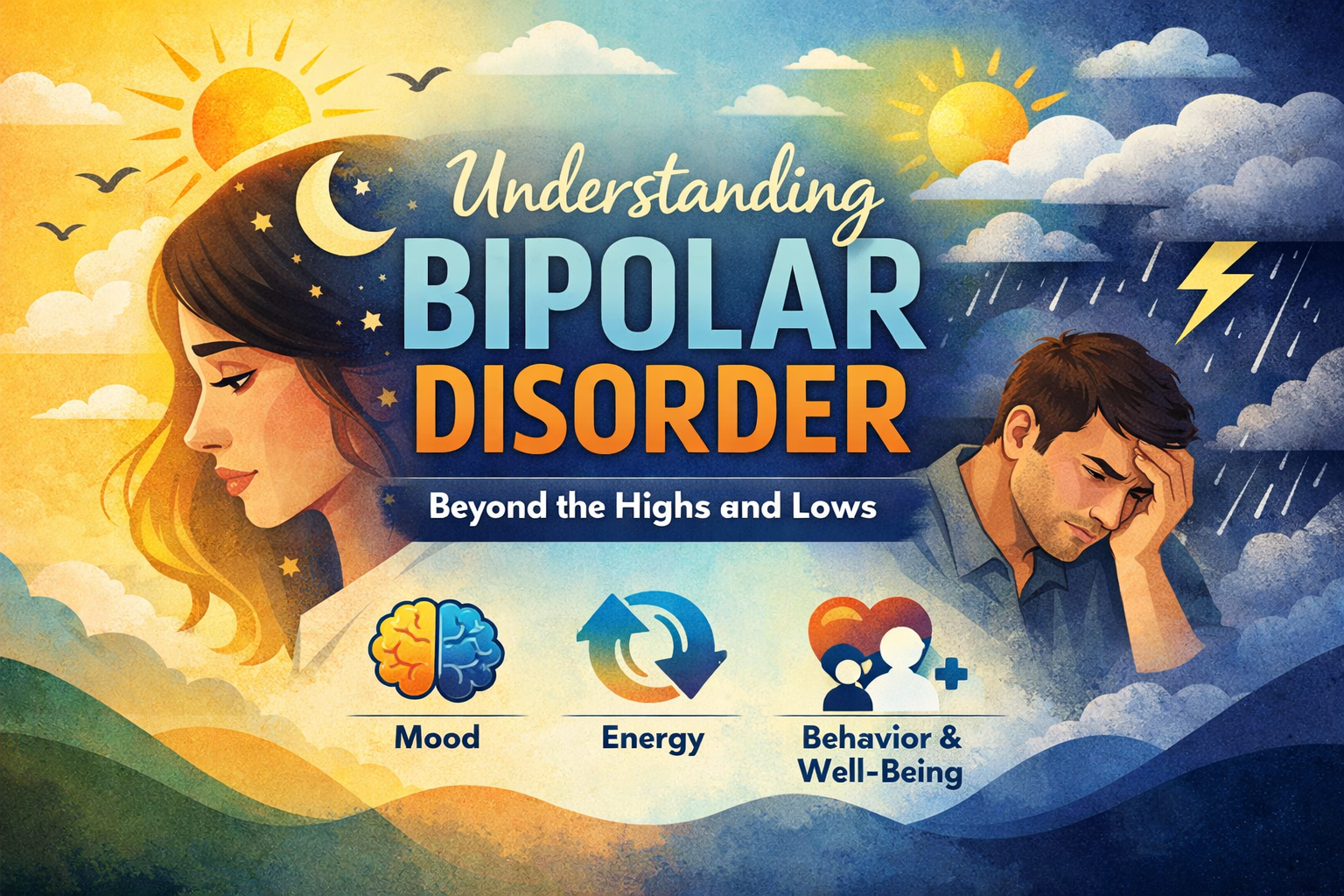
Understanding bipolar disorder requires moving beyond common stereotypes of simple “highs and lows” to recognize it as a complex condition involving shifts in mood, energy, thinking, and behavior. These changes occur in distinct episodes that can significantly affect daily functioning, relationships, and overall well-being. Often influenced by a combination of biological, psychological, and environmental factors, bipolar disorder reflects challenges in mood regulation rather than personal weakness or character flaws. Gaining a deeper understanding of these patterns is essential for reducing stigma and supporting effective management.
Understanding Bipolar Disorder: Beyond Highs and Lows
What Bipolar Disorder Really Is
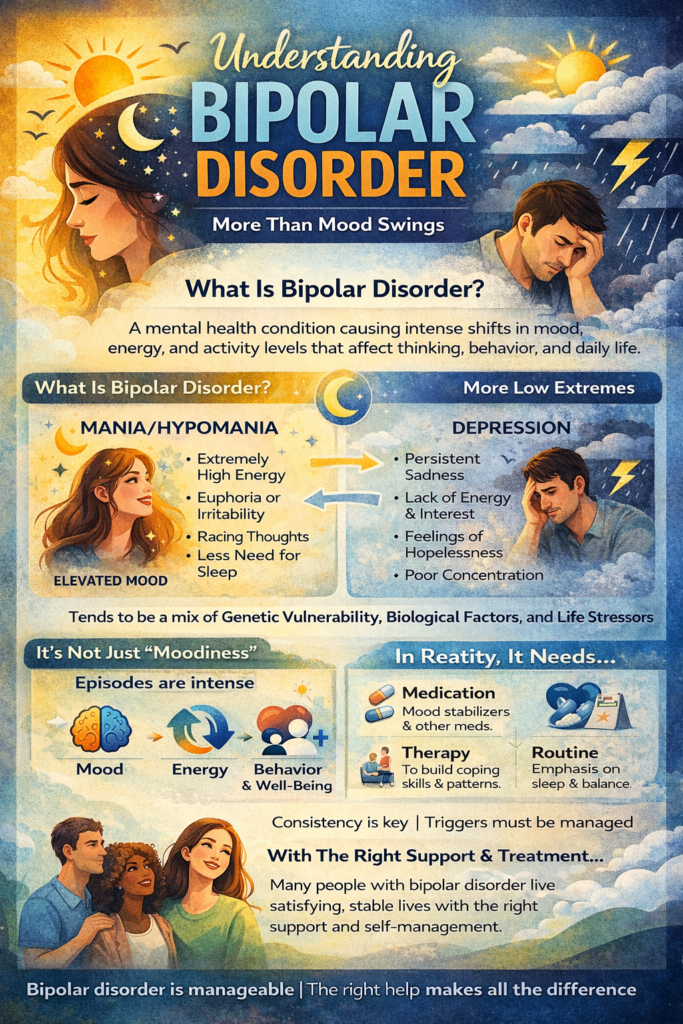
Bipolar disorder is often misunderstood as simply “mood swings,” but it is far more complex than occasional emotional ups and downs. It is a mental health condition characterized by distinct shifts in mood, energy, activity levels, and thinking patterns that can significantly impact daily functioning.
These shifts are not random—they occur in episodes that can last days, weeks, or even longer, and they often follow recognizable patterns.
The Two Poles: Mania and Depression
Manic or Hypomanic Episodes
During these periods, individuals may experience:
- Elevated or irritable mood
- Increased energy and reduced need for sleep
- Racing thoughts and rapid speech
- Impulsivity or risk-taking behavior
- Inflated self-confidence or grandiosity
Hypomania is a milder form of mania, but it can still affect judgment and functioning.
Depressive Episodes
On the opposite end, depressive episodes may include:
- Persistent sadness or emptiness
- Loss of interest in activities
- Fatigue or low energy
- Difficulty concentrating
- Feelings of worthlessness or hopelessness
These episodes can be just as impairing—if not more so—than manic phases.
Why It’s More Than Mood
Bipolar disorder affects more than emotions. It involves changes in:
- Cognition (how a person thinks)
- Behavior (actions and decision-making)
- Biology (brain chemistry and sleep cycles)
This is why it is considered a mood regulation disorder, not just a personality or attitude issue.
What Causes Bipolar Disorder?
There is no single cause. It typically results from a combination of:
- Genetic vulnerability
- Brain chemistry and structure differences
- Environmental stressors or life events
Triggers such as sleep disruption, stress, or substance use can influence the timing of episodes.
Common Misconceptions
“It’s just mood swings.”
Normal mood changes are brief and situational. Bipolar episodes are more intense, longer-lasting, and disruptive.
“People can just control it.”
Bipolar disorder involves biological processes. While individuals can learn to manage it, it is not something that can be controlled by willpower alone.
“Mania is always positive.”
While mania can feel energizing at first, it often leads to:
- Poor decisions
- Relationship strain
- Long-term consequences
Treatment and Management
Bipolar disorder is treatable, and many people live stable, fulfilling lives with the right support.
Common approaches include:
- Medication to stabilize mood
- Therapy to build coping and awareness
- Routine and sleep regulation
- Monitoring triggers and early warning signs
Consistency is key—especially with sleep and daily structure.
The Importance of Early Recognition
Understanding the signs of bipolar disorder allows for:
- Earlier intervention
- Better management of episodes
- Reduced long-term impact
Awareness also helps reduce stigma and encourages people to seek help.
A More Human Perspective
Behind the diagnosis is a person navigating intense internal shifts that can feel confusing and overwhelming. What may look unpredictable from the outside often follows internal patterns that can be understood and managed over time.
Final Thought
Bipolar disorder is not simply about being “up” or “down”—it’s about how the brain regulates mood, energy, and behavior over time.
When we move beyond stereotypes and focus on understanding,
We create space for effective support, reduced stigma, and meaningful stability.
Managing the Highs and Lows: Self-Management Strategies for Understanding Bipolar Disorder
Moving From Awareness to Active Management
Understanding bipolar disorder is an important first step—but managing it requires more than knowledge. Because bipolar disorder involves shifts in mood, energy, and behavior, self-management focuses on recognizing patterns, reducing triggers, and building stability over time.
The goal is not to eliminate all mood changes, but to create consistency and reduce extremes.
Strategy 1: Learn Your Personal Patterns
Bipolar disorder often follows individual patterns.
Start tracking:
- Mood changes (daily or weekly)
- Sleep patterns
- Energy levels
- Triggers (stress, conflict, lack of sleep)
Why it matters:
Recognizing early warning signs—like decreased sleep before mania or low energy before depression—allows for earlier intervention.
Strategy 2: Prioritize Sleep as a Foundation
Sleep is one of the most critical factors in mood stability.
Focus on:
- Consistent sleep and wake times
- Avoiding major disruptions to your routine
- Creating a calming nighttime environment
Even small sleep disruptions can trigger episodes, making sleep non-negotiable in self-management.
Strategy 3: Build a Structured Daily Routine
Routine helps regulate the body’s internal clock and emotional stability.
Include:
- Regular meals
- Set activity times
- Balanced work and rest
Consistency reduces unpredictability, which is key in managing mood swings.
Strategy 4: Monitor Energy and Activity Levels
Changes in energy often signal mood shifts.
Watch for:
- Sudden bursts of productivity or restlessness (possible mania)
- Persistent fatigue or withdrawal (possible depression)
Adjust accordingly:
- Slow down during high-energy periods
- Add gentle structure during low-energy periods
Strategy 5: Develop Emotional Regulation Skills
Strong emotions can escalate quickly without tools to manage them.
Practice:
- Pausing before acting on impulses
- Identifying and naming emotions
- Using grounding or calming techniques
These skills help create a buffer between feeling and reaction.
Strategy 6: Manage Impulsivity During Elevated States
During manic or hypomanic periods, decision-making can become risky.
Helpful strategies:
- Delay major decisions (financial, relational, etc.)
- Use accountability (check in with a trusted person)
- Set pre-planned limits for spending or commitments
Planning ahead protects you during vulnerable moments.
Strategy 7: Reduce and Manage Stress
Stress is a common trigger for both manic and depressive episodes.
Focus on:
- Regular relaxation practices
- Setting realistic expectations
- Avoiding overcommitment
Lower baseline stress = greater emotional stability.
Strategy 8: Stay Consistent With Treatment
Self-management works best alongside professional support.
This may include:
- Taking medication as prescribed
- Attending therapy
- Regular check-ins with healthcare providers
Consistency helps prevent relapse and maintain balance.
Strategy 9: Build a Support System
You don’t have to manage bipolar disorder alone.
Support can include:
- Family or friends
- Support groups
- Mental health professionals
Let trusted people know:
- Your early warning signs
- How can they help if symptoms increase
Strategy 10: Focus on Long-Term Stability, Not Short-Term Feelings
Mania can feel productive or exciting, and depression can feel permanent—but both are temporary states.
Self-management means:
- Making decisions based on long-term well-being
- Not chasing highs or avoiding lows at all costs
- Staying grounded in routines and strategies
A More Empowering Perspective
Bipolar disorder is not just something to “cope with”—it’s something you can learn to understand and manage effectively.
Self-management turns unpredictability into:
- Awareness
- Structure
- Informed action
Final Thought
The goal isn’t to control every mood—it’s to recognize patterns, respond early, and build stability over time.
With the right strategies and consistency,
you can move from reacting to mood shifts
to actively managing them—creating a life that feels more balanced, predictable, and in your control.
Supporting Stability: Family Strategies for Understanding Bipolar Disorder
When Bipolar Disorder Affects the Whole Family
Bipolar disorder doesn’t exist in isolation—it often impacts relationships, communication, and the overall family dynamic. Loved ones may feel confused by sudden shifts in mood, energy, or behavior, especially when those changes seem unpredictable or intense.
Family support becomes more effective when it shifts from:
“Why are they acting like this?”
to
“What patterns are happening, and how can we respond in a supportive and structured way?”
Understanding Before Reacting
Bipolar disorder involves episodes, not personality changes.
What families may interpret as:
- Irritability → may be part of a manic or depressive shift
- Withdrawal → may signal depression
- High energy or impulsivity → may indicate mania or hypomania
Recognizing these as symptoms rather than intentional behavior helps reduce conflict and improve responses.
Strategy 1: Learn the Signs of Mood Episodes
Education is one of the most powerful tools families have.
Learn to recognize:
- Early signs of mania (reduced sleep, increased activity, impulsivity)
- Early signs of depression (low energy, withdrawal, hopelessness)
Why it matters:
Early recognition allows for quicker support and intervention.
Strategy 2: Encourage Consistency and Routine
Routine plays a major role in stabilizing mood.
Families can support by:
- Encouraging regular sleep schedules
- Supporting a consistent daily structure
- Helping reduce sudden disruptions
Stability in daily life helps regulate internal rhythms.
Strategy 3: Support Treatment Without Controlling
Encourage:
- Medication adherence
- Therapy attendance
- Open communication with providers
But avoid:
- Forcing or policing behavior
- Taking full responsibility for their recovery
Goal: Support autonomy while reinforcing consistency.
Strategy 4: Set Healthy Boundaries
Support does not mean accepting harmful behavior.
Examples:
- Setting limits during impulsive or risky behavior
- Protecting finances or shared responsibilities
- Stepping back when behavior becomes harmful
Boundaries provide structure and safety for everyone involved.
Strategy 5: Avoid Taking Symptoms Personally
During episodes, behavior may feel directed at you—but it often isn’t.
Remind yourself:
- Mood episodes affect perception and behavior
- Reactions may be intensified or distorted
This perspective reduces emotional reactivity and prevents escalation.
Strategy 6: Communicate Calmly and Clearly
During mood shifts, communication can become strained.
Helpful approaches:
- Keep language simple and direct
- Avoid arguing or trying to “win.”
- Focus on concern, not criticism
For example:
- “I’ve noticed you haven’t been sleeping much, and I’m concerned.”
Strategy 7: Have a Plan for Mood Episodes
Preparation reduces chaos during difficult periods.
Discuss ahead of time:
- Warning signs
- Preferred support strategies
- When to seek professional help
Having a plan creates predictability in unpredictable moments.
Strategy 8: Encourage Balance, Not Extremes
Families can help reinforce:
- Rest during high-energy periods
- Gentle activity during low-energy periods
Avoid encouraging:
- Overcommitment during mania
- Total withdrawal during depression
Balance supports long-term stability.
Strategy 9: Take Care of Yourself
Supporting someone with bipolar disorder can be emotionally demanding.
Family members should:
- Seek their own support (therapy, groups)
- Maintain personal boundaries
- Take breaks when needed
Your well-being directly impacts your ability to support others.
Strategy 10: Reinforce Progress, Not Just Problems
It’s easy to focus on crises—but progress matters too.
Acknowledge:
- Efforts to manage symptoms
- Consistency with routines or treatment
- Healthy coping choices
Positive reinforcement encourages continued growth.
A Healthier Family Dynamic
When families combine understanding, structure, and boundaries:
- Conflict decreases
- Communication improves
- Episodes become more manageable
Support becomes more effective when it is informed and consistent rather than reactive.
Final Thought
Bipolar disorder can be challenging, but it becomes more manageable when families understand the patterns behind it.
By focusing on education, stability, and supportive boundaries, families can move from confusion and frustration to clarity and effective support—creating an environment where both the individual and the family can function and grow.
Stronger Together: Community Resource Strategies for Understanding Bipolar Disorder
Why Community Support Is Essential
Bipolar disorder is often discussed as an individual or family challenge, but it is also deeply influenced by community systems, access to care, and social environments. Without the right resources, individuals may struggle with misdiagnosis, inconsistent treatment, or lack of support.
A community-based perspective shifts the focus from:
“How does this person manage alone?”
to
“What systems help make stability possible?”
Moving Beyond Isolation
Many people with bipolar disorder face:
- Stigma and misunderstanding
- Limited access to mental health care
- Social isolation
- Inconsistent support systems
Community resources help reduce these barriers by providing education, connection, and structure.
Strategy 1: Expand Access to Mental Health Services
Accessible care is the foundation of effective management.
Communities can support:
- Affordable psychiatric services for diagnosis and medication
- Therapy options (individual and group)
- Crisis intervention services
Impact: Consistent care improves stability and reduces the severity of episodes.
Strategy 2: Promote Public Education and Awareness
Misconceptions about bipolar disorder can lead to stigma and delayed treatment.
Community education efforts can include:
- Workshops and seminars
- School and workplace mental health programs
- Public campaigns explaining symptoms and treatment
Goal: Replace myths with an accurate, supportive understanding.
Strategy 3: Build Peer Support Networks
Peer support provides something clinical care alone cannot—shared experience.
Benefits include:
- Reduced isolation
- Real-life coping strategies
- Encouragement from others managing similar challenges
These networks help normalize the experience and reinforce that stability is achievable.
Strategy 4: Encourage Structured Community Programs
Programs that provide routine and engagement can support mood stability.
Examples:
- Wellness and recovery groups
- Community-based mental health programs
- Structured day programs
Routine and structure are key factors in managing bipolar disorder effectively.
Strategy 5: Integrate Services Across Systems
Bipolar disorder affects multiple areas of life.
Communities can improve outcomes by connecting:
- Healthcare providers
- Schools and universities
- Employers and vocational programs
- Social services
Result: Coordinated care that supports the whole person—not just symptoms.
Strategy 6: Support Employment and Vocational Resources
Work stability can be challenging during mood episodes.
Community support can include:
- Flexible work programs
- Vocational training
- Employer education on mental health
This helps individuals maintain independence and purpose.
Strategy 7: Provide Family Education Programs
Families play a key role in long-term support.
Community resources can offer:
- Family workshops on bipolar disorder
- Communication and boundary-setting guidance
- Support groups for caregivers
Educated families are better equipped to support without becoming overwhelmed.
Strategy 8: Promote Healthy Lifestyle Environments
Community environments influence daily habits that affect mood.
Supportive initiatives include:
- Access to recreational and wellness spaces
- Programs promoting sleep hygiene and stress reduction
- Community activities that encourage balance
Healthy environments reinforce consistent routines and well-being.
Strategy 9: Reduce Stigma Through Open Dialogue
Stigma can prevent people from seeking help or disclosing their struggles.
Communities can:
- Encourage open conversations about mental health
- Use nonjudgmental language
- Highlight recovery stories
Reducing stigma increases access, trust, and engagement with support systems.
A Systems-Based Perspective
Bipolar disorder management is not just about individual effort—it depends on:
- Access to consistent care
- Social and peer support
- Education and awareness
- Stable environments
When these systems are strong, individuals are better able to maintain balance and stability.
Final Thought
No one manages bipolar disorder in isolation.
When communities provide access, education, structure, and connection, they create an environment where individuals can move beyond survival and toward stability.
In the right system, managing bipolar disorder becomes less about struggling alone—
and more about being supported every step of the way.
Frequently Asked Questions
Here are some common questions:
1. What is bipolar disorder?
Bipolar disorder is a mental health condition characterized by distinct mood episodes, including periods of elevated mood (mania or hypomania) and periods of depression. These episodes affect energy, thinking, behavior, and daily functioning.
2. Is bipolar disorder just mood swings?
No. While everyone experiences mood changes, bipolar disorder involves:
- More intense emotions
- Longer-lasting episodes
- Significant impact on daily life
It’s a disorder of mood regulation, not typical emotional variation.
3. What is the difference between mania and hypomania?
- Mania: More severe, may include risky behavior, impaired judgment, and sometimes hospitalization
- Hypomania: Less intense, but still involves elevated mood, increased energy, and reduced need for sleep
Both are part of bipolar disorder, but differ in severity and impact.
4. What does a depressive episode look like?
Depressive episodes may include:
- Persistent sadness or emptiness
- Low energy or fatigue
- Loss of interest in activities
- Difficulty concentrating
- Feelings of hopelessness
These symptoms can significantly affect daily functioning.
5. What causes bipolar disorder?
It’s usually a combination of:
- Genetic factors (family history)
- Brain chemistry differences
- Environmental triggers (stress, trauma, sleep disruption)
There is no single cause—it’s a multifactorial condition.
6. Can people control their mood episodes?
Not entirely. While individuals can learn to manage symptoms, bipolar disorder involves biological processes that are not controlled by willpower alone. Management requires strategies, support, and often treatment.
7. Why is sleep so important in bipolar disorder?
Sleep plays a major role in regulating mood.
- Lack of sleep can trigger mania
- Irregular sleep patterns can destabilize mood
Maintaining a consistent sleep routine is one of the most important self-management tools.
8. Can bipolar disorder be treated?
Yes. It is highly manageable with:
- Medication (e.g., mood stabilizers)
- Therapy
- Lifestyle strategies (routine, sleep, stress management)
Many people live stable, fulfilling lives with proper treatment.
9. How can I recognize early warning signs of an episode?
Common early signs include:
Mania:
- Decreased need for sleep
- Increased energy or activity
- Racing thoughts
Depression:
- Low motivation
- Withdrawal from others
- Persistent fatigue
Recognizing these signs early allows for faster intervention.
10. Is bipolar disorder the same for everyone?
No. It varies widely in:
- Frequency of episodes
- Severity
- Triggers
- Response to treatment
Each person has a unique pattern, which is why personalized management is important.
11. Can someone with bipolar disorder have a normal life?
Yes. With proper management, individuals can:
- Maintain relationships
- Work or study successfully
- Achieve long-term stability
Consistency and support are key factors.
12. How can others support someone with bipolar disorder?
Helpful support includes:
- Learning about the condition
- Encouraging treatment and routine
- Recognizing early warning signs
- Offering support without judgment
Support works best when it combines understanding with healthy boundaries.
Conclusion
Ultimately, understanding bipolar disorder is about recognizing patterns, not judging behaviors. When viewed through a psychological and medical lens, the condition becomes more predictable and manageable rather than confusing or overwhelming. With proper awareness, treatment, and support, individuals can learn to navigate mood shifts and build stability over time. Shifting from misunderstanding to an informed perspective enables greater empathy, stronger support systems, and a clearer path toward long-term well-being.
Video: