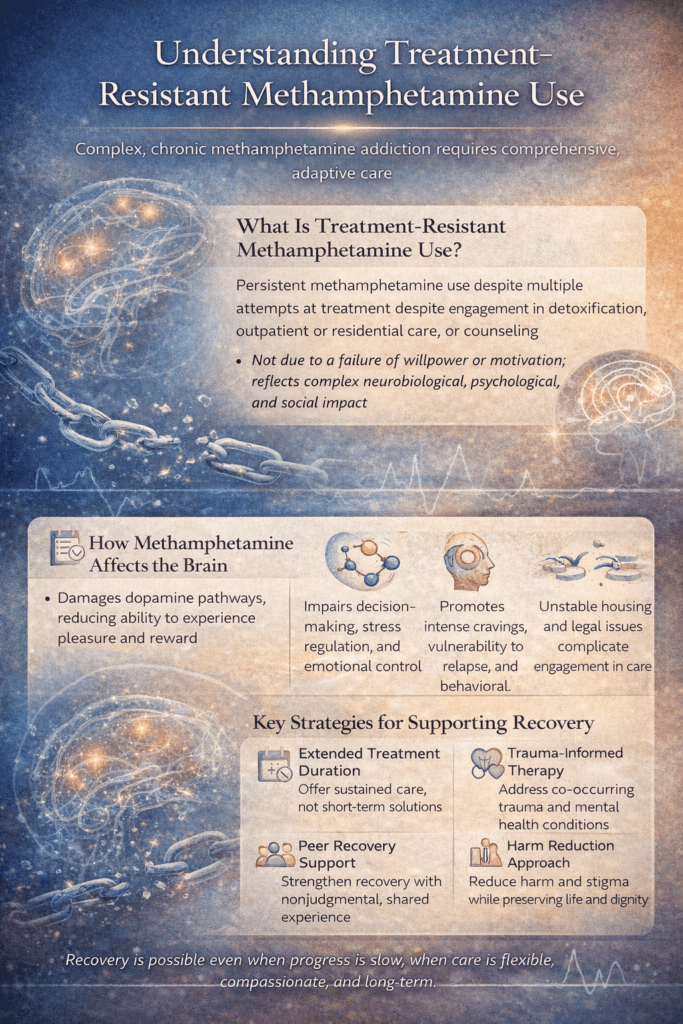
Treatment-resistant methamphetamine use refers to continued use or recurrent relapse despite repeated participation in evidence-based treatment. This pattern reflects the significant and lasting effects of methamphetamine on the brain’s reward, motivation, and decision-making systems. Chronic stimulant exposure disrupts dopamine pathways, impairing impulse control, stress regulation, and the ability to experience natural pleasure. Because brain recovery can take months or years, individuals often remain vulnerable to cravings and emotional instability even while engaged in care.
Co-occurring conditions such as depression, anxiety, PTSD, stimulant-induced psychosis, trauma history, and social instability further complicate recovery. For many, methamphetamine functions as a coping mechanism for emotional distress or environmental stressors, making abstinence difficult without adequate replacement supports.
Importantly, treatment resistance is not a lack of motivation or effort. Rather, it signals the need for more comprehensive, flexible, and longer-term care models that integrate behavioral treatment, trauma-informed therapy, mental health services, harm reduction, and strong peer and community support to address both neurobiological recovery and unmet psychosocial needs.
Treatment-Resistant Methamphetamine Use: Challenges, Causes, and Paths Forward
Treatment-resistant methamphetamine use refers to a pattern of continued or recurrent methamphetamine use despite repeated engagement in evidence-based treatment. Individuals may cycle through detoxification, outpatient care, residential programs, or counseling, yet struggle to achieve sustained recovery. This pattern is not a failure of willpower or motivation—it reflects the complex neurobiological, psychological, and social impact of methamphetamine on the brain and behavior.
Methamphetamine profoundly alters the brain’s reward, motivation, and decision-making systems. Chronic use damages dopamine pathways responsible for pleasure, focus, and goal-directed behavior. Over time, this leads to intense cravings, emotional flatness, impaired judgment, and reduced ability to experience reward from everyday life. When treatment begins, individuals may remain highly vulnerable because the brain’s recovery is slow, often taking months or years rather than weeks.
Co-occurring conditions frequently contribute to treatment resistance. Trauma histories, depression, anxiety, psychotic symptoms, cognitive impairment, and unstable housing or legal stressors can all interfere with engagement and retention in care. Methamphetamine use may function as a coping strategy for emotional pain, hypervigilance, or exhaustion, making abstinence feel intolerable without alternative supports in place.
Another challenge is the limited availability of medications specifically approved for methamphetamine use disorder. While behavioral treatments such as contingency management, cognitive behavioral therapy, and structured recovery programs are effective, they may be insufficient alone for individuals with severe or long-term use. Inconsistent access to comprehensive care further compounds the problem.
Addressing treatment-resistant methamphetamine use requires a shift from short-term interventions to long-term, adaptive care models. Extended treatment duration, harm-reduction approaches, trauma-informed therapy, peer recovery support, and integration of mental health services are essential. Rather than asking why someone “won’t stop,” effective care asks what needs remain unmet and how treatment can evolve to address them.
Recovery from treatment-resistant methamphetamine use is often nonlinear. Progress may involve periods of reduced use, improved stability, or increased engagement rather than immediate abstinence. When treatment focuses on safety, dignity, purpose, and sustained support, individuals can gradually rebuild brain function, identity, and hope.
Treatment resistance is not the end of recovery—it is a signal for deeper, more personalized care. With patience, flexibility, and comprehensive support, meaningful recovery remains possible even after repeated setbacks.
Self-Management Strategies for Treatment-Resistant Methamphetamine Use
Treatment-resistant methamphetamine use presents unique challenges that often persist despite repeated engagement in formal treatment. While clinical care remains essential, self-management strategies play a critical role in supporting recovery when progress feels slow or unstable. These strategies help individuals regain a sense of agency, reduce harm, and strengthen resilience during long-term healing.
One of the most important self-management strategies is craving awareness and response planning. Methamphetamine cravings can be intense, sudden, and emotionally charged. Learning to recognize early warning signs—such as fatigue, stress, boredom, or emotional distress—allows individuals to intervene before cravings escalate. Practical tools include urge surfing techniques, delay strategies, grounding exercises, and a written plan for high-risk moments.
Structure and routine are especially important in treatment-resistant methamphetamine use. Chronic stimulant use disrupts sleep, nutrition, and daily rhythm, which in turn worsens cravings and emotional instability. Establishing consistent wake times, meals, hydration, light physical activity, and rest periods helps stabilize the nervous system and supports gradual brain recovery. Even small routines create predictability and reduce the risk of chaos-driven relapse.
Emotional regulation and stress management are also key. Many individuals use methamphetamine to cope with trauma, anxiety, depression, or exhaustion. Self-management strategies such as mindfulness practices, paced breathing, journaling, and body-based regulation techniques help individuals tolerate distress without relying on substances. Learning to sit with discomfort—rather than escape it—is a foundational recovery skill.
Self-compassion is another essential element. Treatment resistance often fuels shame, self-blame, and hopelessness, which can undermine motivation. Reframing setbacks as data rather than failure encourages persistence. Tracking progress in reduced use, increased stability, improved relationships, or longer periods between relapses helps shift the focus from perfection to progress.
Connection and accountability also support self-management. Peer support, recovery check-ins, digital recovery tools, or trusted individuals can provide encouragement and reality-based feedback. Self-management does not mean managing recovery alone; it means actively engaging with supports that reinforce safety and motivation.
Finally, aligning recovery with personal values strengthens long-term change. Clarifying what matters—health, family, freedom, creativity, stability, or self-respect—helps individuals reconnect with purpose beyond substance use. Values-based choices make recovery meaningful even when cravings persist.
Self-management strategies do not replace professional treatment, but they are vital for individuals facing treatment-resistant methamphetamine use. By building skills that support regulation, structure, self-compassion, and purpose, recovery becomes a gradual, sustainable process—one focused not only on stopping use, but on rebuilding a life worth sustaining.
Family Support Strategies for Treatment-Resistant Methamphetamine Use
Treatment-resistant methamphetamine use can be exhausting and heartbreaking for families. Repeated relapses, incomplete treatment responses, and ongoing instability often leave loved ones feeling helpless, frustrated, or fearful. Family support, however, remains one of the most powerful and underutilized factors in long-term recovery. When approached with education, boundaries, and compassion, families can support healing without reinforcing harm.
One essential family strategy is shifting from control to support. Treatment resistance is not defiance or lack of effort—it reflects deep neurobiological and psychological disruption caused by methamphetamine. Families who move away from threats, ultimatums, or constant monitoring and toward supportive accountability reduce shame and defensiveness, creating space for engagement rather than avoidance.
Clear, healthy boundaries are critical. Supporting recovery does not mean tolerating unsafe behavior or enabling substance use. Families can set firm but respectful boundaries around safety, finances, housing, and communication. Consistency is key; predictable boundaries help reduce chaos, reinforce responsibility, and preserve dignity.
Education about methamphetamine’s effects on the brain is another vital strategy. Understanding that stimulant-related cravings, paranoia, emotional volatility, and cognitive impairment are part of the disorder—not personal attacks—helps families respond with calm rather than reactivity. Psychoeducation also reduces misplaced blame and unrealistic expectations about recovery timelines.
Compassionate communication strengthens connection. Using calm, nonjudgmental language, focusing on concern rather than accusation, and acknowledging effort—even when outcomes fall short—helps maintain trust. Statements that express care and hope are more effective than lectures or comparisons to past failures.
Families can also encourage engagement in long-term, flexible care rather than short-term solutions. Supporting harm-reduction strategies, extended treatment models, peer recovery involvement, and mental health services can keep individuals connected to care even when abstinence is inconsistent. Staying engaged in recovery planning communicates belief in the person, not merely in the outcome.
Equally important is family self-care. Chronic stress, trauma exposure, and burnout are common in families affected by treatment-resistant methamphetamine use. Support groups, family therapy, counseling, and spiritual or community resources help loved ones maintain their own well-being. A regulated, supported family system is better able to offer steady, compassionate support.
Treatment-resistant methamphetamine use is a long and complex journey, but families remain a stabilizing force when support is grounded in understanding, boundaries, and hope. By focusing on safety, connection, and sustained engagement rather than control or perfection, families can help maintain the possibility of recovery—even through repeated setbacks.
Community Resource Strategies for Treatment-Resistant Methamphetamine Use
Treatment-resistant methamphetamine use often persists not because individuals refuse help, but because available care is fragmented, time-limited, or mismatched to the realities of stimulant addiction. Community resources play a critical role in addressing these gaps by providing continuity, accessibility, and long-term support that extend beyond traditional treatment settings. When coordinated effectively, community-based strategies can sustain engagement and reduce harm even when recovery is nonlinear.
Peer recovery support services are among the most effective community resources for treatment-resistant methamphetamine use. Peer specialists bring lived experience, credibility, and relational trust that many individuals lack in clinical settings. Ongoing peer contact helps reduce isolation, normalize setbacks, and maintain motivation during periods when formal treatment engagement may lapse.
Recovery community centers and low-barrier programs provide essential structure and connection. These settings provide safe spaces for social interaction, skill development, employment readiness, education, and wellness activities without requiring immediate abstinence. This inclusive approach keeps individuals connected to recovery-oriented environments while addressing practical needs that often drive continued use.
Harm reduction services are also vital. Outreach programs offering education, safer-use supplies, overdose prevention resources, infectious disease screening, and linkage to care help reduce medical and social consequences of ongoing use. For treatment-resistant individuals, harm reduction can serve as a bridge rather than a barrier to recovery, preserving life and dignity while readiness for change evolves.
Housing, employment, and legal support services significantly influence recovery outcomes. Stable housing programs, vocational training, and reentry services reduce stressors that perpetuate methamphetamine use. Addressing social determinants of health through community partnerships improves engagement and supports gradual stabilization.
Mental health and trauma-informed community services further enhance recovery. Many individuals with treatment-resistant methamphetamine use have co-occurring psychiatric symptoms that are not adequately addressed in substance-focused treatment alone. Integrated community-based mental health care improves emotional regulation and treatment retention.
Finally, community education and stigma reduction efforts strengthen recovery environments. Communities that view addiction as a chronic, treatable condition—rather than a moral failure—create safer spaces for individuals to seek help repeatedly without shame. This cultural shift increases access to care and supports long-term healing.
Community resource strategies do not replace clinical treatment, but they are essential to its success. By offering sustained connection, practical support, and compassionate engagement, communities help transform treatment resistance into an opportunity for deeper, more responsive care—and keep recovery possible, even when progress is slow.
Frequently Asked Questions
Here are some common questions:
What does “treatment-resistant” methamphetamine use mean?
Treatment-resistant methamphetamine use refers to continued or recurrent methamphetamine use despite participation in evidence-based treatments such as detoxification, outpatient therapy, residential programs, or counseling. It reflects the complexity of stimulant addiction rather than a lack of effort or motivation.
Is treatment resistance a personal failure?
No. Treatment resistance is not a personal or moral failure. Methamphetamine causes long-lasting changes to brain chemistry, particularly in dopamine and stress pathways, which can impair motivation, judgment, and impulse control. These changes often require extended and individualized care.
Why is methamphetamine addiction especially difficult to treat?
Methamphetamine strongly affects the brain’s reward and motivation systems, leading to intense cravings, emotional flattening, cognitive impairment, and slow neurological recovery. In addition, there are limited FDA-approved medications for methamphetamine use disorder, making treatment more reliant on behavioral and supportive interventions.
How long does brain recovery take after methamphetamine use?
Brain recovery can take months or years, depending on the duration and severity of use. Improvements in mood, cognition, and impulse control often occur gradually. Slow recovery does not mean treatment is ineffective—it reflects the brain’s healing timeline.
What factors contribute to treatment resistance?
Common factors include trauma history, co-occurring mental health disorders, unstable housing, legal stress, lack of social support, stigma, and interrupted or short-term treatment. Methamphetamine may also function as a coping mechanism for emotional pain or exhaustion.
Are there effective treatments for treatment-resistant methamphetamine use?
Yes. While no single approach works for everyone, evidence-informed strategies include contingency management, cognitive behavioral therapy, trauma-informed care, peer recovery support, harm reduction services, and extended treatment models that allow for relapse and re-engagement without punishment.
Does recovery require complete abstinence right away?
Not always. For individuals with treatment-resistant use, progress may involve reduced use, increased stability, safer behaviors, or improved engagement in care. Harm reduction approaches prioritize safety and dignity while supporting gradual movement toward recovery goals.
How can families support someone with treatment-resistant methamphetamine use?
Families can help by setting healthy boundaries, avoiding shame-based language, learning about the effects of methamphetamine on the brain, supporting long-term treatment engagement, and caring for their own emotional well-being through counseling or support groups.
What role do community resources play in recovery?
Community resources provide continuity beyond formal treatment. Peer support programs, recovery community centers, housing services, employment support, harm reduction programs, and mental health services help address practical and emotional needs that influence ongoing use.
Is relapse inevitable with treatment-resistant methamphetamine use?
Relapse is common but not inevitable. Many individuals experience setbacks before achieving sustained recovery. Each return to care builds skills, insight, and stability. Recovery is often nonlinear, and long-term support improves outcomes.
Why is long-term care important for treatment-resistant cases?
Short-term treatment rarely matches the chronic nature of stimulant addiction. Long-term, flexible care allows the brain time to heal, addresses co-occurring conditions, and supports gradual behavior change without disengagement after setbacks.
Can people fully recover after multiple failed treatments?
Yes. Many individuals achieve meaningful, stable recovery after multiple attempts. Treatment resistance is not the end of recovery—it is an indicator that care must be deeper, longer, and more responsive to individual needs.
Conclusion
Understanding treatment-resistant methamphetamine use as a complex, chronic condition allows addiction therapy and recovery efforts to shift from short-term expectations to sustained, adaptive support. Effective responses prioritize safety, dignity, and continued engagement rather than punishment or disengagement after setbacks. By integrating extended treatment models, harm reduction, peer support, mental health care, and community resources, recovery remains possible even when progress is nonlinear. When care is patient, individualized, and persistent, treatment resistance becomes not a barrier but a call for deeper, more responsive healing.
Video: Meth Addiction Requires a Completely Different Approach #recovery #addiction #treatment