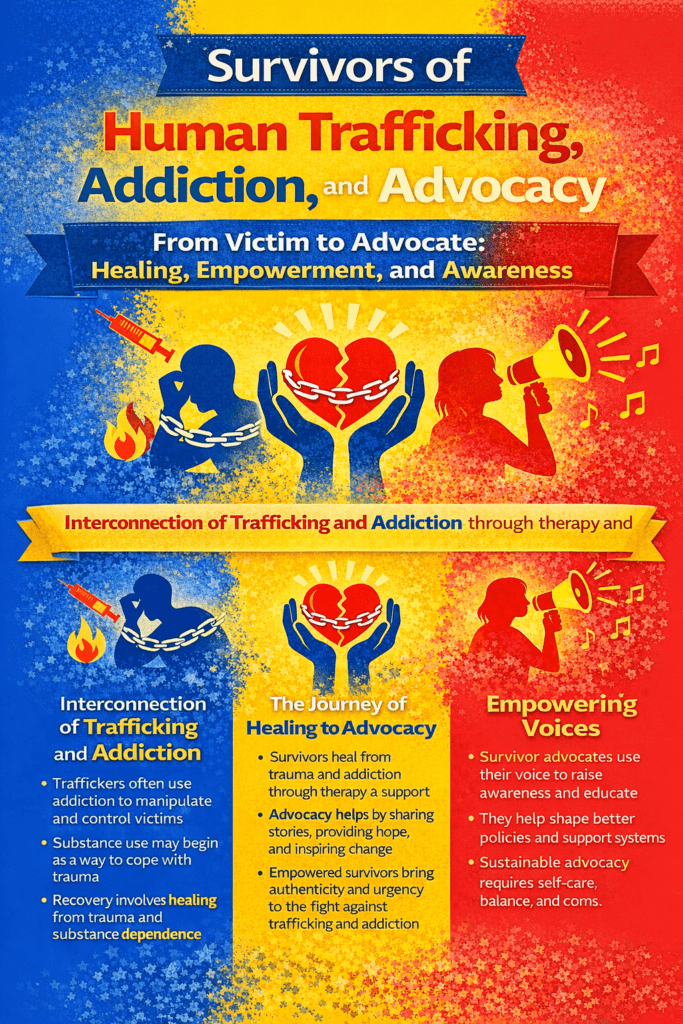
Survivors of human trafficking who have also struggled with addiction carry layered experiences of trauma, survival, and resilience. Substance use is often intertwined with trafficking—sometimes used as a tool of control, other times as a coping response to overwhelming psychological distress. In this context, addiction is not weakness but often a survival mechanism.
Recovery involves more than sobriety; it requires healing from complex trauma, rebuilding safety, restoring trust, and reclaiming identity. Those who become advocates transform their lived experiences into purposeful action—raising awareness, educating communities, and supporting others still at risk. Their voices bring authenticity and depth to conversations about trafficking and addiction, challenging stigma and demonstrating that healing and leadership are possible.
From Survivor to Advocate: Healing from Human Trafficking and Addiction While Fighting for Change
Surviving human trafficking is an experience marked by trauma, coercion, and profound loss of autonomy. For many survivors, addiction becomes intertwined with that experience—sometimes as a coping mechanism for trauma, sometimes as a tool traffickers use to control and manipulate victims. The path to healing can be long and complex, requiring emotional recovery, physical stabilization, and rebuilding a sense of identity. Yet many survivors not only reclaim their lives but also choose to become advocates, using their lived experience to raise awareness, support others, and drive systemic change. Their journey from victimization to empowerment demonstrates extraordinary resilience and highlights the powerful role survivors play in shaping prevention and recovery efforts.
The Connection Between Human Trafficking and Addiction
Addiction and trafficking are often deeply linked. Traffickers may introduce substances to create dependency, maintain control, or suppress resistance. In other cases, individuals struggling with substance use disorders may be targeted because their vulnerability makes them easier to exploit. This intersection can create a cycle where trauma fuels substance use, and substance use increases vulnerability to further exploitation.
For survivors, addiction is not a moral failing—it is often a survival response to extreme trauma. Recognizing this connection is essential for compassionate care, trauma-informed treatment, and effective advocacy. Understanding the role substances played in their experience can also become a crucial step in recovery and empowerment.
Healing as the First Step Toward Advocacy
Before advocacy can begin, healing must come first. Recovery from both trafficking trauma and addiction often involves:
- Trauma-informed therapy
- Medical and mental health support
- Safe housing and stability
- Peer support networks
- Legal and social services
Healing is not linear, and survivors may move forward in stages. As stability grows, many feel a desire to help others still trapped in similar circumstances. Advocacy often emerges naturally from this healing process, not as an obligation but as a calling.
Why Survivors Make Powerful Advocates
Survivors bring perspectives that professionals, policymakers, and institutions cannot replicate. Their lived experience provides insight into recruitment tactics, psychological manipulation, barriers to escape, and gaps in support systems. Because of this, survivor advocates often become leaders in:
- Public education and awareness campaigns
- Policy reform efforts
- Training programs for healthcare and law enforcement professionals
- Peer mentoring for individuals in recovery
Their voices humanize statistics and bring urgency to conversations that might otherwise remain abstract.
Challenges Survivor Advocates May Face
Advocacy can be empowering, but it can also be emotionally demanding. Survivors who speak publicly about their experiences may encounter:
- Emotional triggers or retraumatization
- Public misunderstanding or stigma
- Pressure to share personal details
- Burnout from advocacy work
For this reason, sustainable advocacy requires strong boundaries, ongoing support, and permission to step back when needed. Healthy advocacy prioritizes the survivor’s well-being first.
Balancing Advocacy, Recovery, and Identity
One of the most important lessons for survivor advocates is that their identity is not defined solely by their past trauma. Advocacy is something they do—not all that they are. Maintaining balance means nurturing personal interests, relationships, creativity, and self-care alongside advocacy work. This balance protects long-term recovery and prevents emotional exhaustion.
Healthy advocacy includes:
- Choosing when and how to share one’s story
- Working with trusted organizations
- Practicing self-care routines
- Staying connected to supportive communities
The Role of Communities and Professionals
Communities, healthcare providers, and organizations play a crucial role in supporting survivor advocates. Trauma-informed care, stigma-free language, and survivor-centered policies help ensure that advocacy is empowering rather than exploitative. When systems listen to survivors and include them in decision-making, programs become more effective, ethical, and compassionate.
Supportive environments allow survivor advocates not only to speak—but to lead.
Conclusion
Being a survivor of human trafficking while also navigating addiction recovery is a journey of immense strength and courage. Those who choose to become advocates transform their lived experience into a force for education, healing, and systemic change. Their voices shine light on hidden realities, challenge stigma, and inspire hope for others still struggling. When survivors are supported, respected, and empowered, they become catalysts for transformation—not only in their own lives but in society as a whole. Their stories remind us that resilience can rise from even the darkest circumstances, and that healing, when nurtured, can become a powerful tool for justice and change.
Strength Within: Self-Management Strategies for Survivors of Human Trafficking Who Become Advocates
For survivors of human trafficking, healing is a deeply personal and ongoing journey that often involves rebuilding safety, identity, and trust. Some survivors choose to become advocates, using their voices to raise awareness, support others, and influence change. While advocacy can be empowering, it can also be emotionally demanding—especially when it involves revisiting traumatic experiences. Self-management strategies are essential for survivors who step into advocacy roles, helping them maintain emotional stability, protect their well-being, and sustain both recovery and purpose. Advocacy is most powerful when it grows from a place of strength rather than sacrifice.
Why Self-Management Matters for Survivor Advocates
Survivors who advocate often carry dual responsibilities: continuing their personal healing while helping others. Without intentional self-care and boundaries, advocacy can lead to burnout, emotional overwhelm, or retraumatization. Self-management ensures that survivors:
- Protect their mental and emotional health
- Maintain progress in healing and recovery
- Avoid compassion fatigue
- Sustain long-term advocacy impact
- Preserve personal identity beyond trauma
Healthy advocacy begins with caring for oneself first.
Core Self-Management Strategies
1. Set Personal Boundaries
Boundaries help survivor advocates decide what to share, when to share, and with whom. Survivors are not obligated to disclose every detail of their experience. Choosing how much to share preserves emotional safety and prevents exploitation or overexposure.
Practical approach: Prepare phrases such as, “I share parts of my story that feel safe for me,” or “I prefer not to discuss that detail.”
2. Monitor Emotional Triggers
Advocacy can sometimes bring up memories or emotions tied to trauma. Learning to recognize early warning signs—such as anxiety, irritability, or fatigue—allows survivors to pause and regulate before becoming overwhelmed.
Helpful tools:
- Grounding techniques
- Breathing exercises
- Sensory awareness methods
- Short breaks during events or presentations
3. Create a Recovery-Centered Routine
Consistency supports emotional regulation. A structured routine that includes sleep, nutrition, therapy, movement, and creative outlets helps maintain stability and resilience while doing advocacy work.
Routine anchors may include:
- Daily self-check-ins
- Scheduled rest days from advocacy
- Therapy or peer support sessions
- Mindfulness practices
4. Separate Identity from Advocacy Role
Survivors are more than their trauma and more than their advocacy. Maintaining hobbies, friendships, career goals, and interests unrelated to advocacy helps prevent identity from being defined solely by past experiences.
Key reminder: Advocacy is something you do, not who you are.
5. Build a Support System
Strong support networks help survivor advocates process emotions safely. Trusted individuals—therapists, peer mentors, friends, or support groups—provide grounding, encouragement, and perspective when advocacy becomes emotionally heavy.
Healthy support systems:
- Validate experiences
- Offer honest feedback
- Encourage rest and boundaries
- Provide safe spaces to decompress
6. Practice Sustainable Advocacy
Advocacy is a marathon, not a sprint. Survivors can protect themselves by carefully choosing opportunities, pacing their involvement, and recognizing when they need to step back.
Signs it’s time to pause:
- Emotional exhaustion
- Loss of motivation
- Increased stress or anxiety
- Feeling pressured to share more than feels safe
Rest is not quitting—it’s preservation.
7. Reclaim Control Through Choice
Trafficking involves loss of control, so reclaiming autonomy is central to healing. Survivor advocates should always feel empowered to choose when to speak, what to say, and how to participate. Voluntary participation restores agency and reinforces recovery.
The Balance Between Healing and Helping
The strongest advocates are those who prioritize their own wellness. When survivors manage their emotional health, they model resilience and demonstrate that healing is possible. Their presence alone becomes a powerful message of hope—not because they share every detail, but because they stand as proof of survival and strength.
Conclusion
Being both a survivor of human trafficking and an advocate requires courage, self-awareness, and intentional self-care. Self-management strategies—such as setting boundaries, monitoring emotional triggers, building support systems, and pacing advocacy efforts—allow survivors to protect their well-being while continuing to inspire change. Advocacy should never come at the cost of healing; instead, it should grow alongside it. When survivors honor their limits, nurture their recovery, and choose their path intentionally, they transform advocacy into a sustainable force for empowerment, justice, and hope.
Standing Beside Strength: Family Support Strategies for a Survivor of Human Trafficking Who Is Also an Advocate
When a loved one survives human trafficking and later becomes an advocate, families often feel both pride and concern. Pride in their courage and resilience, and concern for their emotional well-being as they revisit painful experiences to educate others and inspire change. Survivors who step into advocacy roles carry unique emotional demands—they are healing while also helping. Family support becomes a powerful protective factor, offering stability, reassurance, and grounding. With the right strategies, families can create a safe foundation that allows survivor advocates to continue their healing journey while using their voices in meaningful, sustainable ways.
Why Family Support Is Essential
Survivors of trafficking often rebuild trust gradually, and family environments can either strengthen or hinder that process. Supportive families provide emotional safety, reducing stress, promoting recovery, and protecting against burnout. When survivors engage in advocacy, they may encounter triggers, public attention, or emotional fatigue. Families who understand these realities can help maintain balance, ensuring that advocacy strengthens—not harms—the survivor’s well-being.
Strong family support helps survivors:
- Maintain emotional stability
- Feel validated and believed
- Manage stress related to advocacy work
- Build confidence and independence
- Sustain long-term healing
Family Support Strategies
1. Prioritize Emotional Safety
Survivors need environments where they feel respected, believed, and protected. Families can support this by listening without judgment, avoiding intrusive questions, and allowing survivors to share their experiences at their own pace.
Support tip: Let your loved one guide conversations about their story. Silence can be supportive when it communicates respect rather than pressure.
2. Respect Boundaries Around Advocacy
Advocacy often involves public speaking, interviews, or community work. Families should avoid pressuring survivors to share more than they feel comfortable revealing. Respecting boundaries reinforces autonomy—something trafficking survivors were once denied.
Healthy response: Instead of saying, “You should tell people what happened,” try, “I support whatever you choose to share.”
3. Learn About Trauma and Recovery
Understanding trauma responses—such as emotional withdrawal, anxiety, or hypervigilance—helps families respond with compassion instead of confusion. Education empowers families to interpret behaviors as healing responses rather than personal reactions.
Families can learn through:
- Trauma-informed education programs
- Support groups for families of survivors
- Counseling sessions or workshops
4. Encourage Balance, Not Burnout
Advocacy can be emotionally demanding. Families can gently encourage survivors to rest, pursue hobbies, and spend time outside of advocacy work. Maintaining balance protects mental health and prevents emotional exhaustion.
Helpful reminder to offer:
“Your well-being matters more than any event or speech.”
5. Celebrate the Person, Not Just the Advocacy
While advocacy is admirable, survivors should be valued for who they are—not only for what they do. Recognizing their talents, interests, humor, and growth reinforces identity beyond trauma and public roles.
Support tip: Celebrate milestones unrelated to advocacy, such as personal goals, creative achievements, or everyday victories.
6. Provide Quiet Support During Difficult Moments
After speaking engagements or emotionally intense events, survivors may need time to decompress. Families can support them by offering calm, low-pressure environments where they can rest and regulate emotionally.
Simple acts of support include:
- Preparing a comforting meal
- Offering a listening ear without probing
- Providing space if they prefer solitude
7. Stand With Them—Not For Them
Families sometimes feel the urge to speak on behalf of survivors or defend them publicly. While well-intentioned, this can unintentionally take away the survivor’s voice. True support means standing beside them, allowing them to lead their own narrative.
Recognizing Signs They May Need Extra Support
Families should stay attentive to signs that advocacy may be emotionally overwhelming, such as:
- Increased anxiety or irritability
- Withdrawal from loved ones
- Trouble sleeping
- Emotional exhaustion
- Loss of motivation
If these signs appear, gentle encouragement toward rest, therapy, or reduced commitments can be deeply supportive.
The Role of Families in Empowerment
Families are often the quiet force behind strong survivor advocates. Their encouragement, understanding, and patience provide the stability that allows survivors to speak out safely and confidently. When families create environments rooted in trust and compassion, they help survivors reclaim control, strengthen resilience, and sustain healthy advocacy.
Conclusion
Supporting a loved one who is both a survivor of human trafficking and an advocate is a profound responsibility and privilege. Families who prioritize emotional safety, respect boundaries, encourage balance, and celebrate the whole person help ensure that advocacy becomes a source of empowerment rather than strain. Healing and advocacy can coexist—but only when survivors feel supported, respected, and free to move at their own pace. In the end, the most powerful form of support is not grand gestures, but a steady presence—the kind that reminds survivors they are never alone on their journey toward healing, purpose, and lasting strength.
Empowering Voices: Community Resource Strategies for Survivors of Human Trafficking Who Become Advocates
Survivors of human trafficking who step into advocacy roles embody resilience, courage, and transformation. After enduring profound trauma, they not only rebuild their own lives but also work to raise awareness, influence policy, and support others still at risk. However, advocacy can be emotionally demanding, especially when it involves sharing personal experiences or confronting systemic injustice. Community resources play a vital role in ensuring that survivor advocates are supported, protected, and empowered. When communities provide trauma-informed services, collaborative networks, and sustainable opportunities, they help survivors continue their healing while amplifying their voices safely and effectively.
Why Community Support Is Essential
Survivor advocates often operate at the intersection of healing and leadership. Without adequate support, the emotional weight of advocacy can lead to burnout, retraumatization, or isolation. Strong community resources provide structure, safety, and validation, allowing survivors to contribute their insights while maintaining personal well-being.
Community support helps survivor advocates:
- Sustain emotional and psychological stability
- Access ongoing recovery services
- Develop leadership skills
- Share their experiences safely
- Influence change without sacrificing health
Communities that invest in survivor-centered resources strengthen not only individuals but also prevention efforts and public awareness.
Key Community Resource Strategies
1. Trauma-Informed Support Services
Organizations serving survivors must be trained in trauma-informed care, which emphasizes safety, trust, empowerment, and choice. These services include counseling, peer support groups, crisis intervention, and case management tailored to survivors’ needs.
Community impact: Trauma-informed programs reduce retraumatization and help survivor advocates engage in advocacy from a place of stability rather than distress.
2. Survivor-Led Leadership Opportunities
Communities can empower survivor advocates by creating leadership roles on advisory boards, in training programs, and in awareness initiatives. Survivor voices bring authenticity and real-world insight that professionals alone cannot provide.
Examples include:
- Survivor advisory councils
- Peer mentorship programs
- Educational speaker panels
- Advocacy training workshops
Leadership opportunities reinforce confidence, autonomy, and purpose.
3. Safe Platforms for Storytelling
Sharing personal experiences can be empowering—but only when done safely and voluntarily. Communities should provide structured, respectful platforms where survivors can share their stories on their own terms, with informed consent and emotional safeguards in place.
Best practices:
- Pre-event emotional preparation
- Post-event debriefing support
- Clear boundaries about questions
- Control over what is recorded or shared
Safe storytelling ensures advocacy is empowering rather than exploitative.
4. Access to Education and Career Development
Long-term empowerment depends on independence and opportunity. Communities can support survivor advocates by providing scholarships, job training, career mentorship, and educational resources. These opportunities help survivors build sustainable futures beyond their advocacy roles.
Why it matters: Economic stability strengthens recovery and allows survivors to choose advocacy freely—not out of necessity or pressure.
5. Collaboration Across Systems
Effective support requires coordination among healthcare providers, legal systems, social services, nonprofits, and educational institutions. Collaborative networks prevent survivors from falling through gaps and ensure consistent, comprehensive care.
Integrated community collaboration may include:
- Multidisciplinary response teams
- Coordinated referral systems
- Shared training initiatives
- Joint awareness campaigns
6. Mental Health and Wellness Resources for Advocates
Advocacy can reopen emotional wounds, so communities should provide ongoing mental health services specifically for survivor advocates. Wellness programs, access to therapy, and peer debriefing groups help advocates process emotions safely.
Important principle: Supporting the advocate protects the advocacy.
7. Public Education and Stigma Reduction
Communities must also work to reduce stigma surrounding trafficking survivors. Educational campaigns, workshops, and public awareness initiatives help shift perceptions from judgment to compassion. When communities become informed, survivor advocates face fewer barriers and more support.
Signs Community Support Is Working
A community effectively supporting survivor advocates often demonstrates:
- Survivor voices included in decision-making
- Accessible and stigma-free services
- Collaboration among organizations
- Respect for survivor autonomy
- Opportunities for growth and leadership
These indicators show that support systems are empowering rather than performative.
The Broader Impact of Supporting Survivor Advocates
When communities invest in survivor advocates, the benefits extend far beyond individual healing. Survivor-led advocacy improves prevention strategies, informs policy, strengthens professional training, and inspires others to seek help. Survivors who feel supported are more likely to sustainably remain engaged in advocacy, creating ripple effects that protect future generations.
Conclusion
Community resource strategies are essential for survivors of human trafficking who choose to become advocates. By offering trauma-informed services, leadership opportunities, safe storytelling platforms, education pathways, and coordinated care, communities can ensure that survivor advocacy remains empowering and sustainable. Supporting survivor advocates is not just an act of compassion—it is an investment in justice, awareness, and long-term societal change. When communities stand beside survivors, they don’t just amplify voices; they help transform pain into purpose and experience into powerful leadership.
Frequently Asked Questions
Here are some common questions:
1. How are human trafficking and addiction connected?
Human trafficking and addiction are often closely linked. Traffickers may use substances to control victims, create dependency, or suppress resistance. In other cases, individuals struggling with substance use may be targeted because traffickers perceive them as more vulnerable. Addiction in survivors is frequently a trauma response rather than a personal choice.
2. Why do some trafficking survivors develop substance use disorders?
Substance use can develop as a coping mechanism to manage fear, pain, shame, or psychological trauma. Survivors may use substances to numb emotional distress or because they were coerced into substance use during exploitation. This is why trauma-informed treatment is essential in recovery.
3. Can survivors recover from both trafficking trauma and addiction?
Yes. With proper support—such as trauma-informed therapy, addiction treatment, safe housing, and supportive communities—many survivors achieve healing and long-term recovery. Recovery is often a gradual process that requires patience, stability, and compassionate care.
4. What does it mean when a survivor becomes an advocate?
A survivor advocate is someone who uses their lived experience to raise awareness, educate others, support victims, and promote systemic change. Advocacy can include public speaking, mentoring, policy work, or community outreach. Many survivors find advocacy empowering because it helps transform their experiences into a sense of purpose.
5. Is advocacy ever emotionally difficult for survivors?
Yes. Advocacy can sometimes be emotionally demanding because it may involve revisiting traumatic memories or facing public attention. This is why self-care, boundaries, and strong support systems are essential for survivor advocates to protect their well-being.
6. How can communities support survivor advocates?
Communities can help by providing trauma-informed services, mental health support, safe spaces for speaking, education opportunities, and leadership roles. Respecting survivors’ autonomy and ensuring they are never pressured to share their stories is crucial.
7. What are common misconceptions about survivors of trafficking and addiction?
Common myths include the belief that survivors “chose” their situation or that addiction reflects moral weakness. In reality, trafficking involves coercion and manipulation, and addiction often develops as a survival response to trauma. Understanding this helps reduce stigma and promotes compassionate care.
8. What role do survivor voices play in prevention and policy change?
Survivor voices are vital because they provide real-world insight into trafficking tactics, systemic gaps, and recovery needs. Policymakers and professionals often rely on survivor input to create more effective laws, training programs, and support services.
9. How can families support a survivor who is also an advocate?
Families can offer emotional safety, respect boundaries, encourage balance, and celebrate the survivor as a person—not just as an advocate. Providing stability and understanding helps survivors maintain both healing and advocacy efforts.
10. Why is it important to listen to survivor advocates?
Survivor advocates bring authenticity, experience, and credibility to discussions about trafficking and recovery. Listening to them helps communities better understand the issue, improve support systems, and prevent future exploitation. Their voices are not only testimonies of survival but also catalysts for change.
Conclusion
The journey from survivor of trafficking and addiction to advocate is a profound testament to human resilience and courage. These individuals not only reclaim their lives but also illuminate pathways for others still struggling, challenging stigma and promoting compassion. By sharing their stories, shaping policy, and supporting fellow survivors, they turn personal pain into collective progress. When communities listen to and support survivor advocates, they strengthen prevention efforts and foster healing environments. Ultimately, survivors who rise to advocacy remind us that recovery is possible, dignity can be restored, and even the most painful experiences can become catalysts for change, hope, and justice.
Video: Survivors Reveal How They Found Safety Again #TraumaRecovery #HealingJourney #SurvivorVoices