Building healthy habits is a vital part of recovering from any addiction, but what often receives far less attention are the toxic habits that can quietly return and increase the risk of relapse. These patterns don’t always look dangerous at first—they often appear as small compromises, emotional shortcuts, or shifts in routine that slowly weaken recovery. In my experience, recognizing and addressing these behaviors is just as important as learning new, healthy coping skills. Understanding how toxic habits develop helps people intervene early, before cravings intensify or motivation slips. In this discussion, I’ll break down common toxic habits that undermine recovery and share practical, realistic ways to step away from them. By increasing awareness and building consistency, recovery can remain grounded, resilient, and focused on long-term stability rather than short-term survival.
Toxic Habits That Put Your Recovery at Risk
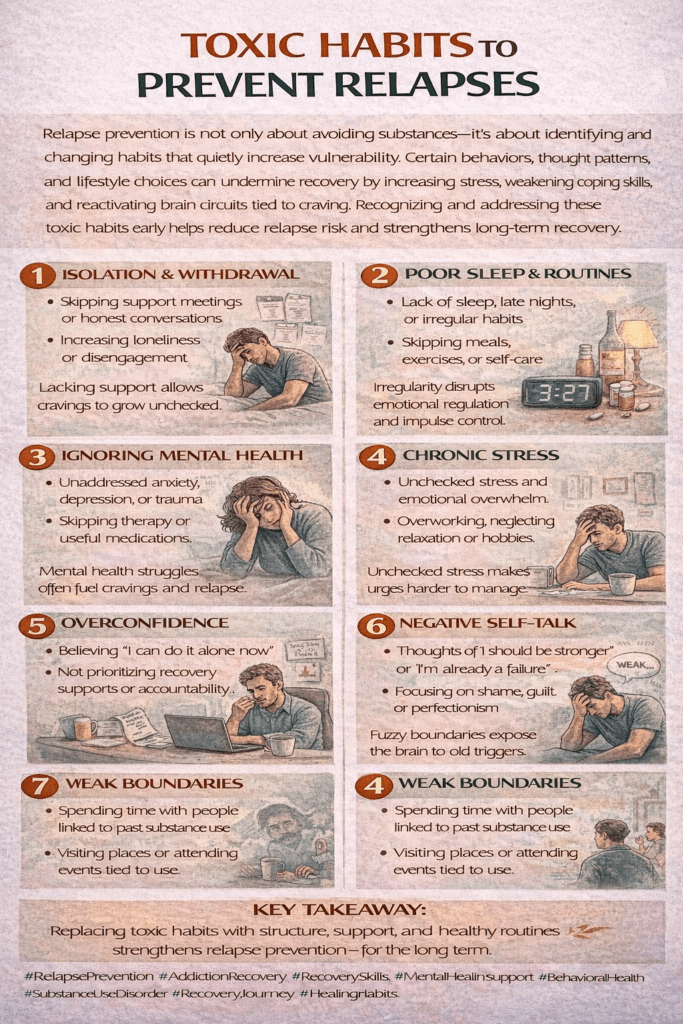
Relapse isn’t something that typically happens out of the blue. It’s often the result of unhealthy habits sneaking back into everyday life. Recognizing these toxic habits early can make recovery smoother and much less stressful. Here are some of the biggest troublemakers I’ve seen pop up:
- Negative Self Talk: Being harsh or overly critical with yourself can really weigh you down and eat away at motivation.
- Skipping Support: Pulling away from support groups, therapy, or people you trust usually opens the door for old thought patterns to return.
- Ignoring Basic Needs: Letting sleep, eating, or exercise slip might not seem like a big deal, but over time, it can seriously mess with your mood and energy.
- Hanging Out in Triggering Environments: Spending time around places, people, or activities connected to old habits often tempts you to slide back.
- Bottling Up Emotions: Trying to handle everything internally instead of sharing what’s going on creates pressure that’s tough to manage alone.
Why Toxic Habits Can Sneak Back into Daily Life
Recovery feels awesome, but it’s definitely not a straight line. Old habits tend to reappear, especially when life gets busy or stressful. I’ve caught myself falling into unhealthy routines during tough times, sometimes without even realizing it until things start to feel off.
A few reasons these habits might sneak back in:
- Stress: Daily stress from work, family, money, or relationships can wear down willpower, making it harder to stick with healthy choices.
- Complacency: Feeling confident in recovery is a really good thing; sometimes it leads to dropping the routines that keep you grounded.
- Isolation: Pulling away from helpful people or activities can make toxic habits feel easier to fall back into.
Breaking Down Common Toxic Habits in Recovery
I’ve found that being specific about which habits to watch for makes them way easier to notice and adjust. Here’s a closer look at behaviors that tend to cause problems, with practical ways to catch and replace them:
Negative Self Talk
This one shows up quietly, maybe thinking, “I’m not good enough” or “Everyone’s doing better than me.” After a while, these thoughts begin to shape self-perception and mood.
One thing that helps is catching those thoughts and flipping them. I like to write down what I’m thinking and then pause to ask if it’s really true. If I find myself being unfairly critical, I’ll challenge that idea or talk to someone I trust about how I’m feeling. It’s not about faking positivity; it’s more about being fair to myself.
Withdrawing from Support
I’ve seen friends (and myself at times) stop going to meetings or talking with their support network once things are going well. At first, it feels fine; however, distance from support often makes tough days harder to manage.
Setting small, weekly check-ins with accountability buddies or therapists, even when everything feels good, helps keep that support alive before trouble starts brewing.
Ignoring Sleep, Nutrition, and Exercise
Pulling an all-nighter or eating nothing but snacks for days in a row isn’t just bad for the body; it also throws off your mood and energy. In my own life, a basic routine with regular meals and some physical activity (even if it’s just a walk) helps keep my head clear and my cravings manageable.
Spending Time in Triggering Situations
Old hangouts or people connected to past behaviors usually aren’t the best places to spend much time during recovery. Sometimes, even driving past a certain store or neighborhood can stir up cravings.
I try to map out my day and plan routes or activities that keep me away from triggers. If I need to be around certain places (like for work), I check in with a friend afterwards or plan something fun to distract myself. This small switch in my schedule can make a big difference in my overall mood.
Bottling Up Emotions
Trying to handle everything solo is pretty common, but it usually backfires. Pushing down emotions often leads to stress building up, and that’s when cravings can spike. Even the most minor irritation, when ignored, can snowball unexpectedly into a big setback.
I make a habit of doing a “feelings check” with myself at the end of each day and talking it out if something’s bugging me. Journaling works, too, or even doodling—anything to keep things from piling up inside and making me feel overwhelmed or out of control.
Healthy Habits That Can Replace Toxic Ones
Stopping toxic habits isn’t just about quitting; swapping them for healthier routines makes the process way smoother. Some habits that really work for me and others in recovery:
- Positive Self Talk: Regular affirmations or reminders of how far I’ve come help keep motivation high and keep negativity in check.
- Consistent Support: Staying plugged into support groups, therapy, or even online communities keeps me accountable and less stressed.
- Caring for Physical Health: A set sleep schedule, balanced meals, and regular movement do wonders for mood and stress levels. Something as simple as a walk outside is often enough to break a bad cycle.
- Planning Ahead: Mapping out days, avoiding tricky places, and keeping a backup plan handy make it much easier to ride out stressful moments.
- Emotional Honesty: Being open about struggles—with myself and others—creates more room for solutions and less pressure.
Simple Steps to Prevent Relapses by Breaking Toxic Patterns
- Check In with Yourself Daily: Take a minute every day to ask how you’re doing emotionally, physically, and mentally. If something feels off, it’s easier to adjust early.
- Keep Your Network Close: Even a simple text or short call with a trusted person makes a big difference. Don’t wait for a crisis to reach out.
- Set Gentle Reminders: Post-it notes with encouraging reminders on the bathroom mirror, or a pep-talk note as a phone wallpaper, can help break up negative thought cycles.
- Stick to Routines: Routine is your friend. Sleep, meals, and movement at consistent times help keep your energy up and stress down. If your routine is disrupted, jump back in as soon as you can—consistency is what counts.
- Notice Triggers and Plan Ahead: If you know certain situations or dates could be tough, make a plan. Bring a support buddy or have an activity ready as a distraction. Keeping a list of those triggers handy is a powerful tool for quick reference.
- Choose Healthy Stress Outlets: Instead of falling back on old habits, try a quick walk, music break, or creative hobby when stress ramps up. Exploring new hobbies, such as painting or gardening, can provide fresh energy and perspective while reducing the urge to slip back into negativity.
Real World Examples of How Toxic Habits Lead to Relapse
I’ve seen a close friend, who had been doing great for months, start to skip check-in meetings because “things felt fine.” Soon after, some old friendships crept back in, stress at work increased, and they began isolating themself. A few weeks later, they admitted to relapsing—not on a sudden whim, but after these small toxic habits added up and slowly pulled them back to square one.
Another time, I recognized that when I skipped meals and stayed up late, my mood plummeted and cravings snuck in. Returning to routines and leaning on my support circle helped me bounce back before things got worse. Simple shifts really do matter.
It’s also worth mentioning that even after a setback, the skills you were building before are still inside you. I like to remind myself that each restart isn’t from scratch, but from a stronger place of experience. Every small adjustment gives you another piece of the puzzle for next time.
Common Questions About Preventing Relapse with Better Habits
Question: What should I do if I catch myself slipping into a toxic habit?
Answer: Notice it without beating yourself up. Reach out to someone in your support network and ask for help shifting your routine back to a healthier one. The sooner you pivot, the easier it is to recover from a slip.
Question: How do I know if I’m at risk for a relapse?
Answer: Some warning signs include dropping self-care routines, skipping support appointments, or spending lots of time thinking about old patterns. If you notice a combination of these, it’s a good idea to double down on healthy habits or talk to a counselor.
Question: Are occasional setbacks normal?
Answer: Yes, almost everyone has struggles now and then. The important part is reaching out for support and shifting back into positive habits as quickly as possible. Progress matters more than perfection. Each day is an opportunity to move forward, not a pass-or-fail test.
Making Recovery Smoother by Ditching Toxic Habits
It’s unrealistic to expect anyone to be perfect during recovery, but paying attention to the habits that creep in makes things far more manageable. Creating space for healthy routines keeps toxic ones at bay, helping prevent relapses and pushing progress forward. Swapping out toxic for healthy takes a bit of effort up front, but it pays off with better moods, more energy, and a stronger feeling of control every single day. Keep checking in, lean on your support, and know that every positive step adds up over time.
Video: TOXIC HABITS TO PREVENT RELAPSES