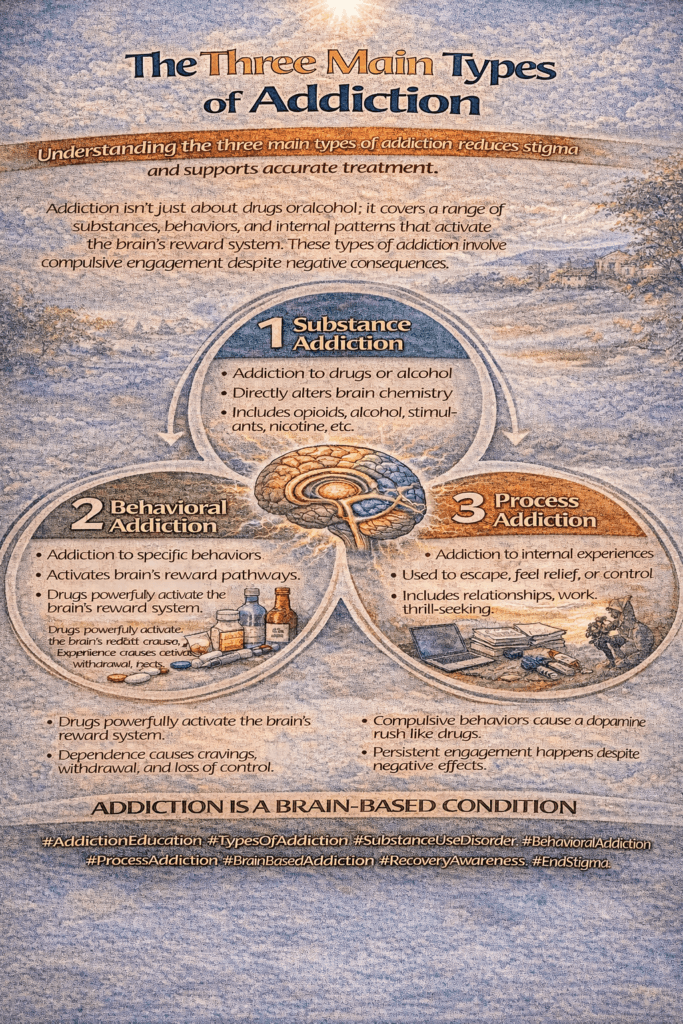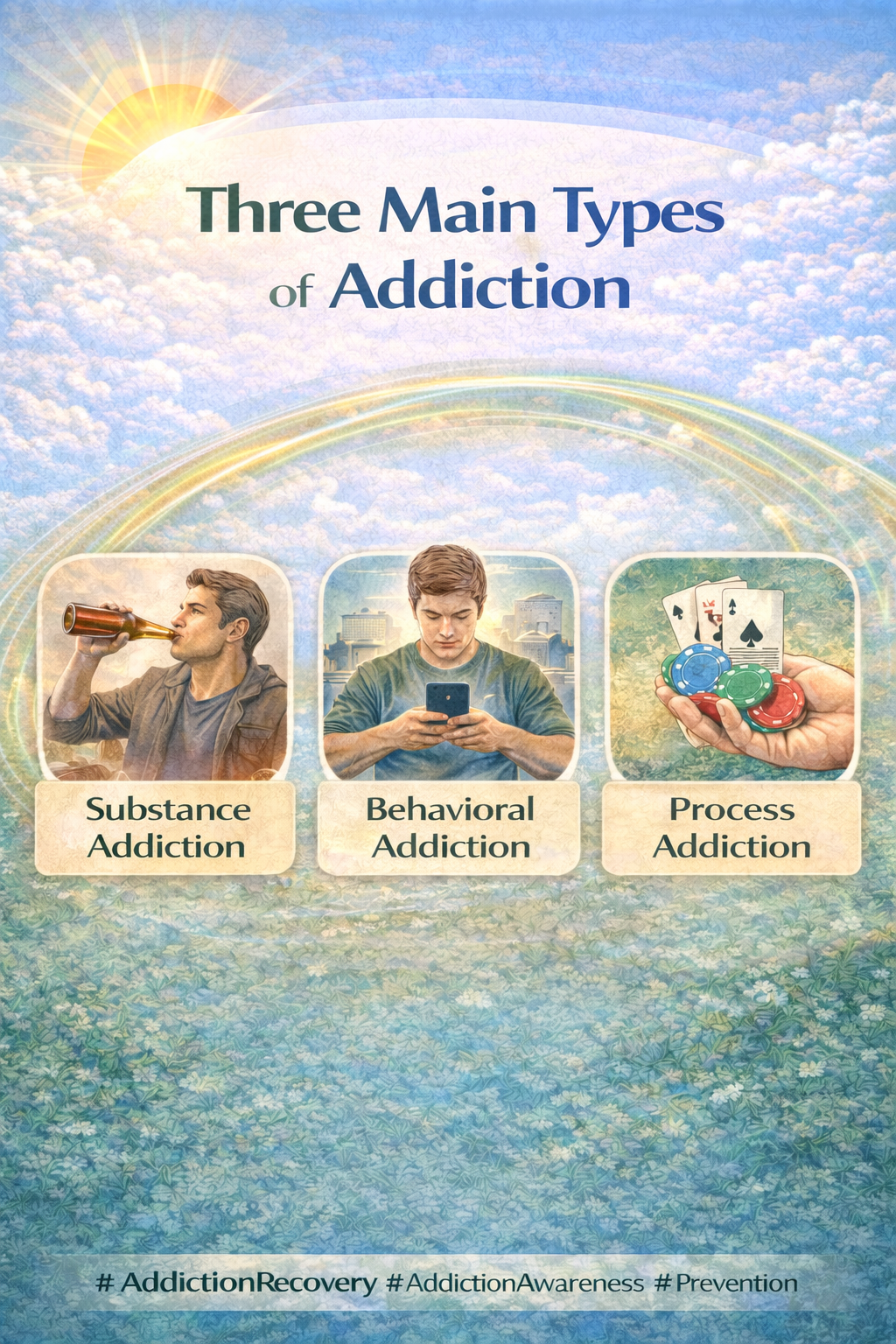
Addiction can take many forms, shaping how a person thinks, behaves, and copes with life’s challenges. While each experience is unique, experts commonly group addiction into three main types: substance addiction, behavioral addiction, and impulse or process addiction. Each type affects the brain’s reward system, reinforcing repeated behaviors despite negative consequences. Substance addiction involves dependence on drugs, alcohol, or medications. Behavioral addiction centers on compulsive actions such as gaming, internet use, or shopping. Impulse or process addiction involves repeated engagement in activities like gambling or risk-taking behaviors that provide temporary emotional relief. Understanding these three types helps people recognize warning signs earlier, reduce stigma, and find the right support for recovery.
Understanding Addiction: An Overview
For a lot of people, addiction feels like something that happens to “other people.” The truth is, it can affect anyone, regardless of background or circumstances. Addiction isn’t just about lacking willpower; it’s a complicated health issue where changes in the brain create cravings, habits, or behaviors that are tough to shake.
The three main types of addiction—substance, behavioral, and impulse control—cover a wide range of experiences. They all share a pattern: a person keeps doing something even when it causes problems in their lives. Recognizing these patterns is really important for early intervention and long-term recovery.
Historically, conversations around addiction focused mostly on drugs and alcohol, but research now shows destructive patterns can develop with behaviors as well. Science has evolved a ton over the past few decades, shedding light on how complex and sneaky addiction can be.
The Three Main Types of Addiction
Substance Addiction
This type is what most people picture when they think of addiction. Substance addiction, sometimes called substance use disorder, involves becoming dependent on things like alcohol, tobacco, or drugs (illegal or prescription). Over time, a person needs more and more of the substance to feel “normal,” and cutting back leads to withdrawal symptoms that can get pretty rough.
- Alcohol Addiction: Characterized by cravings, loss of control, and withdrawal symptoms when not drinking. Long-term alcohol misuse can lead to serious health problems, including liver issues and memory loss.
- Drug Addiction: Covers both illegal substances (like heroin or cocaine) and legal ones (such as prescription painkillers, stimulants, or even cannabis in some regions). Drug addiction can have huge physical and psychological effects, including increased tolerance, risky behavior, and long-term organ damage.
- Tobacco/Nicotine Addiction: Often underestimated, this is one of the most widespread addictions in the world. Regular use leads to strong cravings, and withdrawal can be pretty uncomfortable, with symptoms like irritability and anxiety.
I’ve seen friends and family struggle to quit smoking or drinking, and I can say that support, both professional and social, can make a big difference. Strategies like therapy, medication, and peer groups are worth checking out for anyone facing a substance addiction.
Behavioral Addiction
Behavioral addiction is less about putting something into your body and more about actions that become compulsive or hard to stop. People can get addicted to certain activities because those behaviors trigger a release of brain chemicals, such as dopamine, which feel really good in the short term.
- Gambling Addiction: Sometimes called “problem gambling,” this involves feeling unable to control gambling, whether it’s sports betting, slot machines, lotteries, or even online games. Losses can pile up, but the urge to keep playing stays strong.
- Internet and Gaming Addiction: Spending huge amounts of time online, on video games, or scrolling social media can start out harmless but quickly take over daily life. People might neglect sleep, school, work, or even relationships as a result.
- Shopping Addiction: Also known as compulsive buying disorder, this involves irresistible urges to shop, often followed by guilt or financial problems. It’s not about buying things you need; it’s about the chase and the feeling of “scoring” something new.
- Sexual Addiction: Compulsive pursuit of sexual experiences, even when it risks personal relationships, health, or legal standing. Like other behavioral addictions, it’s driven by the reward system in the brain.
Behavioral addictions often fly under the radar, because the activities themselves (like shopping or using the internet) aren’t always seen as negative. But when these actions start causing harm or feel impossible to stop, it’s a clear signal that help might be needed. Additionally, new types of behavioral addictions seem to be popping up as technology and our ways of life change. For example, social media addiction and smartphone overuse are now recognized more widely by mental health professionals. Staying aware and educated about these trends is key to tackling problems early.
Impulse Control Addiction
This type centers around the ongoing urge to act on sudden impulses, often without thinking about the consequences. While there’s some overlap with behavioral addictions, impulse control issues generally pop up with things that provide short-term relief or pleasure but longer-term regret or trouble.
- Kleptomania: Compulsive stealing not because of need or financial gain, but because of the rush or relief it gives. People with kleptomania often feel guilt or anxiety about their actions, but still struggle to control the behavior.
- Pyromania: A rare impulse control disorder that involves repeatedly setting fires just for the emotional release. It’s not done for money or revenge, but for the satisfaction or thrill that comes with it.
- Intermittent Explosive Disorder: Characterized by episodes of sudden rage or aggression. These aren’t just mood swings; they’re intense outbursts that the person can’t control, even if they understand the damage the behavior might cause.
The science around impulse control addiction is still growing, but it’s generally linked to different wiring in the brain’s reward system and trouble with emotional self-regulation. Therapy, especially cognitive-behavioral therapy (CBT), tends to be super useful for these disorders.
It’s worth noting that society’s understanding of impulse control disorders is still developing, and sometimes people don’t realize they need help. Open conversations and the removal of stigma are crucial so that more individuals feel comfortable asking for support. New treatments and research keep emerging, so options continue to expand for those seeking effective solutions.
Quick Guide: Spotting and Addressing Addiction
Recognizing addiction isn’t always straightforward, especially when the signs are subtle or when someone is good at hiding their habits. Here are some typical warning signs for all types of addiction:
- Loss of Control: Finding it really hard or impossible to stop the behavior or substance use, even with good intentions.
- Neglecting Responsibilities: School, work, relationships, or even self-care start slipping as the addiction takes priority.
- Withdrawal: Feeling anxious, irritable, or even sick when trying to quit or cut back.
- Escalation: Needing more of a substance or more time with a behavior to get the same feeling.
- Continued Use Despite Consequences: Keeping up the behavior even after legal, financial, relationship, or health problems pop up.
If these signs sound familiar to you or someone you care about, reaching out for help can feel scary, but it’s an important step. Support from healthcare professionals, counselors, and peer groups can make a huge difference.
People often wonder whether their habits really count as addiction or if they’re just struggling through a tough season. If you’re not sure, asking a trusted professional or opening up to close friends is a great way to get honest feedback and guidance. Remember, seeking advice is a strength, not a weakness. It’s better to seek out help early and catch potential problems before they get out of hand.
Challenges and Practical Tips for Managing Addiction
Dealing with addiction isn’t really a “one size fits all” process. Each person faces different triggers, resources, and challenges. Here are some things that help people manage or recover from addiction:
- Support Networks: Surrounding yourself with people who care (family, friends, or support groups) can really boost motivation and keep you accountable.
- Professional Guidance: Therapists, doctors, and counselors offer strategies tailored to your situation; sometimes including medication or structured programs.
- Healthy Distractions: Swapping out addictive behaviors for healthier habits, such as hobbies, exercise, or volunteering, can shift your focus and improve your well-being.
- Setting Boundaries: Learning to recognize triggers and setting clear boundaries (like avoiding certain situations or people) helps reduce the risk of relapse.
I’ve watched friends find a lot of comfort in community groups, like Alcoholics Anonymous or online recovery forums. Professional treatment is a solid choice too, especially if withdrawal symptoms or mental health issues are part of the picture.
Don’t be afraid to check out multiple resources or combine different types of support. For some people, medication-assisted treatment or one-on-one therapy is key. For others, regular meetings, journaling, or finding new hobbies work wonders. Recovery often involves trying a few things before finding what sticks; that’s totally normal. Staying patient with yourself makes a big difference, too.
Frequently Asked Questions
Reading about addiction often brings up a bunch of questions, especially if you’re worried about yourself or someone else. Here are a few that come up a lot:
Question: Can someone have more than one type of addiction at the same time?
Answer: Yes, it’s pretty common for people to experience “co-occurring addictions,” like substance use along with behavioral addiction. Treating both at the same time tends to give the best results.
Question: Are some people more at risk for addiction?
Answer: Genetics, early exposure, trauma, mental health conditions, and even the environment all play a role. Some people can experiment without problems, while others are more vulnerable after just a little exposure.
Question: Do behavioral and impulse control addictions get treated the same as substance addiction?
Answer: The basic approaches, like counseling and support groups, often overlap. But there are also unique challenges, so treatment may be tailored to specific needs or behaviors.
Question: What can I do if a loved one refuses help?
Answer: This is tough. Try to stay open and nonjudgmental and keep communication honest yet caring. Sometimes just knowing someone is there and ready to help can be comforting for your loved one and might encourage them to seek help over time. Don’t forget to take care of your own emotional needs, too; support groups for families and friends can provide valuable resources and comfort.
Final Thoughts
Addiction, in any form, isn’t a moral failing. It’s a real health issue that shows up in many ways. Whether you’re dealing with substances, behaviors, or impulses, the most important step is taking it seriously and reaching out for help. Recovery takes patience, self-compassion, and often a bit of trial and error to find what works, but change is always possible.
Learning more about the three main types of addiction can help people spot problems earlier and connect with the resources they need. If you or someone you know is struggling, there’s hope and support out there; it’s worth reaching for. Staying informed, supportive, and persistent can make a world of difference on the road to recovery and a healthier future.
Video: The Three Main Types of Addiction