The addiction cycle helps explain why breaking free from substance use is often far more complex than simply “stopping.” Addiction isn’t driven by willpower alone—it follows a predictable pattern of changes in the brain’s reward, stress, and decision-making systems that reinforce continued use over time. These biological and psychological shifts create a repeating loop that pulls a person back in, even when they genuinely want to quit. By breaking the process down into three core stages, the addiction cycle becomes easier to recognize and understand. Whether you’re personally affected, supporting someone else, or learning from an educational perspective, understanding these stages provides clarity and reduces blame and stigma. In the sections that follow, I’ll walk through each stage, offer real-world examples of how they manifest, and share practical, evidence-based strategies to help interrupt the cycle and support recovery.
The Three Core Stages of the Addiction Cycle
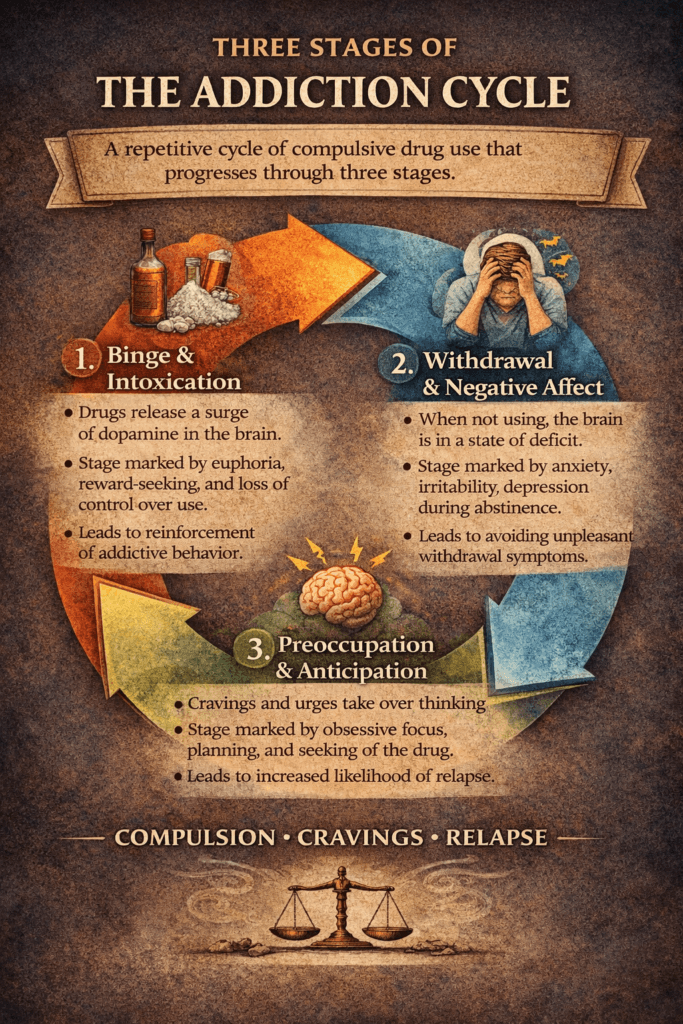
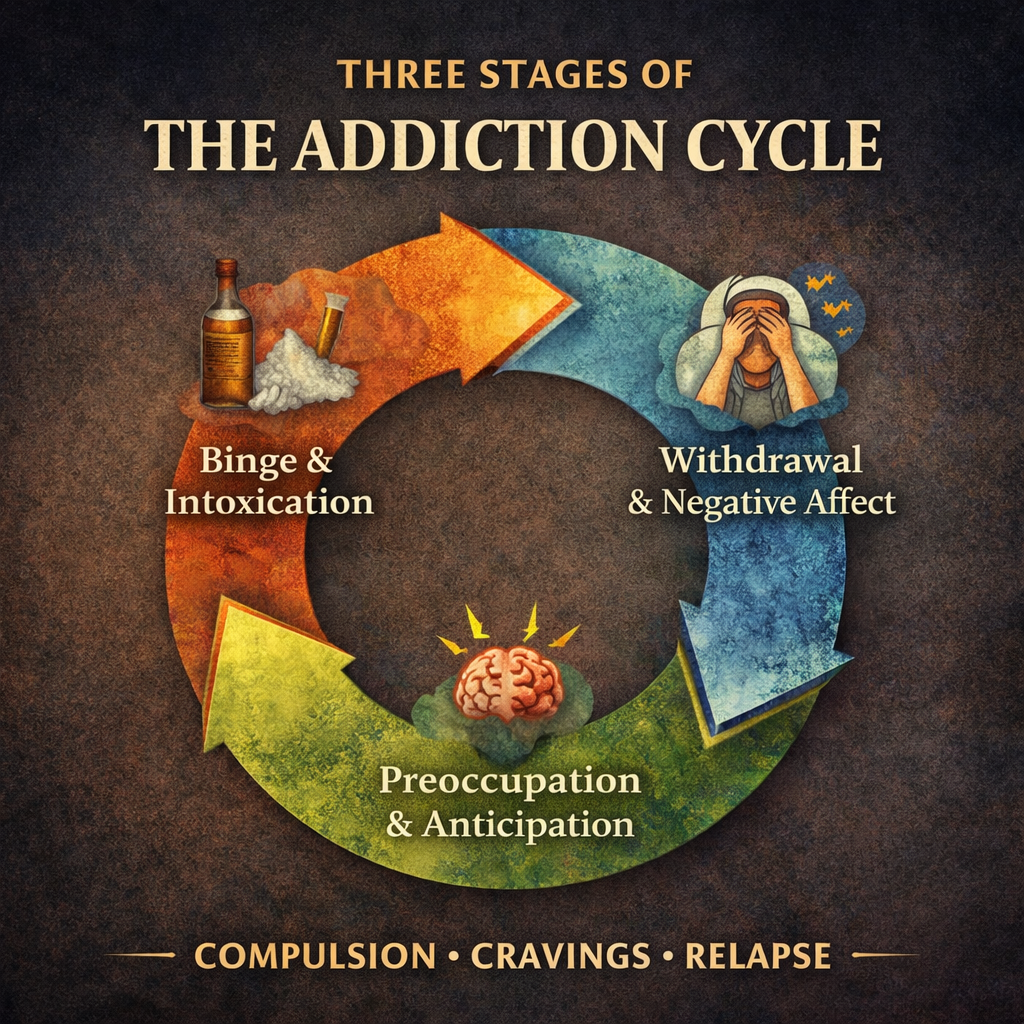
Addiction isn’t a one-time event. It works through a repeating, predictable pattern. Researchers often describe the cycle in three parts: Binge/Intoxication, Withdrawal/Negative Affect, and Preoccupation/Anticipation (also called Craving). Each stage brings its own set of reactions and challenges. While the details might change depending on the substance or behavior, the overall pattern remains similar.
This cycle isn’t just about willpower or “bad choices.” It involves big changes in the brain’s reward and stress systems, making it tough for someone to simply stop on cue. Understanding the pattern is pretty useful for both empathy and anyone looking to make changes. By understanding how these stages work, people can begin to develop a plan to break this automatic loop.
Stage One: Binge/Intoxication
This first stage is all about reward. In the Binge/Intoxication phase, someone uses a substance or behavior (like drinking alcohol, gambling, or taking drugs) and feels a rush of pleasure. The brain’s reward system lights up from the dopamine surge, creating intense feelings of satisfaction. For many people, this release is what keeps them coming back.
During this stage, self-control can slip away. The search for that pleasurable feeling becomes a driving force. This is often the part that outsiders see most: the drinking spree, the nightlong video game session, or the repeated use of a drug. People at this stage might ignore risks or consequences just to keep the good feelings going a bit longer.
- Pleasure drive: The brain releases dopamine, which builds strong memories linking the substance to feeling good.
- Rising tolerance: Over time, it takes more of the substance or behavior to reach the same high.
- Focus on the moment: Decisions revolve around immediate rewards, pushing aside long-term goals or impacts.
Many people who struggle with addiction recall this stage as both exciting and chaotic. It might start off feeling social and lighthearted, but it can quickly become the only way to feel good at all. This pattern builds powerful connections in the brain, reinforcing the urge to return repeatedly, even in the face of loss or danger.
Stage Two: Withdrawal/Negative Affect
After the high wears off, things can change fast. The Withdrawal/Negative Affect stage is a rough patch filled with discomfort, low mood, anxiety, or irritation. The brain goes into a kind of rebound effect, and things that used to feel normal or fun just feel flat. Everyday stresses can feel much heavier, too.
This stage isn’t just mental; it can show up as real physical symptoms. Shakes, headaches, nausea, a racing heart, or cravings can all show up. The drive to avoid these uncomfortable feelings can push someone straight back into the Binge/Intoxication phase. That’s the tough reality of withdrawal: it sets the trap for the next round.
- Physical signs: Sweating, fatigue, nausea, trouble sleeping, or pain.
- Mood swings: Feeling down, on edge, or easily triggered by small problems.
- Loss of interest: Ordinary hobbies or daily tasks lose their appeal.
The relief someone gets from using the substance again in this stage isn’t always about pleasure. Many times, it’s about feeling “normal” again or just stopping the discomfort. That can make quitting feel especially tough for those who fear these symptoms returning. Overcoming this hurdle usually takes support and patience, as the body and mind adjust over time. Sometimes even healthy activities lose their spark, which is why small, steady changes and encouragement from others are so important.
Stage Three: Preoccupation/Anticipation (Craving)
This last stage is when planning, daydreaming, and craving take over. Even if someone hasn’t used it in a while, the mind starts circling back to the substance or behavior. Thoughts might include memories of the last high, problems they want to escape, or ways to get access again. This mental preoccupation feels urgent and can crowd out other priorities.
Triggers play a big role here. Certain smells, sights, people, places, and even moods can activate the part of the brain that remembers past pleasure or past relief from stress. Over time, this stage can pop up even when someone wants to stay away, making relapse much more likely.
- Urgency to use: Sudden, strong urges or mental fixation on the substance.
- Obsessive thinking: Planning, hiding, or figuring out ways to use again.
- Trigger sensitivity: Small cues (a location, stress, a celebration) can set off powerful cravings.
Early in recovery, this stage can last a while. That’s part of what makes support networks, distraction techniques, and healthy routines so helpful. Interrupting this stage gives someone more control and a better shot at long-term success. Practicing mindfulness and building new habits help to fill the time and space that cravings once flooded. Over weeks and months, the mind can start to focus more on other goals and pleasures.
Breaking the Addiction Cycle: Real-World Strategies
Stepping out of the addiction cycle isn’t about one big change: it’s usually a process. There are plenty of practical steps people use to interrupt and weaken the cycle. Here are a few that can make a big difference:
- Identify Triggers: Recognizing what sparks cravings (people, places, emotions) makes it easier to avoid or manage them.
- Build Support: Connecting with others—friends, family, support groups—brings accountability and encouragement.
- Healthy Alternatives: Swapping in hobbies, exercise, or new routines can offer a different kind of reward and distraction.
- Professional Help: Therapy, counseling, or medical support can address root issues, difficult symptoms, or mental health concerns.
- Mindfulness and Stress Tools: Practicing breathing, meditation, or journaling lowers stress and helps head off cravings before they build.
Relapse doesn’t wipe out every step forward; it just means the cycle is strong, and it’s time to regroup and try again. Support and self-understanding can turn even setbacks into learning moments. Many find that having a plan for what to do when a craving strikes can make all the difference. Regular check-ins with supportive friends or professionals help keep progress steady and the cycle in check.
Things to Know: What Can Make the Cycle Harder to Break?
Some factors set the addiction cycle on repeat mode, making it a tough nut to crack. Here are some challenges to watch out for:
- Genetics: Some people have a higher genetic risk, meaning their brains respond more quickly or strongly to certain substances.
- Mental Health: Anxiety, depression, or trauma can make the withdrawal stage tougher and push the return to use.
- Environment: Living, working, or socializing in settings where use is common or stress is high increases risk.
- Lack of Support: Trying to break the cycle alone is much tougher. Support networks are super important for sticking to goals and recovering after setbacks.
I’ve seen that even small switches in the environment or added supports can tip the odds in your favor. Changes don’t have to be huge to help weaken the cycle. Simple acts, like spending less time in high-risk situations, organizing your space, or reaching out for help, can set the stage for lasting progress.
Frequently Asked Questions
Some common questions pop up for anyone learning about the addiction cycle. I’ll answer a few that come up a lot:
What exactly is the addiction cycle?
It’s the repeating pattern of pleasure-seeking, withdrawal, and craving that keeps substance use (or certain behaviors) going. Understanding the cycle can help spot warning signs and plan for recovery.
Is the addiction cycle different for alcohol, drugs, or behaviors like gambling?
While the details can change, the same core pattern appears in both substances and certain behaviors. The ups and downs, the cravings, and the pressure to repeat are all there.
Can the cycle be stopped permanently?
With time, support, and the right strategies, the cycle can weaken to the point where it barely shows up. For some, certain triggers can still spark cravings, but the strength and frequency fade the longer someone is in recovery.
Why does relapse happen even after a long time?
Old cues can sometimes restart memories in the brain’s reward pathways. That’s why some people are caught off guard by sudden cravings years later. Awareness and new routines can help limit this. Relapse can feel discouraging, but it offers a chance to learn more about your own patterns and how to prepare better next time.
Real-World Examples: Spotting the Stages in Everyday Life
Seeing these stages play out in real life can make them easier to spot and address. Here are some practical examples from daily life that show the stages in action:
- Binge/Intoxication: Someone goes out after a stressful week and drinks until they blackout, missing important plans the next day.
- Withdrawal/Negative Affect: A person tries to cut out caffeine, but can’t focus on work, feels irritable, and starts snapping at coworkers.
- Preoccupation/Anticipation (Craving): Another person gets home and finds themselves thinking only about playing online games, even skipping dinner and ignoring friends.
Recognizing which stage is happening makes it easier to step in. Even simple changes, like leaving the situation, calling a friend, or staying busy, can help turn things around before the cycle starts up again. If you spot these stages in yourself or others, know that reaching out for support or making even a slight tweak to your routine can start a positive shift.
Understanding these three stages shines a light on why addiction can feel so powerful and frustrating. There are real changes happening internally, not just momentary choices. With proper support and community, it’s possible to break the pattern and build something new. Remember: the road can have ups and downs, but every effort counts and brings you closer to lasting change.
Video: The Addiction Cycle 3 Stages