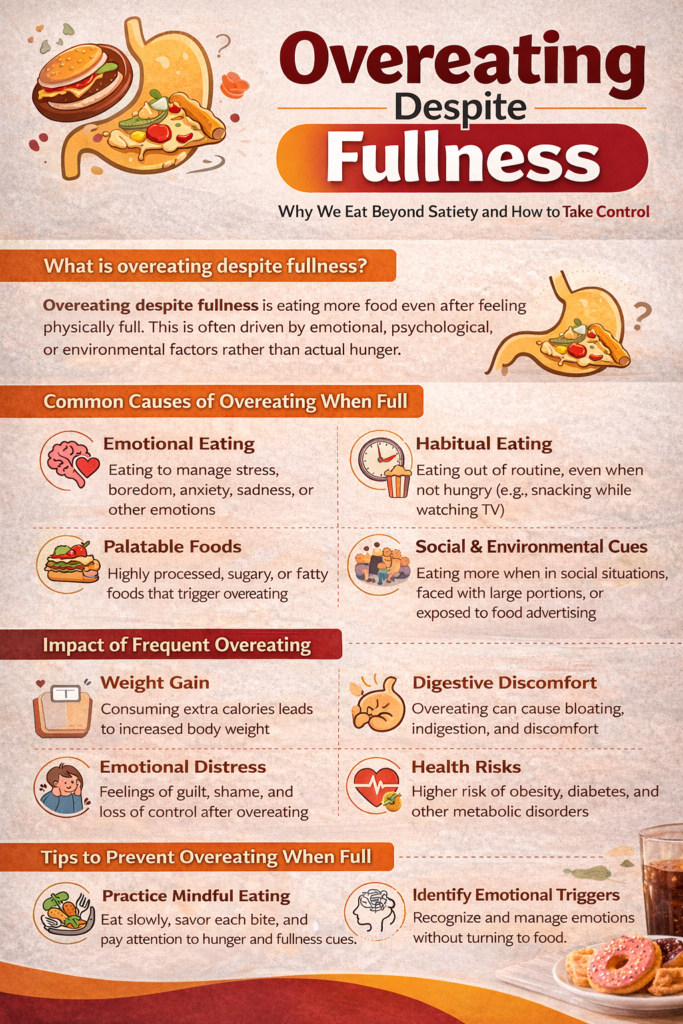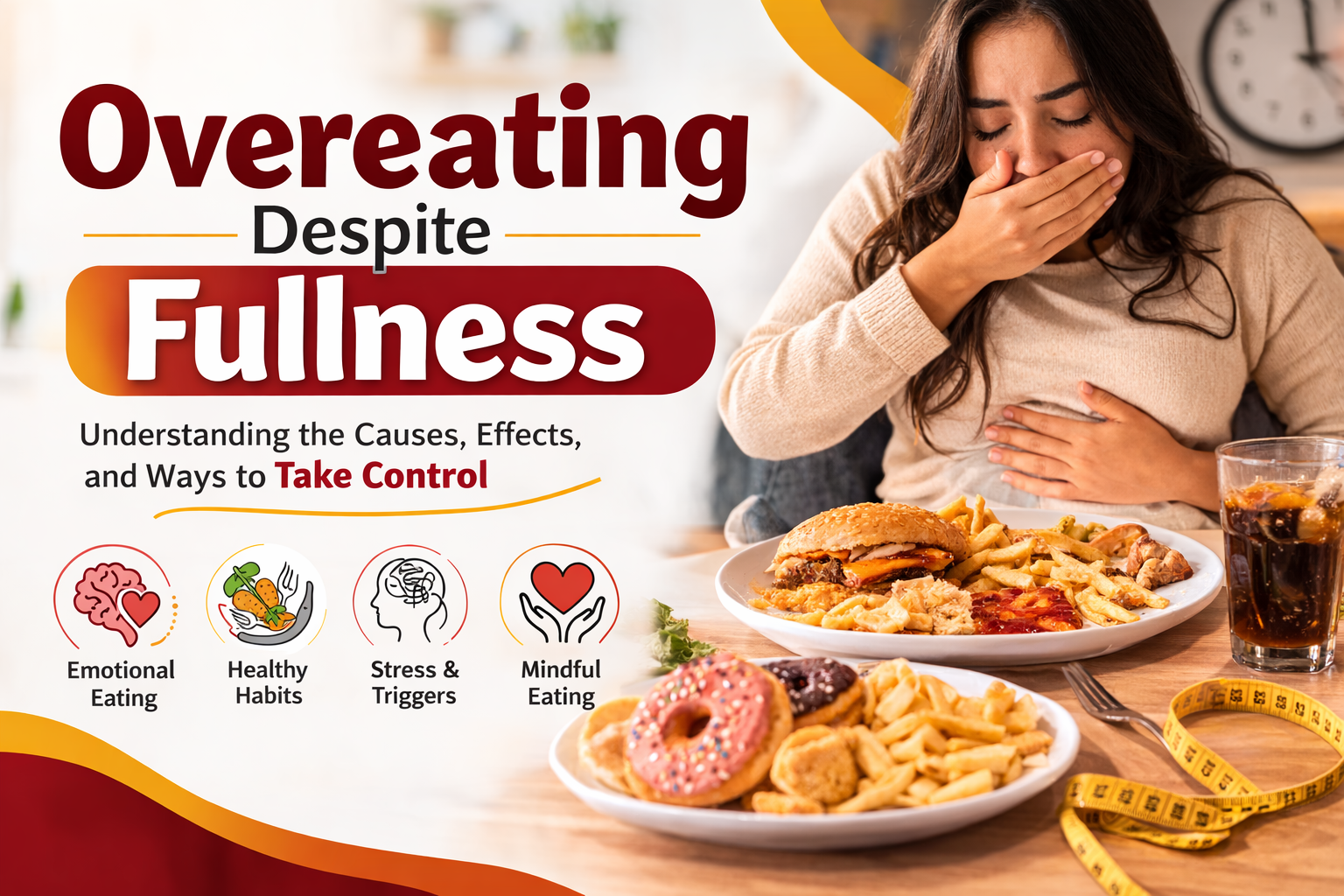
Overeating despite feeling full is a behavior that many people experience, often without fully understanding the reasons behind it. Although hunger normally serves as the body’s signal that it needs energy, eating beyond the point of fullness is frequently driven by factors other than physical hunger. Emotional states such as stress, anxiety, boredom, or sadness can lead individuals to seek comfort in food, using eating as a coping mechanism rather than a response to true hunger. Psychological influences, including habits formed over time, social expectations, or the desire for pleasure and reward, can also encourage people to continue eating even after they feel satisfied. Environmental factors further contribute to this behavior, such as large portion sizes, constant exposure to food advertisements, and easy access to highly processed or appealing foods. Additionally, distractions like watching television, scrolling on phones, or working while eating can make it harder for individuals to recognize their body’s signals of fullness. Over time, repeatedly ignoring these natural cues can disrupt the body’s internal regulation of hunger and satiety, making it more difficult to maintain balanced eating patterns. This may lead to unhealthy relationships with food, feelings of guilt or loss of control, and potential health concerns if the behavior becomes frequent. Therefore, understanding the emotional, psychological, and environmental influences behind overeating despite fullness is an important step in developing healthier eating habits, improving self-awareness, and supporting overall physical and emotional well-being.
Overeating Despite Fullness
Overeating despite feeling full is a common experience for many people. While hunger is typically the body’s signal that it needs energy, overeating beyond fullness often occurs for reasons unrelated to physical hunger. Emotional factors, environmental cues, habits, and psychological triggers can all contribute to eating even when the body has already received enough food. Understanding why this behavior occurs is an important step toward developing healthier eating patterns and improving overall well-being.
One of the most common causes of overeating despite fullness is emotional eating. People may turn to food as a way to cope with stress, anxiety, boredom, sadness, or other emotions. In these situations, food provides temporary comfort or distraction, even when the body does not need additional calories. Over time, this pattern can become a learned coping mechanism, making it difficult to distinguish between emotional hunger and physical hunger.
Another factor that contributes to overeating is environmental influence. Large portion sizes, highly palatable foods, and constant exposure to food advertisements can encourage people to eat more than they intend. Social situations such as parties, family gatherings, or eating while watching television can also lead individuals to continue eating after they feel full because attention is focused elsewhere.
Habitual eating patterns may also play a role. Many people are conditioned from childhood to finish everything on their plate or eat at certain times, regardless of hunger levels. These habits can override the body’s natural signals of fullness, leading individuals to consume more food than they actually need.
Biological factors can also influence overeating. Certain foods high in sugar, fat, and salt activate reward pathways in the brain, making them particularly appealing. This can create cravings and make it difficult to stop eating once a person begins, even when physical hunger has been satisfied.
Addressing overeating despite fullness often involves developing mindful eating practices. Mindful eating encourages individuals to pay attention to hunger and fullness cues, eat slowly, and focus on the experience of eating without distractions. Recognizing emotional triggers and finding alternative ways to cope with stress—such as exercise, relaxation techniques, or talking with supportive friends—can also help reduce the urge to eat unnecessarily.
In addition, maintaining balanced nutrition and regular meal patterns can help stabilize appetite and prevent excessive cravings. Eating meals that include protein, fiber, and healthy fats can promote a longer feeling of fullness and reduce the likelihood of overeating later.
Overeating despite fullness is not simply a matter of willpower; it is often influenced by emotional, environmental, and biological factors. By increasing awareness of these influences and adopting healthier coping strategies, individuals can develop a more balanced relationship with food and support long-term health.
Self-Management Strategies to Prevent Overeating Despite Fullness
Overeating despite feeling full is a behavior that many people experience at some point. It often occurs when emotional triggers, habits, or environmental factors override the body’s natural signals of hunger and satiety. While occasional overeating is normal, frequent episodes can lead to unhealthy eating patterns and negatively affect physical and emotional well-being. Developing effective self-management strategies can help individuals become more aware of their eating behaviors and maintain better control over food choices.
One of the most effective strategies is practicing mindful eating. Mindful eating involves paying close attention to the body’s hunger and fullness signals during meals. This can include eating slowly, savoring each bite, and avoiding distractions such as television or smartphones. When individuals eat mindfully, they are more likely to recognize when they are satisfied and stop eating before becoming overly full.
Another helpful strategy is recognizing emotional triggers. Many people overeat when experiencing stress, boredom, sadness, or anxiety. Identifying these emotional triggers allows individuals to develop healthier coping methods. Instead of turning to food, they may choose alternative activities such as taking a walk, practicing relaxation techniques, journaling, or talking with a friend.
Portion control can also play a significant role in preventing overeating. Serving smaller portions, using smaller plates, and avoiding eating directly from large packages can help individuals better regulate how much food they consume. Preparing balanced meals with appropriate portion sizes can make it easier to stop eating when the body feels full.
Another important self-management strategy is planning regular meals and snacks. Skipping meals or going long periods without eating can lead to excessive hunger, which increases the likelihood of overeating later. Consuming balanced meals throughout the day that include protein, fiber, and healthy fats helps maintain stable energy levels and promotes longer-lasting fullness.
Keeping a food and mood journal can also help individuals identify patterns related to overeating. Tracking what is eaten, when it is eaten, and how one feels at the time can reveal connections between emotions, habits, and eating behaviors. This awareness allows individuals to make more intentional choices about their eating habits.
Finally, building healthy lifestyle habits supports long-term self-management. Regular physical activity, adequate sleep, and stress management techniques help regulate appetite and improve emotional well-being. When overall health is prioritized, individuals are more likely to maintain balanced eating patterns.
Self-management strategies are valuable tools for preventing overeating despite fullness. By practicing mindful eating, recognizing emotional triggers, managing portions, and maintaining healthy daily routines, individuals can strengthen their awareness of hunger and fullness cues and develop a healthier relationship with food.
Family Support Strategies to Prevent Overeating Despite Fullness
Overeating despite feeling full can be influenced by emotional stress, habits, and environmental factors. While individuals can develop personal strategies to manage their eating behaviors, family support also plays an important role in promoting healthier eating habits. Families can help create supportive environments that encourage balanced nutrition, mindful eating, and positive relationships with food.
One important strategy is encouraging open communication about eating habits and emotions. Family members can create a safe and supportive space where individuals feel comfortable discussing stress, emotional struggles, or food-related challenges. When people feel understood and supported, they may be less likely to rely on food as a coping mechanism.
Another helpful approach is promoting healthy eating environments at home. Families can support healthier eating habits by preparing balanced meals, offering nutritious food choices, and limiting access to highly processed or unhealthy snacks. Having regular family meals can also encourage more mindful eating and provide opportunities for connection and conversation.
Modeling healthy eating behaviors is another effective family support strategy. When family members demonstrate balanced eating habits, portion control, and mindful eating practices, it encourages others to adopt similar behaviors. Children and adults alike often learn eating habits by observing those around them.
Families can also support healthy routines and structured meal patterns. Eating meals together at consistent times each day helps regulate hunger and fullness signals. This routine can prevent irregular eating patterns that may lead to overeating later in the day.
In addition, families can help individuals develop healthy coping strategies for stress and emotions. Instead of turning to food during stressful situations, family members can encourage activities such as exercising together, spending time outdoors, practicing relaxation techniques, or engaging in hobbies that promote emotional well-being.
Another important aspect of family support is reducing food-related pressure or judgment. Criticism or strict control around eating habits may increase stress and unhealthy relationships with food. Instead, families should focus on encouragement, understanding, and positive reinforcement when supporting healthier behaviors.
Family support strategies play a key role in preventing overeating despite fullness. By fostering open communication, creating healthy home environments, modeling balanced eating habits, and encouraging positive coping strategies, families can help individuals develop healthier relationships with food and maintain long-term well-being.
Community Resource Strategies to Prevent Overeating Despite Fullness
Overeating despite feeling full is often influenced by emotional stress, environmental cues, and unhealthy eating habits. While individuals and families play an important role in managing eating behaviors, community resources can also provide valuable support. Community programs, educational initiatives, and accessible health services can help individuals develop healthier relationships with food and reduce patterns of overeating.
One important strategy is access to community nutrition education programs. Many community centers, public health departments, and nonprofit organizations offer workshops and classes focused on healthy eating, portion control, and mindful eating practices. These programs help individuals better understand hunger and fullness cues and make informed choices about their diet.
Another valuable community resource is support groups and counseling services. Emotional stress, anxiety, and mental health challenges can contribute to overeating behaviors. Community-based counseling programs and support groups provide safe spaces for individuals to discuss their struggles, share coping strategies, and receive guidance from professionals or peers facing similar challenges.
Community organizations also promote healthier habits through wellness and fitness programs. Access to recreational facilities, exercise classes, walking groups, and other physical activity programs encourages individuals to adopt healthier lifestyles. Regular physical activity can help regulate appetite, reduce stress, and improve overall well-being, potentially reducing the urge to overeat.
Local communities may also support healthy eating through improved access to nutritious foods. Farmers’ markets, community gardens, and food assistance programs help individuals access fresh fruits, vegetables, and balanced meals. When healthier foods are readily available, individuals may be less likely to rely on highly processed foods that can contribute to overeating.
Educational campaigns and public health initiatives can also raise awareness about mindful eating and healthy lifestyle practices. Community outreach programs can provide information about recognizing emotional eating triggers, managing stress without relying on food, and developing balanced meal routines.
Finally, healthcare providers in the community—such as dietitians, nutritionists, and wellness coaches—can offer professional guidance and personalized strategies to manage overeating behaviors. Access to these professionals helps individuals receive evidence-based advice tailored to their needs.
Community resource strategies are essential for promoting healthier eating habits and preventing overeating despite feeling full. By providing education, support services, access to healthy foods, and opportunities for physical activity, communities can help individuals build sustainable habits and maintain a healthier relationship with food.
Frequently Asked Questions
Here are some common questions:
1. What does overeating despite fullness mean?
Overeating despite fullness means eating more food even after the body signals it is satisfied. This behavior often occurs when emotional, psychological, or environmental factors override natural hunger and fullness cues.
2. Why do people eat even when they are full?
People may eat beyond fullness due to emotional stress, boredom, habits, social situations, or exposure to highly appealing foods. These factors can trigger the desire to keep eating even when the body no longer needs more food.
3. Is overeating despite fullness the same as binge eating?
Not necessarily. While both involve eating more than the body needs, binge eating usually involves consuming a large amount of food in a short period with a feeling of loss of control. Overeating despite fullness may happen in smaller amounts and may not always involve the same level of distress.
4. What are common triggers for overeating?
Common triggers include emotional stress, anxiety, boredom, social pressure, large portion sizes, and the availability of highly processed or sugary foods. Eating while distracted, such as watching television, can also contribute to overeating.
5. How can overeating despite fullness affect health?
Frequent overeating can lead to weight gain, digestive discomfort, and an increased risk of health conditions such as obesity, diabetes, and heart disease. It may also affect emotional well-being by causing feelings of guilt or loss of control.
6. How can someone recognize their hunger and fullness cues?
Paying attention to physical sensations such as stomach fullness, energy levels, and appetite changes can help individuals recognize when they are truly hungry or satisfied. Eating slowly and pausing during meals can also make these signals easier to notice.
7. What strategies can help prevent overeating?
Helpful strategies include practicing mindful eating, managing stress in healthy ways, controlling portion sizes, and avoiding distractions during meals. Keeping a food journal may also help identify patterns or triggers related to overeating.
8. Can emotional factors contribute to overeating?
Yes. Many people eat to cope with emotions such as stress, sadness, loneliness, or boredom. Learning alternative coping strategies—such as exercise, relaxation techniques, or talking with supportive friends—can help reduce emotional eating.
9. When should someone seek professional help?
If overeating occurs frequently, causes distress, or interferes with daily life, it may be helpful to seek support from a healthcare professional, dietitian, or counselor who specializes in nutrition or eating behaviors.
10. Can healthy habits improve eating behaviors?
Yes. Regular meals, balanced nutrition, adequate sleep, and stress management can help regulate appetite and support a healthier relationship with food.
Conclusion
Overeating despite feeling full is a complex behavior shaped by emotional triggers, learned habits, and environmental influences. Recognizing these factors is an important step toward greater awareness of eating patterns and healthier choices. Strategies such as mindful eating, emotional regulation, supportive family environments, and access to community resources can help individuals regain control over their eating behaviors. By learning to listen to the body’s hunger and fullness cues and adopting healthier coping strategies, individuals can build a more balanced relationship with food and support long-term physical and emotional health.
Video: The Comfort Food Trap Explained #Emotional Eating #Psychology #HealthTips