Addiction isn’t just about willpower or bad choices. The way certain substances mix with our brains can make them nearly impossible to put down, even for people who never planned on heading in that direction. I’ve noticed plenty of curiosity around why some drugs are much more habit-forming than others, so I’m breaking down what makes certain substances so addictive, how they impact people, and what you should know if you want to understand this tricky topic.
Understanding What Makes a Substance Addictive
Some substances grab hold of the brain’s reward system and won’t let go. When you use an addictive drug, your brain gets flooded with chemicals like dopamine that spark good feelings, reinforce certain actions, and push you to use the substance again. The cycle of craving and chasing that high can get really strong, really fast. While anyone can be affected, some people are more vulnerable due to their genetics, mental health struggles, or environment.
Repeated use can actually rewire the brain, which is why quitting gets tough—even if you want to. Factors like age, history of trauma, and regular or heavy use increase the odds of getting hooked. Some substances are riskier than others; research like this from the NIH checks out biological and psychological risk factors that matter.
Talking about addiction is about more than just one-time use or casual experiments. The substances covered here are those that, after repeated use, make quitting feel basically impossible for lots of people.
What are the Most Addictive Substances?
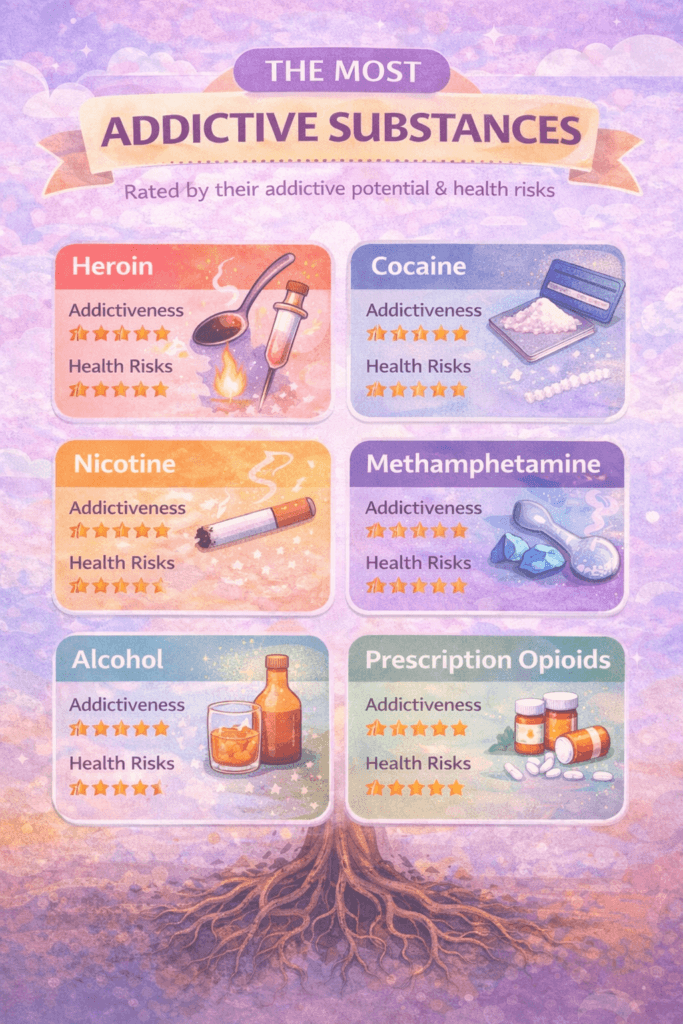
Everyone hears about different drugs being the most addictive, but researchers tend to look at three things: how strong the cravings get, how likely people are to keep using in spite of problems, and how hard it is for most people to quit. Here are substances that usually top “most addictive” lists:
- Nicotine: Found in cigarettes and vapes, nicotine is shockingly addictive for something that’s perfectly legal. Many smokers light up within minutes or hours of waking up, and quitting usually takes several attempts because the withdrawal symptoms—anxiety, cravings, irritability—can be tough to push through.
- Alcohol: Because it’s so popular, alcohol use can sneak up on people. Some start by social drinking, but heavy drinkers can find themselves physically dependent, needing a drink just to feel normal, and experiencing shakiness or worse if they skip it.
- Opioids: Prescription painkillers like oxycodone and drugs such as heroin create a powerful need in the brain very quickly. Physical dependence sets in rapidly, and withdrawal is brutal. It often involves pain, nausea, chills, and intense cravings.
- Cocaine: This stimulant ramps up dopamine levels. Euphoria is brief, and users often binge, chasing those good feelings and sliding into psychological addiction in no time.
- Methamphetamine: Meth’s effects last longer than cocaine but are just as tough on the brain’s reward system. Intense highs are followed by deep lows that push users back for more.
- Benzodiazepines: Drugs like Xanax are commonly prescribed for anxiety but can cause major trouble with dependence and withdrawal, especially when used longer than recommended.
This isn’t an all-inclusive list, but it covers some of the drugs most likely to trap people in a cycle of dependence and struggle.
How Addictive Substances Impact the Brain
Nearly every addictive substance does two main things: it changes how your brain’s reward system works, and it rewires your brain to depend on the drug just to function “normally.” For instance, cocaine and meth flood your brain with dopamine, which feels next-level cool the first few times. After that, your brain struggles to create its own feel-good chemicals, making you chase those highs over and over.
Opioids work a bit differently. They trigger opioid receptors and block pain, creating a warm, relaxed sensation. After more than a couple of weeks, the body adapts and starts to demand the chemical. Quitting can mean pain and emptiness until the body has time to readjust.
Benzodiazepines slow the brain’s activity, making stress and anxiety disappear. When the drug leaves your system, your brain can bounce back violently, making withdrawal risky and even life-threatening without medical supervision.
Interestingly, scientists continue to stumble upon new ways addiction manifests in the brain—some people show changes in parts of the brain relating to decision making and impulse control, making recovery even more complicated for those affected.
Factors That Make Some Substances More Habit-Forming
Not every drug grabs people the same way. Here’s why certain substances can take hold much faster than others:
- Route It’s Taken: Smoking and injecting deliver drugs into the bloodstream fast, so the “rush” is much stronger compared to swallowing a pill.
- Speed of Action: The faster a drug hits your brain, the tougher it is to put down. Quick-acting drugs push your brain toward habit formation much faster than slow burners.
- Withdrawal Symptoms: The worse the withdrawal, the more likely people are to keep using, just to avoid feeling horrible.
- How Often & How Much: High doses and frequent use majorly increase the risk of developing a habit. Folks coping with chronic pain, tough emotions, or high stress are at even higher risk.
It’s also true that people sometimes use certain drugs to help numb emotional pain or stress, which can make the cycle much harder to break without outside support.
Risks and Consequences of Addictive Substance Use
Getting tangled up in addiction brings more than just cravings. Both short and long-term problems can show up depending on the drug used:
- Nicotine: Smoking is a top cause of lung cancer, heart trouble, and many chronic illnesses.
- Alcohol: Regular, heavy use can wreck your liver, spike cancer risks, and cause mental health struggles. Withdrawal can be dangerous, even deadly, for people who become physically dependent.
- Opioids: Besides the risk of overdose (which has soared in recent years), opioids can wreck relationships, lead to legal trouble, and leave the brain struggling to recover for months or years after quitting.
- Stimulants: Both cocaine and meth can deal lasting blows to your heart, brain, and mental health—effects that sometimes won’t fully heal.
- Benzodiazepines: Dependence can bring memory issues, balance problems, and during withdrawal, panic, seizures, or even death in very severe cases.
No matter the drug, addiction often spirals into real-world harm for health, relationships, work, school, and even legal standing. Recognizing these risks early helps with quicker support.
Tips for Reducing Risks and Finding Support
Worried about your use or someone else’s? Small changes make a big difference—there are many ways to give yourself or a loved one a boost on the path to recovery:
- Find Good Information: Talking to doctors or checking out reliable resources like SAMHSA can help you spot warning signs early and find local help.
- Set Boundaries: Try to avoid places or people who push you toward using. Knowing your triggers helps—so making a game plan ahead of time is smart.
- Seek Support: Open up to a friend, try a support group, or work with a counselor. Professional help breaks down the psychological side of addiction so you’re not tackling it alone.
- Prioritize Health: Simple habits like eating well, getting regular sleep, and staying active boost your body’s healing and help your mind bounce back.
Harm reduction practices like switching to less risky methods or trying supervised detox can keep you safer while working toward recovery. The process isn’t one-size-fits-all—each person’s adventure is unique.
Frequently Asked Questions
If you’ve got questions about addictive substances, you’re definitely not alone. Here are a few common ones that come up, and what I’ve picked up from research and experience:
Question: Why do some people get addicted and others don’t?
Answer: Everyone’s brain, genetics, and personal history are unique, so some are more at risk than others. With certain drugs, though, almost anyone can become addicted with ongoing use.
Question: Can addiction be treated?
Answer: Yes, treatment really does work! It’s usually a marathon, though, not a sprint. There will be challenges and setbacks, but recovery is possible with persistence and the right support.
Question: Are prescription drugs less addictive than illegal ones?
Answer: Not always. Prescription painkillers (opioids) and medications for anxiety (benzodiazepines) are highly addictive when misused or taken for too long.
The Role of Awareness in Prevention
Knowing which substances can be the most addictive—and why—helps people make smarter choices and catch early warning signs, either for themselves or for loved ones. Honest conversations, accurate information, and early support can stop problems from ballooning. While knowing the facts won’t prevent every case, it arms people with the tools to build safer habits and get help sooner.
If you want to learn more about addiction science or recovery, there is plenty of trustworthy material online, and your local health services are a great starting point. Getting facts, not just warnings or scare tactics, helps everyone make better decisions about addictive substances. Remember, reaching out and talking about this topic isn’t a weakness—it’s the first step toward positive change and a healthier path.
Video: The Most Addictive Substances Ranked #science #facts #explained