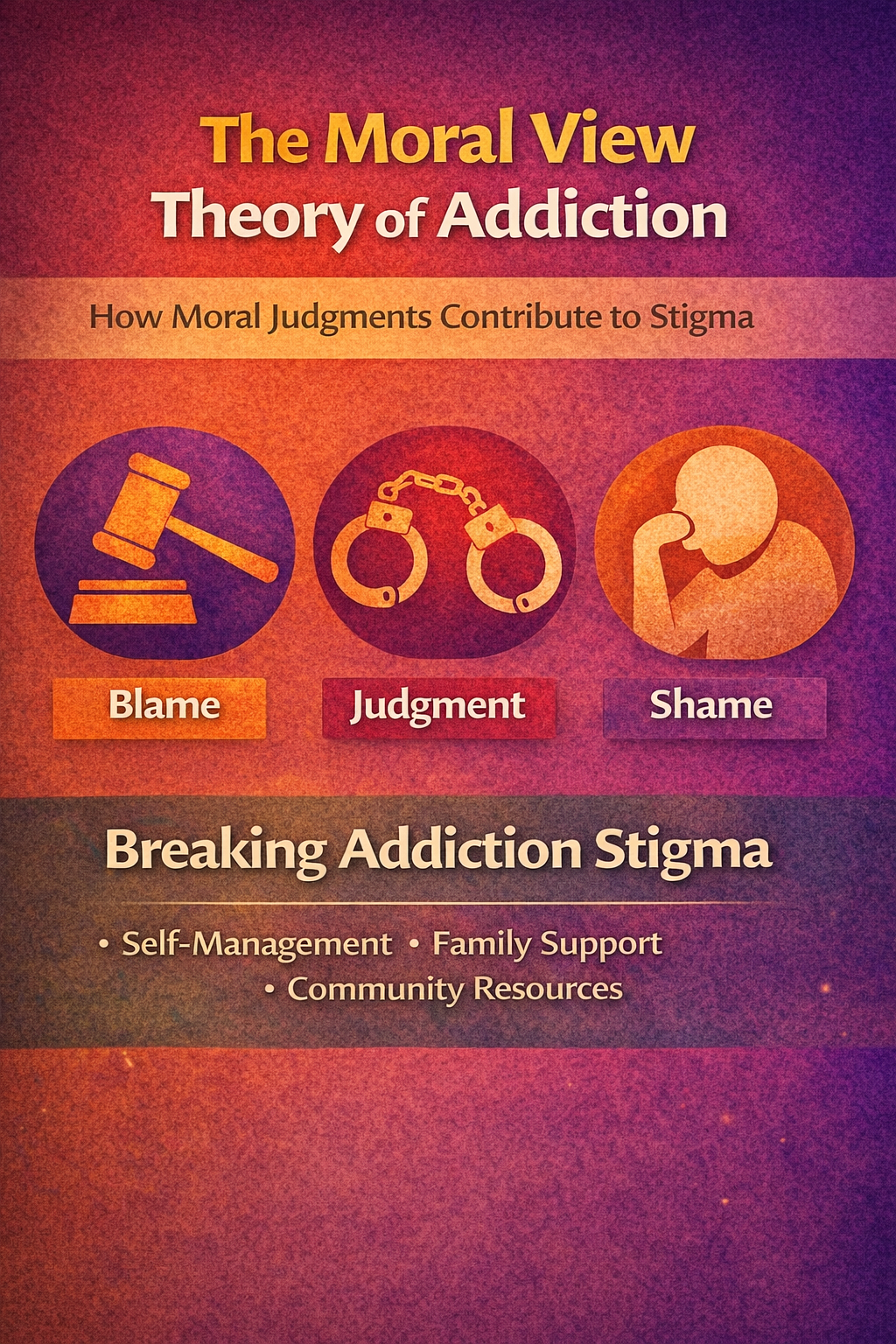
The Moral View Theory of Addiction interprets substance use as a personal weakness or moral failure, rather than a complex health condition. Although this perspective has been largely replaced by scientific and public health models, its influence persists in the form of stigma, shame, and judgment toward people with addiction. This stigma can discourage help-seeking, worsen mental health, and undermine recovery efforts. Avoiding the harmful effects of the moral view requires intentional strategies at multiple levels. Through self-management practices that challenge internalized shame, family support that replaces blame with understanding, and community resources that promote education and compassionate care, the stigma rooted in the moral view can be reduced, and recovery can be more effectively supported.
The Moral View Theory of Addiction: Understanding an Outdated Perspective
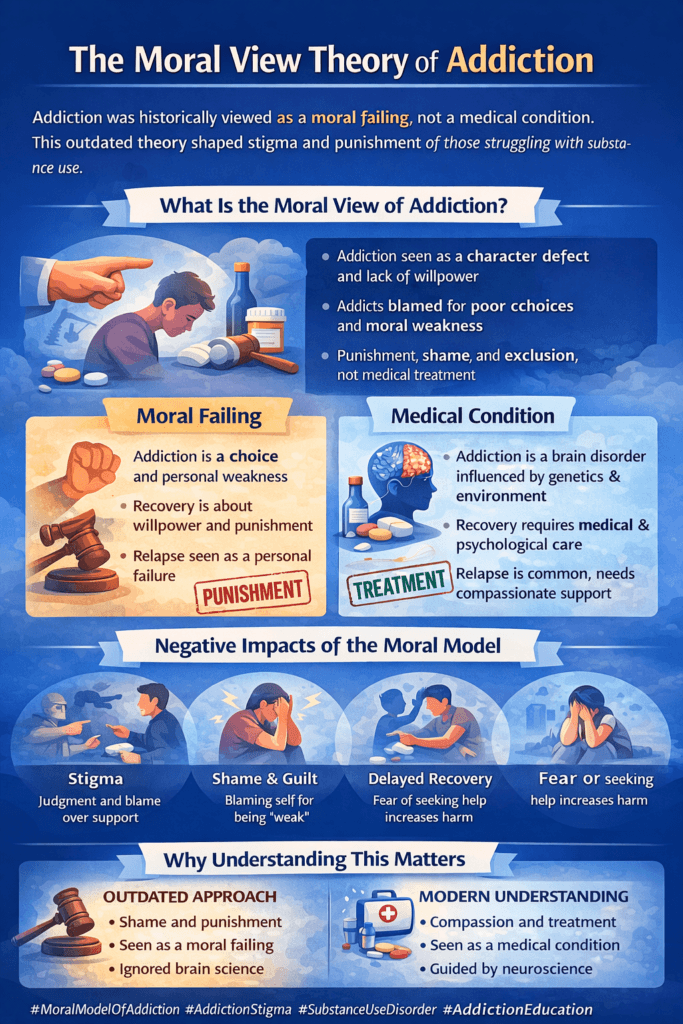
The Moral View Theory of Addiction is one of the earliest frameworks used to explain substance use and addictive behaviors. This perspective views addiction as a result of personal weakness, poor character, or moral failure. According to this theory, individuals who struggle with addiction are believed to lack self-discipline, willpower, or ethical strength, and recovery is seen as a matter of choosing to stop rather than requiring treatment or support.
Historically, moral views have shaped social attitudes, laws, and punishments surrounding substance use. People with addiction were often blamed, shamed, or criminalized rather than offered medical or psychological care. Relapse was interpreted as evidence of moral failure rather than as a predictable feature of a chronic condition. As a result, individuals experiencing addiction frequently faced stigma, social exclusion, and harsh consequences instead of compassion or treatment.
One of the major limitations of the Moral View Theory is that it ignores scientific evidence. Modern neuroscience shows that addiction involves significant changes in brain chemistry, reward pathways, impulse control, and stress regulation. Psychological factors such as trauma, mental health disorders, and environmental stressors also play a major role. By focusing solely on choice and blame, the moral model fails to explain why addiction persists despite severe negative consequences.
The moral perspective can also be harmful to recovery. Shame and guilt increase stress, which is a known trigger for substance use. When individuals internalize the belief that they are morally flawed, they may avoid seeking help, hide their struggles, or give up after setbacks. This approach often worsens outcomes rather than improving them.
While personal responsibility is an important part of recovery, modern addiction care emphasizes compassion, accountability, and evidence-based treatment rather than moral judgment. Current models view addiction as a complex interaction of biological, psychological, and social factors, requiring long-term support and care.
Understanding the Moral View Theory of Addiction helps explain why stigma still exists today. Moving beyond this outdated perspective allows individuals, families, and communities to replace blame with understanding and punishment with pathways to healing.
Self-Management Strategies for Understanding the Moral View Theory of Addiction and Its Role in Stigma
The Moral View Theory of Addiction frames substance use as a personal failure or lack of willpower rather than a health condition. Although modern science has largely moved beyond this perspective, its influence remains deeply embedded in social attitudes and self-perception. Many individuals struggling with addiction internalize moral judgments, leading to shame, guilt, and stigma that interfere with recovery. Self-management strategies can help individuals recognize this framework, challenge its assumptions, and reduce its harmful impact.
A key self-management strategy is self-awareness. Recognizing when negative self-talk reflects moral judgment—such as viewing relapse as a failure or as a sign of “weakness”—helps individuals identify the moral model’s influence. By labeling these thoughts as learned stigma rather than truth, individuals can begin to separate identity from behavior.
Education is another powerful tool. Learning about addiction as a brain-based and behavioral health condition allows individuals to replace moral explanations with scientific understanding. This knowledge reduces self-blame and promotes realistic expectations about recovery, including the possibility of setbacks.
Practicing self-compassion directly counters stigma. Treating oneself with patience, understanding, and respect during difficult moments reduces emotional distress and strengthens resilience. Self-compassion encourages accountability without shame, allowing individuals to learn from challenges rather than withdraw.
Cognitive reframing is also effective. This strategy involves challenging moral-based beliefs and replacing them with evidence-based perspectives. For example, reframing “I failed because I lack willpower” as “I experienced a setback due to stress and unmet needs” supports problem-solving rather than self-punishment.
Finally, seeking supportive environments is an essential self-management practice. Engaging in peer support groups, therapy, or recovery communities that reject moral judgment reinforces healthier narratives. Sharing experiences openly helps dismantle stigma and promotes empowerment.
Understanding the Moral View Theory of Addiction through self-management strategies allows individuals to recognize stigma, reduce its internalized effects, and approach recovery with clarity and compassion. By replacing moral judgment with informed self-care, recovery becomes a process of growth rather than punishment.
Family Support Strategies to Understand the Moral View Theory of Addiction and Its Role in Stigma
The Moral View Theory of Addiction interprets substance use as a personal or moral failing rather than a health condition. Although modern addiction science has challenged this view, its influence continues to shape family attitudes and responses to addiction. When families unknowingly adopt moral-based beliefs, stigma can emerge in the form of blame, shame, or unrealistic expectations. Family support strategies focused on understanding and reframing this theory can significantly improve recovery outcomes.
A foundational family strategy is education. Learning about addiction as a brain-based and behavioral health condition helps families move away from moral judgments. Understanding how genetics, trauma, mental health, and environmental stressors contribute to addiction allows families to replace blame with empathy and informed support.
Language awareness is another important strategy. Words that imply weakness, failure, or lack of willpower reinforce stigma and discourage open communication. Families can reduce stigma by using person-centered language and focusing on behaviors rather than character. This shift creates a safer emotional environment for honest conversations.
Families also benefit from practicing empathetic communication. Listening without interrupting, lecturing, or threatening helps individuals feel respected and understood. When family members express concern rather than judgment, loved ones are more likely to share struggles and seek help early.
Reframing relapse is critical. From a moral perspective, relapse is seen as failure. From a health perspective, it is a signal that additional support or treatment adjustments are needed. Families who understand this distinction respond with problem-solving rather than punishment, thereby reducing shame and disengagement.
Finally, families must address their own beliefs and emotions. Fear, frustration, and grief can intensify moral reactions. Family counseling or support groups provide space to process these emotions and learn healthier ways to respond.
By understanding the Moral View Theory of Addiction and its link to stigma, families can transform their support approach. Replacing moral judgment with education, empathy, and evidence-based understanding strengthens trust and promotes lasting recovery.
Community Resource Strategies to Understand the Moral View Theory of Addiction and Reduce Stigma
The Moral View Theory of Addiction frames substance use as a personal weakness or moral failing rather than a health condition. Although modern science recognizes addiction as a complex interaction of brain changes, mental health, trauma, and social factors, the moral view continues to influence public attitudes, policies, and access to care. Community resource strategies are essential for challenging this outdated perspective and reducing the stigma that prevents individuals from seeking help.
One of the most effective community strategies is public education. Health departments, schools, nonprofits, and faith-based organizations can offer evidence-based education that explains addiction as a medical and behavioral health condition. When communities understand that addiction is not simply a matter of choice, stigma decreases and compassion increases. Educational campaigns also help correct harmful myths rooted in moral judgment.
Healthcare and social service integration plays a key role in reducing stigma. Community clinics, primary care settings, and mental health services that screen for substance use disorders normalize addiction as part of overall health. When addiction care is integrated rather than isolated, individuals are less likely to feel labeled or judged.
Peer-led and recovery-oriented programs further counter moral stigma. Recovery coaches, peer support groups, and community recovery centers provide lived-experience perspectives that humanize addiction. These spaces challenge moral narratives by emphasizing resilience, growth, and shared understanding instead of shame.
Communities can also address stigma through language and policy reform. Training for educators, law enforcement, employers, and service providers promotes person-first language and trauma-informed practices. Policies that prioritize treatment, harm reduction, and rehabilitation over punishment reflect a shift away from moral judgment toward public health solutions.
Finally, accessible support services, such as counseling, housing assistance, employment programs, and harm-reduction initiatives, mitigate the social consequences of stigma. When communities meet basic needs and offer pathways to stability, individuals are more likely to engage in recovery without fear of discrimination.
By understanding the Moral View Theory of Addiction and actively challenging it through education, integrated care, peer support, and policy change, communities can reduce stigma and create environments where recovery is encouraged rather than condemned.
Frequently Asked Questions
Here are some common questions:
What is the Moral View Theory of Addiction?
The Moral View Theory sees addiction as a personal weakness or moral failure rather than a medical or psychological condition.
How did the moral view influence addiction treatment in the past?
It led to punishment, blame, and criminalization rather than to treatment, education, or support.
Why is the Moral View Theory considered outdated?
Modern research shows addiction involves brain changes, genetics, mental health, trauma, and environmental factors—not just choice or willpower.
How does the moral view contribute to addiction stigma?
It labels people with addiction as irresponsible or flawed, leading to shame, judgment, and social exclusion.
What is stigma in addiction?
Stigma is negative labeling or discrimination that causes people to feel ashamed, hide their struggles, or avoid seeking help.
How does stigma affect recovery?
Stigma increases stress, lowers self-esteem, delays treatment, and increases the risk of relapse.
Can people internalize moral stigma?
Yes. Many individuals adopt self-blame and harsh self-judgment, believing they are “weak” rather than struggling with a health condition.
How can self-management reduce moral-based stigma?
By increasing self-awareness, practicing self-compassion, challenging negative beliefs, and learning evidence-based views of addiction.
What role do families play in reducing stigma?
Families can reduce stigma by using nonjudgmental language, educating themselves, and offering supportive boundaries rather than blame.
How can communities help challenge the moral view?
Through public education, stigma-free healthcare, peer support programs, and policies that prioritize treatment over punishment.
Is accountability still important without moral judgment?
Yes. Accountability, when paired with compassion, fosters responsibility without shame and supports long-term recovery.
Why is moving beyond the moral view important?
Because recovery improves when addiction is treated as a health condition, and people are supported with dignity, understanding, and evidence-based care.
Conclusion
Moving beyond the Moral View Theory of Addiction is essential for reducing stigma and improving recovery outcomes. When individuals learn to replace self-blame with self-awareness and self-compassion, families adopt supportive and informed responses rather than judgment, and communities provide stigma-free education and accessible services, addiction is addressed as a health issue rather than a moral failing. These combined strategies create environments in which individuals feel safe seeking help, remain engaged in treatment, and recover with dignity. By rejecting moral judgment and embracing evidence-based, compassionate approaches, society can transform addiction care from punishment to healing.
Video: Why We Stopped Blaming People for Their Addictions #MoralModel #HealingJourney