Teen cannabis use is a topic that gets a lot of attention, and for good reason. While it’s often seen as a rite of passage or something harmless, more research keeps pointing to a real connection between early cannabis use and certain mental health conditions, including psychosis. In this article, I’m breaking down what’s currently known about this link, the factors that play a role, some background on both cannabis and psychosis, and what parents or teens should keep in mind.
Understanding Cannabis and Psychosis: What Does It Mean?
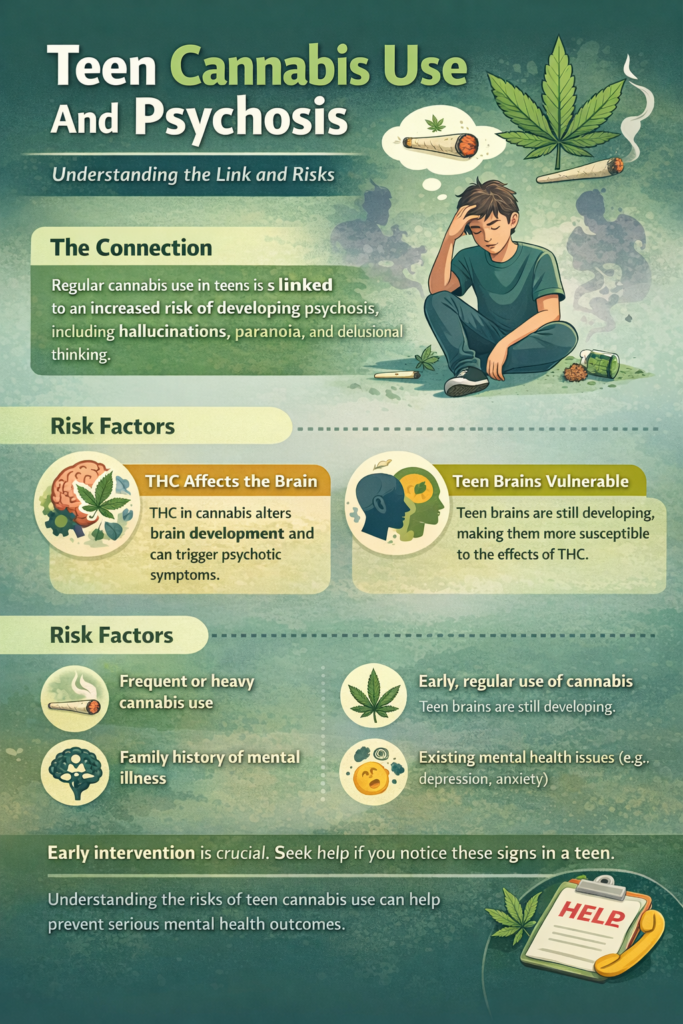
The relationship between teen cannabis use and psychosis isn’t about scare tactics. It’s really about looking at the facts. Cannabis, also called marijuana, weed, or pot, is a psychoactive plant. Its effects can vary a lot based on the chemical THC. THC is what’s responsible for the classic “high,” and it can have strong effects on the brain, especially in people with developing brains, like teens.
Psychosis is a mental state where a person loses some contact with reality. This typically involves hallucinations (seeing or hearing things that aren’t there), delusions (false beliefs), and mood or thinking changes that upend daily life. Psychosis isn’t a diagnosis by itself; it’s a symptom that can show up in several mental health conditions, including schizophrenia and bipolar disorder.
What We Know So Far About the Link
Researchers have been studying the ways cannabis and psychosis connect for decades. The evidence suggests there’s a real association, especially for teens who start using cannabis early or use it often. This doesn’t mean everyone who tries cannabis will develop psychosis, but the risk goes up for those who start young or use a lot.
Large studies, including reviews published in journals like JAMA Psychiatry, have found that cannabis use in the teen years—before the brain is fully developed—increases the chances of developing psychosis later in life. Ongoing use during teenage years is linked to higher odds of experiencing psychotic symptoms than people who wait until adulthood or don’t use at all.
Why Teens Are At Higher Risk
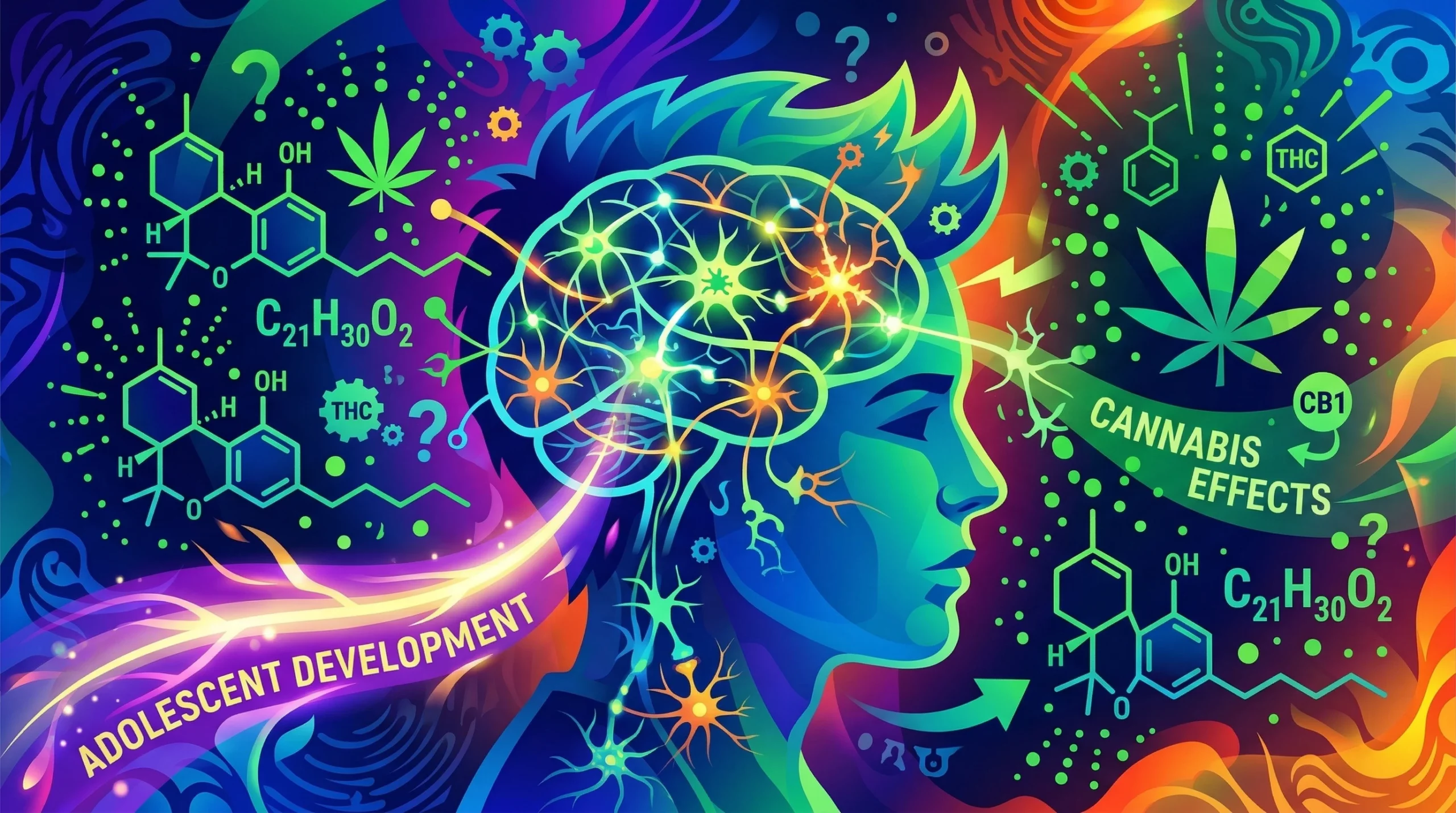
The teenage brain is still growing and changing a lot. The regions responsible for judgment, self-control, and information processing continue to develop into the mid-20s. THC can mess with how these brain connections form; that’s why the risk is higher for teens than adults.
- Brain Development: THC can affect brain regions critical for decision-making and emotional regulation. Teens’ brains are more vulnerable as these areas are still maturing.
- Frequent or Heavy Use: The more cannabis is used and the earlier one starts, the bigger the risk for negative outcomes, including psychosis.
- Family History: Teens with a family background of psychosis or certain mental health disorders seem even more at risk.
Main Signs of Psychosis to Be Aware Of
If you or someone you know is using cannabis as a teen, knowing what signs to watch for is pretty handy. Psychosis often comes on gradually and can be mistaken for “getting stressed” or “going through a phase.” Common early warning signs include:
- Becoming withdrawn from family or friends
- Drop in school performance or motivation
- Finding it hard to tell what’s real and what isn’t
- Unusual thoughts; may seem paranoid or overly suspicious
- Hearing or seeing things other people don’t
These symptoms may not just be related to cannabis, but if they’re happening alongside regular use, it’s worth paying attention to them and having a conversation or reaching out for support.
What Does the Research Say?
Most of the strongest evidence comes from long-term studies that follow large groups of people over years. These studies consistently find that starting cannabis in the teen years is linked to a higher chance of developing psychosis as an adult. For example, in a major study published in The Lancet Psychiatry (2019), regular cannabis use was associated with about three times the odds of developing a psychotic disorder compared to those who never used it.
It’s pretty important to mention that these are averages, not destiny. Risk isn’t the same as a guarantee. Some people use cannabis and never develop psychosis. Others may be genetically more prone or have other risk factors that combine with cannabis to trigger psychosis. Researchers are still working to pin down all the details and see how factors overlap or interact over time.
Factors That Increase Risk
Not everyone who uses cannabis is affected the same way. There are a few factors that seem to bump up the dangers:
- Genetics: Certain genes may make the brain more sensitive to THC. People with a family history of psychosis or schizophrenia are especially at risk.
- Type of Cannabis: There’s a big difference between strains of cannabis. High THC strains, which are more common these days, carry a greater risk for mental health problems. Low THC, high CBD strains seem less likely to kick off these issues.
- Other Mental Health Issues: If someone already has symptoms of anxiety, depression, or mood swings, cannabis use can add to the problem and sometimes tip things into psychosis.
Debunking a Few Myths
Because cannabis is often talked about as “natural” or “just a plant,” some people downplay the risks. Here are a few points I hear come up a lot, with what the evidence actually shows:
- “Cannabis is safer than other drugs.” While cannabis might not be as dangerous as some substances in other ways, its effect on the developing brain is real. There’s a reason many countries have minimum age laws for use.
- “Everyone’s doing it.” Not all teens use cannabis. According to CDC surveys, about 22% of U.S. teens reported using cannabis in the past month (as of 2021). Most teens are not using it regularly.
- “It’s only a problem if you use a lot.” Even occasional use can raise risk, especially for teens already at higher risk for psychosis or mental health issues. Frequency and age of starting both matter.
What Parents and Teens Can Do
Raising awareness is the first step toward better decisions. If you’re a teen or a parent, here are some things that help reduce risk:
- Delay starting cannabis use as long as possible. The latter is safer for brain health.
- Be open about mental health and family background—especially with doctors and counselors.
- If you notice early signs of psychosis or really big changes in behavior, don’t wait to ask for help. Mental health support matters and can prevent problems from spiraling.
- Stay informed about what’s in the cannabis being used. Knowing about THC content can help with safer choices if someone is going to use at all.
Common Questions About Cannabis and Psychosis
Getting straight answers is important when it comes to mental health and cannabis. Here are a couple of questions I hear a lot:
Q: Can cannabis cause psychosis all by itself?
A: Most often, cannabis is one piece of a more complex puzzle. It can trigger psychosis in people already at risk, but most people who use cannabis don’t develop full-blown psychotic disorders. The risk goes up with early, heavy, or frequent use, and with certain genetic backgrounds.
Q: Is occasional use safe for teens?
A: Even intermittent use can impact the developing brain. It’s especially risky for those with other risk factors (mental health issues, family history), though some teens may not have any obvious negative reaction.
Q: Is CBD safe?
A: Early research suggests that CBD (another cannabis compound) doesn’t have the same risk for psychosis as THC, and some studies are exploring if it could even help with symptoms. Most of the risk comes from THC.
How to Reduce Harm if You or Someone You Know Uses Cannabis
If avoiding cannabis isn’t in the cards, there are a few things that can help keep risks lower:
- Choose strains with lower THC content and higher CBD (if available).
- Avoid cannabis use if there’s a family history of mental illness or signs of mental health struggles.
- Stick to small amounts and avoid daily use.
- Keep trusted adults, friends, or healthcare providers in the loop if mental health symptoms start popping up.
Wrapping Up
Teen cannabis use and psychosis are linked in a way that’s still being studied, but there’s enough evidence for teens and parents to take it seriously. The combination of an not-yet-finished brain, genetics, and the strength of today’s cannabis raises risks far above what older generations may have experienced. If you have questions or aren’t sure what to watch for, reaching out to a health professional or school counselor is always a good move. The more you know, the better prepared you’ll be to make safe, informed choices about cannabis. Staying tuned in to these issues and talking openly can go a long way in keeping everyone safer and healthier.
Video: Teen Cannabis Use: A Recipe for Disaster? #TeenHealth #PsychosisAwareness