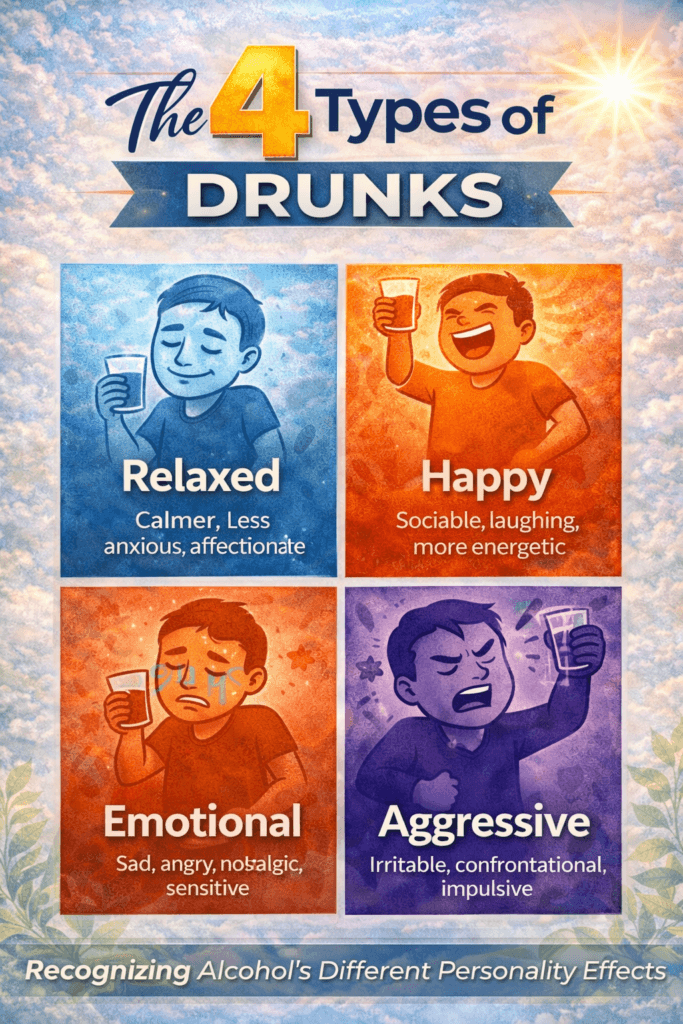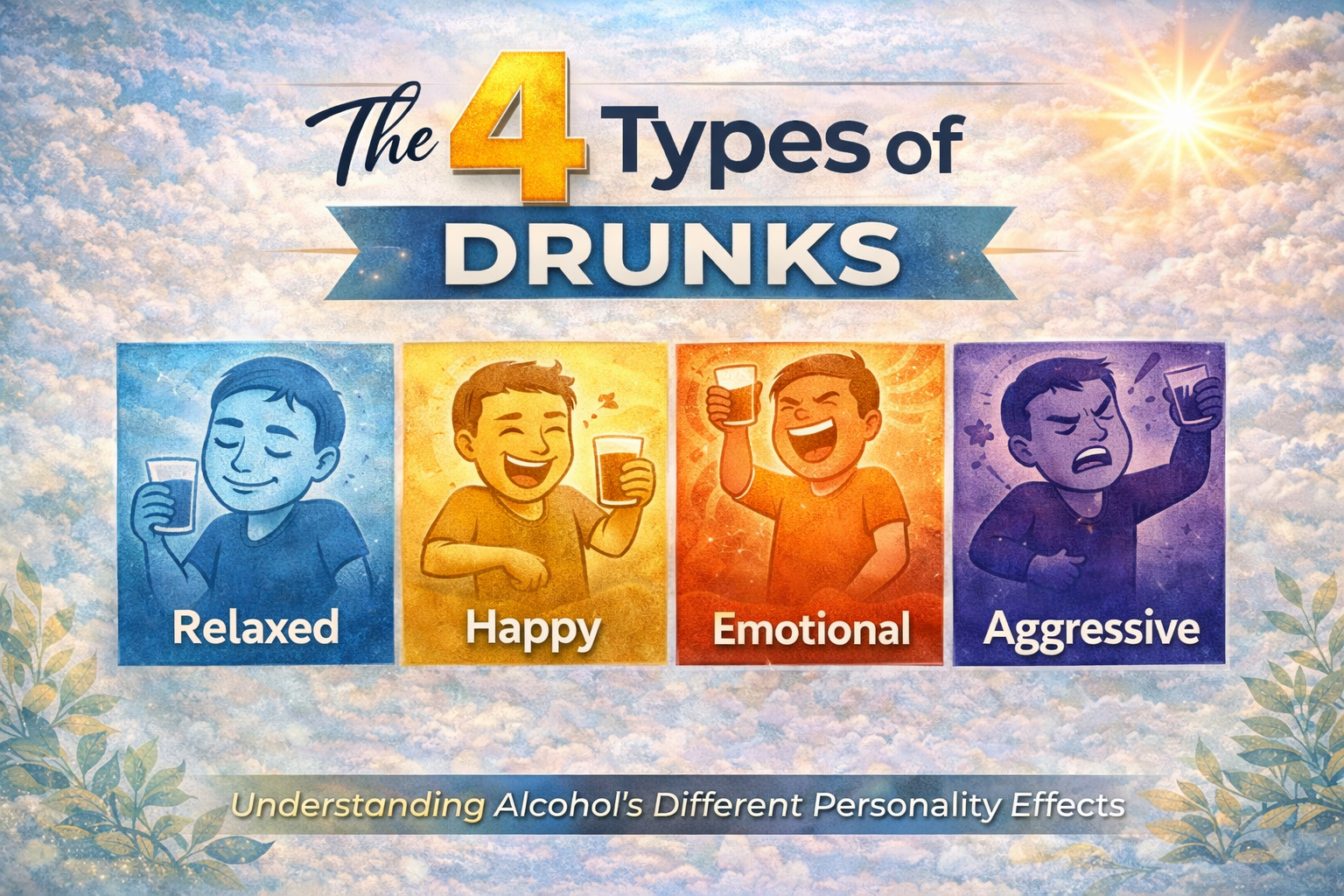
The idea of the four types of drunks is a helpful framework used to describe common behavioral patterns people may display when intoxicated, such as becoming relaxed, happy, emotional, or aggressive. While these categories are not scientific diagnoses, they offer insight into how alcohol can amplify underlying personality traits, emotions, and coping styles. Understanding these patterns promotes self-awareness and helps individuals recognize how alcohol affects their mood, judgment, and interactions. This awareness is especially important because alcohol often reduces inhibition and self-monitoring before a person realizes how much their behavior has changed.
The Four Types of Drunks: Understanding Alcohol’s Different Personality Effects
Alcohol doesn’t affect everyone the same way. While it is chemically the same substance for all drinkers, its psychological and behavioral effects can vary widely depending on personality traits, mood, environment, and tolerance. Researchers and behavioral experts often describe four common types of drinkers when intoxicated—not as rigid categories, but as patterns that help explain how alcohol influences personality and behavior. Understanding these types can increase self-awareness, improve safety, and reduce harm to relationships or social groups.
1. The Relaxed Drunk
This person becomes calmer, friendlier, and less anxious after drinking. Inhibitions drop slightly, but behavior usually remains socially appropriate. People in this category often feel more open emotionally and may become more talkative or affectionate. While this type may appear harmless, the risk is relying on alcohol as a coping tool for stress or social anxiety.
2. The Happy Drunk
Often cheerful, energetic, and sociable, the happy drunk tends to laugh more, joke around, and seek connection. Alcohol amplifies positive emotions, making social interaction feel easier and more enjoyable. However, this elevated mood can sometimes mask rising intoxication levels, leading to unintentional overdrinking.
3. The Emotional Drunk
This type experiences intensified feelings—sadness, anger, nostalgia, or vulnerability. Alcohol lowers emotional regulation, so underlying stress or unresolved feelings may surface quickly. Emotional drinkers may cry, argue, or become overly sensitive. This pattern often signals that alcohol is interacting with emotional strain rather than simply enhancing mood.
4. The Aggressive Drunk
The most concerning category, the aggressive drunk, may become irritable, confrontational, or impulsive. Alcohol impairs judgment and reduces impulse control, which can lead to risky decisions or conflict. Not everyone who drinks becomes aggressive, but for those who do, alcohol may magnify preexisting frustration, stress, or personality tendencies.
Why These Types Matter
Recognizing which pattern someone tends toward can be a powerful self-management tool. Alcohol lowers activity in brain regions responsible for judgment and inhibition, meaning personality traits that are normally controlled can become exaggerated. By understanding personal tendencies, individuals can set limits, avoid triggers, and make safer decisions.
Final Thought
The idea of “types of drunks” isn’t meant to label or judge—it’s meant to build awareness. Alcohol doesn’t create a new personality; it often reveals or amplifies parts of one that are already there. When people understand their own patterns, they can drink more responsibly—or choose not to drink at all—based on what best supports their health, relationships, and well-being.
Staying in Control: Self-Management Strategies to Recognize and Prevent Becoming the Four Types of Drunks
Alcohol affects each person differently, often amplifying existing personality traits rather than creating entirely new ones. Behavioral research commonly describes four intoxication patterns: the relaxed, happy, emotional, and aggressive drinker. While these categories are not diagnoses, they can serve as powerful tools for self-awareness. Recognizing which pattern you tend toward allows you to take proactive steps to stay in control, reduce risk, and protect your relationships, safety, and well-being. Self-management strategies focus on awareness, preparation, and intentional decision-making before impairment affects judgment.
1. Identify Your Personal Pattern
The first step is honest observation. Reflect on past drinking experiences and ask yourself how your mood, behavior, and communication change. Do you become overly emotional? Extra talkative? Irritable? Tracking patterns in a journal or notes app can help you recognize which type you gravitate toward. Awareness transforms drinking from an automatic behavior into a conscious choice.
2. Learn Your Early Warning Signs
Each intoxication pattern has subtle early indicators. Emotional types may feel more sensitive, aggressive types may notice irritation, and overly social types may talk faster or louder. These signals appear before severe impairment. Training yourself to notice them provides a critical window to slow down or stop drinking.
3. Set Limits Before Drinking
Pre-planned limits are one of the strongest prevention tools. Decide in advance how many drinks you will have, how quickly you’ll consume them, and under what conditions you will stop. Decisions made ahead of time rely on clear thinking rather than alcohol-impaired judgment.
4. Manage Emotional Triggers
Many problematic intoxication patterns are linked to emotional states rather than alcohol itself. Stress, anger, loneliness, or anxiety can increase the likelihood of becoming emotional or aggressive when drinking. Developing alternative coping skills—exercise, breathing techniques, social support, or creative outlets—reduces the chance that alcohol becomes an emotional amplifier.
5. Control Your Environment
Your surroundings influence your drinking behavior more than you might realize. Loud, high-energy environments or peer pressure can accelerate consumption and intensify personality shifts. Choosing calmer settings, spacing drinks, or planning an exit time helps maintain control.
6. Use Accountability Supports
Letting a trusted friend know your limits or goals can help you stay mindful. Supportive peers can gently point out behavioral changes you might not notice on your own. External feedback is valuable because alcohol reduces self-awareness as intoxication increases.
7. Reflect Afterward
After drinking, take a few minutes to review your experience. Ask yourself what type you became, what triggered it, and how you felt physically and emotionally afterward. Reflection builds insight, helping you adjust future choices and strengthen self-control.
Final Thought
Preventing yourself from becoming one of the four intoxication types isn’t about perfection—it’s about awareness and intention. Alcohol tends to magnify what’s already present emotionally and psychologically. By recognizing your patterns, preparing ahead, and responding to early warning signs, you can stay in charge of your behavior rather than letting alcohol decide for you. Real control isn’t about avoiding every risk; it’s about understanding yourself well enough to make choices that align with your goals, values, and long-term well-being.
Family Support Strategies for Recognizing and Preventing the Four Types of Drunks
Alcohol affects people in different ways, often amplifying personality traits rather than changing them completely. Behavioral patterns sometimes described as the four types of intoxicated personalities—relaxed, happy, emotional, and aggressive—can help families understand how a loved one tends to act when drinking. These categories aren’t labels or diagnoses; they’re awareness tools. When families recognize patterns early, they can provide supportive guidance that prevents risky behavior and promotes safer choices. Family involvement, when compassionate and consistent, can be one of the strongest protective factors against harmful drinking patterns.
The first strategy is learning individual warning signs. Each person shows subtle shifts before intoxication becomes obvious. A loved one who becomes emotional when drinking might start speaking more softly or appear withdrawn. Someone prone to irritability may show tension in tone or posture. Families who notice these cues can gently check in early, before behavior escalates. Calm observations such as “You seem a little off tonight—how are you feeling?” can increase awareness without triggering defensiveness.
Another key approach is creating supportive environments. Family gatherings and celebrations often include alcohol, but families can shape the atmosphere by providing food, nonalcoholic options, and activities that don’t center on drinking. These changes reduce pressure and slow consumption, making it easier for individuals to stay within safe limits. A supportive environment encourages balance rather than excess.
Open communication is also essential. Families who discuss alcohol expectations, boundaries, and concerns ahead of time build trust and reduce conflict. Conversations should focus on safety and well-being rather than criticism. When people feel understood instead of judged, they are more receptive to feedback and more likely to reflect on their behavior.
Families must also practice healthy boundaries. Support should never become enabling. This means avoiding actions such as covering up consequences, making excuses, or minimizing harmful behavior. Clear boundaries—like refusing to tolerate aggression or ensuring safe transportation—protect both the individual and the family system.
Another powerful strategy is modeling balanced behavior. When family members demonstrate moderate drinking, stress-management skills, and respectful communication, they provide a living example of healthy coping. Modeling often influences behavior more effectively than advice alone because it shows what responsible choices look like in real life.
Finally, supportive reflection after events can help build awareness. Discussing what went well and what felt uncomfortable allows individuals to connect their drinking patterns with real-life outcomes. These conversations should be collaborative and solution-focused, helping loved ones learn rather than feel shamed.
In conclusion, families play a vital role in helping loved ones recognize and prevent risky intoxication patterns. Through early recognition, supportive environments, clear communication, healthy boundaries, and positive modeling, families lay a foundation in which safer choices become easier. When support is rooted in empathy and consistency, it empowers individuals to understand their behavior, make healthier decisions, and maintain stronger, more respectful relationships.
Community Strategies to Recognize and Prevent Harmful Drinking Patterns: Addressing the Four Types of Drunks
Alcohol affects people differently, often amplifying personality traits rather than changing them entirely. Behavioral patterns sometimes described as the four intoxication types—relaxed, happy, emotional, and aggressive—can help communities understand how alcohol influences behavior across different individuals. While these categories are not clinical diagnoses, they provide a practical framework for prevention and education. Community resources play a vital role in helping people recognize early behavioral shifts, reduce risk, and create safer social environments where harmful drinking patterns are less likely to develop.
One of the most effective community strategies is public education and awareness programming. Schools, health organizations, and local wellness initiatives can teach residents how alcohol affects mood, judgment, and impulse control. Educational workshops that explain early signs of emotional escalation, irritability, or overconfidence help individuals and bystanders recognize when someone may be entering a risky behavioral state. Awareness encourages early intervention, which is far safer than responding after impairment has intensified.
Another important approach is training for community-facing professionals. Bartenders, event staff, campus leaders, and hospitality workers can be trained to identify behavioral warning signs associated with problematic intoxication. Recognizing when someone becomes overly emotional, impulsive, or confrontational allows staff to intervene calmly—offering water, slowing service, or arranging transportation. Responsible service practices can prevent escalation while maintaining dignity and respect for the individual.
Accessible support resources also strengthen prevention efforts. Community counseling centers, peer support groups, and mental health services provide spaces where individuals can explore emotional triggers that influence drinking behavior. People who tend to become emotional or aggressive when intoxicated often benefit from learning healthier coping strategies. When communities offer easy access to these services, they address root causes rather than only visible symptoms.
Communities can further help by creating alcohol-balanced social environments. Events that include appealing nonalcoholic options, structured activities, and clear safety messaging reduce pressure to drink excessively. Recreation programs, volunteer opportunities, and social clubs also give residents alternative ways to connect without alcohol being the central focus. These environments normalize moderation, making it easier for individuals to maintain control.
Another powerful tool is peer-led outreach and mentorship. People are often more receptive to feedback from peers than authority figures. Peer educators and recovery advocates can share experiences, discuss behavioral patterns, and encourage mindful drinking practices. These conversations reduce stigma and promote honest reflection, both of which are essential for lasting change.
Finally, community safety networks ensure protection when prevention isn’t enough. Local transportation programs, crisis hotlines, and emergency response education help communities respond quickly if someone shows signs of severe intoxication or dangerous behavior. Prepared communities can act decisively while prioritizing safety and care.
In conclusion, preventing harmful intoxication patterns is not just an individual responsibility—it’s a shared community effort. When communities invest in education, professional training, accessible support services, and safe social environments, they create conditions where people can recognize their behavioral tendencies and make healthier choices. By fostering awareness, compassion, and accountability, communities help individuals stay in control, protect relationships, and reduce alcohol-related harm for everyone.
Frequently Asked Questions
Here are some common questions:
1. What are the four types of drunks?
They are commonly described patterns of behavior people may show when intoxicated: relaxed, happy, emotional, and aggressive. These are informal behavioral categories, not medical diagnoses.
2. Are these types scientifically proven categories?
Not exactly. They’re based on behavioral observations and personality research rather than strict clinical classifications. They’re best used as awareness tools, not labels.
3. Why do people act differently when drunk?
Alcohol affects brain regions responsible for judgment, impulse control, and emotional regulation. When these functions are suppressed, underlying personality traits and emotions can become amplified.
4. Can someone be more than one type?
Yes. Many people show a mix of traits or shift types depending on mood, environment, stress level, or how much they drink.
5. Which type is considered most risky?
The aggressive type is generally the most concerning because impaired impulse control combined with anger or irritability can lead to conflict, injury, or dangerous decisions.
6. Does your drunk personality reflect your real personality?
Alcohol doesn’t create a new personality—it usually exaggerates existing traits, emotions, or tendencies that are normally regulated when sober.
7. Can someone change their intoxication pattern?
Yes. Awareness, setting limits, managing stress, and choosing environments carefully can influence how someone behaves when drinking.
8. Do tolerance levels affect which type you become?
Tolerance may change how quickly someone appears intoxicated, but it doesn’t necessarily change emotional tendencies. Even people with high tolerance can still become emotional or aggressive.
9. How can recognizing your type help?
Knowing your pattern helps you identify early warning signs, set boundaries, and make safer decisions before behavior escalates.
10. Should these types be used to label people?
No. They’re meant for education and self-awareness, not judgment. The goal is to understand patterns so people can make healthier choices.
Conclusion
Recognizing the four types of intoxication patterns is not about labeling or judging—it’s about understanding behavior so safer choices can be made. When individuals, families, and communities are aware of these tendencies, they can identify early warning signs, set boundaries, and intervene before drinking leads to conflict or harm. Ultimately, the value of this framework lies in education and prevention. By understanding how alcohol influences personality and reactions, people can make more intentional decisions, protect relationships, and support healthier habits that promote long-term well-being.
Video: These 4 drunk archetypes are scarily accurate #relatable #shorts