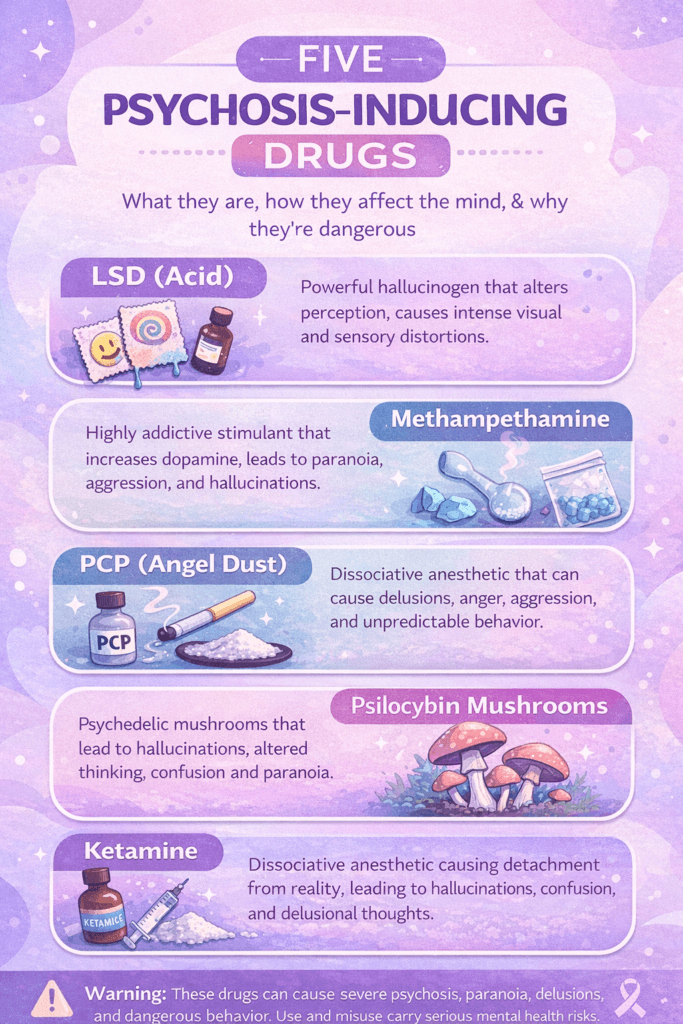
There are certain drugs that can dramatically alter perception and reality. Some substances have powerful effects on the brain that can trigger psychosis, leading to hallucinations, delusions, paranoia, and disorganized thinking. These experiences can seem strange or fascinating from the outside, but for those affected, they are often frightening, confusing, and dangerous. Understanding psychosis-inducing drugs is important not only for students of psychology or healthcare but also for parents, friends, and anyone who wants to protect themselves or loved ones from serious mental health risks. Awareness can mean the difference between early intervention and long-term harm. This guide offers a clear look at five well-known psychosis-inducing drugs, explaining how they affect the brain, why they carry unique dangers, and what warning signs to watch for. With the right knowledge, prevention, safety, and recovery become far more possible.
What Does Psychosis Mean and Why Do Certain Drugs Trigger It?
Psychosis is a broad term for when someone loses touch with reality. This might look like seeing or hearing things that aren’t there (hallucinations), holding unusual beliefs (delusions), or having jumbled thinking. Drug-influenced psychosis can be short-lived or stick around longer, depending on the substance, the dose, and the person using it.
Plenty of drugs can bring on psychosis, but a few stand out because they’re either really well studied, widely used, or carry a reputation for triggering intense mental changes. Sometimes, psychosis fades as the drug leaves the system. Other times, especially with repeated or high-dose use, psychosis can linger or become part of a bigger mental health challenge. Keeping this risk in mind is key when learning about these substances.
It’s also important to know that not all cases of psychosis are the same. For some, drug-induced psychosis is brief and scary; for others, it can change how their brain works for a long time. Education, awareness, and honest conversations can go a long way in helping people make healthy decisions around these substances.
The Five Psychosis-Inducing Drugs Everyone Should Know About
Some drugs are more likely to cause psychosis than others. Here are the five that people tend to encounter most often or that have the strongest evidence linking them to psychotic symptoms:
- LSD (Lysergic Acid Diethylamide)
- Methamphetamine
- Cocaine
- PCP (Phencyclidine)
- Cannabis (Marijuana, especially high THC strains)
LSD: Hallucinations and Distorted Reality
LSD, sometimes called “acid,” is a hallucinogen best known for causing wild visual and auditory hallucinations. Trips can last for up to 12 hours, and people might see patterns, hear voices, or feel disconnected from their own sense of self. For some users, these effects are just strange; for others, LSD can lead to full-blown psychosis, especially if someone already has a family history of mental illness.
The risk isn’t just about what you see and hear. People on LSD may become paranoid or convinced of things that aren’t true, which can be scary and dangerous, especially if they act on those beliefs. Although most symptoms fade as the drug wears off, there are cases where the psychosis lingers for weeks or months, a syndrome called Hallucinogen Persisting Perception Disorder (HPPD).
Research has shown that frequent or high-dose use of LSD can increase the likelihood of experiencing ongoing perceptual disturbances. While many use LSD recreationally without prolonged harm, it’s crucial to think about personal mental health history and potential risks before taking part.
Methamphetamine: Extreme Risk for Paranoia and Delusions
Methamphetamine, or meth, is a stimulant that speeds up the central nervous system. It’s popular for giving users a burst of energy and alertness, but it comes with a hefty list of side effects. At high doses or after long stretches of use, meth commonly causes psychosis. This often includes severe paranoia (sometimes called “tweaking”), hallucinations, and even aggressive or erratic behavior.
One classic example is “formication,” the feeling that bugs are crawling under your skin. Meth users can become convinced of bizarre conspiracies or believe they’re being watched or followed. This experience can start after just a few uses or become a chronic issue for long-term users. Research shows that meth-induced psychosis sometimes continues even when people stop using, making recovery tricky.
Longterm meth use can also change the way the brain handles stress and pleasure, increasing the possibility of ongoing mental health struggles. If you notice friends or loved ones acting in bizarre ways or experiencing paranoia after meth use, professional help is recommended quickly.
Cocaine: Psychosis in High Doses or Long-term Binge Use
Cocaine gives a fast, intense high, but it can also warp perceptions and thinking, especially when used in high amounts or in long binges. Cocaine-induced psychosis isn’t just about euphoria. It can tip into paranoia, erratic thinking, and hallucinations pretty quickly. “Cocaine bugs” is the nickname for the crawling skin sensation some long-term users develop.
Cocaine psychosis is usually temporary. But for those with a tendency toward mental illness, even a single encounter can set off a longer mental health episode. Regular cocaine use, especially over weeks or months, really increases the risk that psychotic symptoms will show up and stick around after stopping the drug.
It’s important to recognize that cocaine’s impact can also extend into users’ relationships and daily life. Episodes of paranoia or aggression may lead to conflicts or risky decisions, highlighting the need for support and intervention if symptoms start appearing.
PCP: Confusion and Violent Delusions
PCP, or phencyclidine, started out as an anesthetic but was ditched for medical use because it caused too many psychiatric problems. PCP can cause extreme confusion, hallucinations, and feelings of being disconnected from the body. People under its influence might develop odd beliefs (like thinking they’re invincible) or become temporarily aggressive and paranoid.
Sometimes, these episodes look a lot like schizophrenia. PCP-induced psychosis can last for hours, but in some cases lingers for days. The drug’s reputation for making people act in unpredictable or violent ways has kept it off most medical shelves and earned it street nicknames like “angel dust.”
Incidents of PCP use have led to some widely publicized stories about people behaving bizarrely or running into legal trouble. The risk of harm rises dramatically if someone already has underlying mental health conditions or mixes PCP with other substances.
Cannabis: Not as Mild as Some Believe
Cannabis is sometimes seen as a harmless drug, but high-potency marijuana, especially strains loaded with THC, has been linked to psychosis in some users. For most people, cannabis causes mild changes in mood, sensation, or thinking. But for others, especially those with a family history of schizophrenia or other psychiatric conditions, even small amounts can trigger serious paranoia, delusions, or hallucinations.
The risk is greater with potent edible forms, concentrated oils (dabs), and use by teens and young adults. Studies have found that regular use, especially starting young, can raise the odds of developing schizophrenia or a persistent psychotic disorder later in life (CDC). It’s not guaranteed, but it’s worth thinking about if you or someone you know is a frequent user.
Common Signs of Drug-Induced Psychosis
Recognizing drug-influenced psychosis can help guide someone towards treatment or support. Here’s what you might notice in someone experiencing it:
- Severe paranoia or believing things that seem unlikely or impossible
- Hallucinations (hearing, seeing, or feeling things that aren’t real)
- Disorganized thinking or speech
- Aggression or sudden mood swings
- Extreme agitation or withdrawal from others
If these symptoms pop up out of nowhere, especially after known drug use, medical attention can really help. Sometimes, stopping the drug is enough, but in other cases, antipsychotic medication or other treatment is needed.
Factors That Increase Risk of Drug-Induced Psychosis
Not everyone who tries these drugs will become psychotic. Several things make it more likely:
- Family or personal history of mental health issues: People with mental illness in the family are more vulnerable.
- High potency or large doses: Using a lot or picking ultra-strong versions raises the odds.
- Youth and early drug use: Teen brains are still developing and are more sensitive.
- Mixing substances: Using different drugs together can make the effects much worse.
If you or someone you know fits these categories, staying informed and approaching drug use with caution is really important.
Personal stress, trauma, and even lack of sleep can also pump up the risk of a negative or psychotic reaction to drugs. It’s worth noting that people may not always realize how their mental health or circumstances set the stage for a stronger response.
Getting Help: Treatment and Recovery
Most cases of drug-influenced psychosis get much better once the drug wears off and the person stops using. Treatment usually involves supportive care, making sure someone’s safe, hydrated, and calm. If symptoms stick around, mental health professionals might recommend medications to keep things under control or therapy to work through the aftereffects. Support groups and addiction treatment centers can be really useful for those struggling to quit or recover from these experiences.
For more information on drug-influenced psychosis, the National Institute of Mental Health and SAMHSA can be helpful starting points. Early intervention, honesty with healthcare providers, and support from family and friends are all super important for getting back on track.
Taking action as soon as troubling symptoms appear is the best way to prevent problems from dragging on. If you’re not sure where to begin, reaching out to a trusted doctor, counselor, or helpline can start the path to recovery.
Frequently Asked Questions
Question: Can a single use of any of these drugs cause permanent psychosis?
Answer: Most drug-influenced psychosis fades after the drug leaves the body, but for rare people, especially those with certain risk factors, even one experience can lead to longer-lasting symptoms.
Question: Is cannabis really as risky as meth or PCP for causing psychosis?
Answer: Cannabis is usually less risky, but high doses and frequent use, especially among teens, have been linked to long-term mental health issues in some people.
Question: What should someone do if they or a friend experiences drug-influenced psychosis?
Answer: Get to a safe place and seek medical help right away. Professional treatment helps ensure symptoms don’t worsen and provides support during recovery.
Key Takeaways
Learning about psychosis-inducing drugs makes it easier to spot warning signs and take action early. LSD, methamphetamine, cocaine, PCP, and cannabis are the big names to watch out for, each with its risks and unique effects. Staying informed, watching out for yourself and others, and reaching out for help make a real difference in safety and recovery.
Video: The Psychosis Epidemic Nobody’s Stopping #drugawareness #brainhealth