Mixing alcohol and painkillers is something a lot of people don’t think twice about. Maybe you’ve nursed a sore back with a couple of pain pills and then decided to catch up with friends over drinks. It can seem harmless, but this combination can actually be pretty risky. As someone who likes to make sure people stay safe and informed, I want to break down why mixing alcohol and painkillers isn’t just a bad idea; it’s a downright dangerous one.
The Basics of Alcohol and Painkillers
Painkillers, also known as analgesics, cover everything from over-the-counter meds like acetaminophen (Tylenol) and ibuprofen (Advil) to prescription opioids like oxycodone and hydrocodone. Each of these medicines works differently in the body, but when you introduce alcohol into the mix, things get complicated fast.
Alcohol is a depressant, meaning it slows down the brain and other systems in your body. Depending on what painkiller you’ve taken, alcohol can either boost the effects of the drug—which can seem helpful but is actually dangerous—or block your body’s ability to process it, making negative effects stronger and last longer.
Mixing these two isn’t about just multiplying the impact. They interact in ways that can be unpredictable and sometimes really harmful. Even small amounts can cause issues, especially for people with certain health conditions.
What Makes This Combination So Risky?
Alcohol and painkillers can put extra stress on your organs, especially your liver, kidneys, and brain. Here are a few ways this can show up:
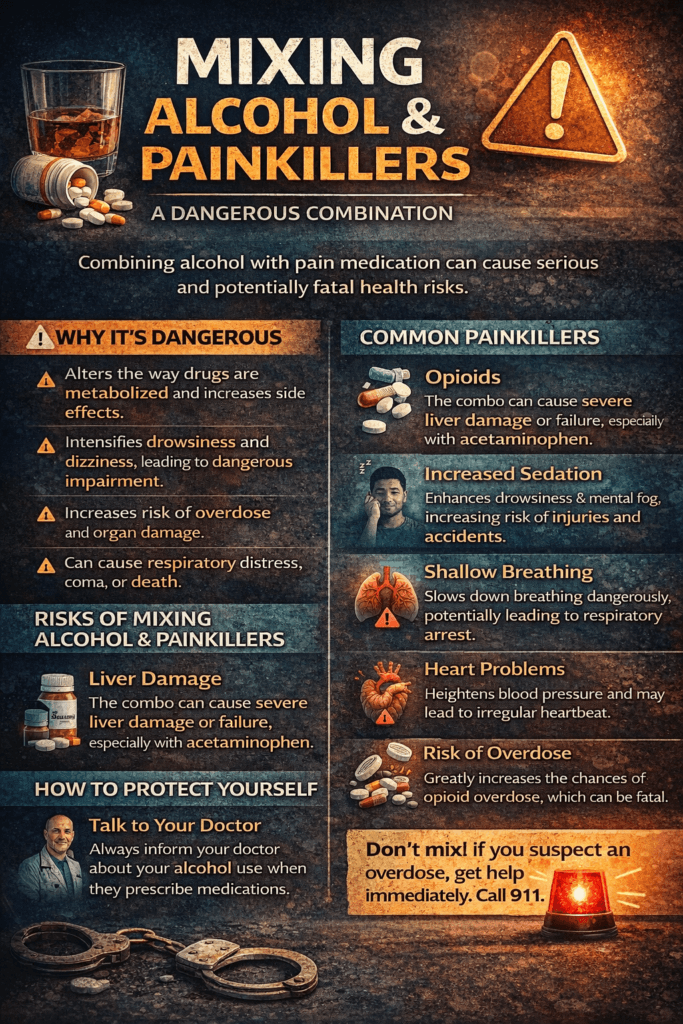
- Liver Damage: Both alcohol and medications like acetaminophen are processed by the liver. Taking them together can overwhelm this organ and lead to damage, sometimes even liver failure.
- Increased Sedation: Both alcohol and painkillers, especially opioids or prescription medications, work to slow things down. This can cause heavy drowsiness, slowed breathing, or a passing out episode. In bad cases, slowed breathing can stop altogether.
- Higher Risk of Overdose: Mixing alcohol with painkillers increases the odds of taking too much, sometimes by accident. Overdose risk skyrockets, especially with opioids, but even with over-the-counter drugs, it’s not something to shrug off.
- Gut Problems: Stomach bleeding, ulcers, and upset digestion are all more likely when mixing NSAIDs like ibuprofen or aspirin with alcohol.
People often think that prescription painkillers are the “biggest problem,” but the truth is, even so-called mild painkillers, when paired with alcohol, can be tough on your body. Even just using them as directed isn’t a free pass to enjoy a drink at the same time.
Common Scenarios Where People Mix the Two (and Why It’s Risky)
I’ve talked to folks who combined pain meds and a glass of wine at dinner, not thinking it would matter. Others have hit happy hour after taking something for a headache. Sometimes people are just tired or dealing with long-term pain and use alcohol for an extra boost of relief. Unfortunately, these everyday situations can quickly become emergencies.
Here are a few examples I hear a lot (and why they should give anyone pause):
- The Social Drinker: You take a couple of ibuprofens for a sore knee and then have beers with friends. Even common NSAIDs can irritate the stomach lining. Alcohol makes it worse, possibly leading to bleeding or ulcers.
- The Nighttime Routine: Maybe you take a prescription painkiller for a back injury and follow up with a glass of whiskey to help you sleep. This can dangerously suppress breathing, all while you’re asleep and less able to notice something is wrong.
- The “Occasional Reward”: Some people treat pain with painkillers and celebrate the end of a rough day with a drink. The body isn’t great at drawing a line between therapeutic and recreational risks here, and overdoing it by mistake happens more than you’d think.
Quick Guide to Understanding the Danger Levels of Different Painkillers
Different painkillers come with different risks when mixed with alcohol. Here’s a quick rundown so you know what to watch out for:
- Acetaminophen (Tylenol): This is in a ton of everyday products. If you drink while taking acetaminophen, the risk of liver damage goes way up, especially if you regularly use both.
- NSAIDs (Ibuprofen, Naproxen, Aspirin): These are tough on your stomach and kidneys. Alcohol just increases the risk of ulcers, bleeding, and kidney issues.
- Opioids (Oxycodone, Hydrocodone, Codeine): These slow breathing and can put you to sleep. Combined with alcohol, the risk of stopping breathing or overdosing jumps. Many emergency visits result from this mix-up.
- Prescription Combination Meds (Vicodin, Percocet): These contain both opioids and something like acetaminophen. This means double trouble: risk for both liver failure and slowed breathing.
Even if your painkiller says “non-drowsy” or “mild,” that doesn’t mean it’s safe to add alcohol to the mix.
Dealing with Real World Challenges
Understanding how alcohol and painkillers interact is important, but there are also real-life things that make it hard to avoid this combination. For example:
- Lack of Clear Warnings: Not all medication bottles or info sheets warn against using alcohol. Sometimes, the instructions are buried or easy to miss.
- Social Pressure: People may feel awkward turning down a drink at events, even if they’ve taken pain meds. It adds to the risk when friends don’t know what’s going on.
- Misjudging What Counts: People often assume only prescription meds are risky. Truth is, you should watch out when mixing alcohol with any pain reliever.
- Forgetfulness: You might forget you took a dose earlier in the day, then have a drink later, not realizing it still matters.
Liver Damage Gets Worse Under the Radar
Your liver cleans out your blood, breaks down drugs, and handles alcohol. Doubling up with both at once is kind of like running two marathons back-to-back. It’s a slow process, and damage builds gradually. Many people don’t even notice until symptoms like yellow skin, pain in the upper right belly, or unusual fatigue appear.
Mixing Painkillers and Alcohol with Other Drugs
If you’re also taking other medicines, like antidepressants, muscle relaxers, or sleep aids, alcohol can mix with those, too. The more combinations, the more unpredictable the effects. This is why checking in with your pharmacist or doctor is always a good idea before adding alcohol to the picture.
Other Risks: Falls, Accidents, and Bad Decisions
Mixing alcohol and painkillers seriously affects your coordination and judgment. Slip-and-fall accidents, car crashes, and serious mistakes are more likely. I’ve seen this catch people totally off guard because they “felt fine,” until they didn’t.
Keeping track of your medications, even the over-the-counter ones, is a step towards playing it safe. When in doubt, skip the drink so you don’t have to worry about side effects getting amplified.
Tips for Managing Pain Safely When Alcohol Might Be Involved
- Check Medication Labels: Always read the warnings section. If it’s not clear, a quick call to your pharmacist can save a lot of worry later.
- Ask Your Doctor: Let your healthcare provider know if you routinely drink alcohol or if you plan to. They can suggest safer options and might adjust your dose or recommend different pain strategies.
- Set a Timer or Reminder: It’s easy to lose track. Setting a phone reminder for when you take meds can help you time things right and avoid overlap.
- Plan Ahead at Social Events: If there’s a party or family dinner coming up, try to time your medications to avoid mixing, or have a nonalcoholic drink ready. No need to explain yourself unless you want to; it’s just about listening to your body.
Painkiller and Alcohol FAQ
Here are some questions people often ask about this topic:
Is it ever safe to drink alcohol after taking painkillers?
Answer: For most medications, the answer is no, especially within a few hours of dosing. If it’s been a full day or you’ve finished a course of medication, talk to your doctor to see what’s safe for you based on your dose and health history.
Are over-the-counter painkillers like ibuprofen safe with a single beer?
Answer: Even one drink can increase your risk of stomach upset and bleeding, especially if you use these painkillers often or at high doses.
Can I drink alcohol if I’ve been prescribed painkillers short term for a dental procedure or surgery?
Answer: It’s usually best to avoid alcohol entirely until the painkillers are out of your system. Your body is already busy healing and processing medication.
Why Avoiding the Mix Matters for Everyone
Staying away from mixing alcohol with painkillers isn’t about missing out on fun. It’s about protecting your body from harm that can creep up before you realize it. Even if you’re just dealing with a headache or recovering from an injury, giving your system a break from alcohol while on pain meds is a good move. When in doubt, I always say it’s better to be cautious. Checking with a pharmacist or your doctor helps you make choices that keep you feeling your best, without any unexpected health scares getting in the way.
If you ever feel uncertain, reach out to a pharmacist; they can break things down in plain language for you. The bottom line: your health is valuable, and mixing substances definitely isn’t worth the risk. Respect your body’s limits and play it safe.
Video: Your Doctor Probably Didn’t Tell You This About Alcohol and Pills #HealthEducation #Awareness