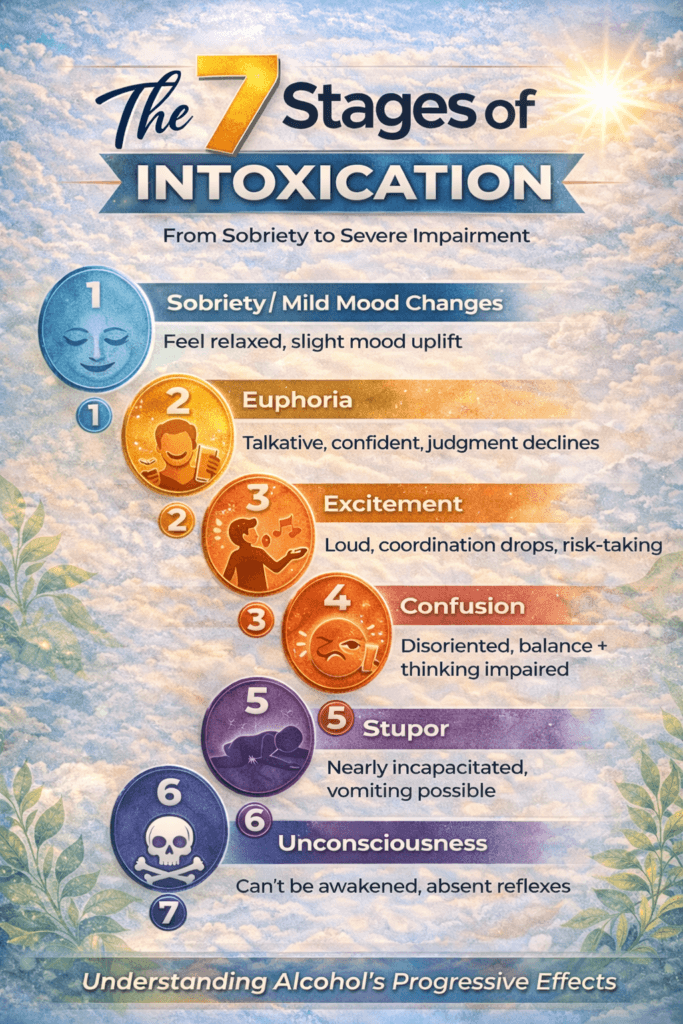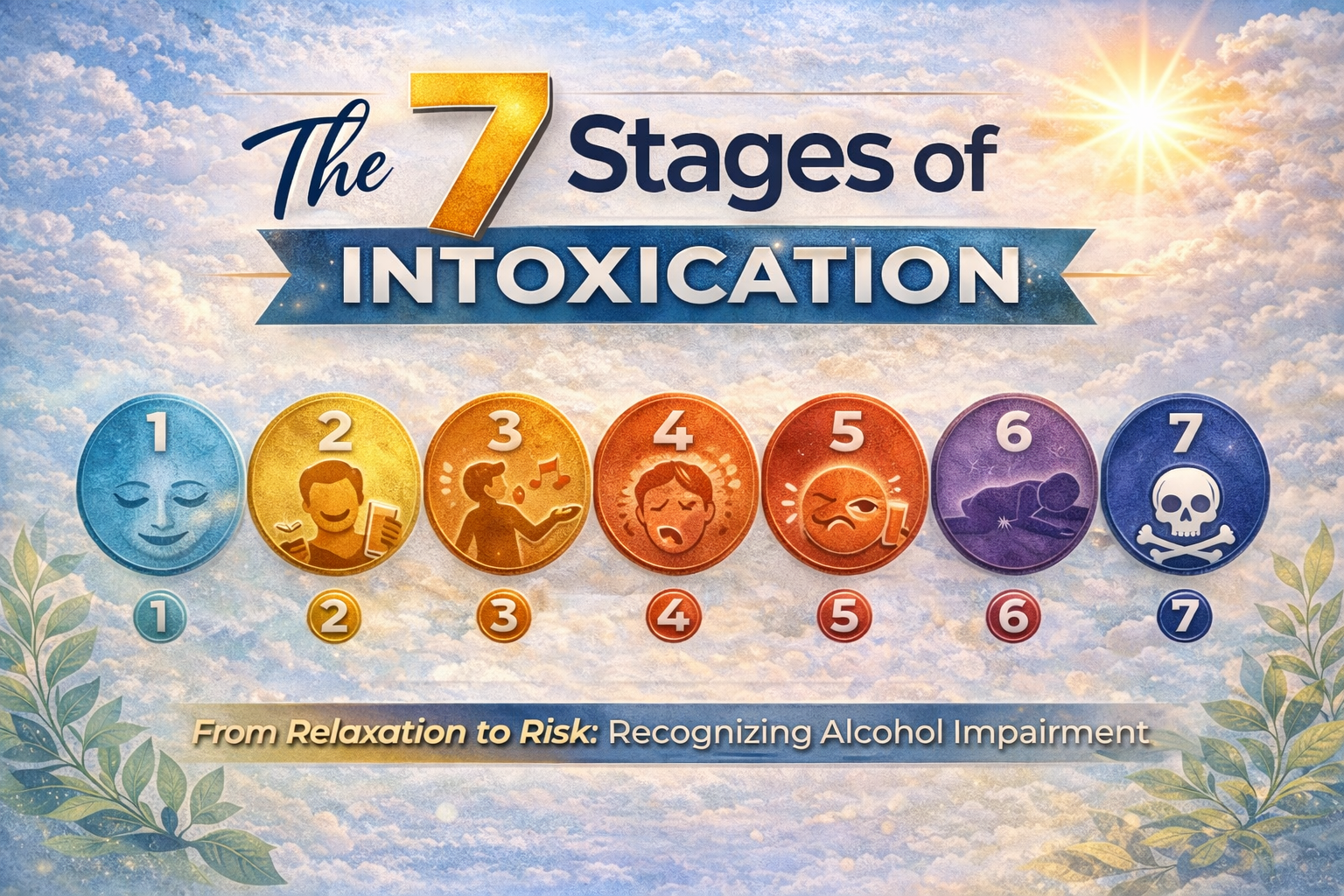
The seven stages of intoxication describe the step-by-step way alcohol affects the brain and body as blood alcohol levels increase. Intoxication develops gradually, beginning with subtle relaxation and reduced inhibitions, then progressing to impaired judgment, decreased coordination, confusion, and, in severe cases, dangerous slowing of breathing and heart rate. Because alcohol depresses the central nervous system, the early stages can feel enjoyable, which often hides the increasing level of impairment. Since judgment and self-awareness are affected early on, individuals may not accurately recognize how intoxicated they have become. Understanding this progression allows people to spot warning signs earlier, make more informed choices, and reduce the risk of serious harm.
The 7 Stages of Intoxication: Understanding How Alcohol Affects the Mind and Body
Alcohol doesn’t affect the body all at once—it progresses through predictable stages as blood alcohol concentration (BAC) rises. Understanding the seven stages of intoxication can help individuals recognize warning signs early, make safer decisions, and understand how quickly drinking can shift from mild relaxation to dangerous impairment. While experiences vary based on tolerance, body chemistry, and environment, the general progression tends to follow a consistent pattern.
Stage 1: Sobriety or Subtle Effects
At very low levels, a person may feel relaxed or slightly lighter in mood. Judgment and coordination remain intact, though subtle changes in reaction time may begin to occur.
Stage 2: Euphoria
This stage often feels pleasant—confidence increases, anxiety decreases, and people may become more talkative. However, attention, judgment, and impulse control already begin to decline, even if the person feels “fine.”
Stage 3: Excitement
As alcohol continues to depress the central nervous system, emotional expression intensifies. Speech may become louder or exaggerated, coordination declines, and reaction time slows. Risk-taking behaviors become more likely.
Stage 4: Confusion
At this level, cognitive impairment becomes obvious. Memory lapses, disorientation, and poor decision-making occur. Balance problems, blurred vision, and slowed thinking are common signs that intoxication has reached a dangerous level.
Stage 5: Stupor
Motor control and awareness drop sharply. A person may struggle to stand or walk, respond slowly to stimuli, or seem detached from surroundings. Vomiting is common, and the risk of injury or alcohol poisoning increases significantly.
Stage 6: Unconsciousness
The brain becomes so suppressed that a person may pass out. This stage is medically dangerous because breathing and gag reflexes can be impaired, increasing the risk of choking or respiratory failure.
Stage 7: Alcohol Poisoning / Life-Threatening Stage
At extreme intoxication levels, the body can no longer regulate vital functions. Symptoms may include slow or irregular breathing, bluish skin, hypothermia, seizures, or inability to wake up. This is a medical emergency requiring immediate help.
Why Knowing the Stages Matters
Many people assume intoxication happens gradually and predictably, but alcohol absorption can accelerate depending on factors like drinking speed, food intake, medications, and body composition. Recognizing early signs allows individuals or bystanders to intervene before impairment becomes dangerous.
Final Thought
Understanding the stages of being drunk isn’t about labeling behavior—it’s about awareness and safety. Alcohol’s effects can escalate faster than expected, and what begins as mild relaxation can quickly become physical risk. Knowing the progression helps people make informed decisions, recognize warning signs, and prioritize their own and others’ well-being.
Staying Ahead of Intoxication: Self-Management Strategies to Recognize and Prevent the 7 Stages of Being Drunk
Understanding the seven stages of intoxication—from subtle relaxation to life-threatening alcohol poisoning—can empower individuals to make safer, more intentional choices. Alcohol affects the brain progressively, impairing judgment before a person realizes it. Because self-awareness declines as intoxication increases, prevention depends on recognizing early warning signs and using structured strategies to stay within safe limits. Self-management isn’t about restriction—it’s about awareness, planning, and control.
The first strategy is learning your early-stage signals. The earliest phases of intoxication often feel pleasant, such as mild relaxation, talkativeness, or lowered anxiety. These feelings can mask impairment, making it easy to underestimate how alcohol is affecting you. Identifying your personal early cues—like speaking faster, laughing more loudly, or losing track of conversations—helps you recognize when alcohol is beginning to influence your nervous system.
Another essential technique is pre-planned limits. Decide in advance how many drinks you’ll have and over what timeframe. Setting limits before drinking is crucial because decision-making weakens as intoxication increases. Many people benefit from pacing strategies such as alternating water between drinks, spacing drinks by 30–60 minutes, or setting reminders on their phone.
Body awareness monitoring is also key. As intoxication progresses, physical signs appear: slowed reaction time, reduced coordination, or difficulty focusing visually. These are signals that alcohol is moving into higher stages. Training yourself to pause and scan your body periodically—asking “How steady do I feel?” or “Is my thinking clear?”—can interrupt automatic drinking and prompt safer choices.
Another powerful tool is environmental management. High-stimulation environments—crowded parties, loud venues, or emotionally intense situations—can accelerate drinking pace. Planning ahead by eating beforehand, bringing nonalcoholic alternatives, or setting a departure time helps reduce risk. Controlling surroundings is often more effective than relying on willpower alone.
Accountability supports strengthening prevention. Sharing your limits with a trusted friend, partner, or support group creates external reinforcement. Some people also use tracking apps or journals to monitor drinking patterns and notice trends. This feedback builds insight and helps identify situations where drinking escalates quickly.
Finally, practicing post-event reflection builds long-term awareness. After drinking, ask yourself what stage you reached, how you felt physically and emotionally, and whether your choices aligned with your goals. Reflection transforms experience into learning, making it easier to recognize patterns and adjust future decisions.
In the end, recognizing and preventing the stages of intoxication is about staying ahead of alcohol’s effects rather than reacting after impairment begins. With preparation, awareness, and supportive systems, individuals can maintain control, reduce risk, and make choices that protect both their health and their future. Self-management doesn’t eliminate enjoyment—it ensures that enjoyment never turns into harm.
Family Support Strategies to Recognize and Prevent the 7 Stages of Intoxication
Alcohol intoxication often progresses in stages, beginning with subtle mood changes and potentially ending in dangerous physical impairment. While individuals play the primary role in managing their drinking, families can provide powerful support by recognizing early warning signs and encouraging safe choices. Understanding the seven stages of intoxication allows families to shift from reacting to crises to preventing them. With awareness, communication, and healthy boundaries, families can help loved ones stay safe long before alcohol reaches risky levels.
One of the most effective strategies is learning early behavioral cues together. In the early stages of intoxication, a person may seem more talkative, impulsive, or overly confident. Families who recognize these subtle shifts can gently check in before impairment worsens. Simple, nonjudgmental comments such as “You seem a little different—how are you feeling?” can prompt awareness without triggering defensiveness. Early intervention is key because judgment declines as intoxication increases.
Another essential approach is creating supportive drinking environments. Families can influence risk by planning gatherings that emphasize connection rather than alcohol. Providing appealing nonalcoholic options, serving food, and pacing activities naturally slows consumption. These small adjustments reduce the likelihood that someone progresses into later stages of intoxication.
Clear communication and expectations also play a major role. Families can openly discuss limits, safety plans, and transportation arrangements before events where alcohol may be present. When expectations are discussed calmly in advance, they feel collaborative rather than controlling. This proactive approach builds trust and reduces conflict.
Families should also practice protective boundary-setting. Supporting someone does not mean ignoring risky behavior. If a loved one shows signs of significant impairment—such as confusion, poor coordination, or slowed responses—family members can step in by stopping alcohol access, offering water or food, or ensuring they get home safely. Boundaries protect health while reinforcing accountability.
Another powerful tool is modeling healthy behavior. Family members who demonstrate balanced coping skills, moderate drinking habits, and open emotional communication provide a real-life example of responsible decision-making. Modeling is often more influential than advice because it shows rather than tells.
Finally, after-event reflection conversations can strengthen learning. Discussing what went well and what felt uncomfortable helps individuals recognize patterns and make safer choices in the future. These conversations should be supportive, not critical, focusing on growth rather than blame.
In conclusion, families can be one of the strongest protective factors against harmful intoxication. By recognizing early signs, fostering supportive environments, setting healthy boundaries, and encouraging reflection, families help prevent alcohol use from progressing through dangerous stages. With patience and understanding, family support becomes not just supervision—but a partnership that promotes safety, trust, and long-term well-being.
Community Resource Strategies to Recognize and Prevent the 7 Stages of Intoxication
Alcohol intoxication progresses through predictable stages, ranging from mild relaxation to life-threatening impairment. While individual awareness is important, community systems play a crucial role in preventing people from advancing into dangerous levels of intoxication. When communities provide education, supportive environments, and early intervention resources, they create a safety net that helps individuals recognize warning signs and make healthier choices before risk escalates.
One of the most effective strategies is public education and awareness initiatives. Community health programs, schools, and local organizations can teach residents how intoxication develops and what signs to watch for at each stage. Workshops, social media campaigns, and outreach events that explain early indicators—like lowered inhibition, slowed reactions, or impaired coordination—help normalize recognizing impairment rather than ignoring it. Education empowers bystanders and individuals alike to intervene sooner.
Another key approach is responsible service and venue policies. Bars, restaurants, and event organizers trained in responsible beverage service can identify signs of intoxication and stop serving alcohol before someone reaches a dangerous stage. Visible drink measurements, water availability, and food options help slow alcohol absorption. When local businesses adopt safety-focused practices, they become active partners in prevention.
Accessible transportation resources also play a major role. Community rideshare programs, designated driver initiatives, and late-night transit options reduce the risk of impaired driving and encourage people to make safer decisions when drinking. Knowing there is a safe way home often lowers pressure to keep drinking or make risky choices.
Communities can further support prevention through peer support and outreach programs. Recovery groups, youth mentorship programs, and community wellness centers provide safe spaces where people can discuss alcohol use openly without stigma. These programs promote emotional awareness and teach coping skills, reducing the likelihood that individuals use alcohol to manage stress or social anxiety.
Another powerful tool is event-level prevention planning. Festivals, campus events, and large gatherings can include hydration stations, visible medical tents, sober volunteers, and clear safety messaging. These measures create environments where safety is prioritized, and early intervention is normalized rather than seen as intrusive.
Finally, community response training strengthens safety. Teaching residents how to recognize signs of alcohol poisoning—such as slow breathing, unconsciousness, or bluish skin—and when to call emergency services can save lives. Quick action during late stages of intoxication is often the difference between recovery and tragedy.
In conclusion, preventing dangerous intoxication is not just an individual responsibility—it’s a collective effort. Communities that invest in education, safe environments, accessible transportation, and supportive programs create conditions where people can recognize early warning signs and act before harm occurs. When prevention is built into the fabric of community life, individuals are better protected, decisions are safer, and the progression from mild intoxication to serious risk becomes far less likely.
Frequently Asked Questions
Here are some common questions:
1. What are the 7 stages of intoxication?
They describe the progressive effects alcohol has on the brain and body as blood alcohol concentration rises—from mild relaxation to life-threatening alcohol poisoning.
2. Why is it important to understand these stages?
Knowing the stages helps people recognize early warning signs, make safer decisions, and intervene before intoxication becomes dangerous.
3. Do the stages happen the same way for everyone?
No. Factors such as body weight, tolerance, metabolism, medications, food intake, and drinking speed can change how quickly someone progresses through stages.
4. What is the earliest warning sign of intoxication?
Subtle behavioral changes—such as lowered inhibitions, increased talkativeness, or mild coordination changes—often appear first.
5. At what stage does intoxication become dangerous?
Risk significantly increases in later stages when confusion, poor coordination, slowed breathing, vomiting, or unconsciousness occur.
6. Can someone skip stages?
They don’t literally skip stages, but rapid drinking can cause a person to move through them so quickly that early signs go unnoticed.
7. How fast can intoxication progress?
Alcohol is absorbed quickly, especially on an empty stomach. Effects can intensify within minutes if drinks are consumed rapidly.
8. What should you do if someone reaches a severe stage?
If a person cannot be awakened, is breathing slowly or irregularly, or shows signs of alcohol poisoning, seek emergency medical help immediately.
9. Does tolerance prevent someone from reaching dangerous stages?
No. High tolerance may mask visible signs of impairment, but alcohol can still depress vital functions and become life-threatening.
10. Can understanding the stages help prevent alcohol misuse?
Yes. Awareness increases self-monitoring and allows individuals to set limits before impairment reduces judgment and self-control.
Conclusion
Recognizing the stages of intoxication is not about labeling behavior—it’s about promoting safety, awareness, and prevention. When people understand how alcohol affects them at each phase, they can intervene earlier, set limits, and protect themselves and others from harm. Education about these stages also empowers friends, families, and communities to respond appropriately if someone shows signs of severe impairment. Ultimately, knowledge of the intoxication process transforms alcohol use from a guessing game into an informed choice, helping reduce risk while supporting healthier, more responsible decisions.
Video: These 7 Intoxication Stages Explain Everything #AlcoholFacts #DrinkingTruth #HealthTips