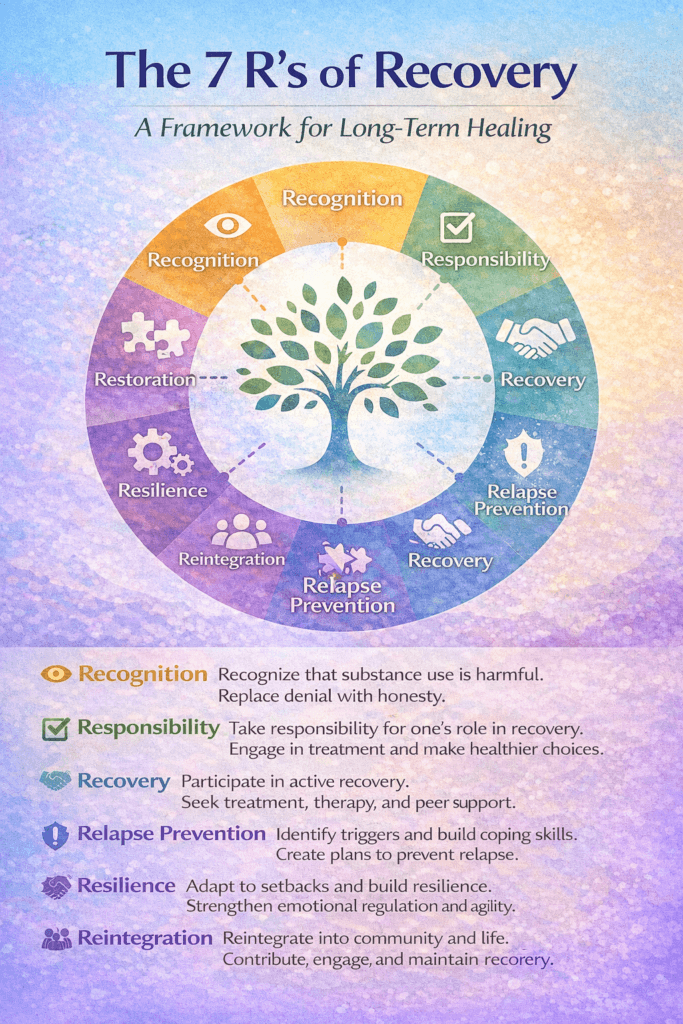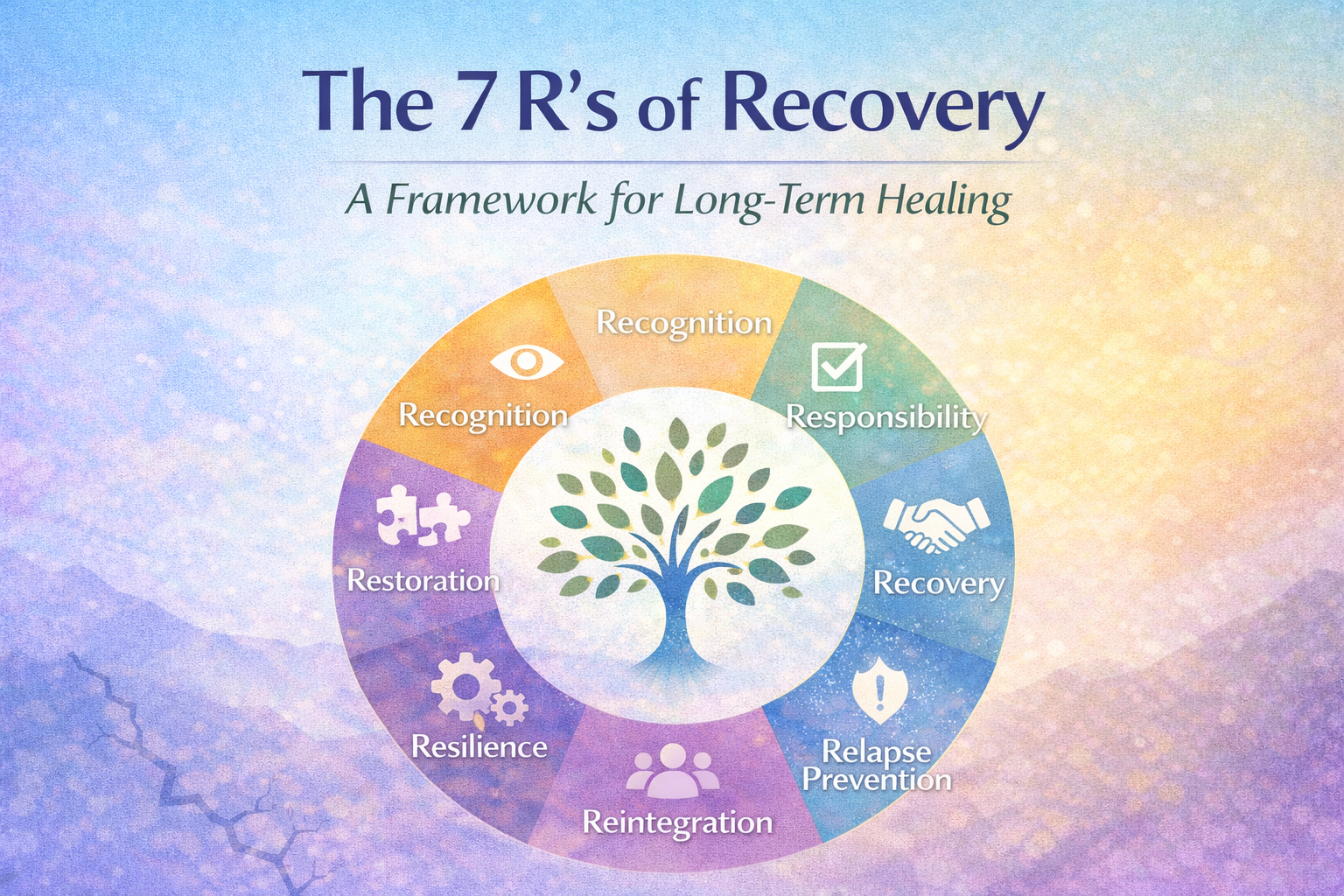
The **7 R’s of Recovery—Recognition, Responsibility, Recovery, Relapse Prevention, Restoration, Resilience, and Reintegration—**provide a comprehensive framework for understanding addiction recovery as a long-term, evolving process rather than a single event. Each stage represents an essential part of healing, guiding individuals from awareness to growth and meaningful participation in life. While the model provides structure, its effectiveness depends on how consistently it is applied in everyday life, particularly during challenges or setbacks.
Lasting recovery requires coordinated support at multiple levels. Self-management builds accountability and coping skills; family support fosters stability and trust; and community resources provide access to treatment, guidance, and opportunities. When these elements work together, the 7 R’s become a practical roadmap for sustainable recovery, resilience, and long-term well-being.
The 7 R’s of Recovery: A Practical Framework for Lasting Change
Recovery from addiction is not a single decision or event—it is an ongoing process that unfolds over time. The 7 R’s of Recovery provide a clear, practical framework for understanding the stages and skills involved in building and sustaining recovery. Rather than focusing only on stopping substance use, this model emphasizes growth, resilience, and long-term healing.
The first R is Recognition. Recovery begins when a person recognizes that substance use has become harmful and unsustainable. This awareness may come through personal reflection, health consequences, strained relationships, or external feedback. Recognition opens the door to change by replacing denial with honesty.
The second R is Responsibility. Taking responsibility does not mean self-blame—it means acknowledging one’s role in recovery. This includes engaging in treatment, making healthier choices, and accepting support. Responsibility empowers individuals by reinforcing that change is possible through action.
Recovery itself is the third R and refers to the active process of healing. This includes treatment, therapy, medication when appropriate, peer support, and lifestyle changes. Recovery is not linear; setbacks may occur, but progress is measured by sustained effort and learning.
The fourth R is Relapse Prevention. Rather than viewing relapse as failure, this stage focuses on identifying triggers, strengthening coping skills, and building protective routines. Relapse prevention emphasizes preparation, self-awareness, and early intervention when warning signs appear.
The fifth R is Restoration. Addiction often damages relationships, health, employment, and self-esteem. Restoration involves rebuilding trust, repairing connections, improving physical and mental health, and rediscovering purpose. This stage helps individuals reclaim parts of life that addiction disrupted.
Resilience is the sixth R. Resilience is the ability to adapt, recover from setbacks, and continue moving forward despite challenges. Developing resilience involves learning from past experiences, practicing self-compassion, and strengthening emotional regulation and problem-solving skills.
The final R is Reintegration. Reintegration focuses on full participation in life again within families, workplaces, and communities. It includes contributing to others, maintaining recovery supports, and building a meaningful life that supports long-term sobriety and well-being.
Together, the 7 R’s of Recovery offer a balanced, realistic roadmap for change. They remind us that recovery is not just about abstinence, but about growth, connection, and building a life worth sustaining.
Self-Management Strategies to Implement the 7 R’s of Recovery
The 7 R’s of Recovery offer a powerful framework for long-term healing, but lasting change happens when these principles are applied in daily life. Self-management strategies help individuals actively implement each R, turning insight into consistent action. By developing skills in awareness, structure, and self-compassion, recovery becomes a lived practice rather than an abstract goal.
Recognition begins with self-awareness. Effective self-management includes regular reflection through journaling, mood tracking, or brief daily check-ins that ask, “How am I doing today?” These practices help individuals recognize early warning signs, emotional triggers, or behavioral changes before problems escalate.
Responsibility is strengthened through goal setting and accountability. Creating small, realistic recovery goals—such as attending appointments, taking medications as prescribed, or practicing coping skills—reinforces ownership without self-blame. Using planners, reminders, or recovery apps can support follow-through and consistency.
For Recovery, self-management focuses on routine and structure. Establishing daily schedules that incorporate sleep, nutrition, physical activity, therapy, and peer support reduces chaos and stress. Consistent routines support brain healing and help recovery become predictable and sustainable.
Relapse Prevention relies on proactive planning. Individuals can identify triggers, high-risk situations, and early warning signs, then create written coping plans for managing cravings or emotional distress. Practicing coping skills—such as grounding techniques, urge surfing, or reaching out for support—before crises occur increases confidence and preparedness.
Restoration involves rebuilding what addiction disrupted. Self-management strategies include setting gradual goals to repair relationships, improve physical health, or return to work or education. Tracking progress and celebrating small wins helps restore self-esteem and reinforces motivation.
Resilience is developed through cognitive and emotional skills. Challenging negative self-talk, practicing self-compassion, and learning from setbacks help individuals recover more quickly from stress or disappointment. Mindfulness and stress-management techniques further strengthen emotional regulation.
Finally, Reintegration is supported by purposeful engagement. Volunteering, pursuing hobbies, strengthening social roles, or mentoring others in recovery helps individuals reconnect with meaning and community. Self-management at this stage focuses on balance—maintaining recovery supports while fully participating in life.
By applying intentional self-management strategies to each of the 7 R’s, recovery becomes an active, empowering process. These daily practices help transform recovery from a short-term effort into a resilient, long-term way of living.
Family Support Strategies to Implement the 7 R’s of Recovery
Families play a crucial role in turning recovery frameworks into lived, sustainable change. The 7 R’s of Recovery—Recognition, Responsibility, Recovery, Relapse Prevention, Restoration, Resilience, and Reintegration—are most effective when families understand how to support each stage without enabling, blaming, or withdrawing. Thoughtful family involvement can strengthen motivation, accountability, and long-term outcomes.
Recognition is supported when families acknowledge addiction as a health condition rather than a moral failure. Using non-judgmental language and validating concerns helps individuals feel safe admitting challenges and asking for help. Avoiding denial or minimization reinforces honest awareness.
For Responsibility, families can encourage ownership without shame. This means supporting treatment engagement and healthy decision-making while allowing natural consequences when appropriate. Clear boundaries help individuals take responsibility for recovery tasks without being controlled or rescued.
During Recovery, families contribute by creating stable, supportive environments. Predictable routines, reduced chaos, and encouragement of therapy, medication adherence, and peer support help maintain consistency in recovery efforts. Emotional support—rather than constant monitoring—builds trust.
Relapse Prevention improves when families understand warning signs and respond calmly. Learning triggers, respecting coping plans, and avoiding panic or punishment during setbacks reduce fear-driven secrecy. Framing relapse risk as a signal for support rather than failure encourages early intervention.
Restoration focuses on rebuilding trust and relationships. Families can support this by acknowledging progress, allowing time for repair, and avoiding unnecessarily bringing up past mistakes. Participating in family therapy or recovery education strengthens communication and mutual understanding.
Resilience is modeled through healthy coping. When families manage stress constructively, communicate openly, and seek their own support, they demonstrate adaptability and emotional regulation. This modeling reinforces resilience for everyone involved.
Finally, Reintegration is supported by welcoming the individual back into family and community roles at a realistic pace. Encouraging independence, meaningful contribution, and community involvement helps recovery become part of everyday life rather than a separate identity.
By aligning family support strategies with the 7 R’s of Recovery, families move from reacting to addiction toward actively supporting healing. This collaborative approach strengthens relationships, reduces the risk of relapse, and facilitates recovery across the entire family system.
Community Resource Strategies to Implement the 7 R’s of Recovery
Recovery is most sustainable when it is supported not only by individuals and families, but by strong, accessible community systems. The 7 R’s of Recovery—Recognition, Responsibility, Recovery, Relapse Prevention, Restoration, Resilience, and Reintegration—provide a framework for communities to actively support through coordinated resources, services, and policies. When communities align their efforts with these principles, recovery becomes a shared public health goal rather than an isolated personal struggle.
Recognition is strengthened through community education and awareness initiatives. Public health campaigns, school-based education, workplace training, and stigma-reduction efforts help communities recognize addiction as a treatable medical condition. Early screening programs in primary care, emergency departments, and community clinics also support timely recognition and referral.
For Responsibility, community systems can reduce barriers to engagement. Clear referral pathways, case management, and peer navigation programs help individuals take responsibility for recovery without becoming overwhelmed by complex systems. Accountability is enhanced when services are coordinated and accessible.
Recovery is supported by accessible treatment and recovery services. Outpatient and inpatient programs, medication for substance use disorders, counseling services, and peer recovery organizations provide the foundation for active recovery. Communities that integrate addiction care into primary care, mental health, and social services improve continuity and outcomes.
Relapse Prevention is reinforced through ongoing monitoring and support. Recovery coaching, peer check-ins, crisis lines, and follow-up programs help individuals identify early warning signs and respond before relapse escalates. Community-based harm reduction services also play a critical role in keeping individuals safe and engaged.
Restoration focuses on rebuilding life stability. Community resources, such as recovery housing, employment programs, vocational training, legal aid, and healthcare access, help individuals repair areas of their lives affected by addiction. These services support dignity, independence, and long-term stability.
Resilience is strengthened when communities offer wellness and support programs beyond substance use treatment. Access to mental health services, stress-management programs, trauma-informed care, and community wellness activities helps individuals adapt to challenges and maintain recovery during stress or setbacks.
Finally, Reintegration is supported through inclusive community participation. Recovery-friendly workplaces, volunteer opportunities, faith and civic organizations, and social activities help individuals reconnect with meaningful roles. Public recognition of recovery—through events, advocacy, and leadership opportunities—reinforces a sense of belonging and purpose.
By aligning education, healthcare, social services, and policy with the 7 R’s of Recovery, communities create environments where recovery is visible, supported, and sustainable. These coordinated efforts transform recovery from an individual effort into a collective pathway toward health, inclusion, and long-term well-being.
Frequently Asked Questions
Here are some common questions:
1. What are the 7 R’s of Recovery?
The 7 R’s of Recovery is a framework that describes key stages of addiction recovery: Recognition, Responsibility, Recovery, Relapse Prevention, Restoration, Resilience, and Reintegration. Together, they outline recovery as an ongoing process rather than a single event.
2. Why is the 7 R’s model helpful in addiction recovery?
This model provides structure and clarity. It helps individuals, families, and providers understand where someone is in their recovery journey and which types of support are most helpful at each stage.
3. What does “Recognition” mean in recovery?
Recognition involves acknowledging that substance use has become harmful and unsustainable. It replaces denial with honesty and awareness, creating the foundation for meaningful change.
4. How is “Responsibility” different from blame?
Responsibility focuses on empowerment, not shame. It means accepting one’s role in recovery decisions and actions while recognizing that addiction is a medical condition, not a moral failure.
5. What does the “Recovery” stage include?
Recovery refers to active participation in treatment and healing. This may include therapy, medication for substance use disorder, peer support, lifestyle changes, and skill-building to support sobriety and wellness.
6. Why is Relapse Prevention considered its own stage?
Relapse prevention emphasizes preparation rather than punishment. It involves identifying triggers, strengthening coping skills, and developing plans to respond early to warning signs, thereby reducing the risk of relapse to use.
7. What is meant by “Restoration”?
Restoration focuses on repairing areas of life affected by addiction, such as relationships, physical health, employment, and self-esteem. It is about rebuilding stability, trust, and purpose over time.
8. How does “Resilience” support long-term recovery?
Resilience is the capacity to adapt to stress, setbacks, and challenges without relapsing into substance use. It includes emotional regulation, problem-solving, self-compassion, and learning from difficult experiences.
9. What does “Reintegration” look like in real life?
Reintegration involves re-engaging with family, work, community, and meaningful roles. It includes contributing to others, maintaining recovery supports, and building a fulfilling life that supports long-term wellness.
10. Do the 7 R’s happen in a specific order?
Not always. While they often follow a general progression, recovery is not linear. Individuals may revisit certain R’s multiple times as they grow, face new challenges, or strengthen recovery skills.
11. Can families and communities use the 7 R’s too?
Yes. Families can align communication and boundaries with the 7 R’s, and communities can support them through education, access to treatment, housing, employment programs, and recovery-friendly environments.
12. How does the 7 R’s model support long-term recovery success?
By addressing awareness, accountability, skill-building, healing, and reintegration, the 7 R’s promote a balanced approach to recovery. This holistic framework reduces the risk of relapse and supports sustainable, meaningful change.
Conclusion
When self-management, family support, and community resources work together, the 7 R’s of Recovery become a practical roadmap rather than a theoretical concept. Individuals strengthen recovery through self-awareness, routines, and coping skills; families reinforce progress through empathy, boundaries, and consistent support; and communities sustain recovery through education, access to treatment, and inclusive opportunities. This integrated approach recognizes that recovery does not happen in isolation. By aligning personal effort, relational support, and community systems with the 7 R’s, recovery becomes more sustainable, meaningful, and deeply rooted in long-term health and connection.
Video: 7 R’s that saved my recovery #addictionrecovery #healing #motivation