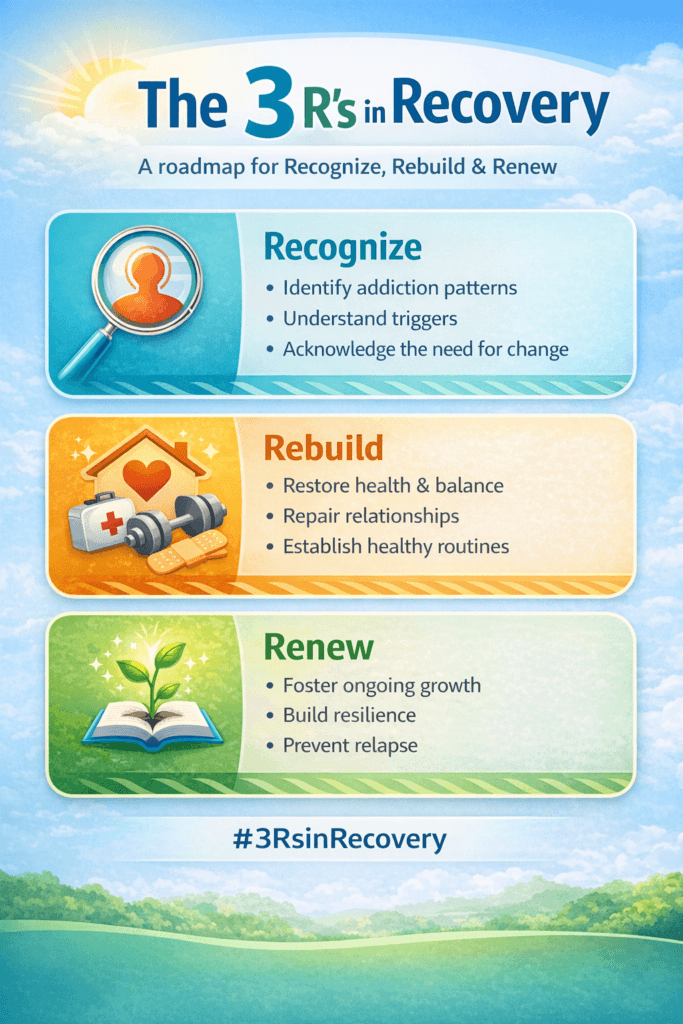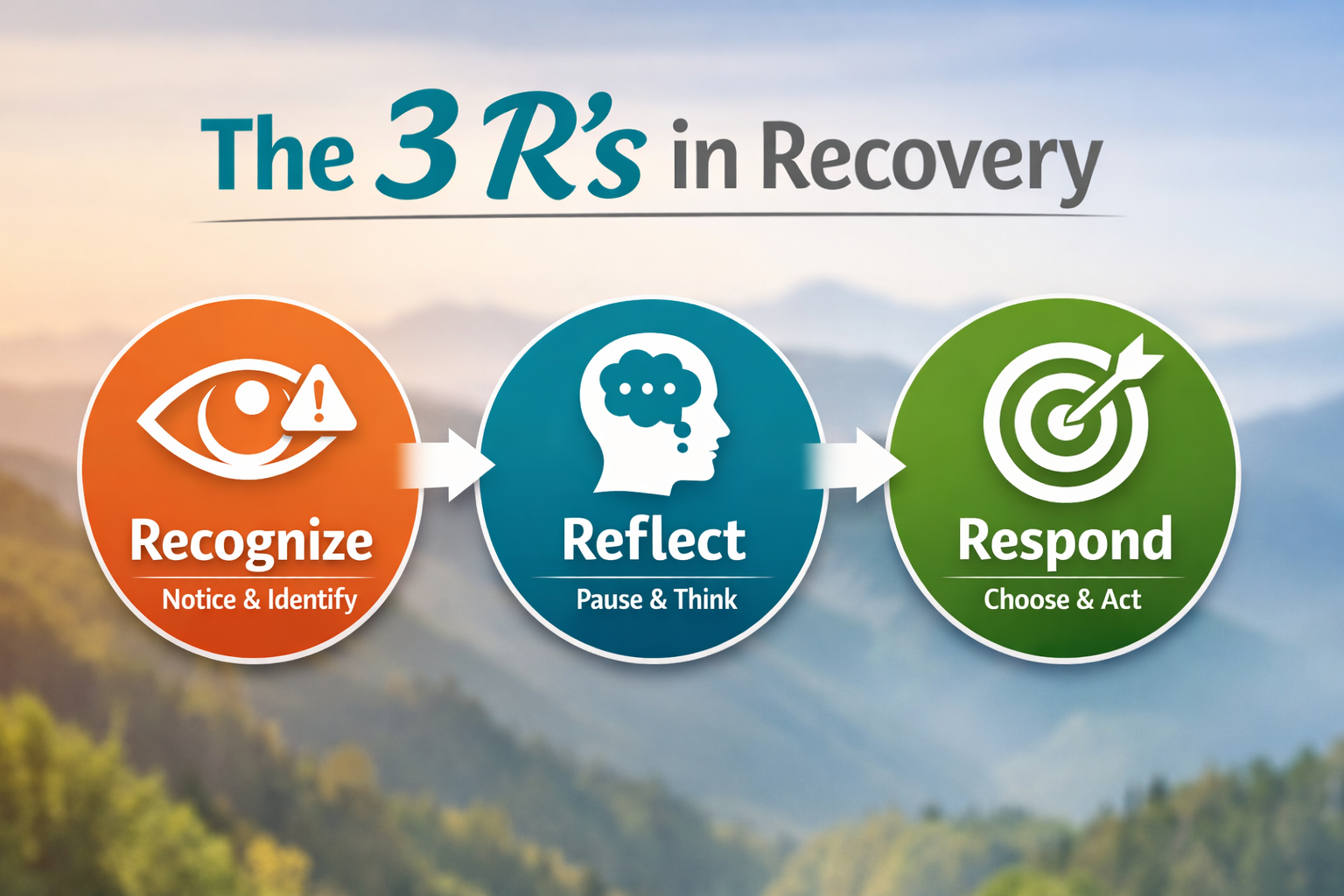
Recovery can often feel like trying to solve a complex puzzle, with emotional, physical, and behavioral pieces that don’t always seem to fit together at once. Breaking the process into simple, repeatable steps can make healing feel more manageable and less overwhelming. The “3 R’s in Recovery” — Recognize, Reflect, and Respond — is a straightforward framework that guides individuals through moments of stress, craving, or emotional difficulty by encouraging awareness, thoughtful pause, and intentional action. This approach has gained popularity in addiction treatment, mental health care, and stress management because it is flexible, practical, and easy to apply in real-life situations. Rather than relying solely on willpower, the 3 R’s help people build daily habits of self-awareness and emotional regulation that strengthen resilience and support long-term recovery.
What Are the 3 Rs in Recovery?
The 3 R’s stand for Recognize, Reframe, and Reconnect. Each part builds on the last, helping you understand what’s really happening, change the way you respond, and strengthen the relationships and activities that keep you moving forward.
This framework is pretty handy for people just getting started with recovery or anyone who feels stuck and wants a way to reset. I’ve seen the 3 R’s pop up in addiction recovery, trauma treatment, and even in simple stress management plans. It’s kind of an all-purpose tool, and once you get the hang of it, it starts to feel like second nature.
Recognize: Spotting the Real Issue
Kicking off recovery starts with recognizing what’s actually going on. This means paying attention to your thoughts, feelings, habits, and triggers. Without this first step, making any real change is nearly impossible.
How to Recognize What Needs Attention
- Keep a Journal: Write down how you feel and what happens every day. Patterns start to jump out once you see things on paper.
- Get Feedback: If you’re comfortable, talk to a close friend, counselor, or support group. Sometimes an outside perspective helps you notice things you’ve missed.
- Watch Your Triggers: Notice situations, people, or feelings that set off negative habits or uncomfortable emotions.
Recognition doesn’t mean judging yourself. It’s just about being honest and clear. For example, when a counselor once asked me, “What sets you off?” I realized I couldn’t answer at first. Journaling over a few weeks helped me spot patterns I never noticed. Work stress would spark late-night snacking or arguments.
Reframe: Changing the Way You Think and Respond
Once you recognize your patterns, it’s time to reframe. This means shifting your thoughts or behaviors so they serve you better. Reframing isn’t just “thinking positively”; it’s about understanding your mistakes, challenges, or setbacks in a new light, so they don’t control you.
Ways to Use Reframing in Recovery
- Challenge Negative Thoughts: When you catch yourself thinking, “I always mess up,” swap it for, “I had a tough moment, but I can try again tomorrow.” It sounds simple, but it’s super effective.
- Practice Self-Compassion: Most people are hard on themselves when things go wrong. A good trick is to ask, “Would I say this to a friend?” If not, reframe it for yourself.
- Set Small, Realistic Goals: Instead of “I’ll never stress again,” reframe it as, “I’m going to manage my stress today by taking a walk.” This breaks down even big problems into something doable.
Reframing is something I learned from cognitive behavioral therapy (CBT). Therapies like CBT often use this idea because changing thoughts genuinely changes how you feel and act. For anyone in recovery, these tools can mean the difference between feeling stuck and finding a way forward.
Reconnect: Building Positive Connections and Support
The last step, reconnecting, is about rebuilding or strengthening your ties to the people, places, and activities that support your recovery. Recovery can be pretty lonely, but you don’t have to go it alone.
Simple Ways to Reconnect
- Reach Out to Old Friends or Family: Even one text or call can open doors to support you might have lost touch with.
- Join a Support Group or Community: In-person groups, online forums, or hobby clubs all bring new people into your circle. Sometimes the best support comes from others who “get it.”
- Explore New Interests: Pick up a new activity that brings you joy or gives you a sense of accomplishment. Art, exercise, or volunteering are all great ways to reconnect with yourself and others.
After a hard patch a few years ago, volunteering at a local animal shelter gave me a whole new group of supportive friends. Being around dogs definitely lifts your mood. Reconnecting doesn’t mean things look exactly like they used to. Sometimes, new experiences make you feel stronger than ever before.
How the 3 Rs Apply: Real-World Examples
People use the 3 R’s in all sorts of recovery situations. Here’s how this approach can play out in a few real scenarios:
- Addiction Recovery: Recognize triggers for cravings, reframe slipups as learning opportunities, and reconnect with sober friends.
- Mental Health: Recognize signs of burnout, reframe stress as a signal to slow down, and reconnect with calming routines or confidants.
- Physical Wellness: Recognize persistent aches, reframe setbacks (“I missed a workout”) as motivation to restart, and reconnect by joining a class or group activity.
One friend recovering from anxiety uses the 3 R’s every day. She journals in the mornings (recognize), talks herself through nerves before meetings (reframe), and calls a friend for a short walk in the evenings (reconnect). These habits add up over time, making a visible difference in her mood and progress.
Common Challenges (And How to Handle Them)
No recovery adventure is completely smooth. Here are a few hurdles people run into, plus some suggestions for handling them:
- Feeling Overwhelmed: When too much happens at once, focus on just one “R” a day. If today is really tough, just aim to recognize one feeling.
- Lack of Support: Finding new connections online, such as on wellness forums or virtual support groups, can help fill gaps if friends or family aren’t available right now.
- Guilt and Shame: These feelings hit most people at some stage. Remember that slips happen. Reframe setbacks as part of your learning curve, not proof of failure.
- Slower Progress than Expected: Change is rarely quick. Tracking even tiny wins—a day without an old habit, or reaching out to someone—keeps you moving.
Recognize Small Wins
Celebrating even the littlest breakthroughs matters. I started writing down victories on my calendar: a clearheaded morning, a skipped unhealthy snack, or just a productive conversation. Seeing progress in black and white builds motivation and helps you keep going.
Tips for Making the 3 Rs Part of Everyday Life
Sticking with new habits means working them into your daily routine. Here’s how I like to keep the 3 R’s front and center:
- Use Reminders: Sticky notes, phone alarms, or daily checklists keep things from slipping your mind.
- Buddy Up: Pair up with someone who’s also working on recovery. Trading check-ins can be super helpful for both of you to stay on track.
- Adjust Regularly: Life changes, and what worked last month might need tweaking now. Don’t be afraid to swap strategies or try new things as you move forward.
Frequently Asked Questions
Question: Can I use the 3 Rs for more than just addiction recovery?
Answer: Absolutely. The 3 Rs work with pretty much any life change—stress management, mental health, physical health, and more.
Question: What if I struggle to recognize my triggers or patterns?
Answer: That’s common, especially at first. Journaling or speaking with someone you trust can reveal blind spots. Over time, self-awareness grows, and things become much clearer.
Question: Can the 3 Rs be used alone, or do I need professional help as well?
Answer: A lot of people use the 3 Rs on their own, but adding support from therapists, coaches, or support groups often speeds progress and makes the process feel less lonely.
Key Takeaways for Lasting Recovery
The 3 Rs—recognize, reframe, reconnect—are practical steps anyone can use to make recovery more manageable. They guide you to understand your patterns, think differently about setbacks, and connect to the support you need. I’ve seen firsthand how these steps make recovery doable, even when things feel tough.
Whether your recovery is just beginning or you’re deep into the process, using the 3 Rs can keep you grounded and moving forward. One day (or even one step) at a time.
Jumping into the world of recovery isn’t easy, but simple frameworks like the 3 Rs provide a solid starting point. Take that first step, and as you go, remember that any progress—no matter how small—still moves you toward a stronger, healthier future. Support is out there, and your next breakthrough might be closer than you think.
Video: The 3 R’s in Recovery