If you’ve ever wondered what a 13-panel drug test looks for, you’re definitely not alone. These tests are often used in workplaces, rehab centers, and even legal settings. I’ve researched and broken down what you need to know about 13-panel drug screens, so if you’re browsing for info or just curious about what’s being checked, you’ll find some super useful details below.
What Is a 13-Panel Drug Test?
A 13-panel drug test isn’t a mysterious or high-level medical tool. It’s simply a urine (sometimes saliva) test that checks for the presence of 13 different groups of drugs at once. You mostly see these used in places where knowing about a wide variety of possible drug use matters, like with certain jobs, after an accident, or for ongoing monitoring situations.
Drug testing has expanded significantly over the years. Early versions only screened for the basics like marijuana and cocaine, but today’s multipaned tests cover much more ground. As new prescription and street drugs appeared, the panels just kept getting longer. So when you see a 13-panel test, it means whoever’s in charge wants a pretty all-in-one look at recent drug use, including many prescription meds that could impact safety or performance.
Which Drugs Show Up On a 13-Panel Test?
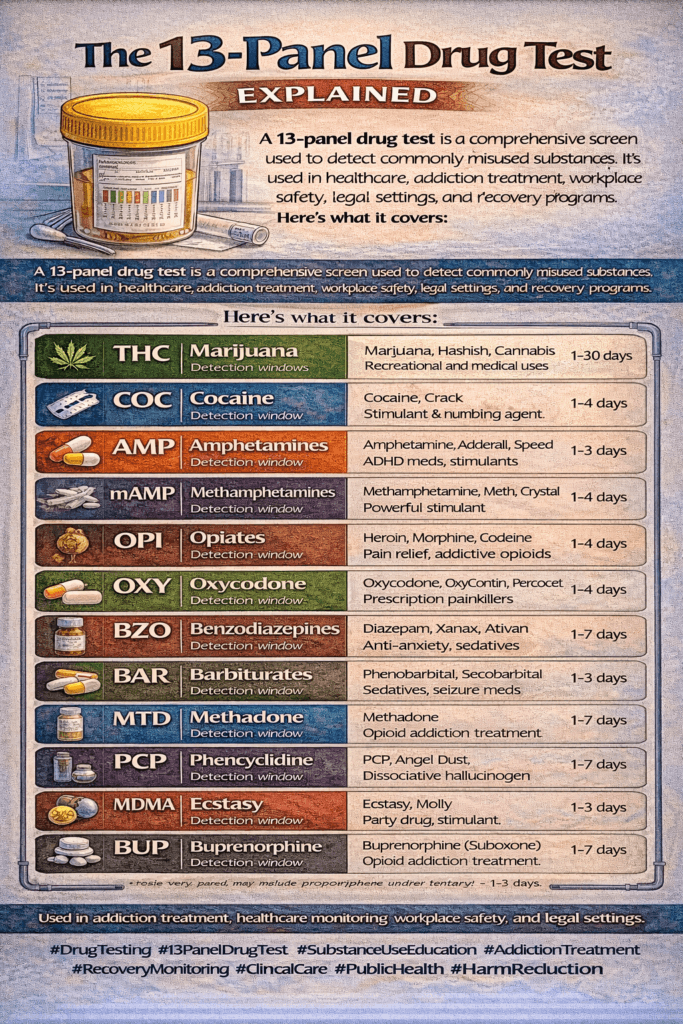
Each panel corresponds to a different drug or family of drugs. The specifics can mix up a bit, depending on the manufacturer and local rules, but here’s what you’ll usually find on one of these kits:
- Marijuana (THC): Checks for tetrahydrocannabinol, the main psychoactive compound in cannabis.
- Cocaine: Looks for benzoylecgonine, a main cocaine metabolite.
- Opiates/Morphine: Picks up morphine, codeine, and other naturally occurring opiates.
- Phencyclidine (PCP): Picks up PCP (also called angel dust).
- Amphetamines: Check for drugs like Adderall and some diet pills.
- Methamphetamines: Detects meth, whether it’s crystal or prescription varieties.
- Barbiturates: Includes secobarbital, phenobarbital, and related sedatives.
- Benzodiazepines: Covers Valium, Xanax, Ativan, and similar anti-anxiety meds.
- Methadone: Used for opioid treatment but sometimes misused.
- Propoxyphene: A painkiller withdrawn from the U.S. market but may still be found in older formulations or in other countries.
- MDMA/Ecstasy: Picks up ecstasy and related substances like MDA.
- Oxycodone: Covers OxyContin, Percocet, and related painkillers.
- Buprenorphine: A common opioid treatment also sometimes misused recreationally.
If you see a test labeled as a 13-panel, these are probably the drugs getting checked. Some places might swap out one or two drugs if local trends call for a specific drug, but this list is accurate for most situations.
How Does a 13-Panel Drug Screen Work?
The process for a 13-panel test is pretty straightforward, though it’s important to follow all collection instructions. Usually, it’s done with urine. The person taking the test urinates in a cup and hands it back to the test administrator. Some jobs or legal settings may use oral swabs, but urine remains the most popular because it offers a wider detection window and is generally cheaper.
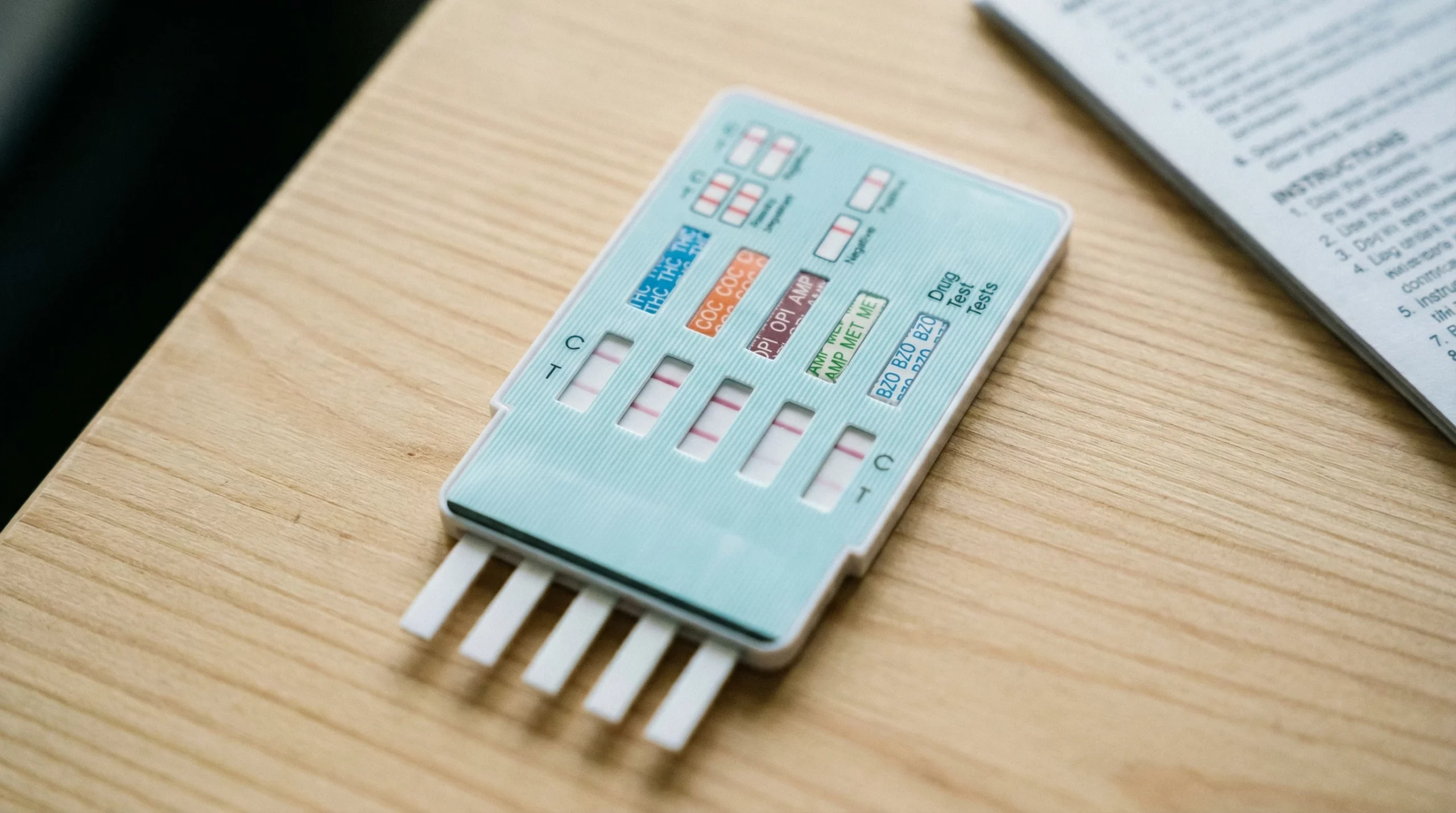
The test strip or card is dipped into the sample, and after a short wait (often just a few minutes, depending on the test), colored lines indicate whether certain drugs are detected above a preset threshold. If results are unclear or are positive, the sample is usually sent to a laboratory for confirmation testing using more precise methods, such as GC/MS (gas chromatography–mass spectrometry).
Reasons for Using a 13-Panel Drug Test
The 13-panel drug test checks for both commonly abused substances and some newer or less typical drugs. Here’s when you might see these tests come up:
- Workplace Testing: Especially in jobs with machinery, driving, or public safety involved. Employers want assurance on a wide range of substances.
- Rehabilitation and Treatment Centers: Regular, random drug checks help monitor recovery and flag any relapses fast.
- Legal or Court-Ordered Testing: Family court or probation services often require super detailed testing to cover more than just basic substances.
- School or Sports Programs: Sometimes used in competitive sports or with students under strict codes of conduct.
The idea is to cast a wide net, so nothing sneaks through unnoticed, including drugs often prescribed by doctors but still risky in safety-sensitive jobs.
How Accurate Are 13-Panel Drug Tests?
Home and on-site kits are good initial screening tools and catch most cases. But false positives or false negatives can occur due to factors like over-the-counter drugs, foods, or even lab errors. If a test fails, it’s usually repeated at a lab with more advanced, reliable tests that target specific molecules. So, people won’t be penalized based on a single cheap test strip alone, without additional backup testing, in most situations.
What the Results Mean
Results come out as either positive (the drug was present above a certain level) or negative (it wasn’t detected, or it fell below the test’s cutoff). Keep in mind, a positive on a screening test isn’t a final verdict. Prescription medications, supplements, or errors during collection can cause false positives, which is why labs conduct confirmatory testing with advanced techniques when results are questionable.
Detection Times
The detection window for each drug changes based on the type of drug, how often it’s used, and the person’s metabolism. For instance, marijuana can be present in regular users’ urine for weeks, while cocaine or amphetamines might only show up for a day or two. Prescription painkillers or benzos sometimes hang on just a little longer, even after the effects fade.
What to Know Before Taking a 13-Panel Drug Test
If you’re getting ready to take this test, here are some tips to help:
- Make a List of Your Medications: If you’re prescribed anything (Adderall, Xanax, or pain relievers), let the tester know. Honest communication usually clears up false positives before there’s a problem.
- Follow All Instructions Carefully: The timing of collection, not diluting your urine, and how the sample is handled are important. Overhydrating or trying to “flush” your system can actually raise a red flag.
- Know Your Rights: In most places, you have the right to confirmation testing if a result is disputed. Ask for the lab confirmation if needed.
Also, keep in mind these tests don’t aim to trip people up for no reason. In workplaces, the focus is on safety. In legal or recovery settings, it’s about accountability and support. Openness about everything you’re taking is the best move.
Challenges and Limitations of 13-Panel Drug Tests
- Risk of False Positives: Some over-the-counter meds (such as certain cold medicines) or even foods can affect results. Always double-check with the lab if something unexpected comes up.
- Doesn’t Test for Every Substance: There are synthetic or new designer drugs not included, though this panel covers quite a bit.
- Short Detection Windows for Some Drugs: Some substances leave your body fast, making timing important.
Who Interprets Results
Qualified professionals examine the results and decide what happens next. This process weeds out misreadings or technical errors from at-home or rapid tests. Confirmatory testing at labs is done by experienced toxicologists or medical review officers, who consider prescriptions and medical issues before making a final call on positive results.
13-Panel vs. Other Drug Testing Panels
If you’re stacking this up against a 5-panel or 10-panel test, the 13-panel digs deeper into medication and street drug lists. Most jobs and basic screening programs use a 5-panel (for THC, opiates, PCP, cocaine, and amphetamines), but the 13-panel test jumps into newer and prescription drugs that might not show up on the simpler screens. For some places, like addiction clinics or high-responsibility jobs, having a broader screen just makes sense.
Frequently Asked Questions
Here are questions people commonly ask about 13-panel drug tests:
Does a 13-panel test check for alcohol?
Most 13-panel urine tests don’t include alcohol unless it’s specifically added to the panel. For alcohol checks, there are special breath or urine tests just for that purpose.
How far back can the 13-panel test track drug use?
It depends on the drug. For most, the window is about 1 to 4 days. Marijuana could be detected for weeks in heavy users.
Can I get a false positive on a 13-panel drug test?
It happens, especially with certain medications or supplements. Lab confirmation tests usually sort out any confusion.
Should I tell my employer about prescriptions before testing?
Definitely. Letting them know up front smooths the process and helps explain any unexpected results linked to medication.
Final Thoughts
Knowing what a 13-panel drug test checks for and how it works can make the process a lot less stressful if you’re ever asked to take one. These all-in-one screens are becoming more common, and understanding the basics, along with keeping open communication about prescription meds, keeps things clear and fair for everyone. If you have questions or concerns about your results, talking to a medical expert or lab professional is always the smartest move.
Video: The 13 Panel Drug Test Explained