Addiction counseling requires skill, consistency, and a real commitment to create lasting change for people. The 12 Core Functions of Addiction Counseling provide a clear roadmap that guides counselors through every stage of treatment. From initial contact through ongoing support, aftercare, and relapse prevention, these functions help ensure that care is ethical, organized, and effective. They support accurate assessment, trust-building, and coordinated care. Below, we’ll explore how each of these 12 functions appears in real-world practice and why every step matters in supporting long-term recovery.
What Are the 12 Core Functions of Addiction Counseling?
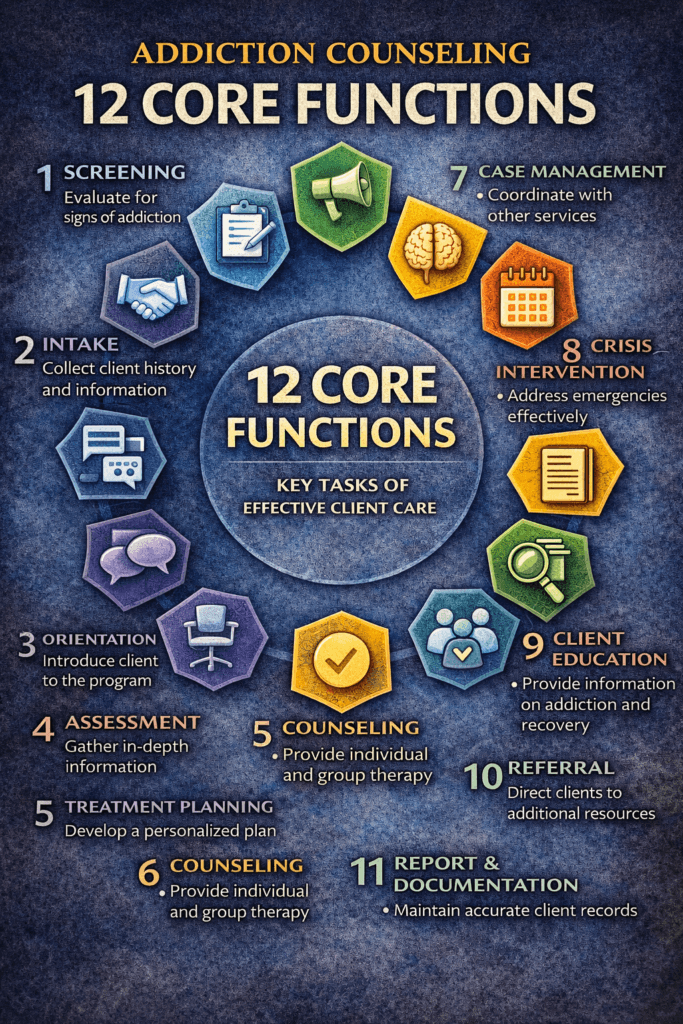
Understanding the structure of addiction counseling makes the process feel less overwhelming. The 12 Core Functions are widely accepted as the gold standard in the field, covering every step of treatment to ensure organization and effectiveness. Here’s a look at each function:
- 1. Screening: Determining whether a person is a good fit for treatment and identifying their needs.
- 2. Intake: Gathering important info, paperwork, and beginning the official process toward treatment.
- 3. Orientation: Introducing the client to the program, outlining what to expect, and going over the rules.
- 4. Assessment: Getting into a client’s background to really understand their situation.
- 5. Treatment Planning: Building a personalized plan with goals and steps tailored to the client’s needs.
- 6. Counseling: Working directly with the client and using specific techniques to support healing and growth.
- 7. Case Management: Connecting clients with services and resources beyond therapy sessions.
- 8. Crisis Intervention: Offering immediate support and safety in emergencies to stabilize things fast.
- 9. Client Education: Sharing knowledge about addiction, preventing relapse, and offering recovery tools.
- 10. Referral: Guiding clients to other professionals or services for needs the counselor can’t address alone.
- 11. Reports and Record Keeping: Carefully tracking progress and maintaining all key documentation.
- 12. Consultation With Other Professionals: Teaming up with healthcare providers, family members, and legal systems to deliver well-rounded care.
Breaking Down the First Steps: Screening, Intake, and Orientation
Getting started with addiction counseling means paying close attention to the first three core functions: screening, intake, and orientation. These steps can shape the whole treatment adventure, so it’s important to get them right.
- Screening examines substance use history, medical background, mental health, and motivation to make sure a program is the right fit. This is often where hard conversations begin, but with empathy, it sets an honest, supportive tone.
- Intake is about gathering details. Counselors collect identification, insurance information, and personal background information. Intake forms may be lengthy, but a careful approach reduces confusion later. Simple, clear questions matter—nerves are common, and friendly support makes a world of difference.
- Orientation spells everything out. It covers confidentiality, daily routines, and what to expect throughout treatment. Offering a welcome packet and time for questions can lower anxiety and make people feel welcome.
Assessment and Treatment Planning, The Foundation for Success
A thorough assessment gathers input from clients, their families, and any relevant medical or legal documents. Counselors check out details like past trauma, education, use patterns, criminal background, and current physical or mental health.
This information informs the treatment plan. These aren’t just papers—they’re the personalized maps for a client’s recovery. Good treatment plans include:
- Clear, realistic, manageable goals
- Who is responsible for each step
- Methods and tools, such as group counseling, medication support, or family involvement
- Timelines plus ways to keep track of progress
Regular updates keep the plan effective. Plans should change with clients. Goals that fit the client’s life encourage motivation and true progress. Encouraging small victories boosts morale and offers hope along the way.
Counseling in Action: Individual, Group, and Family Support
Counseling is where the transformation happens in addiction recovery. This includes one-on-one sessions, group meetings, and family counseling. Different approaches are used to match each client’s style and needs:
- Individual counseling tackles deeply personal issues with trust and privacy. Methods such as Cognitive Behavioral Therapy (CBT) or Motivational Interviewing can help clients identify triggers and build healthy habits.
- Group sessions create a sense of belonging. Clients find they aren’t alone, and group sharing has a significant impact. Discussion topics focus on coping tools, relapse prevention, and personal growth.
- Family counseling invites loved ones to heal and learn together. This builds understanding and often mends broken relationships, giving a major boost to the home environment.
Allowing clients to switch between these styles provides flexibility and helps them get the most from their treatment.
Case Management and Collaboration with Other Systems
Daily life doesn’t hit pause during addiction treatment. Case management helps clients access housing, legal assistance, education, and health care. This may involve contacting probation officers, securing job training, or helping to locate safe housing.
A key part of case management is building a network of local community organizations and professionals. Strong communication ensures consistent, thorough care. The best counselors are proactive about opening doors for their clients and making sure nothing slips through the cracks.
Crisis Intervention: Support When It Matters Most
Addiction recovery rarely follows a straight line; emergencies pop up. Crisis intervention requires stepping in fast to restore safety, whether it’s responding to a relapse, managing a mental health emergency, or calming an urgent situation. This often takes quick thinking, steady communication, and a plan for immediate safety.
Using clear words, firm boundaries, and remaining calm is crucial. Being present and steady in these times helps clients feel safe and understood. Sometimes, just showing up with kindness and a calm presence makes all the difference when chaos hits.
Education, Referrals, and Keeping the Recovery Going
Client education provides people with the information they need to make informed decisions. Topics can range from the effects of substances to brain chemistry and ways to tackle stress. Simple printouts or short videos help, as everyone processes information differently.
Sometimes a client needs something beyond what counseling can provide—for example, help with another mental health diagnosis. That’s where a referral comes in. Connecting people with therapists, doctors, support groups, or legal services helps fill the gaps. Following up is key: checking whether they went to the referral and whether it was helpful provides additional support and motivation.
Reports, Record Keeping, and Teamwork with Other Professionals
Reports and record-keeping might seem tedious, but good records protect both the counselor and the client. Notes help track what’s working, what’s not, and allow for changes to the plan. If a client moves to another counselor, strong records make the handoff smooth.
Consultation means joining forces with others. Addiction counseling should never happen in isolation; health care providers, social workers, legal representatives, and educators each bring needed perspectives to the table. By working together, clients receive broader, more complete support.
Challenges in Practicing the 12 Core Functions
Putting these functions into daily practice can be tough. Common challenges include:
- Balancing paperwork with quality time for clients
- Managing emergencies on top of routine sessions
- Connecting clients to resources when communities are stretched thin
- Handling privacy issues while also working with a bigger team
Staying organized, using digital records, and developing strong community ties help ease these challenges. Setting boundaries and practicing self-care matter just as much as professional skills.
Frequently Asked Questions About the 12 Core Functions
What’s the purpose of the 12 Core Functions in addiction counseling?
They develop a structured plan that covers all aspects of recovery, ensuring nothing is missed as clients progress from start to finish.
How does a counselor know which function should come first?
It depends on the client’s stage. For someone new to treatment, screening and assessment come first. For those further along in recovery, the focus shifts to case management and relapse prevention.
Does every counselor use these 12 Core Functions?
Most treatment centers base their services on these steps, but there may be slight variations due to state laws, treatment models, or unique client populations.
Wrapping Up: Why the 12 Core Functions Matter in Addiction Counseling
The 12 Core Functions provide both counselors and clients with a practical, down-to-earth guide to navigating the challenging process of addiction recovery. They keep things organized, up-to-date, and always focused on the client’s actual needs—not just what the system expects. By following these steps, counselors can help clients make meaningful, lasting changes, one step at a time.
Whether you’re starting a career in addiction counseling or working with a counselor yourself, knowing these stages turns a complicated process into something approachable. With the right support, clients can find real hope—and counselors can feel confident they’re making a difference every step of the way.
Video: How Professional Addiction Counselors Work #addiction #treatment #recovery