Addiction affects people from every walk of life. It’s not just about drugs or alcohol, and it’s not a matter of lacking willpower. The more I’ve learned about addiction, through research and from people sharing their stories, the clearer it’s become how important it is to really understand what addiction is, where it comes from, and how it can be managed or treated. I’ve pulled together the ten things I think everyone should know about addiction, whether you’re concerned for yourself, a friend, or just curious to know more about how this works.
Understanding What Addiction Really Is
Addiction is much more than just a bad habit or a sign of weakness. In simple terms, it’s a long-lasting condition where someone keeps doing something, even when it causes problems, because their brain has changed. This can happen with alcohol, drugs, gambling, gaming, or even food. The definition that sticks with me is this: addiction means repeatedly seeking out something for the short-term “reward,” even if it causes pain or trouble over time.
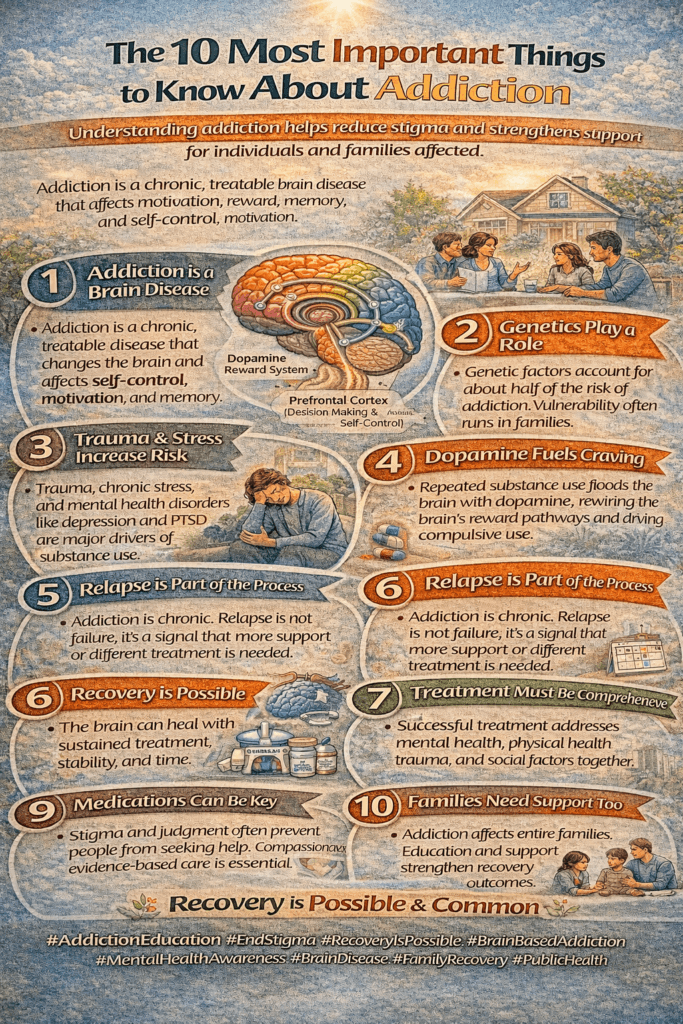
When researchers talk about addiction, they usually describe it as a brain disorder that affects how a person thinks, feels, and acts. The brain’s reward system gets rewired by repeated behavior, making it harder to stop, even when the person wants to. Once I realized this, it started making more sense why quitting isn’t just a choice for many people.
Addiction Can Happen to Anyone
It’s way too easy to think that addiction “won’t happen to me” or that it only affects certain types of people. But addiction cuts across all ages, backgrounds, and incomes. I’ve met people who came from supportive families, did well in school, and set big goals; addiction still found its way into their lives. Genetic factors, mental health issues, traumatic experiences, and even just everyday stress or pain can play a role. There’s no one type of person who gets addicted, and no one is immune.
There Are Many Forms of Addiction
Most folks first think of drugs or alcohol, but that’s far from the full picture. Addiction can grab hold through:
- Substances: Alcohol, prescription meds, cannabis, nicotine, opioids, cocaine, meth, and many others.
- Behaviors: Gambling, internet and social media use, gaming, shopping, eating, and even exercise in rare cases.
Some types of addiction can fly under the radar, but they still cause distress and disruption. Even behaviors you might not expect, like compulsive work or risk-taking, can become addictive for certain people. The underlying issue is not just the object of addiction, but how it affects daily life and relationships.
How Addiction Develops: The Science Side
Brains are always looking for ways to feel good and avoid pain. Substances and behaviors that trigger strong feelings of pleasure can actually change the brain’s chemical balance and structure. Over time, more of the substance or behavior is needed to get the same effect—a process called “tolerance.” Eventually, the brain starts to think it needs the substance or behavior just to function normally.
One thing that really stands out is how the brain’s decision-making center gets clouded by addiction. Medical studies explain how the ability to weigh risks or pause before making a choice gets overridden. That’s why people who are addicted might take huge risks or seem totally out of control; their brains have basically put the addiction in the driver’s seat. It’s like the natural brakes on decision-making have been worn down, making it far tougher to change course, even with strong motivation.
Newer research is also looking into how stress and trauma can “prime” the brain to be more likely to form addictions, especially if there are underlying genetic vulnerabilities. This sheds light on why two people exposed to the same substance may have totally different experiences—one may walk away, while another quickly falls into a pattern of misuse.
Signs and Symptoms Aren’t Always Obvious
Addiction doesn’t always look like how it’s shown in movies or on TV. Sometimes the early signs are pretty subtle. You might notice someone becoming more secretive, pulling away from family and friends, struggling with work or school, or acting irritable and anxious. Physical changes, such as sudden weight loss, sleep problems, or odd health issues, might also appear.
There are also mental and emotional signs. The person might fixate on the addiction, spend a lot of time getting or thinking about it, or keep going even after things turn sour. Sometimes, what looks like simple forgetfulness or a bad mood could actually be related to substance use or behavioral addiction. I’ve learned how easily these signs can be missed in busy lives, so keeping an open mind and paying close attention really matters.
Addiction Often Goes Hand in Hand with Other Mental Health Issues
Many people struggling with addiction are also dealing with depression, anxiety, PTSD, or other mental health conditions. In fact, having one makes the other more likely. It’s common for people to use substances or behaviors to try and cope with difficult emotions or trauma. This is called “self-medicating,” and it can make both problems worse over time. The best treatment programs look at the whole picture, not just the addiction in isolation. It’s important to understand that addressing mental health can make a major difference in the path to recovery, and many treatment centers now focus on treating both issues together.
Treatment Takes Many Different Forms, and One Size Doesn’t Fit All
Addiction recovery isn’t about a quick fix or a single solution. There are lots of approaches, and what works for one person might not work for another. Some options you might hear about include:
- Counseling or therapy: Individual, group, or family sessions to dig into the causes and create new ways of coping.
- Medication: For some substance addictions, medicines can reduce cravings or block the “high.”
- Support groups: Groups like Alcoholics Anonymous (AA), Narcotics Anonymous (NA), and SMART Recovery provide community and accountability.
- Rehab programs: These range from short stays in a treatment center to longer-term, live-in recovery communities.
Other complementary options, such as mindfulness, nutritional support, and regular physical activity, can also support recovery. Most experts say a combination of these approaches tends to work best, and it can take some trial and error to find the right mix. Everyone’s situation is unique, and recovery can require patience and flexibility as things progress.
Relapse Happens, But It Doesn’t Mean Failure
It’s super important to know that slipping back into old habits or relapsing doesn’t wipe out progress. Recovery isn’t straightforward or perfect. Medical sources like the National Institute on Drug Abuse say that relapse rates for addiction are similar to other chronic conditions, like diabetes or hypertension. Slips may mean that something in a recovery plan needs adjusting, and it’s not a sign that someone is weak or hopeless.
I see a lot of people feeling discouraged after a relapse, but it’s really just a detour on a longer road. Recognizing triggers, learning new skills, and having ongoing support can help get things back on track.
The Role of Family and Friends in Recovery
Support from loved ones makes a huge difference for people trying to manage addiction. Even just having one supportive friend or family member can help with motivation, reduce shame, and keep hope alive. Of course, it’s not always easy to know how to help. Sometimes, family or friends need their own support or guidance, too.
- Listening without judgment and learning about addiction can make a real impact.
- Avoiding enabling behaviors, like lending money for unhealthy habits or covering up mistakes, keeps things honest and makes genuine support possible.
- Supporting recovery plans by encouraging healthy routines or joining family therapy can boost the chances of lasting change for many folks.
Family members can also benefit from therapy or peer support communities. Groups like Al-Anon or Nar-Anon are designed to offer help and connection for loved ones of those affected by addiction.
Stigma Makes Recovery Harder
One of the biggest hurdles for people with addiction is the judgment from society. Stigma, those negative stereotypes and assumptions, can make people way less likely to get help. It’s so common for someone to feel ashamed, scared, or afraid of losing a job or relationships. The more we talk about addiction as a health problem—something that can be treated—the easier it becomes to ask for and receive support. Changing how we talk about addiction and offering understanding instead of blame or shame is key to helping more people find recovery.
Recovery Is Possible with the Right Support and Tools
Plenty of people do recover from addiction, even if it takes years, multiple attempts, or lots of medical and personal support. Recovery doesn’t always mean total abstinence; for some people, it might involve learning how to manage behavior in a healthier way. Regular counseling, medical checkups, a safe place to live, meaningful activities, and strong relationships all go a long way toward building a life that feels worth living again.
Having hope and staying connected to supportive communities is really important. Every progress step, no matter how small, counts. Sharing stories of recovery and finding inspiration from others can also give a boost to those who feel stuck or alone. Recovery is a personal adventure, but no one has to go it alone.
Frequently Asked Questions About Addiction
Here are a few questions I hear a lot, especially from people who are new to the subject:
Question: Can you become addicted to something after just a short time?
Answer: Addiction usually develops with repeated use, but some people find themselves hooked quickly due to genetic factors or underlying mental health issues. It depends on the substance or behavior involved. Some drugs, like nicotine or powerful opioids, can lead to dependence more rapidly, while behavioral addictions might take more time to set in, but are still real risks.
Question: Is addiction always permanent?
Answer: Not at all. Many people find ways to manage or overcome addiction. It’s a long-term condition, but with the right approach, it often can be controlled. Even after years of struggle, people have rebuilt their lives and found fulfillment, though ongoing support often helps keep things on track.
Question: How do I talk to someone I’m worried about?
Answer: It’s helpful to come from a place of openness and care rather than blame or shame. Being patient, listening, and offering support to find professional help makes a big difference. Sometimes, just knowing that someone cares and is there to listen can open the door to getting more help.
Wrapping Up
Addiction is complex, personal, and often misunderstood. Understanding the different layers, from how it rewires the brain to how recovery works, helps break down stigma and opens the door to real solutions. Whether you’re dealing with addiction yourself or looking to support someone else, being informed really does help you make better choices and offer more meaningful help.
If you want to dig deeper or get support, sites like SAMHSA (Substance Abuse and Mental Health Services Administration), NIAAA (National Institute on Alcohol Abuse and Alcoholism), or NAMI (National Alliance on Mental Illness) have lots of resources, hotlines, and advice worth checking out. Reaching out is often the first step to real change.
Video: This is how addiction happens #shorts #brainbasedaddiction #mentalhealth