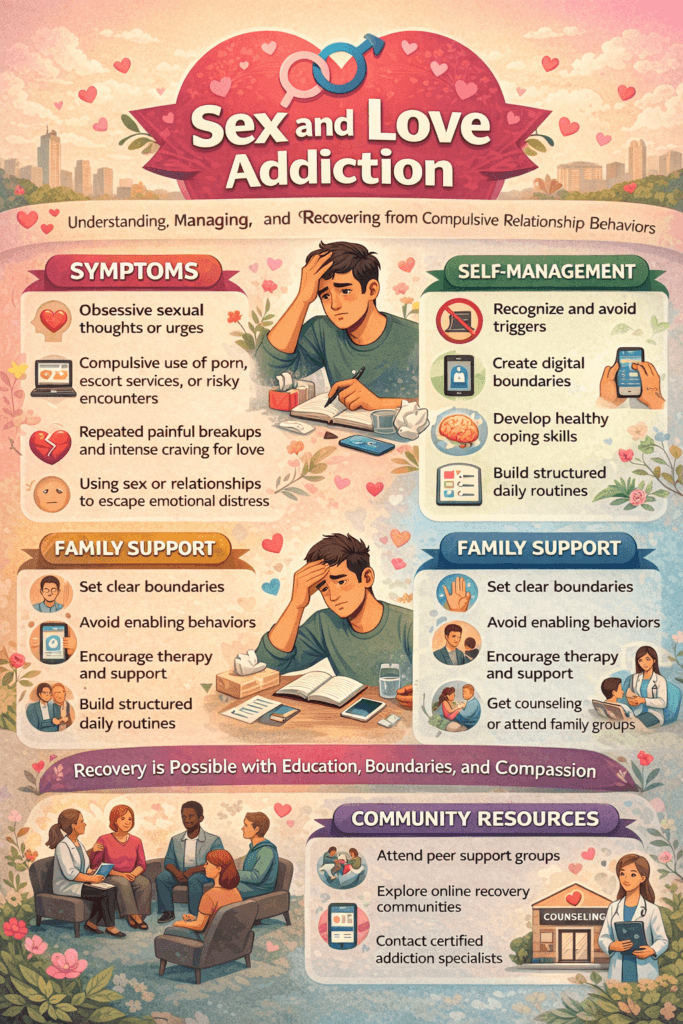
Sex and love addiction are behavioral addictions that involve compulsive patterns of seeking intimacy, romantic attachment, or sexual experiences despite harmful consequences. While connection and intimacy are natural human needs, addiction develops when these behaviors become a primary method of coping with stress, loneliness, trauma, or emotional pain. Managing sex and love addiction requires more than willpower alone. Successful recovery depends on a combination of self-management strategies that build emotional regulation, family support systems that restore trust and stability, and community resources that provide accountability and ongoing guidance. When these three levels of support work together, individuals gain the tools needed to break compulsive cycles and rebuild healthy relationships.
Sex and Love Addiction: Symptoms, Causes, Diagnosis, and Treatment
Understanding When Intimacy Becomes an Addiction
Sex and love are natural human needs tied to connection, bonding, and emotional well-being. But for some individuals, the pursuit of sexual experiences or romantic attachment becomes compulsive, uncontrollable, and damaging. This condition—often referred to as sex and love addiction—can disrupt relationships, mental health, and daily functioning. Recognizing the symptoms and understanding available treatment options is the first step toward recovery.
What Is Sex and Love Addiction?
Sex addiction involves compulsive sexual behaviors that continue despite negative consequences. Love addiction, while less discussed, refers to an obsessive attachment to romantic partners or the constant pursuit of relationships to fill emotional voids. Both conditions activate the brain’s reward system similarly to substance addictions, creating cycles of craving, temporary relief, and emotional crash.
Though not formally listed as a distinct diagnosis in all diagnostic manuals, many clinicians recognize these behavioral addictions as real and treatable conditions.
Common Symptoms
Individuals struggling with sex or love addiction may experience:
• Persistent sexual thoughts or fantasies that interfere with daily life
• Compulsive use of pornography, escort services, or risky sexual encounters
• Repeated relationship cycles with intense attachment and painful breakups
• Inability to stop behaviors despite guilt, shame, or consequences
• Neglect of work, family, or responsibilities
• Using sex or relationships to escape stress, anxiety, or low self-esteem
• Withdrawal-like symptoms when unable to engage in the behavior
Underlying Causes
Sex and love addiction often develop from a combination of emotional, psychological, and neurobiological factors, including:
• Childhood trauma, neglect, or abandonment
• Insecure attachment styles
• Low self-worth or fear of being alone
• Depression, anxiety, or unresolved emotional pain
• Early exposure to sexual content
• Dysfunctional relationship modeling
• Dopamine-driven reward reinforcement in the brain
Rather than being about pleasure alone, these addictions often reflect attempts to regulate emotional distress.
Diagnosis
There is no single lab test for sex or love addiction. Diagnosis typically involves:
• Clinical interviews with mental health professionals
• Behavioral history and pattern assessment
• Screening for co-occurring disorders (depression, anxiety, trauma, substance use)
• Evaluation of how behaviors impact relationships and daily functioning
Proper diagnosis focuses on identifying compulsive patterns and loss of control rather than moral judgment.
Treatment Options
Recovery is possible with structured and compassionate care. Effective treatment may include:
Psychotherapy
Cognitive Behavioral Therapy (CBT) helps identify triggers and restructure compulsive thought patterns.
Trauma-informed therapy addresses underlying emotional wounds.
Attachment-based therapy builds healthy relationship skills.
Group Support
Programs like Sex Addicts Anonymous (SAA) or Love Addicts Anonymous (LAA) provide peer accountability and community healing.
Medication
When co-occurring conditions like depression or anxiety are present, medication may support emotional stability.
Lifestyle and Coping Skills
Mindfulness, emotional regulation strategies, and boundary-building skills strengthen long-term recovery.
Living in Recovery
Healing from sex and love addiction means learning to form relationships based on respect, trust, and emotional balance rather than compulsion. With professional support and self-awareness, individuals can rebuild self-esteem, restore relationships, and regain control of their lives.
Final Thought
Sex and love addiction thrive in secrecy and shame—but recovery grows in understanding and support. If you or someone you know struggles with compulsive relationship or sexual behaviors, reaching out for help can open the path to lasting healing.
Self-Management Strategies for Sex and Love Addiction
Building Daily Control and Emotional Balance
Sex and love addiction thrive on secrecy, impulsivity, and emotional avoidance. Self-management strategies help individuals regain control of compulsive urges, regulate emotions, and build healthier relationship behaviors. While professional treatment is strongly recommended, consistent self-guided practices strengthen long-term recovery.
1. Identify Triggers
Recognize emotional and situational triggers that drive compulsive behaviors. Common triggers include loneliness, rejection, boredom, stress, or exposure to sexualized media. Keeping a daily trigger journal builds awareness of patterns and prepares you to respond rather than react.
2. Create Digital Boundaries
Limit access to high-risk content. Use website blockers for pornography, unfollow triggering social media accounts, remove dating apps during early recovery, and avoid late-night internet use. Environmental control reduces impulsive opportunities.
3. Develop Urge-Surfing Skills
Cravings rise and fall like waves. Practice deep breathing, grounding exercises, or short walks when urges appear. Most urges pass within 20–30 minutes if not acted upon.
4. Build Emotional Regulation
Learn healthy ways to manage uncomfortable emotions. Mindfulness meditation, journaling, physical exercise, or creative activities help process feelings rather than escape them through compulsive connection or sexual behavior.
5. Establish Relationship Boundaries
Set clear standards for communication, physical intimacy, and emotional disclosure. Avoid rushing emotional attachment. Practice pacing relationships slowly and intentionally.
6. Seek Healthy Connection
Replace compulsive connections with supportive relationships. Join recovery groups, engage with trusted friends, or participate in community activities that provide belonging without romantic intensity.
7. Practice Self-Compassion
Shame fuels addiction cycles. Replace self-criticism with supportive inner dialogue. Celebrate little progress rather than perfection.
8. Create a Structured Daily Routine
Idle time increases vulnerability. Plan daily schedules including work, exercise, meals, social time, and sleep to reduce impulsive behavior windows.
9. Use Accountability Tools
Share goals with a trusted sponsor, therapist, or recovery partner. Regular check-ins increase follow-through.
10. Educate Yourself
Read reputable recovery materials, listen to recovery podcasts, and learn about attachment and behavioral addiction. Knowledge reduces confusion and builds motivation.
Long-Term Growth
Self-management is not about suppressing desire — it’s about learning to build healthy intimacy, self-respect, and emotional stability. Combined with therapy or support groups, these strategies form a powerful foundation for recovery.
Helping Loved Ones Heal Without Losing Yourself
Sex and love addiction affects not only the individual but also partners, children, and close family members. Trust may be broken, communication strained, and emotional safety disrupted. Family support strategies focus on rebuilding stability while protecting the well-being of everyone involved.
1. Learn About the Addiction
Understanding sex and love addiction reduces blame and confusion. Learn how compulsive intimacy behaviors stem from emotional dysregulation, trauma, and brain-reward cycles — not moral failure. Education helps families respond with clarity rather than shame.
2. Set Clear Boundaries
Healthy boundaries protect family stability. Define what behaviors are unacceptable, what consequences follow, and what behaviors support recovery. Boundaries are not punishment — they are emotional safety measures.
3. Avoid Enabling Behaviors
Do not cover up behaviors, lie for the person, excuse repeated betrayals, or absorb all consequences. Enabling prevents accountability and prolongs the addiction cycle.
4. Encourage Professional Help
Support attendance in therapy, recovery groups, or medical appointments. Offer transportation, schedule flexibility, or childcare support when possible.
5. Rebuild Trust Gradually
Trust returns through consistent actions over time. Avoid forcing immediate forgiveness. Allow transparency practices such as shared device access, recovery check-ins, or progress discussions if agreed upon in therapy.
6. Communicate Honestly
Use calm, direct communication. Express feelings using “I” statements rather than blame. Example: “I feel unsafe when secrets happen” instead of accusations.
7. Seek Support for Yourself
Partners and family members often experience trauma, anxiety, and depression. Attend support groups such as S-Anon, COSA, or family therapy. Healing the family system improves long-term outcomes.
8. Protect Children’s Emotional Safety
Keep adult issues age-appropriate. Maintain routines, reassurance, and stability. Children need consistent emotional security while adults work on recovery.
9. Focus on Self-Care
Sleep, nutrition, exercise, social connection, and hobbies restore resilience. Family members cannot pour from an empty cup.
10. Celebrate Progress, Not Perfection
Recovery includes setbacks. Recognize effort, honesty, and responsibility rather than demanding immediate change.
Family Healing Is Possible
Sex and love addiction thrives in secrecy, but healing grows in openness, accountability, and support. When families learn healthy boundaries and compassionate communication, recovery becomes stronger and more sustainable.
Community Resource Strategies for Managing Sex and Love Addiction
Recovery Grows Through Connection, Not Isolation
Sex and love addiction often thrive in secrecy and isolation. Community-based resources provide accountability, education, emotional safety, and long-term support. Accessing structured community support helps individuals and families sustain recovery beyond therapy offices.
1. Peer Support Groups
Twelve-step and peer-led groups provide non-judgmental spaces to share experiences and receive guidance. Common programs include:
Sex Addicts Anonymous (SAA)
Sex and Love Addicts Anonymous (SLAA)
Love Addicts Anonymous (LAA)
Sexaholics Anonymous (SA)
These groups offer sponsorship, daily check-ins, and structured recovery steps.
2. Community Counseling Centers
Local mental health clinics often provide affordable therapy, group counseling, and trauma-informed services. Sliding-scale payment options improve access for uninsured individuals.
3. Certified Addiction Specialists
Seek providers trained in behavioral addictions and compulsive intimacy disorders. Certified Sex Addiction Therapists (CSAT) and Licensed Marriage and Family Therapists (LMFT) offer specialized care.
4. Faith-Based and Spiritual Resources
Many individuals find healing through spiritually oriented support programs, pastoral counseling, or faith-based recovery groups that emphasize accountability and purpose.
5. Online Recovery Communities
Virtual meetings, forums, and mobile apps provide accessible support for those without local resources. Online recovery meetings allow anonymity and flexible scheduling.
6. Family Support Programs
Community-based family groups such as S-Anon and COSA teach boundary-setting, emotional healing, and shared recovery principles for partners and loved ones.
7. Educational Workshops
Some communities offer relationship-skills training, trauma education workshops, mindfulness courses, or emotional regulation classes that strengthen relapse-prevention skills.
8. Crisis Support Services
Hotlines and crisis centers offer immediate support when individuals feel overwhelmed or are at risk of acting out.
9. Volunteer and Service Activities
Service work builds healthy social connection, purpose, and self-esteem — important protective factors against relapse.
10. Recovery-Friendly Environments
Sober living communities, wellness centers, and recovery cafés provide safe social spaces free from high-risk triggers.
Sustaining Long-Term Recovery
Community resources transform recovery from a private struggle into a shared healing process. When individuals feel supported, understood, and accountable, long-term stability becomes achievable.
Frequently Asked Questions
Here are some common questions:
1. What is sex and love addiction?
Sex and love addiction are behavioral addictions involving compulsive sexual activity or obsessive attachment to romantic relationships. The behaviors continue despite negative consequences and are often used to cope with emotional distress rather than for genuine intimacy.
2. Is sex and love addiction officially recognized as a disorder?
While not always listed as a formal diagnosis in diagnostic manuals, many mental health professionals recognize sex and love addiction as real behavioral addiction patterns that respond to structured treatment.
3. What is the difference between a high sex drive and sex addiction?
A high sex drive involves healthy, consensual behavior under personal control. Sex addiction involves loss of control, secrecy, distress, and continued behavior despite harmful consequences.
4. What is love addiction?
Love addiction is an obsessive need for romantic attachment. Individuals may rush into relationships, fear abandonment, or feel emotionally incomplete without a partner.
5. What causes sex and love addiction?
Common causes include childhood trauma, insecure attachment, low self-esteem, loneliness, depression, anxiety, early exposure to sexual content, and brain reward-system reinforcement.
6. Can someone have both sex and love addiction?
Yes. Many individuals experience overlapping patterns of compulsive sexual behavior and obsessive romantic attachment.
7. What are common warning signs?
Frequent sexual thoughts, compulsive pornography use, repeated secretive behaviors, serial intense relationships, fear of being alone, guilt, shame, and inability to stop despite consequences.
8. How does sex and love addiction affect relationships?
It can cause broken trust, emotional instability, betrayal trauma, secrecy, financial strain, and repeated relationship cycles.
9. How is sex and love addiction diagnosed?
Diagnosis is made by a qualified mental health professional through clinical interviews, a review of behavioral history, and an assessment of compulsive patterns and their impact on life.
10. What treatments are effective?
Cognitive Behavioral Therapy, trauma-informed therapy, attachment therapy, group recovery programs (like SLAA or SAA), and sometimes medication for co-occurring conditions.
11. Can self-management strategies help?
Yes. Trigger awareness, boundary setting, digital controls, emotional regulation, accountability partners, and structured routines support daily recovery.
12. How can families support recovery?
By learning about addiction, setting boundaries, avoiding enabling, encouraging treatment, attending family support groups, and practicing self-care.
13. Are support groups available?
Yes. Groups such as SLAA, SAA, SA, COSA, and S-Anon provide peer-based recovery support in person and online.
14. Is recovery possible?
Absolutely. With proper support, therapy, and accountability, individuals can regain control and build healthy, stable relationships.
15. Where can someone get help?
Licensed therapists trained in behavioral addictions, certified sex addiction specialists (CSAT), community mental health centers, and recovery support groups are good starting points.
Conclusion
Recovery from sex and love addiction is possible when individuals are supported rather than isolated. Self-management practices strengthen daily control, family support strategies rebuild emotional safety, and community resources provide long-term connection and accountability. Together, these approaches replace secrecy and shame with structure, understanding, and hope. With education, boundaries, and compassionate support, individuals and families can heal, restore trust, and create relationships grounded in balance, respect, and emotional well-being.
Video: Obsessive Thoughts About Someone? You Might Be Addicted #psychology #relationships #toxic