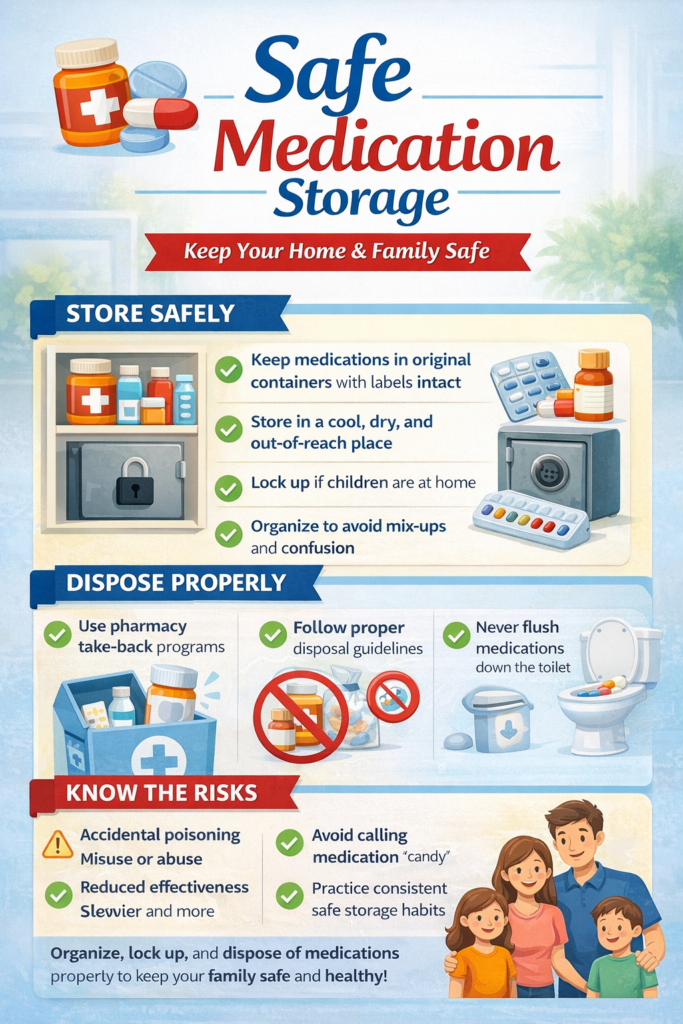
Safe medication storage is a critical yet often overlooked aspect of maintaining health and safety at home. Medications are designed to heal and manage conditions, but when stored improperly, they can lose effectiveness or pose serious risks such as accidental ingestion, misuse, or harmful interactions. Factors like heat, moisture, light, and accessibility all play a role in how well medications maintain their intended purpose. Understanding and practicing proper storage habits is essential for protecting not only your own health but also the safety of others in your household.
💊 Safe Medication Storage: Protecting Your Health at Home
Medications play a vital role in managing health, but how they are stored is just as important as how they are used. Improper storage can reduce a medication’s effectiveness, increase the risk of accidental misuse, and even pose serious safety hazards—especially for children, pets, or vulnerable individuals. Understanding safe medication storage practices is a simple yet powerful way to protect your health and the well-being of those around you.
🌡️ Why Proper Storage Matters
Medications are sensitive to environmental conditions like heat, light, and moisture. When stored incorrectly, they can break down, lose potency, or become unsafe.
Common risks of improper storage:
- Reduced effectiveness of medication
- Increased risk of side effects
- Accidental ingestion by children or pets
- Confusion or misuse due to disorganization
🚫 Avoid Common Storage Mistakes
Many people unknowingly store medications in places that can cause harm.
Avoid storing medications:
- In bathrooms (humidity from showers can damage them)
- Near heat sources (like stoves or windows)
- In cars (temperature fluctuations can degrade medications)
- In easily accessible areas for children
🏠 Best Places to Store Medications
Choose storage locations that are cool, dry, and secure.
Safe storage tips:
- Keep medications in a high cabinet or locked box
- Store them away from direct sunlight
- Use original containers with labels intact
- Separate medications by purpose or person
🔒 Keep Medications Out of Reach
Safety is especially important in households with children or pets.
Protective steps:
- Use child-resistant containers
- Install cabinet locks if needed
- Never refer to medicine as “candy.”
- Educate family members about medication safety
📅 Stay Organized and Aware
Proper organization helps prevent misuse and ensures medications are taken correctly.
Helpful habits:
- Check expiration dates regularly
- Dispose of expired or unused medications safely
- Keep a list of current medications
- Follow dosage instructions carefully
♻️ Safe Disposal Matters
Unused or expired medications should not be thrown loosely in the trash or flushed down the toilet without guidance.
Better options:
- Use community take-back programs
- Follow the FDA or pharmacy disposal guidelines
- Mix medications with undesirable substances (like coffee grounds) if no other option is available
💬 Final Thoughts
Safe medication storage is an often-overlooked part of healthcare, yet it plays a crucial role in preventing harm and ensuring treatment effectiveness. By making small adjustments—like choosing the right storage location, staying organized, and keeping medications secure—you can significantly reduce risks and create a safer home environment.
💊 Taking Control: Self-Management Strategies for Safe Medication Storage
Safe medication storage is not just about where you keep your medications—it’s about creating consistent habits that protect your health and prevent misuse. With simple self-management strategies, you can ensure your medications remain effective, organized, and secure. Taking an active role in how you store medications is an important step toward safer, more responsible healthcare at home.
🧠 Build Awareness of Storage Needs
Different medications have different storage requirements, so understanding these needs is essential.
Start by:
- Reading labels for storage instructions (e.g., “store in a cool, dry place”)
- Asking your pharmacist about specific requirements
- Noting which medications require refrigeration or special handling
Awareness helps prevent accidental damage or reduced effectiveness.
🏠 Create a Designated Storage Space
Having a consistent, organized place for medications reduces confusion and risk.
Tips for success:
- Choose a cool, dry location away from heat and moisture
- Use a specific cabinet, drawer, or storage box
- Keep medications in their original containers with labels intact
A designated space makes it easier to manage and monitor your medications.
🔒 Prioritize Safety and Security
Keeping medications secure is especially important if others are in your home.
Self-management strategies include:
- Using a lockbox or high cabinet
- Keeping medications out of sight and reach of children and pets
- Being mindful of visitors who may have access
Security reduces the risk of accidental ingestion or misuse.
📅 Stay Organized and Consistent
Organization is key to safe medication use and storage.
Helpful habits:
- Use a pill organizer if appropriate
- Keep a current list of all medications and dosages
- Regularly check expiration dates
- Avoid mixing different medications in one container
Consistency prevents errors and ensures proper use.
🔄 Develop a Routine for Monitoring
Regularly reviewing your medications helps maintain safety over time.
Try to:
- Do a monthly check of storage conditions
- Remove expired or unused medications promptly
- Reassess whether your storage system is still working for you
Routine check-ins keep your system effective and up to date.
♻️ Practice Safe Disposal Habits
Self-management also includes knowing when and how to safely dispose of medications.
Best practices:
- Use pharmacy take-back programs when available
- Follow official guidelines for disposal
- Never keep medications “just in case” if they are no longer needed
Proper disposal prevents misuse and protects others.
🧩 Plan for Special Situations
Travel, illness, or changes in routine can affect how medications are stored.
Prepare by:
- Using travel-friendly storage containers
- Keeping medications at proper temperatures while on the go
- Carrying a medication list for emergencies
Planning ahead ensures safety even outside your usual environment.
💬 Final Thoughts
Safe medication storage is a daily responsibility that becomes easier with intentional habits and routines. By staying organized, aware, and proactive, you can protect your health, reduce risks, and create a safer environment for yourself and those around you. Small, consistent actions can make a lasting difference in medication safety.
👨👩👧👦 Working Together: Family Support Strategies for Safe Medication Storage
Safe medication storage is not just an individual responsibility—it’s a shared effort within the household. Families play a critical role in ensuring medications are stored properly, used correctly, and kept out of harm’s way. By working together and creating a culture of safety, families can prevent accidental misuse, protect vulnerable members, and support overall health.
🧠 Build Shared Awareness
The first step in family support is making sure everyone understands why safe medication storage matters.
Families can:
- Talk openly about the risks of improper storage
- Educate children (in age-appropriate ways) about medication safety
- Ensure all household members know basic guidelines
When everyone is informed, safety becomes a shared priority.
🏠 Establish a Central Storage System
Creating a consistent storage plan helps reduce confusion and errors.
Consider:
- Choosing one designated, secure location for all medications
- Keeping medications in original containers with clear labels
- Separating medications by person if needed
A central system makes it easier for everyone to follow the same rules.
🔒 Prioritize Safety for Children and Vulnerable Members
Families with children, elderly individuals, or pets must take extra precautions.
Protective strategies:
- Use locked cabinets or medication lockboxes
- Store medications out of sight and reach
- Avoid leaving medications unattended
These steps significantly reduce the risk of accidental ingestion.
👀 Monitor and Support Each Other
Family members can help one another stay on track with safe storage and use.
This includes:
- Reminding each other to return medications to their proper place
- Helping organize and check expiration dates
- Watching for signs of confusion or misuse
Supportive monitoring promotes accountability without judgment.
🧩 Encourage Open Communication
Creating a safe environment for discussion helps prevent mistakes and misuse.
Families should:
- Encourage questions about medications
- Talk about any concerns or side effects
- Avoid blame if mistakes happen—focus on solutions instead
Open communication builds trust and improves safety.
♻️ Work Together on Safe Disposal
Proper disposal is another area where family support is essential.
You can:
- Set reminders to check for expired medications
- Use community take-back programs as a family activity
- Ensure no unused medications are left accessible
This prevents unnecessary risks in the home.
📅 Create Routines and Responsibilities
Consistency helps make safe storage a habit.
Try:
- Assigning roles (e.g., one person checks expiration dates monthly)
- Incorporating medication checks into regular household routines
- Keeping a shared medication list is appropriate
Routine reduces the chance of oversight.
🌱 Lead by Example
Adults set the tone for safe practices in the home.
Modeling includes:
- Following storage guidelines consistently
- Using medications responsibly
- Demonstrating organization and awareness
Children and other family members often learn best by observing.
💬 Final Thoughts
Safe medication storage is most effective when it’s a team effort. Through communication, organization, and shared responsibility, families can create a safer home environment and reduce the risk of harm. Small, consistent actions—done together—can make a lasting impact on health and safety.
🌍 Community Matters: Resource Strategies for Safe Medication Storage
Safe medication storage is not only an individual or family responsibility—it is a broader community concern. Communities play a vital role in promoting medication safety by providing access to resources, education, and support systems that help individuals store and manage medications properly. By working together, communities can reduce risks such as accidental poisoning, misuse, and decreased medication effectiveness.
🧠 Community Education and Awareness
Education is the foundation of prevention. Communities can empower individuals with knowledge about safe medication storage.
Effective strategies include:
- Public health campaigns on proper storage practices
- Workshops at community centers, schools, and clinics
- Distribution of educational materials in pharmacies and healthcare facilities
Increased awareness helps individuals make safer, more informed decisions.
🏥 Pharmacy and Healthcare Support
Local pharmacies and healthcare providers are key resources for medication safety.
They can:
- Provide clear storage instructions with prescriptions
- Offer counseling on medication safety
- Educate patients about the risks of improper storage
Pharmacists are often the most accessible professionals for guidance.
🔒 Access to Safety Tools and Resources
Communities can improve safety by making protective tools widely available.
Examples include:
- Medication lockboxes or safe storage kits
- Childproof containers
- Educational toolkits for families
Providing these resources—especially at low or no cost—reduces barriers to safe practices.
♻️ Medication Take-Back Programs
Proper disposal is essential to preventing misuse and accidental exposure.
Community initiatives can:
- Host medication take-back events
- Provide permanent drop-off locations at pharmacies or law enforcement agencies
- Educate the public on safe disposal methods
These programs help remove unused or expired medications from homes.
🏫 Partnerships with Schools and Workplaces
Integrating medication safety into everyday environments increases reach and impact.
Communities can:
- Include medication safety in school health education
- Offer workplace wellness programs that address safe storage
- Promote awareness campaigns in local organizations
These partnerships reinforce safe habits across different settings.
🤝 Support for Vulnerable Populations
Certain groups may need additional support to safely manage medications.
Communities can assist:
- Older adults managing multiple prescriptions
- Individuals with chronic conditions
- Households with young children
Home visits, community health workers, and outreach programs can provide personalized guidance.
📢 Reducing Stigma and Encouraging Responsibility
Open conversations about medication safety encourage proactive behavior.
Communities should:
- Normalize asking questions about medication use and storage
- Promote a non-judgmental approach to safety concerns
- Encourage individuals to seek help when needed
A supportive culture makes it easier to adopt safe practices.
🌱 Building a Culture of Safety
Ultimately, community efforts help create an environment where safe medication storage becomes the norm.
This includes:
- Encouraging shared responsibility
- Promoting consistent safety habits
- Supporting individuals through accessible resources
💬 Final Thoughts
Safe medication storage is most effective when supported at every level—individual, family, and community. By providing education, resources, and accessible support systems, communities can significantly reduce risks and promote healthier, safer environments for everyone. Collective action leads to stronger prevention and better health outcomes.
Frequently Asked Questions
Here are some common questions:
Why is safe medication storage important?
Answer:
Proper storage ensures medications remain effective and reduces the risk of accidental ingestion, misuse, or overdose—especially for children, pets, and vulnerable individuals.
Where is the best place to store medications?
Answer:
Medications should be stored in a cool, dry place away from direct sunlight and moisture—such as a bedroom cabinet or drawer. Avoid bathrooms and kitchens where heat and humidity fluctuate.
Why shouldn’t medications be stored in the bathroom?
Answer:
Bathrooms are often humid due to showers and sinks. Moisture can break down medications, making them less effective or unsafe to use.
Should medications be kept in their original containers?
Answer:
Yes. Original containers include important information such as dosage instructions, expiration dates, and safety warnings. Keeping them intact helps prevent confusion and misuse.
How can I keep medications safe from children?
Answer:
- Store medications out of reach and sight
- Use child-resistant containers
- Consider a locked cabinet or lockbox
- Never refer to medicine as “candy.”
These steps help prevent accidental poisoning.
Is it safe to store medications in a pill organizer?
Answer:
Pill organizers are safe for short-term use (such as daily or weekly doses), but long-term storage should still be in the original containers to maintain labeling and protection.
What should I do with expired or unused medications?
Answer:
- Use pharmacy or community take-back programs
- Follow official disposal guidelines
- If necessary, mix with undesirable substances (like coffee grounds) before discarding
Avoid flushing medications unless specifically instructed.
Can temperature affect medications?
Answer:
Yes. Extreme heat or cold can damage medications. Avoid storing them in cars, near windows, or close to heat sources. Some medications require refrigeration—always check the label.
How often should I check my medications?
Answer:
It’s recommended to review your medications at least once a month to:
- Check expiration dates
- Remove unused medications
- Ensure proper storage conditions
What are the risks of improper medication storage?
Answer:
Improper storage can lead to:
- Reduced effectiveness
- Accidental poisoning
- Misuse or abuse
- Confusion with dosages or medications
Should medications be shared between family members?
Answer:
No. Medications are prescribed for specific individuals and conditions. Sharing can be dangerous and lead to incorrect treatment or harmful side effects.
Conclusion
Safe medication storage is a simple but powerful step in preventing avoidable health risks. By choosing appropriate storage locations, staying organized, and ensuring medications are kept secure and properly disposed of, individuals and families can significantly reduce the chance of harm. These small, consistent practices help maintain medication effectiveness and create a safer home environment. Ultimately, prioritizing safe storage is an important part of responsible healthcare and long-term well-being.
Video: One Mistake Everyone Makes With Their Medicine Cabinet #health #mistake #medicine