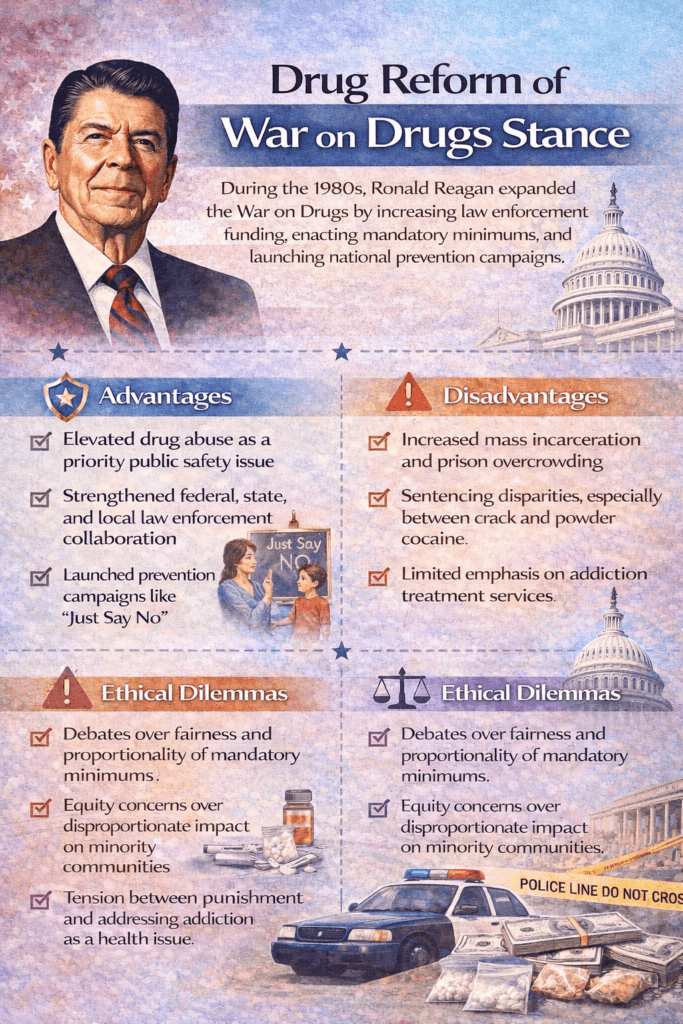
President Ronald Reagan significantly intensified the War on Drugs during the 1980s by expanding federal law enforcement funding, strengthening penalties through mandatory minimum sentencing laws, and launching nationwide prevention campaigns that framed drug use and trafficking as urgent threats to public safety and national stability. His administration sought to deter drug activity through strict enforcement and coordinated efforts among federal, state, and local agencies, which supporters argue increased accountability, improved interagency collaboration, and elevated public awareness about the dangers of substance use. However, critics point to substantial unintended consequences, including rising incarceration rates, persistent sentencing disparities, and a policy imbalance that prioritizes punishment over treatment and rehabilitation. These outcomes sparked ongoing ethical debates about proportional justice, racial equity, and whether enforcement-focused strategies adequately addressed addiction as a public health issue. The legacy of these policies continues to shape modern discussions about how to balance accountability, prevention, treatment, and social equity in drug policy.
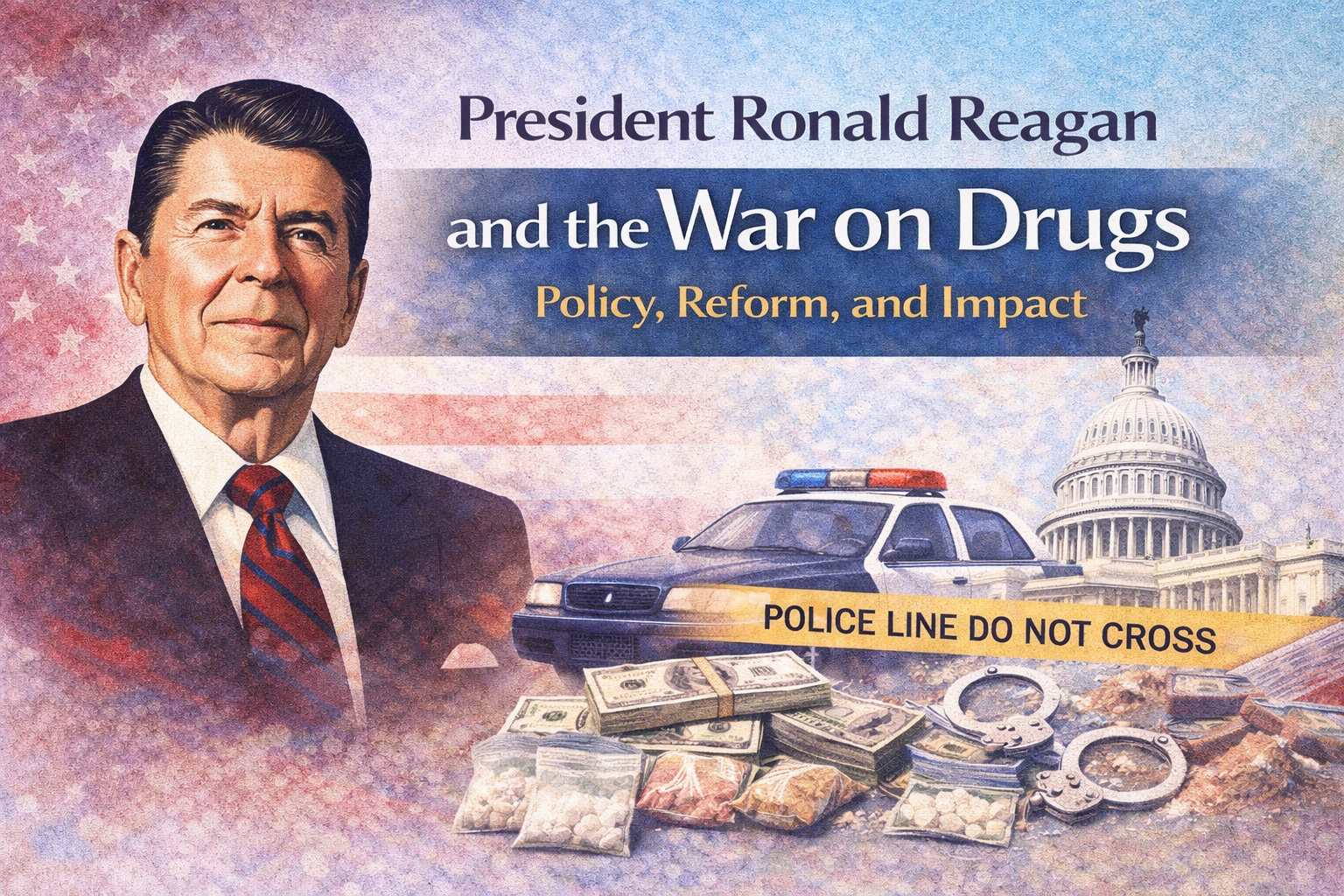
President Ronald Reagan and the War on Drugs: Policy, Reform, and Impact
During the 1980s, President Ronald Reagan significantly expanded the federal government’s efforts in what became known as the War on Drugs. Although the initiative began in the 1970s, Reagan’s administration intensified enforcement, increased funding for law enforcement agencies, and reshaped national drug policy through legislation and public messaging. His drug reform stance emphasized deterrence, criminal penalties, and a strong federal response to illicit drug trafficking, particularly during the rise of crack cocaine use in urban communities.
One of the most defining features of Reagan’s drug policy was the passage of the Anti-Drug Abuse Acts of 1986 and 1988. These laws established mandatory minimum sentencing for drug offenses and created significant sentencing disparities between crack and powder cocaine. The intent was to deter drug trafficking and reduce drug-related crime. The administration framed substance use as both a criminal justice issue and a moral crisis, emphasizing personal responsibility and zero tolerance.
Reagan’s approach also included national prevention campaigns. The “Just Say No” initiative, strongly associated with First Lady Nancy Reagan, focused on youth education and abstinence messaging. Prevention became a central theme, aiming to reduce demand for drugs through awareness and moral clarity. Federal funding for drug enforcement agencies, including the Drug Enforcement Administration (DEA), increased substantially, and cooperation between federal, state, and local law enforcement was strengthened.
However, the policy emphasis leaned heavily toward enforcement rather than treatment. While some funding for prevention and treatment expanded, most resources supported policing, interdiction, and incarceration. Critics argue that this approach contributed to mass incarceration, disproportionately affected minority communities, and did not adequately address addiction as a public health condition. Supporters contend that the policies signaled a strong federal commitment to public safety and sought to reduce drug-related violence and trafficking.
From a historical perspective, Reagan’s drug reform stance marked a pivotal shift toward punitive drug policy in the United States. The long-term effects continue to influence debates about criminal justice reform, sentencing disparities, and the balance between enforcement and treatment. Today, policymakers and healthcare professionals often reflect on this era when considering how to integrate public health approaches with accountability measures.
President Reagan’s War on Drugs stance remains one of the most consequential and debated chapters in modern U.S. drug policy—shaping conversations about addiction, crime, prevention, and reform for decades to come.
Advantages of Ronald Reagan’s Drug Reform and War on Drugs Stance
During the 1980s, President Ronald Reagan expanded federal drug policy efforts in response to rising concerns about cocaine use, drug trafficking, and drug-related violence. While the War on Drugs remains debated, supporters argue that Reagan’s drug reform initiatives offered several advantages in areas of law enforcement coordination, public awareness, and national prioritization of the drug crisis.
One major advantage was the elevation of drug abuse as a national security and public safety issue. By prioritizing drug enforcement at the federal level, Reagan’s administration signaled that drug trafficking and organized crime were serious threats requiring a coordinated response. Increased funding for federal agencies, such as the Drug Enforcement Administration (DEA), and strengthened interstate and international cooperation improved the government’s ability to disrupt trafficking networks.
Another advantage was the clear deterrence messaging established by legislation such as the Anti-Drug Abuse Acts of 1986 and 1988. Mandatory minimum sentencing laws were intended to create consistent consequences for drug trafficking and large-scale distribution. Supporters believed that firm penalties would deter high-level traffickers and reduce drug supply, particularly during the crack cocaine surge.
Reagan’s era also brought significant attention to drug prevention and youth education. National campaigns such as “Just Say No” increased public dialogue around substance use and encouraged schools and communities to adopt prevention programs. For many communities, this marked the first time drug education became a consistent part of public school curricula. The emphasis on prevention helped frame substance use as a serious health and social issue rather than a hidden problem.
In addition, the War on Drugs encouraged interagency collaboration and data tracking. Federal, state, and local law enforcement agencies improved coordination, thereby strengthening intelligence sharing and strategic planning. This infrastructure later supported broader criminal justice and public health initiatives.
Finally, the administration’s policies brought public accountability and urgency to a rapidly growing drug epidemic. By placing the issue at the forefront of national conversation, Reagan’s approach mobilized communities, policymakers, and law enforcement around a unified objective: reducing drug availability and protecting families.
While long-term outcomes and unintended consequences continue to be examined, proponents argue that Reagan’s drug reform stance provided structure, national focus, and enforcement capacity during a period of escalating drug-related concern. Understanding these perceived advantages helps provide balance when evaluating the broader historical impact of the War on Drugs.
Disadvantages of Ronald Reagan’s Drug Reform and War on Drugs Stance
President Ronald Reagan’s expansion of the War on Drugs during the 1980s significantly shaped U.S. drug policy for decades. While supporters viewed the approach as necessary to combat rising drug use and trafficking, critics argue that several unintended and long-term disadvantages emerged from the administration’s heavy emphasis on enforcement and punitive measures.
One of the most widely cited disadvantages was the rise in mass incarceration. The Anti-Drug Abuse Acts of 1986 and 1988 introduced mandatory minimum sentencing laws, which limited judicial discretion and resulted in lengthy prison terms for drug offenses. Many individuals incarcerated under these laws were non-violent offenders, contributing to prison overcrowding and long-term social and economic consequences for families and communities.
Another major concern was the sentencing disparity between crack and powder cocaine offenses. The 100:1 sentencing ratio meant possession of small amounts of crack cocaine carried significantly harsher penalties than equivalent amounts of powder cocaine. Because crack cocaine was more prevalent in low-income urban communities, critics argue that these policies disproportionately affected minority populations, contributing to racial disparities in incarceration rates.
The War on Drugs also faced criticism for its limited emphasis on treatment and public health approaches. Although prevention campaigns received attention, funding, and policy focus, these efforts were largely directed toward law enforcement and interdiction rather than toward expanding addiction treatment services. As addiction is now widely recognized as a chronic medical condition, many experts argue that the imbalance between enforcement and treatment hinders long-term recovery efforts.
Additionally, some researchers question the overall effectiveness of supply-side strategies. Despite increased enforcement and international drug control efforts, illicit drug availability and use persisted. Critics suggest that focusing primarily on punishment did not adequately address underlying drivers of substance use, such as trauma, poverty, mental health conditions, and social instability.
The policies also contributed to stigma surrounding addiction, reinforcing the perception of substance use as primarily a criminal issue rather than a health condition. This framing may have discouraged individuals from seeking help and influenced public attitudes toward people struggling with addiction.
In retrospect, while Reagan’s drug reform stance reflected the urgency of the time, many policymakers and healthcare professionals now view its long-term consequences as complex and, in some cases, counterproductive. The disadvantages associated with mandatory sentencing, incarceration disparities, and limited treatment access continue to shape ongoing debates about criminal justice reform and balanced public health strategies in addiction policy.
Ethical Dilemmas of Ronald Reagan’s Drug Reform and War on Drugs Stance
President Ronald Reagan’s expansion of the War on Drugs in the 1980s marked a defining shift in U.S. drug policy. While intended to reduce drug trafficking, crime, and substance use, the policies introduced complex ethical dilemmas that continue to shape debates in criminal justice and public health. These dilemmas center on the balance between public safety and individual rights, punishment and treatment, and equality under the law.
One major ethical concern involved mandatory minimum sentencing laws. By limiting judicial discretion, these laws prioritized uniform punishment over individualized assessment. Ethically, this raised questions about proportionality and fairness. Critics argued that rigid sentencing did not always account for context, intent, or potential for rehabilitation, potentially undermining principles of justice and individualized care.
Another ethical dilemma emerged from the crack versus powder cocaine sentencing disparity. The significantly harsher penalties for crack cocaine offenses disproportionately impacted minority communities. This disparity raised concerns about equity, systemic bias, and whether the legal system was applying justice evenly across populations. Ethical policymaking requires fairness and equal protection, and many argue that this imbalance challenged those principles.
A further dilemma centered on the criminalization of addiction. Reagan’s policies largely framed drug use as a criminal issue rather than a medical condition. From an ethical standpoint, this approach questioned whether individuals with substance use disorders—now widely recognized as having a chronic brain-based illness—were being punished for symptoms of a health condition. The tension between accountability and compassion became a central debate.
There were also ethical concerns regarding resource allocation. Significant federal funding was directed toward law enforcement and interdiction, while comparatively less emphasis was placed on expanding treatment services. This raised questions about whether resources were being distributed to maximize public health benefit or whether enforcement-focused spending overshadowed therapeutic solutions.
Finally, the War on Drugs influenced public perception and stigma. Policies that emphasize punishment may reinforce moral judgment rather than promote understanding and rehabilitation. Ethically, governments must consider how policy language and enforcement strategies affect human dignity and social equity.
In the historical context, President Reagan’s stance on drug reform reflected the urgency and fears of the 1980s. However, the ethical dilemmas surrounding proportionality, equity, public health, and human rights continue to inform modern policy discussions. Evaluating these ethical dimensions is essential when balancing public safety with fairness, compassion, and evidence-based approaches to addiction.
Frequently Asked Questions
Here are some common questions:
1. What was President Ronald Reagan’s stance on the War on Drugs?
President Reagan strongly expanded the War on Drugs during the 1980s, emphasizing law enforcement, mandatory minimum sentencing, and national prevention campaigns to combat rising drug use and trafficking.
2. What major laws were passed during his administration?
The Anti-Drug Abuse Acts of 1986 and 1988 were key legislative measures. These laws increased federal funding for enforcement, established mandatory minimum sentences, and intensified penalties for drug offenses.
3. What was the goal of mandatory minimum sentencing?
Mandatory minimums were designed to create consistent, strict penalties for drug trafficking and large-scale distribution. Supporters believed firm consequences would deter drug-related crime.
4. What was the “Just Say No” campaign?
“Just Say No,” promoted by First Lady Nancy Reagan, was a national prevention campaign encouraging youth to refuse drugs. It increased public awareness and expanded school-based prevention programs.
5. What were the advantages of Reagan’s drug reform policies?
Supporters argue that the policies elevated drug abuse as a national priority, strengthened federal and state law enforcement coordination, increased prevention messaging, and mobilized public awareness around substance use.
6. What were the disadvantages of these policies?
Critics point to increased incarceration rates, prison overcrowding, sentencing disparities (especially between crack and powder cocaine), and limited investment in addiction treatment services.
7. What was the crack vs. powder cocaine sentencing disparity?
The 1986 law created a 100:1 sentencing ratio, meaning much harsher penalties for crack cocaine offenses compared to powder cocaine. This policy disproportionately affected minority communities and later became a focus of reform efforts.
8. Did Reagan’s policies focus on treatment for addiction?
While prevention was emphasized, most funding and policy focus centered on enforcement and interdiction rather than on expanding treatment infrastructure. Addiction was largely framed as a criminal justice issue during this era.
9. What ethical dilemmas are associated with the War on Drugs?
Ethical concerns include proportionality in sentencing, racial equity, the criminalization of addiction as a health condition, and whether punitive approaches were balanced with compassion and public health strategies.
10. How did these policies impact incarceration rates?
Drug-related arrests and incarceration rates increased significantly during and after the 1980s, contributing to long-term prison overcrowding and broader criminal justice reform debates.
11. How is Reagan’s War on Drugs viewed today?
Today, the policies are viewed as historically significant but controversial. Some credit them with raising national awareness and strengthening enforcement, while others argue they contributed to systemic inequities and mass incarceration.
12. How does Reagan’s drug reform influence current policy discussions?
Modern debates about sentencing reform, decriminalization, treatment access, and the balance between enforcement and public health are shaped in part by the outcomes of policies implemented during the Reagan era.
Conclusion
Reagan’s drug reform stance remains one of the most consequential and debated chapters in modern U.S. drug policy. Its advantages included national mobilization, stronger enforcement infrastructure, and heightened public attention to substance use prevention. However, its disadvantages—particularly incarceration disparities and insufficient treatment investment—have shaped decades of reform discussions. The ethical tensions between public safety, fairness, compassion, and evidence-based care continue to influence current approaches to addiction policy. Understanding both the strengths and limitations of this era provides important context for developing more balanced strategies that integrate accountability with public health and long-term recovery support.
Video: Reagan’s Biggest Mistake Ruined American Criminal Justice #WarOnDrugs #Politics #Truth